
Quick wins for a faster PC:
Clear out junk files and repair common Windows errorsFree Scan →Scan for outdated or missing drivers - takes under a minuteDriver Scan →In February 2007, WR Hambrecht analysts cut SanDisk’s rating from “buy” to “hold” after reports that Samsung was considering ending an 8% royalty on NAND flash memory and paying SanDisk only a 2% royalty on Samsung-made SD cards. The threat mattered because Samsung was estimated to generate about 90% of SanDisk’s royalty revenue, making even a partial cut a material risk to SanDisk’s forecasts.
What royalty was Samsung reportedly trying to stop paying?
The dispute involved two distinct royalty arrangements, according to the account of WR Hambrecht’s analysis reported by EE Times. Samsung paid SanDisk an 8% royalty on NAND multi-level cell (MLC) flash memory. Separately, finished SD cards carried a 6% royalty to the SD Card Association, of which SanDisk received 2% as a founding member.
Samsung was reportedly considering paying SanDisk only the 2% share associated with Samsung-made SD cards while ending the 8% royalty on MLC NAND. The proposed change was therefore not simply a dispute over the fee on a finished memory card: it threatened the larger NAND royalty stream as well.
How large was the potential revenue hit?
WR Hambrecht estimated that Samsung had supplied about 90% of SanDisk’s royalty revenue in recent years. The analysts warned that about 15% of SanDisk’s total royalty revenue could be at risk as early as the second quarter of 2007, and that about 25% of Samsung’s MLC royalty payments could be at risk.
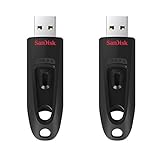
#1 Best Overall

- High-speed USB 3.0 performance of up to 150MB/s(1) [(1) Write to drive up to 15x faster than standard USB 2.0 drives (4MB/s); varies by drive capacity. Up to 150MB/s read speed. USB 3.0 port required. Based on internal testing; performance may be lower depending on host device, usage conditions, and other factors; 1MB=1,000,000 bytes]
- Transfer a full-length movie in less than 30 seconds(2) [(2) Based on 1.2GB MPEG-4 video transfer with USB 3.0 host device. Results may vary based on host device, file attributes and other factors]
- Transfer to drive up to 15 times faster than standard USB 2.0 drives(1)
- Sleek, durable metal casing
- Easy-to-use password protection for your private files(3) [(3)Password protection uses 128-bit AES encryption and is supported by Windows 7, Windows 8, Windows 10, and Mac OS X v10.9 plus; Software download required for Mac, visit the SanDisk SecureAccess support page]
They lowered their royalty-revenue estimates as follows:
| Year | Earlier estimate | Revised estimate | Reduction |
|---|---|---|---|
| 2007 | $373 million | $327 million | $46 million |
| 2008 | $500 million | $405 million | $95 million |
These were WR Hambrecht’s 2007 forecasts for SanDisk royalty revenue, not reported final results. The reductions reflected the analysts’ assessment of the threat, rather than proof that Samsung had already stopped paying the royalty.
Rank #2
- Transfer speeds up to 10x faster than standard USB 2.0 drives (4MB/s); up to 130MB/s read speed; USB 3.0 port required. Based on internal testing; performance may be lower depending upon host device. 1MB=1,000,000 bytes
- Backward compatible with USB 2.0
- Secure file encryption and password protection(2)
Why did analysts see SanDisk as vulnerable?
Royalty income depended heavily on one licensee
If Samsung accounted for about nine-tenths of SanDisk’s royalty revenue, a change in Samsung’s payments could have consequences well beyond one product category. That concentration made SanDisk’s licensing outlook sensitive to the outcome of negotiations with a major customer and competitor.
Market pressure strengthened Samsung’s incentive
The contemporaneous report described falling NAND prices and weak profitability for Samsung’s NAND business. In that environment, reducing royalty costs could improve Samsung’s economics. The analysis also placed the dispute in a broader strategic contest: SanDisk held NAND patents, while Samsung had manufacturing scale and was an important supply relationship for SanDisk.
Rank #3
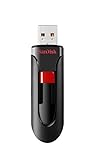
- Reliable storage for photos, videos, music and other files
- Available in capacities from 8GB to 256GB (1GB = 1,000,000,000 bytes - Actual user storage less)
- Transfer with confidence when moving images and other content
- Retractable design keeps the connector safe
- SanDisk SecureAcces software with 128-bit AES encryption and password protection(1)
Legal action was an option, but not an easy answer
SanDisk had patent and commercial disputes involving Hynix, Toshiba, and STMicroelectronics, adding litigation risk to an already contested field. WR Hambrecht analysts summed up SanDisk’s limited alternatives this way: “Outside of going to court and trying to sue, there are not that many options open for SanDisk.”
Independent reader supportYour contribution helps us test, update, and keep practical guides available for everyone.What did the downgrade mean for investors?
WR Hambrecht moved SanDisk from “buy” to “hold” and reduced its royalty-revenue forecasts for 2007 and 2008. The downgrade signaled that the analysts saw a meaningful downside risk to licensing income, not that the reported proposal had already become a settled outcome.
Rank #4
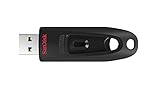
- Transfer speeds up to 10x faster than standard USB 2.0 drives (4MB/s); up to 130MB/s read speed; USB 3.0 port required. Based on internal testing; performance may be lower depending upon host device. 1MB=1,000,000 bytes
- Backward compatible with USB 2.0
- Secure file encryption and password protection(2)
The EE Times report was published on February 26, 2007, and describes the proposal and analyst reaction at that time. It does not establish what Samsung ultimately paid, whether the royalty arrangement changed, or how the dispute was resolved.
Quick Recap
Product prices and availability are accurate as of the date/time indicated and are subject to change. Any price and availability information displayed on Amazon at the time of purchase will apply.

