
Anyone can use a public automated external defibrillator (AED); you do not need prior training. If someone is unresponsive and not breathing normally—including if they are only gasping—call your local emergency number, start CPR, and use an AED as soon as it is available. The AED checks the heart rhythm and advises a shock only when indicated. Follow its prompts and keep everyone from touching the person during analysis or a shock.
Who is allowed to use a public AED?
A public AED is designed for use by bystanders, not just medical professionals or people with CPR credentials. Training is useful preparation, but it is not a prerequisite to helping. Turn the device on and follow its spoken directions; it will guide you through pad placement and rhythm analysis.
There is no minimum age to operate an AED, according to the American Heart Association (AHA). Children can help, but a child who cannot manage the device or is unsure what to do should call for help and get an adult rather than delay the response. The AHA quotes emergency medicine specialist Dr. Ashish Panchal saying, “A child can operate an AED.”
When should you use one?
Use an AED when a person is unresponsive and not breathing normally. Gasping or occasional irregular breaths are not normal breathing and can occur during cardiac arrest. Call emergency services, begin CPR, and get an AED. In the United States, call 911; elsewhere, use the local emergency number. The AHA explains the warning signs and response in What Is Cardiac Arrest?
#1 Best Overall

- Included Components: Heartstart Onsite Aed Defibrillator, Battery, Adult Smart Pads Cartridge, Setup
An AED is for suspected cardiac arrest, not for a person who is awake and experiencing chest pain. A heart attack and cardiac arrest are different emergencies: if someone is conscious with possible heart-attack symptoms, call emergency services and follow the dispatcher’s instructions rather than applying AED pads.
What to do, step by step
- Check for danger. Make sure it is safe to approach before touching the person.
- Check responsiveness and breathing. If the person will not respond and is not breathing normally, treat it as possible cardiac arrest.
- Call and delegate. Shout for help. Ask one person to call emergency services and another to retrieve the nearest AED. If you are alone, call and follow the dispatcher’s instructions while getting help.
- Start CPR. For an adult, push hard and fast in the center of the chest at 100–120 compressions per minute, to a depth of at least 2 inches. Keep interruptions as short as possible. The AHA’s Adult Basic Life Support guidance describes CPR and AED response.
- Turn on the AED and follow its prompts. Expose the chest, dry it if needed, and attach the pads as shown on the device or pads. Continue CPR while the device is being prepared if possible.
- Clear the person for analysis and shock. Make sure nobody is touching the person when the AED analyzes the rhythm or delivers a shock. Press the shock button only if the device tells you to do so.
- Resume CPR when prompted. Continue following the AED and dispatcher until the person shows signs of life or emergency responders take over.
Can an AED shock or hurt someone who does not need it?
The AED analyzes the heart rhythm before advising whether a shock is appropriate. That analysis is an important safeguard against an unnecessary advised shock; the device does not simply deliver one whenever someone presses a button. Follow the prompts, and do not touch the person during analysis or shock.
Rank #2
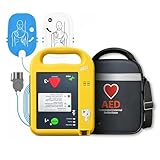
- Safety Precautions:Do not immerse in water . If accidental exposure is suspected, do not operate the unit until it has been properly inspected. The device is designed for use in dry environments only.
- Authorized Usage Parameters:This equipment is engineered to perform within defined technical specifications. For optimal performance and user safety, please ensure all applications align with the published guidelines. Any operation beyond these parameters or unauthorized adjustments may affect device functionality.
- Pre-Use Inspection Recommendation:For reliable performance, we recommend a quick visual inspection before each use. Check for any visible signs of wear, damage, or unusual conditions. If any component appears compromised, discontinue use and arrange for professional servicing before next operation.
- Proper Cleaning Instructions:Maintain hygiene by gently wiping surfaces with a damp, lint-free cloth. Avoid soaking or using excessive moisture during cleaning. Do not use harsh chemicals, abrasive materials, or immerse any part of the device in cleaning solutions.
- Storage and Handling Notes:Store in a clean, dry location within recommended temperature ranges. Regular visual checks help ensure the unit remains in ready condition when needed. The device should only be used as intended and specified in the user documentation.
That safeguard is not a promise that every action in every circumstance is harmless. Use the device only for a person who is unresponsive and not breathing normally, follow its instructions, and keep the scene safe. The AHA quotes Virginia Commonwealth University professor Dr. Mary Ann Peberdy saying, “People should not be afraid to use these devices.” Her reassurance is not a reason to ignore the prompts or basic safety steps.
What if CPR is already underway, or the emergency involves drowning?
Do not leave a person without CPR just to retrieve an AED if another bystander can get it. Ask someone else to bring the device while you continue compressions. Once it arrives, apply it promptly without allowing setup to create an unnecessary pause. The AHA’s five things to know about AEDs includes this advice.
Rank #3

- CLEAR GUIDANCE WHEN SECONDS COUNT: The bright LED display provides step-by-step visual prompts, heart-rhythm graphics, and device-status information to help users follow the AED operating sequence clearly.
- FIND IT FAST. GRAB IT. GO: The high-visibility orange housing and ergonomic carry handle make the AED easy to spot, grab, and transport when quick access is needed.
- INTUITIVE CONTROLS FOR CONFIDENT OPERATION: Clearly marked power and shock indicators, together with illuminated buttons, help users identify essential controls quickly during setup and operation.
- COMPACT FOR CONVENIENT PLACEMENT: Lightweight construction supports convenient storage and placement in offices, schools, gyms, and other designated locations.
- READY WHEN NEEDED: Built-in readiness indicators simplify routine status checks, while the complete system includes essential operating components for prompt setup and use. Follow the supplied manual for battery, pad, cleaning, storage, and replacement schedules.
After drowning, effective CPR that includes breaths and compressions is especially important. Shockable rhythms are less common in drowning-related cardiac arrest, so do not delay CPR with breaths to find or prepare an AED. Once the AED is available, follow its prompts and the emergency dispatcher. The AHA discusses drowning and other contexts in its Adult and Pediatric Special Circumstances of Resuscitation guidance.
Why it matters to act quickly
The AHA reported in September 2026 that more than 350,000 adults in the United States experience out-of-hospital cardiac arrest each year. It also reported that bystanders administer CPR about 40% of the time and that about 1 in 8 people whose cardiac arrest occurs in a public setting receive a bystander AED shock. These are broad AHA-reported figures, not a prediction of what will happen in an individual emergency.
Rank #4

- Philips HeartStart M5066A-C02BPB OnSite AED Defibrillator is a virtually ready to use emergency medical device for cases of suspected sudden cardiac arrest
- A portable heart defibrillator in a sturdy carry case; provides real-time CPR instructions and step-by-step voice prompts; also includes an AED wall sign, Fast Response Kit and Basic Cabinet
- Suitable for emergency use in all public environments including restaurants, offices, gyms, and airports and businesses of any size. Training not required for use. Device provides simple, intuitive instructions for people who have never used a defibrillator
- Philips defibrillators perform a daily, weekly and monthly self-test to eliminate the need for manual calibration. May be converted to an AED trainer with the use of Adult or Infant/Child Training Pads Cartridge (sold separately)
- Philips AEDs use advanced technology to respond to your actions, utilizing SMART Analysis to assess the heart’s rhythm, and a Quick Shock feature which allows the device to deliver a shock within 8 seconds. Post shock guidance on CPR will follow
Registry statistics use a different denominator: in CARES data for 2024, reported by the AHA, 47.7% of adult out-of-hospital cardiac arrests in the registry received bystander CPR and 7.9% received bystander AED use. CARES reported survival to hospital discharge of 10.5% and favorable neurological outcome of approximately 8.2% for that registry population. Registry coverage does not represent every U.S. cardiac arrest, and the 7.9% overall figure should not be confused with the AHA’s separate public-setting estimate.
Independent reader supportYour contribution helps us test, update, and keep practical guides available for everyone.Training and AED locations
A CPR/AED course can help you feel prepared, but do not wait for training before helping in an emergency. AED availability and emergency procedures vary by location. The AHA notes that PulsePoint lists registered AEDs, but not every device is registered, so a map or app may not show all nearby AEDs. Laws, emergency numbers, and device protocols can also differ outside the United States.
What’s actually slowing this PC down?
Pick the symptom - the matching free tool is one click away.
Quick Recap
Best Value

- Philips HeartStart Home and OnSite AED Defibrillator Long Life Replacement Battery, a back-up power source for your Philips HeartStart FRx, OnSite or Home defibrillator
- A high-quality, disposable, lithium manganese dioxide battery with a five-year shelf life (four-year lifespan once installed)
- Make sure your Philips device is always ready by having a spare or replacement battery to hand
- What’s in the box: 1 Philips HeartStart Long Life LiMN02 Replacement Battery
- Please contact Philips directly with any questions regarding the performance or operation of your HeartStart products. Replacements are permitted for warranty purposes only
Product prices and availability are accurate as of the date/time indicated and are subject to change. Any price and availability information displayed on Amazon at the time of purchase will apply.

