
256MB of PC2100 DDR is faster in raw memory bandwidth and usually wins when 256MB is enough. But 512MB of PC133 CAS2 SDRAM can make a memory-starved computer feel faster if the smaller configuration forces Windows or another operating system to page data to disk. The right choice depends on the motherboard, processor, operating system and workload—not just the memory label.
What the specifications mean
PC133 SDRAM transfers data once per 133MHz clock cycle. PC2100 DDR SDRAM uses a 133MHz base clock but transfers data on both clock edges, giving it an effective rate of 266 million transfers per second (266 MT/s). In a typical desktop configuration, both use a 64-bit memory bus.

| Memory | Base clock | Effective transfer rate | Theoretical peak bandwidth |
|---|---|---|---|
| PC133 SDRAM | 133MHz | 133 MT/s | About 1.064GB/s |
| PC2100 DDR | 133MHz | 266 MT/s | About 2.128GB/s |
Those theoretical figures come from multiplying the transfer rate by eight bytes per transfer on a 64-bit bus. PC2100 therefore offers roughly twice PC133’s peak bandwidth; “PC2100” refers to approximately 2.1GB/s, not to a promise that applications or the whole computer will run twice as fast. Tom’s Hardware’s bandwidth comparison and Texas Instruments’ DDR application report describe the bandwidth and DDR terminology.
Does CAS2 make PC133 faster?
CAS is one part of a memory timing sequence, not a complete measure of access time or system speed. CAS2 PC133 is preferable to CAS3 PC133 when the rest of the configuration is comparable, but that timing advantage does not cancel DDR’s higher transfer rate. PC2100 modules were commonly rated CAS2.5; whether a particular module can run at CAS2 depends on the memory, motherboard, BIOS settings and stability.
Do not compare “2” and “2.5” as if they were direct overall speed ratings: CAS is expressed in clock cycles, and performance also depends on timings such as RAS-to-CAS delay and precharge, plus the memory controller and access pattern. In AnandTech’s tests on a Pentium III platform, changing PC133 from CAS3 to CAS2 improved Content Creation Winstone 2000 by less than 2% and Quake III Arena by about 3%. That illustrates that tighter timing can help without transforming application performance. AnandTech’s PC133 SDRAM results report those measurements; its Socket-A chipset comparison discusses PC2100 timing ratings.
Why capacity can matter more than bandwidth
If the operating system and active applications need more memory than the 256MB DDR system has available, the system can move less-active data to its paging file or swap space on storage. Storage access is far slower than DRAM, so paging can cause pauses, stuttering and sluggish task switching. In that situation, the extra capacity in 512MB PC133 can outweigh DDR’s bandwidth advantage.
Rank #2

- [STABLE PERFORMANCE AND SPEED] with high-quality chips for efficient operation
- [INCREASED COMPUTER SPEED] thanks to 266MHz memory speed for convenience
- [1G CAPACITY] Provides powerful performance and storage for everyday tasks
- [COMPATIBLE WITH /] motherboards for versatile use
- [DURABLE AND PORTABLE] Design with circuit module board
If the workload fits in 256MB, unused capacity does not inherently make a program faster. In that case, the DDR configuration has the bandwidth advantage, although the application may not be sensitive enough to memory throughput for the difference to be large.
The processor and motherboard change the result
Pentium III or Celeron with a 133MHz front-side bus
A Pentium III-era system may not use all of DDR’s extra bandwidth. The processor’s front-side bus, chipset and memory controller can limit how much data reaches the CPU. Historical Pentium III testing found some improvement from DDR but also noted that the platform constrained its potential. Hartware’s Pentium III DDR test documents that platform-specific result; it does not mean a Pentium III cannot benefit at all.
The Tool Desk
Outbyte PC Repair FREERepair Windows errors before they cause bigger problemsFix Now →Outbyte Driver Updater FREEScan for outdated or missing drivers - takes under a minuteDriver Scan →Rank #3
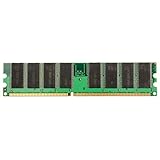
- Computer Components Memory - Pins: 184-Pin
- Form Factor: DIMM
- Speed: 266MHz
- Memory Specifications: PC-2100
- 1GB DDR-266 PC-2100 184pins Non-ECC Desktop Memory RAM - Computer Components Memory - 1x 1GB PC-2100 SDRAM Desktop Memory Ram
Athlon or Athlon XP DDR platform
A DDR-capable Athlon or Athlon XP system is generally a more natural match for PC2100. Chipsets designed for DDR, including AMD 760 and VIA KT266/KT266A, can make better use of its bandwidth than a PC133-oriented board. This still does not imply a twofold application-speed increase.
Integrated graphics
Integrated graphics shares system memory, making memory bandwidth more consequential than it may be with a separate graphics card. DDR is often the better performance choice in an otherwise suitable system, but the result still depends on the chipset, processor, graphics workload and available memory capacity.
Rank #4

- Capacity: 2GB 2 X 1GB Kit
- Form Factor: 184 pin DIMM
- Warranty: Lifetime
- FOR SERVERS ONLY
Existing computer or new platform?
PC133 SDRAM and PC2100 DDR are different memory standards and normally cannot be swapped in the same slot. If you already own a PC133 board, adding compatible SDRAM is a memory upgrade; moving to DDR usually means choosing a different motherboard and potentially a different CPU. For that reason, the meaningful comparison may be between complete systems rather than two sticks of memory.
Choose according to the work you do
- Windows 98 gaming and modest desktop use: 256MB PC2100 DDR is usually the faster choice if the system and games fit within that capacity. Game performance also depends on the CPU, graphics card, game engine and chipset.
- Windows 2000 multitasking: 512MB PC133 may be preferable if your applications and background tasks push usage beyond 256MB. The operating system alone does not determine the answer; workload does.
- Office work and light use: If memory demand stays within 256MB, DDR has the throughput advantage, but CPU limits or cache-friendly software may make the practical gain small.
- Video editing, image work, large spreadsheets or compiling: Choose 512MB if the project routinely exceeds 256MB. If both configurations have enough memory, DDR may help a bandwidth-sensitive workload; CPU speed, storage and software can also set the pace.
- Synthetic bandwidth tests or large data transfers: 256MB PC2100 DDR should lead when the platform can use its bandwidth.
- Integrated graphics: Favor DDR when the board supports it and capacity is sufficient, because graphics activity competes for system memory bandwidth.
Historical discussions reported results ranging from small single-digit differences to larger gains in selected applications, but those figures came from different platforms and workloads, not one controlled universal comparison. AnandTech forum reports are useful as period context, not as a reliable prediction for every system. In cache-friendly workloads, the CPU’s on-die cache can also reduce sensitivity to memory timing, as AnandTech observed in its PC133 testing.
Do these 3 things before closing this tab:
1Clear out junk files and repair common Windows errors2Fix the driver behind crashes, sound loss and screen glitches3Repair Windows errors before they cause bigger problemsBest Value

- Capacity: 4GB 4 X 1GB Kit
- Form Factor: 184 pin DIMM
- Warranty: Lifetime
- FOR SERVERS ONLY
Check compatibility before buying
Older motherboards may not recognize every nominal 512MB PC133 DIMM at full capacity. Chip density, rank or bank organization, BIOS support and chipset limits can make a module incompatible or cause only part of it to be detected. This is particularly relevant to older 440BX-era hardware. Before buying, check the exact motherboard manual and BIOS support for:
- Maximum total memory and maximum capacity per slot;
- Supported DIMM chip density, rank and single- or double-sided organization;
- ECC or registered-memory requirements;
- Supported memory type and speeds, plus any BIOS revision needed.
Retro-computing users continue to report capacity and density problems with older boards; these reports illustrate why the exact board and DIMM layout matter, rather than establishing compatibility for a particular machine. See the reported PC133 compatibility issue and this 440BX memory discussion.
Quick Recap
Quick decision guide
| Your situation | Likely better choice | Why |
|---|---|---|
| DDR-capable Athlon or Athlon XP system, with enough RAM for the workload | 256MB PC2100 DDR | The platform can make better use of DDR bandwidth. |
| Existing PC133 motherboard that supports the proposed DIMM | 512MB PC133 CAS2 | It is a practical capacity upgrade without replacing the platform. |
| Workload runs out of memory at 256MB and pages to disk | 512MB PC133 | Avoiding paging can matter more than peak bandwidth. |
| 256MB is sufficient and the test measures memory throughput | 256MB PC2100 DDR | Its theoretical peak bandwidth is about twice PC133’s. |
| Older board with uncertain 512MB DIMM support | Verify compatibility before choosing | Capacity and module organization may prevent full detection or booting. |
Product prices and availability are accurate as of the date/time indicated and are subject to change. Any price and availability information displayed on Amazon at the time of purchase will apply.

