
For smoother gaming on Intel Arc, first stabilize the game’s actual rendered frame rate with its own graphics and resolution settings. Then, if the game supports them, test XeSS Super Resolution, Frame Generation, and Xe Low Latency for their separate benefits. There is no single best Arc setting: game support, GPU, driver, operating system, and display all affect what you can use and how it feels.
Start with a stable rendered frame rate
Frame Generation cannot fix a game that already feels erratic. Begin with the game’s normal rendering and aim for consistent performance in the scenes you play. If the frame rate is low or uneven, reduce demanding graphics options or render resolution, then compare again in the same scene or built-in benchmark.
There is no evidence-based universal shadow, texture, or ray-tracing setting that guarantees smoother play across all games and Arc systems. Change one option at a time so you can tell whether it improves consistency without an unacceptable image-quality cost.
Choose XeSS Super Resolution for image quality versus performance
XeSS Super Resolution renders the game at a lower resolution and upscales the image. When the game offers it, compare Quality, Balanced, and Performance presets. Intel describes these as trade-offs between performance and image precision; the visual result and frame-rate change depend on the game’s implementation and your hardware. Intel’s XeSS on Arc Graphics guide explains the preset trade-off.
Crashes, No Sound, or Screen Glitches?
Random freezes, missing sound and display glitches usually trace back to one bad driver. Find and replace yours safely.Free scan · under a minutePC Slower Than It Used to Be?
A free scan shows the junk files, broken settings and background clutter dragging Windows down - then fixes them in one click.Free scan · Windows 10 & 11#1 Best Overall

- Next-Gen Intel Arc Graphics: Powered by Intel Arc A580 GPU with Intel Xe HPG microarchitecture, featuring 384 XMX engines for enhanced AI acceleration and content creation.
- High-Performance Memory: 8GB GDDR6 on a 256-bit interface running at 16 Gbps, delivering excellent bandwidth for 1440p gaming and creative workloads.
- Factory Overclocked: Engine clock set at 2000 MHz out of the box, providing optimized performance for smooth gameplay and multimedia tasks.
- Advanced Dual-Fan Cooling: Features a dual-fan design with striped axial fans and an ultra-fit heatpipe for efficient thermal management. 0dB Silent Cooling stops fans completely at low temperatures for silent operation.
- Durable Construction: Includes a stylish metal backplate for enhanced PCB rigidity and a premium aesthetic, backed by ASRock's Super Alloy components for long-term reliability.
Try the highest-quality preset that gives you the consistency you need. If the image looks too soft or unstable, move toward a higher-quality preset or native rendering; if performance remains the priority, test a more performance-oriented preset. Judge the result in motion as well as in a still frame.
Use Frame Generation only after the base game is running well
XeSS Frame Generation (XeSS-FG) creates additional frames between rendered ones to make motion appear more fluid. Those generated frames do not make the game render its underlying frames faster, so establish a stable base first. Intel’s XeSS-FG developer guide recommends an input target of 60 FPS and gives 40 FPS as a minimum target for its implementation. These are Intel recommendations, not a guarantee that every game will feel smooth at either rate.
Rank #2

- System Compatibility Note: This 2-slot card measures 271 x 112 x 39 mm and requires a single 12V-2x6-pin power connector. Please verify chassis and PSU compatibility before purchase.
- Dedicated Support: Please contact us directly through Amazon for any product questions or assistance you may require.
- Professional Intel Arc Pro B70 GPU: Built on the Intel Xe2-HPG architecture, it features 32 Xe cores and 256 XMX engines, designed to accelerate AI, rendering, and complex visualization workloads.
- Massive 32GB GDDR6 VRAM: Equipped with 32GB of high-speed GDDR6 memory on a 256-bit bus, running at 19 Gbps, which allows for handling large AI models and complex datasets locally.
- High-Performance Engine Clock: Delivers an engine clock of 2540 MHz, providing the compute power needed for demanding professional applications and AI inference.
After enabling Frame Generation, assess both motion and control response. Generated frames can improve perceived fluidity, but they are not the same as lower input latency. If the game also provides Xe Low Latency (XeLL) or another latency setting, test it when responsiveness matters. XeLL is designed to reduce input-to-screen latency; it performs a different job from Frame Generation. Intel describes its gaming technologies and their distinct roles on its Arc Graphics Gaming Technologies page and XeSS developer page.
Intel says XeSS-FG supports fixed-refresh and variable-refresh-rate (VRR) modes. It also notes that motion blur may need to be disabled or adjusted when generated frames are used. Try the game’s blur and display options rather than assuming one V-Sync setting is best for every combination of game, monitor, and frame rate. A VRR-capable gaming monitor is relevant only if you want to use VRR; it is not required to apply the core settings advice.
Recommended Free Tools
Rank #3
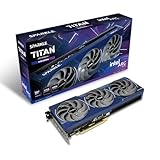
- OC Edition Boost Clock: 2760MHz
- TORN Cooling 2.0
- Metal Backplate
- Blue Breathing Light
- Graphic card sag bracket
Check game, GPU, driver, and operating-system support
These features appear only when a game implements them and the system meets the relevant requirements. Intel’s feature overview lists game availability, while the XeSS-FG guide documents requirements that include DirectX 12, supported Windows 10 or 11 versions, Intel Arc graphics with XMX, a minimum driver version, and XeLL requirements. Consult the current Intel documentation and the game’s support notes because compatibility can vary and change over time.
Update the graphics driver for your exact Arc device and review its release notes if a feature is missing or behaving unexpectedly. For example, Intel’s February 13, 2026 release notes for driver 32.0.101.8509 describe expanded XeSS 3 Multi-Frame Generation support for named Arc B-Series and A-Series discrete GPUs and several Core Ultra integrated Arc platforms. That list does not establish support for every Intel GPU. Read the release notes and verify your specific model.
Rank #4

- System Compatibility Note: 2‑slot ITX card, 169.9x123.5x39.2mm, single 8‑pin power, recommended 500W PSU. Verify chassis clearance before purchase.
- Dedicated Support: Please contact us directly through Amazon for any product questions or assistance you may require.
- Intel Arc A380 GPU: Powered by Intel Xe architecture with 6GB GDDR6 on 96‑bit bus – ideal for compact gaming, HTPC, and media builds.
- 2250MHz GPU Clock: Factory overclocked core delivers solid performance for esports titles and everyday creative tasks.
- Small Form Factor ITX Design: Compact 2‑slot card fits easily into mini‑ITX and small form factor cases without sacrificing performance.
A practical order for testing settings
- Update and verify: Install the current driver for your Arc hardware, then check Intel’s feature documentation and the game’s notes for support.
- Establish a baseline: Play a repeatable scene or run the game’s benchmark with your usual settings. Note whether the rendered frame rate is low or inconsistent.
- Stabilize rendering: If needed, lower demanding graphics options or render resolution one change at a time, retesting the same scene.
- Compare XeSS Super Resolution: Test the available Quality, Balanced, and Performance presets, weighing clarity against consistent performance.
- Test Frame Generation: Enable it only if the game and system support it and the base frame rate is viable. Compare motion smoothness and input response separately; try XeLL or the game’s latency option if available.
- Check display presentation: Test fixed or VRR mode as supported by your setup, and adjust motion blur if generated frames make the presentation look worse.
What older Arc performance figures can—and cannot—tell you
Intel Gaming Access reported that an August 2023 Arc driver update delivered 19% better average frame rates and 20% smoother average frame delivery in a set of DirectX 11 games. These are Intel-reported results for that update and game set, not a forecast for an individual PC or a guarantee that a driver update will produce the same gains. See Intel’s report.
Quick Recap
Product prices and availability are accurate as of the date/time indicated and are subject to change. Any price and availability information displayed on Amazon at the time of purchase will apply.
Do these 3 things before closing this tab:
1Scan for outdated or missing drivers - takes under a minute2Repair Windows errors before they cause bigger problems3Fix the driver behind crashes, sound loss and screen glitches
