
Track the coffee, method, dry dose, water mass and ratio, grinder and setting, brew time, taste, and your next adjustment for every brew. Add temperature, pour structure, water, filter, or measured extraction details when they matter to the method or the question you are testing. A useful journal is repeatable, not exhaustive.
What to record in every brew entry
Use the same core fields each time so you can compare brews. A notebook or digital note is enough; you do not need a specialized journal.

- Date brewed and coffee: Record the roaster or origin if known, roast date, and any variety, processing, or roast-level information stated on the bag. Do not guess at details that are not provided.
- Method and equipment: Name the brewer and filter, and record the grinder. Method matters: a pour-over entry may need bloom and pour details, while an immersion brew may need steep time and agitation.
- Dose and water: Weigh the dry coffee and brewing water, then note the ratio using one consistent convention, such as grams of coffee per liter of water or a coffee-to-water ratio. The Specialty Coffee Association’s Brewing Best Practices search extract gives 55 g/L ± 10% as a Golden Cup reference; treat it as a reference point, not a universal recipe for every method or preference.
- Grind: Write down grinder make or model and its setting. A setting number is meaningful only alongside the grinder because numbers do not transfer reliably across grinders. Note clumping or uneven flow only if you observed it.
- Time: Record total brew or contact time and method-specific stages such as bloom or drawdown. If the brew has distinct stages, note their durations rather than relying only on one total.
- Taste and preference: Keep a short, consistent note on strength, acidity or sourness, sweetness, bitterness, body, clarity, and overall preference. Separate what you taste from how much you like it: descriptive qualities and personal preference are not the same measurement.
- Change and next step: State what you changed from the previous brew and what you plan to change next. This is what turns a list of recipes into a useful record.
What to add when it helps explain the result
Water temperature and pour technique
Record water temperature at the point of use when you can. For pour-over, note the bloom water amount and duration, pour count or schedule, and any stirring, swirling, or other agitation. These details can affect wetting and flow. The SCA’s Brewing Best Practices extract includes temperature, turbulence, and contact time among brewing considerations.
Temperature is worth tracking, but do not interpret it in isolation. An SCA interview about UC Davis research describes hot drip coffee brewed at 87°C, 90°C, and 93°C using a representative wet-processed Honduran Arabica. Under those experimental conditions, tasters could not distinguish brews when final brew strength and extraction yield were held constant, even though temperature affected how quickly extraction occurred. The result is not a claim that temperature never matters, nor that it generalizes automatically to espresso, immersion, cold brew, or every coffee. See the SCA interview with Professor William Ristenpart for the study context.
#1 Best Overall

- Easily dial-in your espresso with this notebook you'll love using every day
- Never waste your favourite coffee beans re-dialling in again
- Improve your espresso shots every day as your Brew Ledger helps you use your machine to its full potential
Water source and filter
Note the water source or recipe if known, plus the filter type or material. These can help explain differences between otherwise similar brews. The SCA best-practices extract identifies water quality and filter media as relevant considerations; its search extract is the basis for the cited ratio reference above.
Measured results: TDS and extraction yield
If you have the equipment and want to investigate more deeply, record total dissolved solids (TDS) and extraction yield. TDS describes dissolved material in the brewed drink; extraction yield is the fraction of the coffee grounds transferred into the liquid. They are related to brew ratio, but they are not interchangeable. A refractometer can support TDS measurement, and extraction yield requires the appropriate calculation. Do not enter estimated numbers as though you measured them.
The SCA’s discussion of brewing charts and sensory research distinguishes these measures from sensory description and preference. It also notes that a chart can oversimplify flavor by collapsing diverse outcomes into a few labels. A measured value can help you compare brews, but it does not decide whether you enjoy one.
How to make entries useful for learning
- Choose one goal. Decide what you want to change, such as more strength, less bitterness, or a flavor you prefer.
- Keep other inputs steady where practical. Use the same coffee, brewer, and preparation details as a baseline, while recognizing that brewing variables can interact.
- Change one controllable input. For example, adjust grind while keeping dose and water mass the same. Record the change plainly.
- Describe the result. Note what you taste and separately whether you like the result. If you use measurements, record only values you actually measured or calculated.
- Choose the next adjustment. Use your own preference and observations rather than treating a chart or target as a universal quality score.
This approach makes a comparison easier to interpret, though one change can affect several outcomes. The SCA’s brewing-chart discussion explains why descriptive sensory attributes and consumer liking should not be collapsed into a single score.
The Tool Desk
Outbyte PC Repair FREERepair Windows errors before they cause bigger problemsFix Now →Outbyte Driver Updater FREEScan for outdated or missing drivers - takes under a minuteDriver Scan →Rank #3
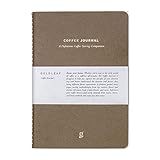
- BUILT FOR COFFEE PROFESSIONALS - Designed for baristas, roasters, and serious brewers to log origin, roast, grind, and brew variables with precision.
- ADVANCED TASTING FRAMEWORK - Guided entries include cupping forms, flavor descriptors, and detailed sensory scoring to sharpen palet consistency.
- INCLUDES BREWING REFERENCE GUIDE - Practical insights for dial-in methods, extraction ratios, water temp, pressure, and brew time across all major methods.
- PREMIUM CONSTRUCTION - Elegant and durable coffee journal built to withstand daily use in cafés and labs-crafted with thick pages and a minimalist layout.
- IDEAL FOR TRAINING & TEAMS - Use as a barista training tool or quality log to document experiments, seasonal blends, or competitive cuppings.
A simple brew-journal template
Copy this into a notebook or notes app, then add optional fields only when relevant:
- Date / coffee:
- Method / brewer / filter:
- Grinder / setting:
- Coffee dose / water mass / ratio:
- Water temperature:
- Pour or agitation details:
- Total time / stage times:
- Taste / preference:
- What changed / next adjustment:
- Optional measured TDS / extraction yield:
A digital coffee scale with a timer can make dose, water, and time easier to record, but it is optional. A refractometer is likewise an advanced option for measuring TDS, not a prerequisite for a useful journal.
Rank #4

- 【A perfect gift for coffee lovers】Crafted with an elegant embossed leather cover, soft touch, and premium texture. A5 size (16 × 21 cm), includes 1 gel pen. Perfect for Christmas, birthdays, and celebrations.
- 【Reinforced Binding, Built to Last】 Strong stitched binding enhances durability and prevents cracking or page loss. The spine also doubles as a convenient pen holder for added practicality.
- 【100 GSM Thick Paper, No Bleed-Through】 Made with 100 GSM acid-free paper, 288 pages total. Resists ink bleed-through, ghosting, and shadowing—ideal for various pens and smooth writing.
- 【Thoughtful Functional Details】 Includes a ribbon bookmark for easy page marking, an elastic closure band for secure fastening, and an inner pocket for cards, notes, and receipts.
- 【Versatile Use & Ideal Gift】 Perfect for work, study, meetings, and journaling. Suitable for professionals and students. A practical and thoughtful gift for friends, family, and colleagues.
Which records can stay minimal?
For an everyday log, start with coffee, method, dose, water, grind, time, taste, and next adjustment. Add temperature, bloom and pour structure, water source, filter, or measurement fields when you are comparing those factors or when your method makes them important. The SCA standards index lists home coffee brewer and grinder certification standards SCA-310 and SCA-320 as member-access items; this journal template is not a reproduction of those specifications. See the SCA standards index.
Quick Recap
Best Value
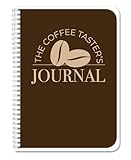
- Made in USA - Proudly produced in Ohio by a Veteran-owned business
- Track your coffee journey: The Coffee Taster’s Journal allows you to record detailed information about the coffees you try, from the bean origin and roast to the flavor profile and aroma. This can help you track your preferences and identify the types of coffee you enjoy most.
- Become a coffee connoisseur: By recording your tasting experiences, you'll start to develop a more refined palate and be able to identify subtle differences in coffees. You'll be able to distinguish between different bean origins, roasts, and brewing methods.
- Durable translux cover great for travel: Our unique cover is a semi-rigid transparent cover that leads to a sturdy book that resists stains and wrinkles. Regardless where you taste your coffee, this 5” x 7” book is a great size for travel and won’t rip or tear in your bag.
- Reorder SKU: JOU-100-57CW-PP(Coffee-Tasting)
Product prices and availability are accurate as of the date/time indicated and are subject to change. Any price and availability information displayed on Amazon at the time of purchase will apply.
Do these 3 things before closing this tab:
1Repair Windows errors before they cause bigger problems2Scan for outdated or missing drivers - takes under a minute3Clear out junk files and repair common Windows errors
