
What’s actually slowing this PC down?
Pick the symptom - the matching free tool is one click away.
There is no universal VPS CPU or RAM specification that guarantees a stable 24/7 YouTube stream. The right server depends first on whether it only relays an already encoded feed or also encodes, composites, or renders video. Choose the stream format, calculate sustained outbound bandwidth with headroom, then test the actual workload on the VPS.
Start by defining what the VPS has to do
A VPS that forwards an already encoded feed has a different workload from one that encodes video or composites scenes. Before choosing a plan, record:



- How many simultaneous streams you will run.
- Output resolution, frame rate, codec, and target bitrate.
- Whether the server relays a pre-encoded feed or performs encoding, overlays, scene composition, or other processing.
- Whether the source is live or a prerecorded video loop.
OBS notes that CPU requirements vary with encoder, resolution, frame rate, and scene complexity. That is why a generic vCPU count cannot guarantee a working stream. OBS System Requirements
Calculate the network capacity you need
Use YouTube’s recommended ingest bitrate for your exact codec and format as the starting point for each stream. YouTube recommends 20% spare upload bandwidth and says the total stream bitrate must not exceed available upload bandwidth. For a VPS, apply that headroom to sustained outbound capacity, then check the provider’s continuous-transfer allowance and throttling terms. YouTube Help: Streaming tips
#1 Best Overall
For example, a 1080p60 H.264 stream has a recommended ingest bitrate of 17 Mbps. With 20% headroom, plan for at least 20.4 Mbps of sustained outbound capacity for that stream, before accounting for other traffic. For multiple simultaneous streams, add their outbound bitrates before applying headroom. A port’s advertised peak speed alone does not establish that continuous egress is permitted.
YouTube’s H.264 bitrate recommendations
| Output | Recommended bitrate |
|---|---|
| 720p, 30 fps | 8 Mbps |
| 720p, 60 fps | 8 Mbps |
| 1080p, 30 fps | 14 Mbps |
| 1080p, 60 fps | 17 Mbps |
| 2160p (4K), 30 fps | 42 Mbps |
| 2160p (4K), 60 fps | 50 Mbps |
These are YouTube ingest recommendations, not VPS CPU requirements. YouTube’s recommendations differ for AV1 and H.265/HEVC, so consult its current encoding settings for the specific codec, resolution, and frame rate you plan to use.
Choose compute for the encoding path, not by guesswork
If the VPS only forwards an encoded feed, it does not need to perform the same video-encoding work as a server running a software encoder or composing scenes. If it encodes or processes video, test that exact configuration on the intended instance rather than assuming a particular number of cores or memory will be enough.
A compatible hardware encoder can move encoding work off the CPU, but a generic VPS listing that mentions vCPUs does not establish GPU availability or encoder compatibility. OBS explains the difference in its hardware encoding guidance. A GPU VPS is worth considering when your workload needs hardware encoding and the provider confirms the relevant encoder is available; it is not a universal requirement for streaming.
The Tool Desk
Outbyte Driver Updater FREEScan for outdated or missing drivers - takes under a minuteDriver Scan →Outbyte PC Repair FREERepair Windows errors before they cause bigger problemsFix Now →Rank #3
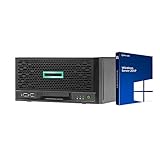
- HP MicroServer Gen10 Plus Tower Server for Business with Microsoft Windows Server 2019 OS!
- Intel Xeon E-2224 Quad-Core 3.4GHz 8MB CPU, Up To 4.6GHz Turbo
- 32GB (2 x 16GB) DDR4 PC4-21300 2666MHz Unbuffered Memory
- 16TB (4 x 4TB) 7.2K 6Gb/s SATA 3.5" HDDs in RAID
- Hard drives and memory upgrades included separately NOT installed, installation required.
Test the real workload before relying on it
- Start with a trial or short-term instance, if available. Configure the same encoder, relay, resolution, frame rate, codec, and bitrate you intend to use.
- Use representative content. Include motion and audio similar to the actual stream; a static test image may not reveal the workload’s demands.
- Watch the server and stream together. Monitor sustained CPU and memory use, dropped frames, YouTube stream health, and any messages from YouTube.
- Adjust if the test is unstable. Increase capacity or revise the encoding path if the VPS is saturated or the stream health deteriorates, then repeat the test.
- Check continuous-operation terms. Before purchasing, review the provider’s transfer limits, throttling rules, restart controls, support, and service terms. These vary by provider; neither YouTube nor OBS defines a universal VPS uptime guarantee or failover setup.
YouTube advises testing with audio and motion like the intended event and monitoring stream health. OBS also cautions that meeting basic compatibility requirements does not guarantee successful streaming. YouTube streaming tips · OBS System Requirements
YouTube connection settings that affect the stream
YouTube’s listed RTMP/RTMPS guidance supports H.264, H.265/HEVC, or AV1 video up to 60 fps, AAC or MP3 audio, constant-bitrate encoding, and a recommended two-second keyframe interval (no more than four seconds). YouTube recommends RTMPS for encrypted transport to its servers. These are output and ingest settings; they do not specify VPS CPU or RAM.
Rank #4
For prerecorded loops, a VPS is not the only route
If your goal is to keep uploaded videos looping on YouTube rather than to run custom server-side processing, a managed cloud service may avoid administering a VPS. YouTube’s verified encoder directory lists Gyre as a cloud-based tool for 24/7 prerecorded streaming; that listing does not establish its current plan details or whether it suits every workflow. YouTube encoder directory
StreamNeo is another option for YouTube prerecorded-video loops: upload a recording or build a playlist, add your YouTube stream key, and go live while the cloud loops it. Its slots include one always-on stream, 10 GB storage per slot pooled across active slots, playlists, automatic recovery if YouTube drops the stream, and team support. The uploaded video streams as made, up to 4K 60fps, at one flat price per slot; there are no quality tiers. StreamNeo does not go live from a camera and streams to YouTube only.
Recommended Free Tools
Best Value
Or let it run in the cloud
For a prerecorded YouTube stream, StreamNeo means no computer or home connection has to stay on. Upload a video or make a playlist, add the YouTube stream key, and go live. It streams at the quality you uploaded, up to 4K 60fps, for one flat price per slot; if YouTube drops the stream, StreamNeo automatically recovers. The first day is free with no card required. Monthly pricing is $9.99 per month. StreamNeo offers UPI and cards in India, card checkout worldwide, and billing periods from a day to a year; contact support for five or more slots. Start the free first day with StreamNeo.
Cost and capacity checks before you commit
For a self-managed VPS, compare the full cost of the compute plan, sustained outbound transfer, any GPU or compatible encoder access, and the provider’s limits for continuous use. An apparently inexpensive instance may not fit if its transfer allowance or throttling policy conflicts with a 24/7 workload. The required configuration depends on your stream format, number of simultaneous streams, encoding path, and the provider’s actual compute and egress characteristics; official YouTube and OBS guidance does not establish a universal minimum vCPU or RAM figure.
Quick Recap
Product prices and availability are accurate as of the date/time indicated and are subject to change. Any price and availability information displayed on Amazon at the time of purchase will apply.

