
Free tools Windows power users keep installed
One-click scans. No signup required.
If your household cannot count on piped water, first identify where the water comes from, when it is available, and whether it has been tested. Ask your local water or public-health authority what treatment is appropriate for that source and its likely hazards. If treatment is needed, pair it with clean, covered storage and careful dispensing: storage helps prevent recontamination, but it does not purify water.
What does “no reliable piped-water supply” mean?
It may mean there is no household connection, the supply runs only intermittently, or water arrives but its quality is uncertain. These are different problems, and the right response depends on the source, local water-quality risks, how much water the household needs, and how it is collected and stored.
The WHO/UNICEF Joint Monitoring Programme (JMP) defines a safely managed drinking-water service as one that uses an improved source, is on premises, is available when needed, and is free from contamination. When one or more of those conditions is missing, an improved source within a 30-minute round trip is classed as a basic service; a longer collection time is classed as limited. Unprotected wells and springs are unimproved sources, while rivers, lakes, streams, dams, and canals are surface water. These categories describe service levels; an “improved” label alone does not prove that water at your home is safe. JMP drinking-water monitoring
In the JMP’s 2023 update, an estimated 2.2 billion people—27% of the global population—lacked safely managed drinking water in 2022. Of these, 703 million lacked even basic service: 292 million walked more than 30 minutes to collect water, 296 million used unprotected sources, and 115 million took untreated water from rivers or lakes. JMP drinking-water monitoring
#1 Best Overall
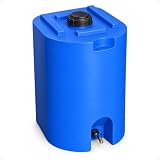
- Large Water Tank: Whether you're camping, hiking, or embarking on a road trip, rely on the 55-gallon water tank to meet your liquid storage needs with ease
- Safe Design: Specially blended UV-proof plastic safeguards water, preventing bacteria build-up, and ensuring its safety for extended periods
- Durable Container: Drum constructed from rugged high-density polyethylene (HDPE), ensuring durability for on-the-go liquid storage needs
- Integrated Spigot: Easy access to emergency water with a spigot that connects to standard garden hoses for versatile use
- Stackable Design: Water tanks have a unique stackable design, allowing for efficient space utilization; Measures 22"L x 23"W x 30"H
What should we assess first?
Write down the details below before contacting a local water or public-health authority. This helps them give advice relevant to your actual source and circumstances.
- Source: Is it a borehole, protected well or spring, rainwater collection, vendor or tanker delivery, public tap, or surface water?
- Availability: When does water arrive, how often does it stop, and how long can the household go without a new supply?
- Collection: How far is the source, and how long does a round trip take?
- Handling: Do you transport or store water? In what type of container, and how is it poured or dispensed?
- Change or concern: Has the water’s appearance, smell, or taste changed suddenly? Is anyone ill, or is chemical contamination suspected?
Appearance, smell, and taste cannot establish that water is safe. If someone is ill, chemical contamination is suspected, or water quality changes suddenly, seek prompt advice from local public-health officials rather than relying on a household guess or a consumer test kit.
Rank #2

- LARGE-CAPACITY WATER STORAGE (55 GALLONS): Store enough emergency drinking water for a family of four for up to two weeks. Perfect for preparedness, camping, off-grid living, or disaster response.
- SPACE-SAVING STACKABLE DESIGN: Engineered to stack securely and safely, giving you big-tank capacity without taking up extra floor space—ideal for garages, basements, or sheds.
- ROBUST DESIGN: Manufactured from high-quality rotationally molded polyethylene that’s safe for long-term potable water storage and built to withstand decades of use.
- EASY FILLING, DRAINING & CLEANING: Includes a 5-inch twist lid for quick filling and internal cleaning, plus a built-in brass spigot for simple dispensing and water rotation.
- BUILT TO LAST: Backed by over 70 years of tank-manufacturing experience, our emergency water tanks are tested for strength, leak integrity, and safety—so you can rely on them when it matters most.
How do we make collected water safer to drink?
Ask the local water or public-health authority which tests and treatment are appropriate for the source and the hazards in your area. Treatment is not one-size-fits-all: boiling, a filter, or a consumer test kit should not be assumed to address every microbial and chemical contaminant. If the cause of a quality problem is unknown, ask for local assessment before choosing a treatment method.
WHO identifies household water treatment and safe storage (HWTS) as an important intervention for people relying on unimproved sources and, in some cases, unsafe or unreliable piped supplies. The treatment needs to match the water-quality problem; the storage and handling steps then help protect treated water from contamination. WHO: Drinking-water
Outdated Drivers Are Slowing You Down
One free scan finds every outdated or missing driver and matches the right update for your exact hardware.Free scan · exact hardware matchPC Slower Than It Used to Be?
A free scan shows the junk files, broken settings and background clutter dragging Windows down - then fixes them in one click.Free scan · Windows 10 & 11Rank #3

- Drinking Water Storage: Whether you're camping, hiking, preparing for emergencies, or embarking on a road trip, rely on this 35-gallon water tank to provide liquid storage at the ready.
- Durable Build: Specially blended UV-proof plastic safeguards water, helps avoid sunlight penetration, and ensures drinking water withstands storage for extended periods.
- Portable Design: Weighing only 16 pounds empty, the 35 gallon horizontal tank features 2 handles and a compact footprint suitable for ATV or camping trailer attachment.
- Built-In Spigot Convenience: Designed with a spigot that connects to a standard garden hose, eliminating the need for a siphon or pump for water retrieval.
- Transport Security: Equipped with 2 built-in strapping points and handles for effortless mobility when empty and secure transport when full.
Nearly 2 billion people use unimproved drinking-water sources or improved sources that are faecally contaminated, according to WHO’s current HWTS information. WHO also attributes close to half a million diarrhoeal deaths in low- and middle-income countries to inadequate drinking water; the vast majority occur among children under five. These global figures describe the scale of the issue, not the risk level of any one household’s supply. WHO: Drinking-water
How should we store drinking water safely?
After using a treatment method recommended for your water, keep drinking water in a clean, covered container and dispense it in a way that limits contact with hands, cups, or other items. A covered water storage container with a tap can make dispensing easier while reducing the need to dip a cup into the stored water. Choose a container that suits the household’s water volume and can be kept clean.
Rank #4

- Portable large capacity water storage bladder containers, foldable water bladder tank, It is suitable for camping garden drought resistance agricultural Irrigation outdoor, camping, hunting, emergency water, and other places without fixed water storage facilities for emergency water supplies. With our portable water bag in the event of drought, hurricanes, fires, floods, and other emergencies or natural disasters, you can quickly and safely store all the water you need.
- THICK AND STRONG 1000d PVC MATERIAL: Our collapsible water containers are constructed with 1/20-inch-thick, high-density coated PVC mesh on both sides, with reinforced seams and high-frequency welded and embossed bonding to increase the strength and longevity of the bladder.
- EASY TO USE AND STORE WATER BAGS: Our water bladder tanks are made of flexible PVC material that can be easily used and folded for storage, the material is thick and sturdy, and the seams are well crafted and will last for years to come. The portable water bladder is wear-resistant, rainproof, fireproof, foldable, lightweight, easy to load/unload and transport, etc. It is practical! Temperature resistant up to -35~+80.
- POTABLE WATER STORAGE BLADDER: A portable water tank quickly fills with water using the bladder's 1.5-inch wide opening. Outlet valve 3/4 spout, stainless steel material is strong and durable. Portable water storage has a convenient outlet valve on/off switch for easy access to water and provides you with emergency water storage.
- OUT-of-the-BOX WATER BLADDER TANK: The LOFTANK bladder kit is thoughtfully prepared with all the accessories for water storage, you can install and use it directly. The water bag's upgraded pull ring design makes it easier to fix the water bladder for easy transportation.
A container is not a purifier: it cannot make untreated or contaminated water safe. Keep treatment and storage as separate steps, and follow local guidance on cleaning, handling, and any treatment-specific instructions.
Independent reader supportYour contribution helps us test, update, and keep practical guides available for everyone.What if the supply is shared or serves a small community?
Raise recurring problems with the responsible operator or local authority. Water safety planning assesses risks across the supply and sets out control measures and corrective actions, rather than focusing only on a household’s final container. WHO’s rural field guide provides a step-by-step approach and templates for small communities. WHO: Water safety planning for small community water supplies
Do these 3 things before closing this tab:
1Fix the driver behind crashes, sound loss and screen glitches2Repair Windows errors before they cause bigger problems3Scan for outdated or missing drivers - takes under a minuteBest Value
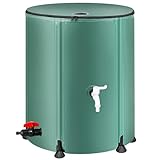
- 【Leak-Proof Design】Unlike typical rain barrels, our product features an integrated design with a straightforward screw-in faucet, eliminating the hassle of assembling multiple parts. This thoughtful construction guarantees a leak-proof system and simple installation
- 【Durable and Sturdy】Our collapsible rainwater collection system is made from premium three-layer PVC material, providing exceptional strength to endure even the toughest conditions. To enhance stability, the rain barrel includes circular footpads, effectively preventing any wobbling or tipping
- 【Easy to Store and Transport】 In contrast to bulky traditional wooden barrels, our rain barrel is foldable, making it easy to carry and store. Say goodbye to heavy, cumbersome containers and embrace convenience. Order our collapsible rain barrel today for effortless water conservation!
- 【Filtering Design】The top of our water storage container is equipped with a mesh design that prevents overflow and keeps leaves and debris out of your clean water. Rainwater collected through the faucet or overflow kit is clearer and can be reused for gardening, farm irrigation, car washing, and more—ideal for eco-conscious individuals
- 【Simple Installation and Exceptional Service】If you encounter any missing or damaged parts during installation, please contact us. We are dedicated to providing prompt replacements to ensure a worry-free experience for our customers
For a shared supply, useful questions include who is responsible for operation and maintenance, what happens when equipment fails, how water quality is monitored, and who should be contacted when a hazard or interruption is found. A lasting improvement requires ongoing risk management, maintenance, and monitoring—not just a one-time equipment purchase.
How can a household or community work toward a dependable supply?
Household treatment and safe storage can help manage immediate risks, but dependable access also depends on the source, treatment, distribution, operation, and the way water is handled at home. WHO’s 2025 compendium considers these elements together and emphasizes fitting technology choices to local conditions and water-quality challenges. WHO: Compendium of drinking-water systems and technologies from source to consumer
When discussing an upgrade with local officials or a supply operator, consider the full set of practical questions rather than selecting a device in isolation:
- What source can provide water reliably, and what risks does it carry?
- What treatment is appropriate for the locally identified water-quality challenges?
- Can the system deliver enough water when households need it?
- Who will operate, maintain, and repair it, and are required parts or consumables accessible?
- How will water quality and service interruptions be monitored, and what corrective action will follow?
- Can households access the supply and manage its cost over time?
The answers depend on local conditions and authority; there is no universally suitable treatment device or upgrade for every rural household.
Quick Recap
Product prices and availability are accurate as of the date/time indicated and are subject to change. Any price and availability information displayed on Amazon at the time of purchase will apply.

