
Before consolidating MSP tools, test whether a candidate platform can handle your team’s real workflows, protect separation between clients, and support reliable recovery—not just display several products in one console. Map the work your tools do today, validate it in a representative trial, compare the full contract cost and exit terms, then migrate in a reversible pilot.
1. Map your current workflows before comparing platforms
Start with the work your team performs, not a vendor’s feature list. Inventory the tools used for RMM, PSA or ticketing, backup, remote access, endpoint and email security, documentation, reporting, and billing. Tool sprawl can create multiple interfaces and disconnected information, but some separate tools may provide specialist capabilities that a single platform does not replace. MSPToday discusses these operational trade-offs; verify the actual URL and claims before relying on them.
For each recurring workflow, record:
- What starts it, such as an alert, customer request, or scheduled task.
- Who or what is responsible at each stage.
- Which client context, credentials, and system details the operator needs.
- What actions are taken and what evidence or record is created.
- Where the work is handed off, including ticketing, billing, or client communication.
Define measurable outcomes for consolidation—for example, fewer manual ticket handoffs or more dependable client-level reporting. A lower product count alone does not prove that the new arrangement is better; it may conceal lost functionality or control.
2. Test real work in the candidate platform
A unified console is valuable only if technicians can complete enough of the work there. A dashboard that links to separate products may still leave staff switching contexts and reconciling information manually. In a time-limited but representative evaluation, test the workflows your team actually handles:
The Tool Desk
Outbyte Driver Updater FREEFix the driver behind crashes, sound loss and screen glitchesFind Drivers →Outbyte PC Repair FREEClear out junk files and repair common Windows errorsFree Scan →#1 Best Overall

- GIGABIT ETHERNET PORTS: Features 5 x 1.0Gbps Ethernet ports for high-speed connectivity. Auto-negotiating ports detect the optimal speed for connected devices and work with existing Cat5e or Cat6 Ethernet cables.
- PLUG-AND-PLAY UNMANAGED NETWORK SWITCH: Simple plug-and-play setup with no software to install or configuration required.
- FLEXIBLE MOUNTING OPTIONS: Compact metal design supports desktop or wall-mount placement for versatile installation.
- SILENT & ENERGY-EFFICIENT OPERATION: Fanless design ensures silent performance, while IEEE 802.3az Energy Efficient Ethernet reduces power consumption without compromising high-speed network performance.
- REGIONAL COMPATIBILITY: Made for use in U.S. & CA only
- An RMM alert that should create or update a PSA ticket.
- An endpoint incident that requires remote access and an auditable record of the response.
- A failed backup that needs triage and escalation.
- A new-client onboarding task that touches policies, documentation, and access.
- A client-level health report that an operator can produce and explain.
For each scenario, check whether the operator can see the right context, take the intended action, and leave a useful record without bouncing between unrelated consoles. Confirm that alerts, client records, tickets, and billing or reporting data synchronize as needed; a nominal integration may still require fragile manual reconciliation. MSPToday recommends checking whether the console is the primary operational interface and whether events flow into ticketing.
Check multi-tenant boundaries
Repeat relevant tests across client tenants and user roles. Verify that client data, policies, credentials, reports, and bulk actions stay confined to the intended customer. Ask the vendor to demonstrate a client count and workload mix comparable to yours, then validate those claims in your own trial. Do not treat a polished demonstration as proof of isolation under your actual permissions and operating model.
Rank #2

- 𝗢𝗻𝗲 𝗦𝘄𝗶𝘁𝗰𝗵 𝗠𝗮𝗱𝗲 𝘁𝗼 𝗘𝘅𝗽𝗮𝗻𝗱 𝗡𝗲𝘁𝘄𝗼𝗿𝗸: 5× 10/100/1000Mbps RJ45 Ports supporting Auto Negotiation and Auto MDI/MDIX.
- 𝗚𝗶𝗴𝗮𝗯𝗶𝘁 𝘁𝗵𝗮𝘁 𝗦𝗮𝘃𝗲𝘀 𝗘𝗻𝗲𝗿𝗴𝘆: Latest innovative energy-efficient technology greatly expands your network capacity with much less power consumption and helps save money.
- 𝗥𝗲𝗹𝗶𝗮𝗯𝗹𝗲 𝗮𝗻𝗱 𝗤𝘂𝗶𝗲𝘁: IEEE 802.3X flow control provides reliable data transfer and Fanless design ensures quiet operation.
- 𝗣𝗹𝘂𝗴 𝗮𝗻𝗱 𝗣𝗹𝗮𝘆: Easy setup with no software installation or configuration needed.
- 𝗔𝗱𝘃𝗮𝗻𝗰𝗲𝗱 𝗦𝗼𝗳𝘁𝘄𝗮𝗿𝗲 𝗙𝗲𝗮𝘁𝘂𝗿𝗲𝘀: Prioritize your traffic and guarantee high quality of video or voice data transmission with Port-based 802.1p/DSCP QoS and IGMP Snooping.
3. Prove backup and recovery with restores
A successful backup-job status means a job ran; it does not prove that your team can restore the data or system a client needs. For every workload included in the platform decision, document the backup source, frequency, retention, storage location, access controls, and recovery owner.
Then perform restore exercises for representative files, systems, and cloud workloads. Record whether recovery succeeds, how long it takes in your test, what dependencies or permissions are needed, and what evidence is captured. Include the people who would perform the recovery during an incident.
Free tools Windows power users keep installed
One-click scans. No signup required.
Rank #3

- GIGABIT ETHERNET PORTS: Features 8 x 1.0Gbps Ethernet ports for high-speed connectivity. Auto-negotiating ports detect the optimal speed for connected devices and work with existing Cat5e or Cat6 Ethernet cables.
- PLUG-AND-PLAY UNMANAGED NETWORK SWITCH: Simple plug-and-play setup with no software to install or configuration required.
- FLEXIBLE MOUNTING OPTIONS: Compact metal design supports desktop or wall-mount placement for versatile installation.
- SILENT & ENERGY-EFFICIENT OPERATION: Fanless design ensures silent performance, while IEEE 802.3az Energy Efficient Ethernet reduces power consumption without compromising high-speed network performance.
- REGIONAL COMPATIBILITY: Made for use in U.S. & CA only
NIST NCCoE’s April 2020 guide for MSPs addresses planning for backup services and products, the usefulness and availability of backup files, and disaster recovery; its guidance supports maintaining and testing backups. The UK National Cyber Security Centre (NCSC) also recommends asking how often backups are tested, whether they meet requirements, where data is stored, and who can access it: Choosing a managed service provider (MSP).
4. Make security responsibilities and evidence explicit
Document what the MSP, client, platform vendor, and any subcontractors each own. UK NCSC guidance says: “A matrix of responsibilities detailing what the MSP will do and what is expected from you as the customer is good practice.” The guidance was published and reviewed on November 24, 2025.
Rank #4
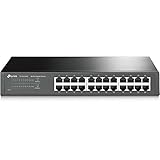
- 𝙊𝙣𝙚 𝙎𝙬𝙞𝙩𝙘𝙝 𝙈𝙖𝙙𝙚 𝙩𝙤 𝙀𝙭𝙥𝙖𝙣𝙙 𝙉𝙚𝙩𝙬𝙤𝙧𝙠: 24 port of 10/100/1000Mbps RJ45 Ports supporting Auto Negotiation and Auto MDI/MDIX
- 𝙂𝙞𝙜𝙖𝙗𝙞𝙩 𝙩𝙝𝙖𝙩 𝙎𝙖𝙫𝙚𝙨 𝙀𝙣𝙚𝙧𝙜𝙮: Latest innovative energy-efficient technology greatly expands your network capacity with much less power consumption and helps save money
- 𝙍𝙚𝙡𝙞𝙖𝙗𝙡𝙚 𝙖𝙣𝙙 𝙌𝙪𝙞𝙚𝙩: IEEE 802. 3X flow control provides reliable data transfer and Fanless design ensures whisper quiet operation
- 𝙋𝙡𝙪𝙜 𝙖𝙣𝙙 𝙋𝙡𝙖𝙮: Easy setup with no software installation or configuration needed, just plug it in and start
- 𝙈𝙚𝙩𝙖𝙡 𝘾𝙖𝙨𝙞𝙣𝙜: Metal-cased switches provide superior durability, heat dissipation, and EMI protection, making them the clear choice for reliable performance over cheaper plastic switches.
For the platform and the operating model around it, establish:
- Which people need administrative access, how that access is protected with two-step verification or equivalent controls, and how it is removed when no longer needed.
- What security logs are available, how long they are retained, and who can retrieve them during an investigation.
- How incidents affecting the platform or MSP are reported, to whom, and within what agreed response expectations.
- How shared duties and third-party dependencies are recorded in agreements.
NCSC’s MSP guidance covers least privilege, incident processes, and contract responsibilities. CISA’s MSP customer risk checklist is also cited for defining MSP, customer, and shared duties and planning for supply-chain risk; its PDF was inaccessible in the cited evaluation, so treat that checklist reference as limited corroboration rather than a fully reviewed source.
Best Value

- 8 GIGABIT PORTS: Features 8 RJ45 ports supporting 10/100/1000 Mbps speeds, providing high-speed wired network connectivity for computers, printers, gaming consoles, and other Ethernet-enabled devices
- PLUG AND PLAY SETUP: No configuration required; simply connect the switch to your network devices and it is ready to use immediately, making network expansion quick and hassle-free
- FANLESS QUIET DESIGN: The fanless design ensures silent operation, making this switch suitable for noise-sensitive environments such as home offices, bedrooms, or conference rooms
- STURDY METAL CONSTRUCTION: Built with a durable metal housing and shielded ports that provide reliable performance, better heat dissipation, and protection against electromagnetic interference
- TRAFFIC OPTIMIZATION: Supports IEEE 802.3x flow control and advanced traffic optimization technology to reduce data bottlenecks and ensure smooth, efficient data transfer across your network
5. Compare candidates against the same criteria
Use one set of questions for every candidate. The table is a decision framework, not a vendor ranking: the available sources do not independently benchmark named platforms.
| Evaluation area | Questions to verify | Evidence to request or produce |
|---|---|---|
| Workflow depth | Can technicians complete incidents and routine tasks in the main console, or does it mostly link to other systems? | Run representative alert, ticket, remote-access, and reporting scenarios in a trial. |
| Multi-tenancy and security | Are client data, policies, permissions, bulk actions, and reports separated? Are privileged accounts protected and auditable? | Test with multiple client tenants and roles; inspect access and audit evidence. |
| Integration | Do alerts create useful tickets, client records stay synchronized, and billing or reporting avoid fragile manual reconciliation? | Trace a workflow end to end, including its handoffs and resulting records. |
| Backup and recovery | Can the MSP restore representative data and systems? Are storage, access, retention, and recovery responsibilities understood? | Complete restore exercises and record results, dependencies, permissions, and recovery ownership. |
| Economics and scale | Do pricing units, storage choices, support, and contract minimums fit your client and workload mix? | Model costs using your actual service mix and growth assumptions; confirm terms in the proposal and agreement. |
| Portability and exit | Can operational records and data be exported in usable form, and are termination and third-party obligations clear? | Test an export or obtain precise contract language describing scope, format, and responsibilities. |
6. Model total cost and read the exit terms
Build the cost comparison around your real operation: endpoint counts, technician and administrator counts, storage volumes, client tiers, and service margins. Include onboarding or migration charges, support, integrations, minimum commitments, renewal terms, and costs that change as the business grows. A pricing model that looks inexpensive at a small scale may not fit a different client or workload mix. MSPToday flags pricing-model alignment, storage flexibility, support, and references from customers at comparable scale as evaluation points.
Read the agreement for service scope, responsibilities, incident notification, service levels, third-party dependencies, data export, contract duration, renewal, and termination. NCSC recommends clear responsibilities and liability, reporting arrangements, response expectations, and contract exit terms. Before signing, establish exactly which records, configurations, credentials, backups, and client data can be exported, in what usable format, and by whom. Do not assume portability because a vendor says data can be exported; test an export or get precise language in the contract.
7. Migrate in controlled, reversible stages
There is no universal migration sequence, but a staged change gives you a way to detect problems before they affect every client. Set the pilot scope and rollback conditions before production cutover.
Recommended Free Tools
Quick Recap
- Select a representative pilot. Include client types and workflows that reflect the service mix you intend to move.
- Define success and rollback criteria. Specify what must work—such as alert-to-ticket handling, client separation, reporting, and restore procedures—and what failure triggers a pause or return to the old workflow.
- Keep the old system available during the agreed overlap. Reconcile alerts and tickets across systems so work is not lost or duplicated.
- Verify procedures and train staff. Exercise restore and incident processes, confirm responsibility for issues throughout the transition, and prepare technicians for changed workflows.
- Communicate client-facing changes. Explain relevant changes to service, reporting, or escalation paths before they take effect.
- Cut over with named owners. Assign an accountable person to each transition step and review the pilot against the criteria before expanding it.
Product prices and availability are accurate as of the date/time indicated and are subject to change. Any price and availability information displayed on Amazon at the time of purchase will apply.

