
In 2022, Pete Warden’s Useful Sensors proposed a simple way to add machine-learning features to appliances: put the camera, microcontroller and trained model in a small sensor module, then expose a narrow sensor-like interface to the product. A manufacturer could request a function such as “pause the TV when someone stands up” without building its own data pipeline, model and computer-vision stack.
What “AI in the sensor” means
A conventional sensor reports a physical measurement. An AI-enabled sensor also interprets its input locally. Instead of sending camera frames to a host computer or cloud service, the module can report a higher-level result such as “person detected,” a position in the image, whether the person is facing the device, or a gesture command.
This is an edge-machine-learning design. In the “sensor 2.0” architecture proposed by Warden and co-authors, input data and machine-learning processing are separated from the rest of the product at the hardware level, while the host receives a thin interface resembling that of a traditional sensor. The proposal is a design paradigm, not proof that every such device is private, secure, accurate or easy to integrate.
Why Useful Sensors was founded
Warden, a former Google engineer associated with TensorFlow Mobile and tinyML, formed Useful Sensors to sell ready-to-integrate machine-learning functions to consumer-electronics and appliance makers. The company’s premise was that many manufacturers could build a product around a finished function more readily than they could collect representative data, train and evaluate a model, select hardware, and maintain the software themselves.
#1 Best Overall
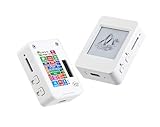
- This is is 1.54inch e-Paper AIoT development board. Onboard 1.54inch e-paper display, 200 x 200 resolution, features ultra-low power consumption and ambient light readability, suitable for portable devices and long-battery-life scenarios. Supports 2.4GHz Wi-Fi (802.11 b/g/n) and Bluetooth 5 (LE), with onboard antenna.
- Integrated with an RTC chip, SHTC3 temperature and humidity sensor, TF card slot, low-power audio codec chip circuit, and Lithium battery recharge management circuit. Reserved interfaces including USB, UART, I2C, and GPIO for easy functionality expansion and sensor connectivity, providing a flexible and reliable development platform for IoT terminals, electronic tags, portable displays, and other applications.
- Supports AI Speech Interaction: Allows access to online large model platforms such as ChatGPT, DeepSeek, Doubao, etc. Onboard audio codec chip, supports voice capture and playback, enabling AI voice interaction applications.
- Built-in 512KB Static RAM, 384KB ROM, with integrated 8MB Flash and 8MB PS RAM. Onboard PCF85063 RTC chip and SHTC3 temperature & humidity sensor for accurate RTC management and environmental monitoring.
- Onboard TF card slot for external storage of images or files. Onboard programmable PWR and BOOT side buttons for customized function development. Reserved 2 × 6 2.54mm pitch pin header for convenient external expansion.
Warden described requests such as a voice interface for a light switch, a television that pauses when its viewer gets up, or gestures that advance presentation slides. His stated goal was to solve the end-to-end problem “going the last mile” so a function would not require significant customization.
EE Times reported a $5 million seed round and six employees, including three former Google staff, in 2022. Those figures describe the company at that time, not its present finances or workforce.
The Person Sensor: hardware and outputs
The first announced product, the Person Sensor, was described by EE Times in October 2022 as a 20 × 20 mm board containing a camera and microcontroller. It presented two kinds of output:
Rank #2

- Powerful MCU Board: Incorporate the ESP32 S3 32-bit, dual-core, Xtensa processor chip operating up to 240 MHz, mounted multiple development ports, Arduino / MicroPython supported
- Advanced Functionality: Detachable OV2640 camera sensor for 1600*1200 resolution, compatible with OV3660 camera sensor, integrating additional digital microphone
- Great Memory for more Possibilities: Offer 8MB PSRAM and 8MB FLASH, supporting SD card slot for external 32GB FAT memory
- Outstanding RF performance: Support 2.4GHz Wi-Fi and BLE dual wireless communication, support 100m+ remote communication when connected with U.FL antenna
- Thumb-sized Compact Design: 21 x 17.5mm, adopting the classic form factor of XIAO, suitable for space-limited projects like wearable devices
- Person-detected output pin: a simple signal for a host product.
- I²C interface: metadata such as where a person appeared in the frame, whether the person faced the device, and limited recognition intended to distinguish familiar users.
The article proposed possible uses including a fan that follows someone, a laptop that locks when its user leaves, and a surround-sound system that accounts for seating positions. These were example integrations and prospects, not evidence that those products shipped with the module.
Useful Sensors said its main differentiation was dataset creation and model development rather than a new processor. The company planned to use feedback from makers and third-party testing to find weaknesses across groups and contexts. The 2022 report describes those as plans; it does not establish that broad testing or certification had been completed.
How this approach compares with other architectures
| Design | Where inference runs | Typical data crossing the interface | Who carries the integration burden |
|---|---|---|---|
| Dedicated AI sensor module | Inside the sensor module | Derived events or metadata, such as person presence or a gesture | The module supplier packages hardware, model and interface; the manufacturer integrates the output |
| Host-device machine learning | On the television, laptop, appliance or an attached computer | Often raw or lightly processed sensor data within the product | The manufacturer assembles hardware, data, model, software and updates |
| Cloud computer vision or voice service | On a remote server | Sensor data travels over a network to the service | The manufacturer depends on network, service, privacy and operating-cost arrangements |
The Person Sensor was reported as having no network connection and returning metadata over its interface rather than full camera frames. That is a description of this reported design, not a rule for all edge-AI products.
Rank #3

- Powerful Processor: Equipped with ESP32-S3R8 Xtensa 32-bit LX7 dual-core processor, up to 240MHz main frequency. Supports 2.4GHz Wi-Fi (802.11 b/g/n) and Bluetooth 5 (LE), with onboard antenna. Built-in 512KB of SRAM and 384KB ROM, with onboard 8MB PSRAM and an external 16MB Flash memory.
- Driver and Touch LCD: Onboard 1.83inch IPS Capacitive Touch Display, 240 × 284 resolution, 65K color. Built-in ST7789P display driver and CST816D capacitive touch chip, using SPI and I2C communication respectively, effectively saving the IO resources. Adopts Type-C port to improve user convenience and device compatibility.
- Supports Offline Speech recognition and AI Speech Interaction: Allows access to online large model platforms such as ChatGPT, DeepSeek, Doubao, etc. Onboard ES8311 audio codec chip and ES7210 echo cancellation circuit to meet daily audio application scenarios.
- Multifunctional Sensor: Onboard QMI8658 6-axis IMU (3-axis accelerometer and 3-axis gyroscope) for detecting motion gestures, counting steps, etc; PCF85063 RTC chip connected to the battry via the AXP2101 for uninterrupted power supply; Onboard PWR and BOOT programmable buttons for easy custom function development.
- Rich Peripheral Interface: Reserved 1 × I2C, 1 × UART and 1 × USB pads for external device connection and debugging, enabling flexible peripheral configuration. Onboard TF card slot for extended storage and fast data transfer, suitable for applications such as data recording and media playback, simplifying circuit design.
Privacy and security: what the claims do—and do not—prove
Local processing can reduce the need to move raw images beyond the sensor. Warden told EE Times, “TVs and laptops are in people’s bedrooms. That’s a massive responsibility,” and presented the design as preferable to giving the wider device direct access to camera data. In a 2023 EE Times Europe interview, he said, “The only things you get from our sensor are the gesture commands; we’re not streaming camera data, and we have third parties checking [to confirm this].” The interview also said Useful Sensors worked with Kudelski on a security report.
Those are attributable company and publication statements, not an independent present-day security assessment. A local, metadata-only interface can still have weaknesses: firmware may be exploitable, metadata can reveal behavior, model decisions can be wrong, and the host product may expose or store the outputs. Warden hoped for third-party certification in 2022; the profile does not say that certification was obtained.
The Tool Desk
Outbyte PC Repair FREEClear out junk files and repair common Windows errorsFree Scan →Outbyte Driver Updater FREEScan for outdated or missing drivers - takes under a minuteDriver Scan →Why datasets and documentation matter
A packaged model removes work from an appliance maker, but it does not remove the underlying technical risks. Performance can change with lighting, camera placement, distance, skin tone, age, disability, clothing, background activity and other conditions. A model that works in a developer’s test setup may fail in a living room or office.
Rank #4
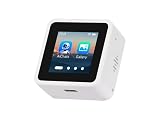
- High-Performance ESP32-S3 Processor-- Equipped with a dual-core Xtensa LX7 CPU with a clock speed of up to 240MHz, built-in 512KB SRAM, 384KB ROM, stacked 8MB PSRAM and external 16MB Flash, supports 2.4GHz Wi-Fi and Bluetooth 5 (LE), easily handling complex applications and AI calculations.
- 1.54inch IPS LCD Display-- Onboard 1.54inch LCD display for clear color picture display, 240 × 240 resolution, 262K color. It perfectly presents rich visual content such as AI dialogue, electronic photo album, video playback, and game animation.
- Intelligent AI Voice Interaction-- Supports mainstream online large model platforms such as Xiaozhi AI and DeepSeek. It features an onboard dual microphone array and ES7210/ES8311 audio codec chip, providing voice wake-up, conversation interruption, noise reduction, and echo cancellation functions for a smooth and intelligent dialogue experience.
- Multifunctional Sensors and Expansion-- Integrated six-axis inertial measurement unit (3-axis accelerometer + 3-axis gyroscope) to support motion detection; onboard Micro SD card slot for storage expansion; Type-C interface for convenient power supply and data transmission; additional I2C and UART pads for peripheral connections.
- Secondary Development-- The factory firmware includes built-in AI dialogue, audio and video playback, electronic photo album, text reading, and fun games. It can be used directly as a smart chat toy, or developers can perform personalized programming and in-depth customization.
The 2023 paper “Datasheets for Machine Learning Sensors” recommends documenting four categories:
- Hardware specifications and operating conditions.
- Model and dataset characteristics, including how data was collected and labeled.
- End-to-end performance rather than only a model’s laboratory score.
- Environmental effects and known limitations.
That framework is important because “on-device” describes where computation occurs, not how representative the training data is, how reliable the output will be, or whether the complete product has been securely implemented.
Independent reader supportYour contribution helps us test, update, and keep practical guides available for everyone.Availability and company status
As observed on September 27, 2026, SparkFun’s listing for Person Sensor (SEN-21231) says the product is retired and no longer for sale. The listing describes a pre-programmed camera module with a Qwiic/I²C interface and person and face metadata. It specifies 3.3 V operation, approximately 150 mW power consumption, and firmware or model updates that are unavailable to the user. The approximately 150 mW figure is a retailer specification, not an independent measurement established here.
Do these 3 things before closing this tab:
1Clear out junk files and repair common Windows errors2Fix the driver behind crashes, sound loss and screen glitches3Repair Windows errors before they cause bigger problemsBest Value
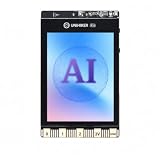
- All-in-One AI Learning Platform: Combines vision AI, offline voice recognition, and TinyML machine learning in one compact device – ideal for STEM education and beginners exploring AI, IoT, and coding.
- Pre-Loaded AI Models & Offline Voice Control: Comes with 4 pre-installed vision AI models (face, pet, QR code, motion) and supports offline speech recognition – no internet needed to start building smart projects.
- Train Your Own AI Models with TinyML: Go beyond built-in features and create custom vision or sensor models for personalized AI projects, enhancing learning and creativity.
- Rich Sensors & Wireless Connectivity: Features a 2MP camera, microphone, speaker, environmental sensors, and dual Wi-Fi/Bluetooth for IoT applications, remote control, and real-time data monitoring.
- User-Friendly with Graphical & MicroPython Coding: Supports drag-and-drop graphical programming (Mind+) and MicroPython, perfect for all skill levels. Includes 2.8" color screen for instant data visualization.
The former usefulsensors.com address redirects to Moonshine.ai at the time checked. That observation does not establish whether Useful Sensors ceased operations, whether products changed ownership, or whether the Person Sensor is available through another channel. Current company status therefore remains unconfirmed.
What the idea changed—and what remained difficult
The integration promise
A narrow output such as a pin or I²C value can let an appliance team treat an ML function more like an ordinary component. It can avoid moving camera frames through the rest of the product and reduce the amount of model code the manufacturer must write.
The unsolved work
The supplier still has to gather representative data, train models, handle edge cases, secure firmware, document limits and support updates. The manufacturer must validate the module in its own enclosure and environment, define user-consent and retention policies, and decide what happens when the model is uncertain or wrong. The 2022 profile identifies data creation, fragmented hardware and adoption as continuing challenges.
The historical takeaway
Useful Sensors’ 2022 proposal was not that every appliance needed a powerful new chip. It was that machine learning could become easier to adopt when the difficult parts—sensor hardware, a task-specific model and a simple interface—arrived as one component. The Person Sensor illustrated that approach with local camera processing and metadata outputs, while the company’s plans also exposed the limits: privacy claims needed verification, model quality depended on data and context, and commercial availability was not guaranteed.
Windows Errors? Fix Them Before They Spread
Repair common Windows errors and clear accumulated junk for a smoother, more stable PC - no reinstall needed.Free scan · no reinstallCrashes, No Sound, or Screen Glitches?
Random freezes, missing sound and display glitches usually trace back to one bad driver. Find and replace yours safely.Free scan · under a minuteQuick Recap
Product prices and availability are accurate as of the date/time indicated and are subject to change. Any price and availability information displayed on Amazon at the time of purchase will apply.

