
Do these 3 things before closing this tab:
1Fix the driver behind crashes, sound loss and screen glitches2Repair Windows errors before they cause bigger problems3Scan for outdated or missing drivers - takes under a minuteNVIDIA BlueField is a data processing unit (DPU) for data-center servers: it handles selected networking, storage, security, and management work so the host CPU can spend more time on applications and AI workloads. That is the infrastructure meaning behind BlueField giving an AI server a “kick up the backside”—it is not a device that automatically makes every AI model run faster.
What is an NVIDIA BlueField DPU?
A DPU is a processor dedicated to infrastructure tasks that would otherwise use resources on the server’s main CPU. NVIDIA describes BlueField-3 as a cloud infrastructure processor that can offload, accelerate, and isolate software-defined networking, storage, security, and management functions. Its hardware acceleration works with NVIDIA DOCA software. NVIDIA’s BlueField-3 guide describes the goal as building software-defined, hardware-accelerated data centers from cloud to edge.
These services matter in an AI server because data must move between GPUs, storage, other servers, and users. Security policies and tenant separation also have to be enforced, while systems need to be managed and monitored. BlueField is intended to take on some of that infrastructure processing rather than leave it all to the host CPU.
What does BlueField do for an AI server?
In NVIDIA’s AI-factory design, BlueField DPUs sit alongside GPUs, networking, and orchestration software such as Kubernetes. The DPU can offload and accelerate software-defined networking, storage, and security tasks, potentially freeing host resources and improving how infrastructure services handle data. NVIDIA’s Enterprise AI Factory design guide describes that architecture; it does not promise a fixed performance gain for every deployment.
#1 Best Overall

- Ports: 1x PCIe x8 4.0, 2x SFP56, 1x RJ45
- The maximum data transfer rate is 25Gbps via Ethernet.
- Processor: 8 core ARM
- RAM: 16GB DDR4 ECC
- Storage capacity: 64GB
- Networking: process selected network and service traffic without relying solely on the host CPU.
- Storage: accelerate infrastructure functions involved in moving or serving data.
- Security and isolation: support enforcement of infrastructure policies and separation between tenants.
- Management: handle selected data-center services that support the server environment.
The practical result depends on which services are enabled, how the server and network are configured, and whether those services are actually consuming resources that matter to the workload. If GPU computation is the limiting factor, shifting infrastructure work to a DPU may not change model execution time.
BlueField-3 DPU vs. BlueField-3 SuperNIC
They are related NVIDIA products, but the names are not interchangeable. In NVIDIA’s HGX AI Factory reference, their network roles differ:
Rank #2
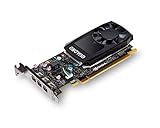
- The NVIDIA Quadro P400 is based on NVIDIA Pascal architecture and delivers up to 2x more visualization performance than the NVIDIA maxwell-based Quadro K420
- Three DisplayPort outputs provide more display connectivity than the previous generation
- With more memory bandwidth than the previous generation, customers can work with larger datasets
- Tuned and tested drivers with support for the latest releases of OpenGL, DirectX, vulkan, and NVIDIA CUDA ensure compatibility with the latest versions of Professional applications
- Creation and playback of HDR video with H264 & hevc encode and decode engines
| Product | Role in NVIDIA’s HGX reference | Traffic emphasis |
|---|---|---|
| BlueField-3 DPU | Infrastructure processing, including networking services | North-south traffic: traffic entering or leaving the server environment |
| BlueField-3 SuperNIC | High-performance networking for GPU compute systems | East-west traffic: communication between GPU servers |
These are design priorities in the NVIDIA HGX components guide, not a claim that each product can handle only one direction of traffic. The guide also lists specific card and system configurations, so a buyer should match the exact model to the intended fabric and server.
BlueField-3 vs. BlueField-4
NVIDIA’s current product portfolio positions BlueField-3 as a 400 Gb/s platform and BlueField-4 as an 800 Gb/s platform. These are manufacturer-stated platform bandwidth figures, not independent measurements of application speed. NVIDIA’s BlueField-4 technical blog additionally claims up to six times BlueField-3’s compute performance, four times the memory capacity, and more than three times the memory bandwidth. Those comparisons are vendor claims, not a guarantee that a particular server or workload will see those gains.
Free tools Windows power users keep installed
One-click scans. No signup required.
Rank #3

- Memory Size: 16 GB GDDR6 ECC.
- Memory Bus Width: 128-bit.
- Memory Bandwidth: 200 GB/s.
- CUDA Cores: 1280.
- Peak Single Precision floating point performance: 18 Tflops (GPU Boost Clocks).
| Platform | NVIDIA-stated bandwidth | Additional performance claims |
|---|---|---|
| BlueField-3 | 400 Gb/s | Not stated in the cited portfolio comparison |
| BlueField-4 | 800 Gb/s | NVIDIA claims up to 6x compute performance, 4x memory capacity, and more than 3x memory bandwidth versus BlueField-3 |
For product positioning, see NVIDIA’s BlueField portfolio and its BlueField co-design blog. Bandwidth alone does not tell you how a DPU will affect an application: the workload, software, system design, and network configuration still matter.
Does BlueField make AI faster?
It can help an AI infrastructure stack by moving selected data-center work away from host CPUs or accelerating parts of the data path. That may improve resource availability, isolation, or service handling. It does not directly guarantee faster GPU calculations, shorter model training, or quicker inference. To establish an end-to-end benefit, a deployment needs measurements for its own workload and configuration.
Rank #4

- GPU Memory Size: 4GB GDDR6
- Form Factor: 2.7"(H) x 6.4"(L), single slot, half height
- Thermal Solution: Active Fan
- RTX A400 Professional Graphics Card
- A400 Professional Graphics Card
NVIDIA has described one specific example: F5 BIG-IP Next for Kubernetes accelerated by BlueField-3 for load balancing, security, multi-tenancy, and observability in AI factories. In a SoftBank test on an NVIDIA H100 GPU cluster, NVIDIA reported 77 Gbps throughput with zero CPU core consumption, 11 times lower latency, 99% lower CPU utilization, and 190 times higher network energy efficiency compared with open-source NGINX. These are results reported by NVIDIA for that solution and test setup, not independent measurements or general BlueField guarantees. NVIDIA’s service-proxy write-up provides the example and comparison.
Independent reader supportYour contribution helps us test, update, and keep practical guides available for everyone.Is BlueField a network card, and will it fit a PC?
BlueField is server hardware with networking capabilities, but calling it just a network card misses its programmable infrastructure-processing role. The BlueField-3 guide specifies a PCIe Gen 5 x16 system connection and a minimum 75 W system power supply for the listed cards. NVIDIA’s HGX material describes data-center card configurations; these specifications are not evidence of compatibility with ordinary consumer PCs.
Quick wins for a faster PC:
Scan for outdated or missing drivers - takes under a minuteDriver Scan →Clear out junk files and repair common Windows errorsFree Scan →Best Value
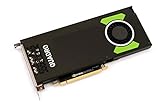
- Pascal GPU Architecture
- Simultaneous Multi-Projection
- Pascal Dynamic Load Balancing
Before selecting a card, confirm the exact SKU and form factor, supported server, port type and network fabric, cooling and power requirements, and the software stack needed for the intended functions. NVIDIA’s guide is a starting point for BlueField-3 requirements, while the HGX components guide describes example server contexts: BlueField-3 technical guide and HGX AI Factory components.
What to take from the BlueField announcement
BlueField addresses an infrastructure problem: AI servers need to move and protect data, serve multiple tenants, and run data-center services as well as execute AI workloads. A DPU can take on some of that work, but its value is architectural and deployment-specific—not a universal speed boost. Distinguish the DPU’s infrastructure role from the SuperNIC’s GPU-fabric focus, and treat bandwidth specifications and benchmark claims according to their source and test context.
Quick Recap
Product prices and availability are accurate as of the date/time indicated and are subject to change. Any price and availability information displayed on Amazon at the time of purchase will apply.

