
Crashes, No Sound, or Screen Glitches?
Random freezes, missing sound and display glitches usually trace back to one bad driver. Find and replace yours safely.Free scan · under a minuteWindows Errors? Fix Them Before They Spread
Repair common Windows errors and clear accumulated junk for a smoother, more stable PC - no reinstall needed.Free scan · no reinstalliTechGuides is reader-supported. When you buy through links on our site, we may earn an affiliate commission. As an Amazon Associate I earn from qualifying purchases. Learn more
Data governance is the system an organization uses to decide who can make decisions about data, what rules apply, how those rules are implemented, and how quality, protection, compliance, and business value are measured. It makes data ownership, meaning, permitted use, quality expectations, and control responsibilities explicit.
It applies to data an organization creates, collects, stores, transforms, shares, analyzes, or uses in automated systems. A successful governance program combines accountable people, agreed policies, repeatable processes, and technical controls. A catalog or governance platform can support that work, but buying software does not create governance by itself.
What does data governance cover?
Data governance covers the decisions and accountability surrounding data throughout its lifecycle. That includes operational databases, spreadsheets, cloud storage, data warehouses, reports, dashboards, machine-learning datasets, application data, scientific information, financial records, and data shared with third parties.
Recommended Free Tools
In practical terms, a governance program should answer questions such as:
Popular on Amazon

- GIGABIT ETHERNET PORTS: Features 5 x 1.0Gbps Ethernet ports for high-speed connectivity. Auto-negotiating ports detect the optimal speed for connected devices and work with existing Cat5e or Cat6 Ethernet cables.
- PLUG-AND-PLAY UNMANAGED NETWORK SWITCH: Simple plug-and-play setup with no software to install or configuration required.
- FLEXIBLE MOUNTING OPTIONS: Compact metal design supports desktop or wall-mount placement for versatile installation.
- SILENT & ENERGY-EFFICIENT OPERATION: Fanless design ensures silent performance, while IEEE 802.3az Energy Efficient Ethernet reduces power consumption without compromising high-speed network performance.
- REGIONAL COMPATIBILITY: Made for use in U.S. & CA only
- What does this data element mean?
- Which dataset or report is authoritative?
- Who owns the data and who maintains its metadata?
- Who may access it, for what purpose, and at what level of detail?
- How accurate, complete, timely, valid, unique, and consistent must it be?
- Where did the data come from, how was it changed, and what depends on it?
- How long should it be retained, and how should it be archived or deleted?
- Can it be used for a particular business process, analytics project, or AI system?
- How can the organization prove that decisions, approvals, controls, and remediation actually occurred?
DAMA describes governance in terms of accountability, policies, and decision rights. ISO/IEC 38505-1:2017 treats governance of data as a domain of IT governance and, ultimately, organizational governance. The result is more than a list of rules: it is a decision system for making data useful, trustworthy, protected, and accountable.
Data governance vs. data management, security, privacy, and cataloging
These terms are related, but they are not interchangeable. Confusing them often leads to a program that buys tools without assigning responsibility or measuring outcomes.
| Term | What it means | How it relates to governance |
|---|---|---|
| Data governance | Decision rights, accountability, policies, standards, oversight, and evidence for data. | The coordinating function that decides what should happen and who is accountable. |
| Data management | The broader discipline of planning, developing, executing, and supervising data practices. | Governance is one coordinating function within data management. |
| Data security | Controls that prevent unauthorized access, alteration, loss, or disclosure. | Security is a major governance concern, but governance also covers meaning, quality, ownership, retention, and acceptable use. |
| Data privacy | Requirements relating to personal information, individual rights, and appropriate processing. | Privacy is a major governance domain. Governance also applies to non-personal operational, financial, scientific, and analytical data. |
| Data catalog | An inventory that helps users discover and understand data assets. | The catalog describes assets; governance determines ownership, definitions, certification, policies, approvals, and acceptable use. |
| Governance software | Technology for discovery, classification, lineage, workflows, quality monitoring, or policy enforcement. | Tools automate parts of governance but cannot independently define business terms or assign accountable owners. |
For example, a catalog may show a table called customer_status. Governance must determine what customer means, which values are valid, whether the table is authoritative, who owns it, how frequently it must be refreshed, whether it contains personal information, and who may use it.
Quick wins for a faster PC:
Fix the driver behind crashes, sound loss and screen glitchesFind Drivers →Clear out junk files and repair common Windows errorsFree Scan →The objectives of a mature governance program
A governance program should connect its controls to business and risk outcomes. Typical objectives are to make data:
- Discoverable: People can find relevant datasets, reports, models, and other assets without relying on informal tribal knowledge.
- Understandable: Business definitions, technical descriptions, classifications, owners, and context are documented.
- Trustworthy: Quality expectations, validation rules, certification status, known issues, and remediation responsibilities are visible.
- Accessible to the right people: Access is based on identity, role, legitimate business need, purpose, policy, and risk.
- Protected: Sensitive data is classified and handled according to security, privacy, retention, and regulatory requirements.
- Traceable: Lineage shows where data came from, how it changed, and where it is used.
- Reusable and valuable: Governed data can support reporting, operations, analytics, AI, and decision-making without repeated manual interpretation.
- Auditable: The organization can demonstrate decisions, approvals, policy application, exceptions, and remediation activity.
These objectives can conflict. Tighter access may reduce convenience, additional quality checks may slow delivery, and retention rules may conflict with operational preferences. Governance provides the forum and decision rights for making those trade-offs deliberately rather than leaving them to individual developers or analysts.
The four parts of data governance
1. People and accountability
Governance starts by naming the people who can make decisions and the people who must implement them. A policy without an owner is guidance, not an operating control.
2. Policies and standards
Policies state requirements such as classification, acceptable use, retention, access approval, quality thresholds, or AI restrictions. Standards make those requirements more specific—for example, defining allowed values, naming conventions, required metadata, encryption expectations, or review frequency.
3. Processes and evidence
Processes turn policies into repeatable actions: access requests, quality issue management, exception approval, glossary changes, retention reviews, incident response, and periodic access recertification. Evidence shows that the process was followed.
4. Technology and controls
Platforms can scan sources, ingest metadata, classify data, display lineage, test quality, route approvals, enforce access policies, and produce audit records. Technology is essential at scale, but it implements decisions made by the organization; it does not replace those decisions.
Who is responsible for data governance?
Titles vary by organization, but a practical operating model usually includes the following roles.
| Role | Typical responsibility |
|---|---|
| Executive sponsor or data council | Sets priorities, approves principles, resolves cross-domain conflicts, allocates attention and funding, and connects governance to business outcomes. |
| Chief data or information leader | Coordinates strategy, operating model, investment, program delivery, and maturity measurement. |
| Data owner | A business representative accountable for definitions, acceptable use, access rules, quality expectations, and decisions for a domain or subject area. |
| Data steward | Maintains definitions and metadata, coordinates quality rules, manages issue queues, supports users, and operates governance workflows. |
| Data custodian or platform team | Operates databases, applications, warehouses, lakes, pipelines, identity systems, integrations, backups, and technical safeguards. |
| Security, privacy, legal, risk, and compliance teams | Provide specialist requirements and review sensitive, regulated, high-impact, or unusual uses. |
| Engineering, analytics, and AI teams | Build and operate data products, pipelines, dashboards, models, and controls that comply with approved policies. |
The data owner is accountable for the business decision; the steward often performs the day-to-day work; and the custodian implements technical controls. These roles should not be silently combined when that creates a conflict of interest—for example, allowing the same person to approve and independently audit privileged access.
Free tools Windows power users keep installed
One-click scans. No signup required.
Also popular on Amazon
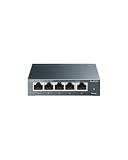
- 𝗢𝗻𝗲 𝗦𝘄𝗶𝘁𝗰𝗵 𝗠𝗮𝗱𝗲 𝘁𝗼 𝗘𝘅𝗽𝗮𝗻𝗱 𝗡𝗲𝘁𝘄𝗼𝗿𝗸: 5× 10/100/1000Mbps RJ45 Ports supporting Auto Negotiation and Auto MDI/MDIX.
- 𝗚𝗶𝗴𝗮𝗯𝗶𝘁 𝘁𝗵𝗮𝘁 𝗦𝗮𝘃𝗲𝘀 𝗘𝗻𝗲𝗿𝗴𝘆: Latest innovative energy-efficient technology greatly expands your network capacity with much less power consumption and helps save money.
- 𝗥𝗲𝗹𝗶𝗮𝗯𝗹𝗲 𝗮𝗻𝗱 𝗤𝘂𝗶𝗲𝘁: IEEE 802.3X flow control provides reliable data transfer and Fanless design ensures quiet operation.
- 𝗣𝗹𝘂𝗴 𝗮𝗻𝗱 𝗣𝗹𝗮𝘆: Easy setup with no software installation or configuration needed.
- 𝗔𝗱𝘃𝗮𝗻𝗰𝗲𝗱 𝗦𝗼𝗳𝘁𝘄𝗮𝗿𝗲 𝗙𝗲𝗮𝘁𝘂𝗿𝗲𝘀: Prioritize your traffic and guarantee high quality of video or voice data transmission with Port-based 802.1p/DSCP QoS and IGMP Snooping.
Centralized, federated, or hybrid governance?
A centralized model places most decisions and stewardship in a central team. It can improve consistency and simplify escalation, but the team may become a bottleneck or make decisions without enough business context.
A federated model gives business or technical domains substantial local ownership within shared enterprise standards. It can improve adoption and speed, but it requires common definitions, interoperable tools, clear escalation paths, and agreement on which decisions remain enterprise-wide.
A hybrid model is common: the center defines principles, minimum metadata, security and privacy requirements, and enterprise terms, while domains own local definitions, quality rules, and day-to-day decisions. The best structure depends on organizational scale, regulatory exposure, data diversity, and how close decisions need to remain to the business.
Data governance frameworks
No single framework is universally best. Frameworks serve different purposes: some provide vocabulary and knowledge areas, some establish governing principles, some assess capability, and some operationalize controls in a technology environment.
| Framework or approach | Best suited to | Important limitation |
|---|---|---|
| DAMA-DMBOK | Creating a common vocabulary, mapping data-management capabilities, defining responsibilities, and identifying gaps. | It is guidance and a reference body of knowledge, not a legally binding standard, product blueprint, or turnkey implementation plan. |
| ISO/IEC 38505-1 | Executive accountability, governing-body oversight, principles, and connecting data decisions to organizational governance. | It is less of a step-by-step catalog or implementation manual. |
| DCAM | Capability and maturity assessment, evidence-based gap analysis, benchmarking, and roadmap prioritization. | An assessment model does not by itself create the operating processes or technical controls needed to close gaps. |
| Platform-native frameworks | Implementing cataloging, identity, lineage, policy, quality, and AI controls in an existing cloud or data-platform estate. | They reflect a vendor’s ecosystem and should be mapped to business definitions, roles, policies, and risk requirements. |
DAMA-DMBOK
DAMA-DMBOK is a vendor-neutral reference for data-management principles, practices, and knowledge areas. Its revised second edition covers governance, quality, security, architecture, modeling, integration, interoperability, metadata, big data, and data science. DAMA has also stated that its 3.0 project began in 2025 to modernize the body of knowledge for AI, cloud, and contemporary data platforms.
Use DMBOK to establish shared language, map responsibilities, design an operating model, and organize a capability assessment. Do not treat it as a sequence of mandatory implementation steps. For readers building professional capability, DAMA certification and related education can complement a governance program, but training cannot substitute for named owners, policies, workflows, and technical controls.
Reference resource: A DAMA-DMBOK reference book can be useful for teams that need a durable reference and common terminology. It should be treated as a reference, not as a prescriptive standard or implementation tool.
ISO/IEC 38505-1
ISO/IEC 38505-1:2017 applies governance principles to data and is intended to guide governing bodies and other stakeholders in the effective, efficient, and acceptable use of data. ISO’s cited page says the standard applies to all organizations and was reviewed and confirmed in 2022, leaving the 2017 edition current according to that source.
The Tool Desk
Outbyte Driver Updater FREEFix the driver behind crashes, sound loss and screen glitchesFind Drivers →Outbyte PC Repair FREEClear out junk files and repair common Windows errorsFree Scan →This makes ISO/IEC 38505-1 particularly useful when governance needs executive sponsorship, board-level accountability, or a clear connection to the organization’s broader governance system. It should be paired with operational guidance that explains how owners, stewards, workflows, and controls will work.
DCAM
The EDM Council’s Data Management Capability Assessment Model, or DCAM, is designed to define and assess data-management capability. It is useful when an organization needs an evidence-based view of its current state, a structured gap analysis, and measurable maturity objectives.
For example, an assessment may reveal that a company has many technical controls but no accountable owners for critical data elements, or that it has a glossary but no process for resolving conflicting definitions. The value is not the maturity score alone; it is the prioritized roadmap that follows from the evidence.
Platform-native governance approaches
Cloud and data-platform vendors increasingly combine catalogs, identity, lineage, policy, quality, and AI-management capabilities. These approaches are practical for operationalizing controls, especially when an organization already has a concentrated technology estate.
What’s actually slowing this PC down?
Pick the symptom - the matching free tool is one click away.
Also popular on Amazon
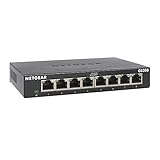
- GIGABIT ETHERNET PORTS: Features 8 x 1.0Gbps Ethernet ports for high-speed connectivity. Auto-negotiating ports detect the optimal speed for connected devices and work with existing Cat5e or Cat6 Ethernet cables.
- PLUG-AND-PLAY UNMANAGED NETWORK SWITCH: Simple plug-and-play setup with no software to install or configuration required.
- FLEXIBLE MOUNTING OPTIONS: Compact metal design supports desktop or wall-mount placement for versatile installation.
- SILENT & ENERGY-EFFICIENT OPERATION: Fanless design ensures silent performance, while IEEE 802.3az Energy Efficient Ethernet reduces power consumption without compromising high-speed network performance.
- REGIONAL COMPATIBILITY: Made for use in U.S. & CA only
They should not be mistaken for a complete enterprise governance framework. A platform can show lineage for the systems it supports, but it may not settle a business definition, govern an external spreadsheet, establish retention policy, or resolve ownership disputes across departments.
Core data governance capabilities and tools
Business glossary and metadata
A business glossary defines important terms such as customer, active account, revenue, consent, or critical data element. A useful entry normally includes the approved definition, synonyms, owner, steward, classification, related policies, authoritative sources, quality expectations, and approval history.
Metadata adds technical and operational context: schemas, data types, classifications, refresh rates, quality status, lineage, usage, retention, and permitted uses. Automated discovery can populate much of this information, but people must resolve competing meanings and approve business context.
Data catalog and discovery
A catalog helps users locate assets and understand whether they are relevant. Governance adds the decisions that make a catalog trustworthy:
- Which asset is authoritative?
- Who owns and certifies it?
- When was it last reviewed?
- What restrictions apply?
- How does a user request access?
- What known quality issues or downstream dependencies exist?
Catalog adoption is more meaningful than catalog size. A smaller catalog containing high-value, well-maintained assets can be more useful than an automatically harvested inventory nobody trusts.
Data quality
Quality must be defined in business terms. Common dimensions include accuracy, completeness, timeliness, validity, uniqueness, and consistency. Not every dataset needs the same threshold: a marketing experiment and a regulatory report have different tolerances for missing or late records.
For each critical data element, define an accountable owner, a measurable rule where practical, a threshold or service-level expectation, a monitoring method, an issue-management process, and a target resolution time. Replace statements such as the customer data is bad with a test such as at least 99.5% of active customer records must contain a valid country code at the daily reporting cutoff.
Classification and sensitive-data handling
Classification identifies personal, sensitive, confidential, regulated, or mission-critical data. The classification should drive practical controls such as access restrictions, masking, encryption, retention, monitoring, approved-use rules, and restrictions on copying or exporting.
Classification tools can produce false positives and false negatives, especially when they infer sensitivity from names or patterns. High-impact classifications should have a review process and an owner. In applicable Microsoft Purview environments, Microsoft guidance emphasizes role separation, group-based access, multifactor authentication for privileged users, and defense-in-depth network controls; those controls still need to be configured and verified for the organization’s specific architecture.
Access governance
Access decisions should consider identity, role, legitimate purpose, least privilege, segregation of duties, and risk. They should cover the entire access lifecycle:
- Joiner: access granted when someone joins a team or organization.
- Mover: access adjusted when responsibilities change.
- Leaver: access removed promptly when employment or authorization ends.
- Temporary access: time-limited access with an expiration and owner.
- Service accounts: non-human identities with documented ownership, scope, secrets management, and review.
- Privileged access: elevated permissions with stronger authentication, monitoring, separation, and periodic review.
- Recertification: owners periodically confirm that existing access remains necessary.
Data owners should approve access for their domains, while security and platform teams implement and monitor controls. Databricks recommends account-level identity management, organization-aligned groups, group ownership of production catalogs and schemas, and carefully scoped catalog and schema permissions.
Also popular on Amazon
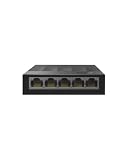
- 【One Switch Made to Expand Network】Features 5 RJ45 ports with 10/100/1000Mbps speeds, supporting Auto-Negotiation and Auto MDI/MDIX for hassle-free setup. Ideal for expanding your network, with 1 uplink (input) port and 4 output ports to split your Ethernet connection to multiple devices.
- 【Gigabit that Saves Energy】Latest innovative energy-efficient technology greatly expands your network capacity with much less power consumption and helps save money
- 【Reliable and Quiet】IEEE 802.3X flow control provides reliable data transfer and Fanless design ensures quiet operation
- 【Plug and Play】Easy setup with no software installation or configuration needed
- 【Ethernet Splitter】Connect to your router or modem for additional wired connections (laptop, gaming console, printer, etc)
Lineage and impact analysis
Lineage records the movement and transformation of data from sources through pipelines, tables, reports, models, and other downstream uses. It supports incident response, regulatory evidence, impact analysis, migration planning, and confidence in analytics.
Lineage is especially valuable when a small source change can affect many reports or AI systems. Before changing a field, a team should be able to identify dependent dashboards, extracts, models, contracts, and controls. Automated lineage is helpful, but coverage varies by source, connector, query pattern, and platform; buyers should test it against real workloads.
Retention, lifecycle, and disposal
Governance should define why data is retained, how long it is needed, which legal holds or regulatory requirements apply, how it is archived, and how it is deleted. Retention is not only a storage-cost decision. It must be coordinated with privacy, records management, litigation, security, backup, and operational requirements.
A retention rule that exists only in a policy document is incomplete. The organization should know which system applies it, how exceptions are handled, how legal holds suspend deletion, and what evidence proves that disposal occurred.
AI and machine-learning governance
AI increases the importance of data provenance, rights, classification, quality, access, lineage, model-use restrictions, and organizational accountability. Before an AI system reaches production, the organization should be able to answer:
Do these 3 things before closing this tab:
1Repair Windows errors before they cause bigger problems2Fix the driver behind crashes, sound loss and screen glitches3Clear out junk files and repair common Windows errors- What data trained, tuned, retrieved, or otherwise influenced the system?
- Was the organization permitted to use that data for this purpose?
- Does it contain personal, confidential, copyrighted, regulated, or restricted information?
- What quality, bias, freshness, and representativeness concerns are known?
- Which people approved the use and remain accountable?
- What data and model lineage is available for an incident or audit?
- How are prompts, outputs, access, human review, and misuse monitored?
Data and AI governance are increasingly connected. Databricks describes Unity Catalog as a governance layer for data and AI assets, while Atlan emphasizes governance context around classification, lineage, access, and policy propagation to AI systems. Those capabilities can help operationalize controls, but they do not independently decide whether a use is lawful, ethical, commercially acceptable, or appropriate for a particular business purpose.
How to choose a data governance tool
Start with the outcome rather than a shortlist of products. A regulatory-reporting problem, a customer-master problem, and an AI-readiness problem may need different capabilities and implementation sequences.
Tool landscape
| Product or approach | Potential fit | What to validate |
|---|---|---|
| Microsoft Purview data governance | Organizations using Microsoft 365, Azure, and Microsoft-centered data estates. Microsoft documentation describes the Unified Catalog, Data Map, governance roles, permissions, and related security and compliance capabilities. | Supported sources, actual feature availability in the relevant region and subscription, permissions design, integration depth, licensing, and adoption by non-technical users. |
| Databricks Unity Catalog | Databricks-centered lakehouse environments that need catalog-level organization, identity, access control, lineage, discovery, and governance of data and AI assets across workspaces. | Compatibility with the organization’s Databricks architecture, identity model, external systems, lineage coverage, policy behavior, and operational ownership. |
| Collibra data governance | Large enterprises emphasizing business language, stewardship workflows, centralized policies, issue management, discovery, and regulatory evidence. | Integration coverage, workflow configuration, implementation effort, user experience, commercial terms, and whether business teams will maintain the content. |
| Atlan Active Data Governance | Modern data teams interested in active metadata, classification, lineage, access governance, policy propagation, and AI-oriented governance context. | Supported systems, metadata freshness, policy enforcement, AI integrations, implementation effort, licensing, and the difference between vendor positioning and independently demonstrated results. |
These products are not ranked. Microsoft Purview may be a natural starting point for a Microsoft-centered estate, Unity Catalog for a Databricks-centered architecture, and independent enterprise platforms such as Collibra or Atlan for organizations seeking broader or different metadata and workflow patterns. The correct choice depends on the estate, operating model, risk requirements, and the people who will use the system.
Evaluation checklist
Use a proof of concept with real data and real users. Compare:
- Source coverage: Can the tool connect to the databases, SaaS applications, warehouses, lakes, files, BI tools, and AI systems that matter?
- Metadata quality: Is metadata complete, fresh, searchable, and easy for business users to correct?
- Lineage depth: Does lineage cover the transformations and downstream assets that the business actually relies on?
- Workflow flexibility: Can it route ownership, access, glossary, quality, exception, and remediation tasks?
- Identity integration: Does it work with the organization’s identity provider, groups, privileged-access processes, and service accounts?
- Policy enforcement: Does it merely document policies, or can it enforce them in the relevant systems?
- Quality monitoring: Can teams define rules, thresholds, alerts, issue ownership, and remediation evidence?
- APIs and interoperability: Can metadata, lineage, policies, and issues be exchanged with other tools?
- Regional and commercial fit: Are the required features available in the relevant geography and edition, and what are the licensing and implementation costs?
- Adoption: Can analysts, engineers, owners, stewards, security teams, and auditors complete their work without bypassing the platform?
Vendor feature lists demonstrate capability claims, not governance outcomes. A proof of concept should test a defined business scenario, such as finding all reports affected by a customer identifier change or approving access to a classified dataset, and should measure time, accuracy, evidence quality, and user effort.
Data governance best practices
- Start with business outcomes, not a tool shortlist. Select one or two consequential use cases, such as regulatory reporting, customer master data, financial metrics, sensitive-data discovery, or AI data readiness.
- Assign named accountability. Every priority domain needs an owner, a steward, an escalation route, and a decision forum.
- Use a minimum viable scope. Begin with critical data elements, high-risk data, or high-value data products rather than trying to inventory everything immediately.
- Define terms before automating them. Automated metadata cannot settle conflicting business meanings without human decisions.
- Make quality measurable. Define rules, thresholds, monitoring, ownership, issue priority, and remediation targets.
- Treat access as a lifecycle. Cover joiners, movers, leavers, temporary access, service accounts, privileged access, and periodic review.
- Translate policy into action. Use workflows, validation checks, access rules, retention actions, and evidence collection. Where appropriate, implement policy as code.
- Integrate governance into delivery. Data products, pipelines, dashboards, and AI systems should include ownership, metadata, quality checks, lineage, and approved-use information as part of their normal lifecycle.
- Use federation carefully. Let domains make local decisions within shared enterprise standards and clear escalation mechanisms.
- Measure adoption and outcomes. Track owner and steward coverage, glossary adoption, catalog usage, critical-data quality, issue-resolution time, access-review completion, lineage coverage, policy exceptions, and audit findings.
- Separate evidence from marketing. Validate supported sources, geography, licensing, integrations, preview status, security architecture, and total cost in a proof of concept.
- Review every AI use case. Make data rights, provenance, personal information, model inputs, output monitoring, and human oversight explicit before production deployment.
A practical implementation roadmap
First 30 days: establish direction
- Identify an executive sponsor and initial governance forum.
- Select one or two high-value use cases.
- Define the first data domains and critical data elements.
- Name owners and stewards.
- Record current pain points, regulatory drivers, dependencies, and major risks.
- Choose a vocabulary framework, such as DAMA-DMBOK or ISO/IEC 38505, and document how it will be adapted.
Expected result: a small, approved scope with accountable people and a clear reason for doing the work.
Also popular on Amazon

- 𝗘𝗶𝗴𝗵𝘁 𝟮.𝟱 𝗚𝗯𝗽𝘀 𝗣𝗼𝗿𝘁𝘀 𝗳𝗼𝗿 𝗦𝘂𝗽𝗲𝗿-𝗙𝗮𝘀𝘁 𝗖𝗼𝗻𝗻𝗲𝗰𝘁𝗶𝗼𝗻𝘀: 8× 2.5-Gigabit ports unlock the highest performance of your Multi-Gig bandwidth and devices, and provide up to 40 Gbps of switching capacity.
- 𝗔𝘂𝘁𝗼-𝗡𝗲𝗴𝗼𝘁𝗶𝗮𝘁𝗶𝗼𝗻: Auto-negotiation intelligently senses the link speeds and adjusts between 3-speeds (100Mb/1G/2.5G) for compatibility and optimal performance for all your devices, including 2.5G WiFi 6 AP, 2.5G NAS, 2.5G PCIe Adapter, 2.5G Server, gaming computer, 4K video, and more.
- 𝗜𝗱𝗲𝗮𝗹 𝗳𝗼𝗿 𝗩𝗮𝗿𝗶𝗼𝘂𝘀 𝗦𝗰𝗲𝗻𝗮𝗿𝗶𝗼𝘀: Built for LAN parties, home entertainment, small and home offices, and instant transfer for workstations.
- 𝗛𝗮𝘀𝘀𝗹𝗲-𝗙𝗿𝗲𝗲 𝗖𝗮𝗯𝗹𝗶𝗻𝗴: Instantly upgrade to 2.5 Gbps without the need to upgrade to Cat6 wiring, reducing wiring costs and hassle. *
- 𝗦𝗶𝗹𝗲𝗻𝘁 𝗢𝗽𝗲𝗿𝗮𝘁𝗶𝗼𝗻: Industry-leading fanless design ensures silent operation, ideal for any home or business.
Days 31–90: create the minimum operating model
- Approve governance principles and decision rights.
- Create an initial glossary and ownership register.
- Define classification, access, quality, issue-management, retention, and exception procedures.
- Inventory priority assets and map basic lineage.
- Establish baseline measures.
- Test whether existing identity, catalog, quality, security, and workflow tools can support the selected use case.
Expected result: a working governance process that can be tested on real assets, not merely a committee charter or tool installation.
Months 4–12: operationalize and scale
- Automate metadata ingestion, classification, lineage, quality checks, access workflows, and evidence collection where the return justifies it.
- Expand from the initial domain to adjacent domains using reusable standards.
- Integrate governance gates into data engineering, analytics, procurement, and AI-development processes.
- Conduct a capability or maturity assessment and reprioritize based on measurable business and risk outcomes.
- Revisit the operating model as ownership, technology, regulations, and AI use evolve.
Expected result: governance becomes part of normal delivery and operational review rather than a separate documentation exercise.
Quick wins for a faster PC:
Clear out junk files and repair common Windows errorsFree Scan →Fix the driver behind crashes, sound loss and screen glitchesFind Drivers →Repair Windows errors before they cause bigger problemsFix Now →Example: governing a customer-revenue metric
Suppose finance, sales, and analytics use different definitions of customer revenue. A weak response is to publish another spreadsheet explaining the preferred definition. A governance response would:
- Name a business owner for the revenue domain and a steward for the metric.
- Approve the definition, calculation logic, exclusions, currency treatment, and reporting period.
- Identify the authoritative source and related critical data elements.
- Document lineage from source transactions through transformations to dashboards and models.
- Set quality rules for missing values, duplicate transactions, valid currencies, and reporting timeliness.
- Classify the underlying data and define who may view detailed records versus aggregated results.
- Create an issue process for disputes or failed checks.
- Require downstream reports and AI systems using the metric to reference the approved definition and lineage.
This example shows why governance is broader than cataloging. The catalog can make the definition and assets visible, but people and processes must establish which meaning is approved and how it is maintained.
Common data governance failure modes
- Buying a catalog before defining ownership: The organization gets an inventory of assets but nobody is accountable for their meaning or quality.
- Treating governance as an IT-only project: Technical teams cannot decide business definitions, acceptable use, or risk tolerance alone.
- Creating a glossary that no process uses: Definitions become stale because reports, data products, procurement, and access workflows never depend on them.
- Counting assets instead of outcomes: A large catalog does not prove trust, adoption, quality improvement, or risk reduction.
- Centralizing every decision: A committee becomes a bottleneck and domains learn to work around it.
- Automating classification without review: False positives create unnecessary restrictions, while false negatives can expose sensitive information.
- Granting broad access because ownership is unclear: Ambiguous accountability often produces excessive permissions rather than safer defaults.
- Ignoring retention and deletion: Retention rules are postponed until after a migration, audit, privacy request, or incident.
- Separating AI governance from data governance: The organization loses sight of provenance, rights, quality, access, and downstream impact.
- Confusing vendor claims with achieved outcomes: A product’s feature list does not prove that the organization has adopted the required controls.
Data governance checklist
Use this checklist to assess whether a program is becoming operational:
- Is there an executive sponsor or decision forum?
- Are owners and stewards named for priority domains?
- Are decision rights and escalation paths documented?
- Do important business terms have approved definitions?
- Can users identify authoritative and certified assets?
- Are critical data elements associated with measurable quality rules?
- Is there an issue queue with owners, priorities, and target resolution times?
- Are sensitive-data classifications connected to access, masking, retention, and monitoring controls?
- Does access cover joiners, movers, leavers, temporary permissions, service accounts, and privileged users?
- Can the organization trace important data from source to report, model, or AI system?
- Are retention, legal holds, archiving, and deletion responsibilities clear?
- Are policy exceptions approved, time-limited, and recorded?
- Are governance requirements built into data-product and AI-development lifecycles?
- Are adoption, quality, remediation, access review, lineage, and audit outcomes measured?
Frequently Asked Questions
Is data governance an IT responsibility?
IT, security, and platform teams implement many controls, but governance also requires business owners, stewards, privacy, legal, risk, compliance, analytics, and executive participation. Business teams must decide meaning, acceptable use, quality expectations, and risk trade-offs.
Is a data catalog the same as data governance?
No. A catalog inventories and describes assets. Governance decides which assets are authoritative, who owns them, what terms mean, what restrictions apply, how access is approved, and how quality or policy issues are handled.
Which data governance framework should an organization choose?
Choose based on the job. DAMA-DMBOK is useful for vocabulary and capability mapping, ISO/IEC 38505-1 for governing principles and executive accountability, DCAM for capability assessment, and platform-native approaches for implementing controls in a particular technology estate. Organizations can combine them.
How long does data governance implementation take?
A focused first use case can establish direction in 30 days and a minimum operating model in 31–90 days. Broader automation and scaling generally require several more months. The timeline depends on data complexity, regulatory exposure, ownership clarity, existing tools, and organizational adoption.
Can data governance improve AI projects?
Yes. Governance can make data provenance, rights, classification, quality, access, lineage, approved use, and accountability explicit before an AI system reaches production. It does not by itself guarantee model accuracy, fairness, legal compliance, or appropriate business use.
The Bottom Line
Data governance is not a catalog, a security product, a privacy checklist, or a committee operating in isolation. It is the organization’s system for making data decisions accountable and repeatable. Start with a consequential use case, name owners and stewards, define a small set of important terms and quality rules, connect policies to workflows and technical controls, and measure whether people can actually find, understand, trust, protect, and use the data.

