
What’s actually slowing this PC down?
Pick the symptom - the matching free tool is one click away.
Adaptive bitrate streaming (ABR) lets a viewer’s player switch among available video versions as network conditions change. For a typical YouTube Live broadcast, you do not need to create a separate ABR ladder: YouTube says it transcodes the incoming stream into multiple output formats. Your job is to send a stable feed using a supported encoder setup and a bitrate your upload connection can sustain.
What adaptive bitrate streaming means
ABR is a playback technique: a player can select a lower-bitrate version when bandwidth falls, then move to a higher-quality version when conditions improve. The Internet Engineering Task Force describes this dynamic adjustment in its RFC 9317. Apple’s HTTP Live Streaming documentation likewise describes alternate bit-rate streams and switching as network bandwidth changes.
ABR is not the same thing as the bitrate your encoder sends to YouTube. The live video pipeline has three parts:
- Ingest: Your camera, computer, or hardware encoder sends one configured feed to YouTube.
- Platform processing: YouTube receives that feed and transcodes it into output formats for viewers.
- Playback: A viewer’s player selects an available version suited to the viewer’s current connection and device.
YouTube Help says: “YouTube will automatically transcode your live stream to create many different output formats so that all of your viewers across many devices and networks can watch.” See Choose live encoder settings, bitrates, and resolutions.
#1 Best Overall

- GIGABIT ETHERNET PORTS: Features 5 x 1.0Gbps Ethernet ports for high-speed connectivity. Auto-negotiating ports detect the optimal speed for connected devices and work with existing Cat5e or Cat6 Ethernet cables.
- PLUG-AND-PLAY UNMANAGED NETWORK SWITCH: Simple plug-and-play setup with no software to install or configuration required.
- FLEXIBLE MOUNTING OPTIONS: Compact metal design supports desktop or wall-mount placement for versatile installation.
- SILENT & ENERGY-EFFICIENT OPERATION: Fanless design ensures silent performance, while IEEE 802.3az Energy Efficient Ethernet reduces power consumption without compromising high-speed network performance.
- REGIONAL COMPATIBILITY: Made for use in U.S. & CA only
Do you need to configure ABR for YouTube Live?
Usually, no. For an ordinary YouTube Live broadcast, you send a single compatible feed; YouTube handles creating multiple output formats. You do not need to send a separate rendition for every viewer quality or buy a multi-bitrate encoder just because you want viewers to have quality choices.
You do need an encoder configuration that YouTube supports, a source resolution and frame rate that suit your production, and enough reliable upload bandwidth for the outgoing stream. An encoder may be software or standalone hardware. YouTube lists encoder workflows for productions such as gameplay or screen sharing, external audio/video equipment, and multi-camera setups. Its encoder setup guide also links to verified encoders and notes that those products are not made by YouTube; choose one based on your actual production needs.
Rank #2

- 𝗢𝗻𝗲 𝗦𝘄𝗶𝘁𝗰𝗵 𝗠𝗮𝗱𝗲 𝘁𝗼 𝗘𝘅𝗽𝗮𝗻𝗱 𝗡𝗲𝘁𝘄𝗼𝗿𝗸: 5× 10/100/1000Mbps RJ45 Ports supporting Auto Negotiation and Auto MDI/MDIX.
- 𝗚𝗶𝗴𝗮𝗯𝗶𝘁 𝘁𝗵𝗮𝘁 𝗦𝗮𝘃𝗲𝘀 𝗘𝗻𝗲𝗿𝗴𝘆: Latest innovative energy-efficient technology greatly expands your network capacity with much less power consumption and helps save money.
- 𝗥𝗲𝗹𝗶𝗮𝗯𝗹𝗲 𝗮𝗻𝗱 𝗤𝘂𝗶𝗲𝘁: IEEE 802.3X flow control provides reliable data transfer and Fanless design ensures quiet operation.
- 𝗣𝗹𝘂𝗴 𝗮𝗻𝗱 𝗣𝗹𝗮𝘆: Easy setup with no software installation or configuration needed.
- 𝗔𝗱𝘃𝗮𝗻𝗰𝗲𝗱 𝗦𝗼𝗳𝘁𝘄𝗮𝗿𝗲 𝗙𝗲𝗮𝘁𝘂𝗿𝗲𝘀: Prioritize your traffic and guarantee high quality of video or voice data transmission with Port-based 802.1p/DSCP QoS and IGMP Snooping.
Choose a sustainable YouTube Live bitrate
YouTube’s current English encoder-settings page, checked October 3, 2026, lists RTMP/RTMPS ingest; H.264, H.265/HEVC, and AV1 video; frame rates up to 60 fps; constant bitrate encoding; and a recommended two-second keyframe interval that should not exceed four seconds. For RTMP/RTMPS audio, it lists AAC or MP3; AAC is required for 5.1 surround. Consult the current YouTube table before a broadcast because supported settings and recommendations can change.
Examples of YouTube’s recommended encoder bitrates are below. These are encoder settings, not guarantees of picture quality or minimum household internet speeds.
The Tool Desk
Outbyte PC Repair FREERepair Windows errors before they cause bigger problemsFix Now →Outbyte Driver Updater FREEScan for outdated or missing drivers - takes under a minuteDriver Scan →Rank #3

- GIGABIT ETHERNET PORTS: Features 8 x 1.0Gbps Ethernet ports for high-speed connectivity. Auto-negotiating ports detect the optimal speed for connected devices and work with existing Cat5e or Cat6 Ethernet cables.
- PLUG-AND-PLAY UNMANAGED NETWORK SWITCH: Simple plug-and-play setup with no software to install or configuration required.
- FLEXIBLE MOUNTING OPTIONS: Compact metal design supports desktop or wall-mount placement for versatile installation.
- SILENT & ENERGY-EFFICIENT OPERATION: Fanless design ensures silent performance, while IEEE 802.3az Energy Efficient Ethernet reduces power consumption without compromising high-speed network performance.
- REGIONAL COMPATIBILITY: Made for use in U.S. & CA only
| Output format | H.264 recommendation | AV1 or H.265 recommendation |
|---|---|---|
| 720p at 60 fps | 8 Mbps | 6 Mbps |
| 1080p at 30 fps | 14 Mbps | 10 Mbps |
| 1080p at 60 fps | 17 Mbps | 12 Mbps |
| 2160p (4K) at 60 fps | 50 Mbps | 35 Mbps |
Use the full YouTube settings table for other resolutions and frame rates, including its minimums. YouTube notes that 4K/2160 streams are set to normal latency. If your encoder does not support the codec you intend to use, select a supported alternative rather than assuming that all encoders offer the same options.
Check upload bandwidth and stream health
YouTube recommends keeping the total stream bitrate within available upload bandwidth and leaving 20% headroom. For example, a stream set to 10 Mbps calls for more than 10 Mbps of upload capacity because the recommendation is to reserve headroom; other devices and network activity can reduce what is available to the encoder. Test upload speed, not just download speed, and remember that a shared or unstable connection can disrupt delivery. See YouTube’s streaming tips.
Rank #4

- 8 GIGABIT PORTS: Features 8 RJ45 ports supporting 10/100/1000 Mbps speeds, providing high-speed wired network connectivity for computers, printers, gaming consoles, and other Ethernet-enabled devices
- PLUG AND PLAY SETUP: No configuration required; simply connect the switch to your network devices and it is ready to use immediately, making network expansion quick and hassle-free
- FANLESS QUIET DESIGN: The fanless design ensures silent operation, making this switch suitable for noise-sensitive environments such as home offices, bedrooms, or conference rooms
- STURDY METAL CONSTRUCTION: Built with a durable metal housing and shielded ports that provide reliable performance, better heat dissipation, and protection against electromagnetic interference
- TRAFFIC OPTIMIZATION: Supports IEEE 802.3x flow control and advanced traffic optimization technology to reduce data bottlenecks and ensure smooth, efficient data transfer across your network
- Set a realistic source format. Pick a resolution and frame rate your production and connection can sustain, then use the corresponding bitrate guidance for your codec.
- Run a representative test. Include the usual audio and the amount of motion expected in the event; a static test image may not reflect the demands of gameplay, movement, or a busy scene.
- Check stream health before and during the event. Watch for warnings or interruptions, and lower the source bitrate or quality if the upload connection cannot sustain the chosen settings.
If a computer-based encoder is struggling on Wi-Fi and the computer can reach the router by cable, a wired Ethernet connection is one possible reliability measure—not a requirement for ABR or for YouTube Live.
Independent reader supportYour contribution helps us test, update, and keep practical guides available for everyone.What ABR will not fix
ABR can help a viewer’s player adapt picture quality to changing delivery conditions, but it cannot guarantee uninterrupted playback, eliminate buffering, or repair a weak connection between your encoder and YouTube. If the creator’s upload stalls, YouTube may not receive a usable live feed regardless of what the viewer’s player can adapt to.
Quick wins for a faster PC:
Scan for outdated or missing drivers - takes under a minuteDriver Scan →Clear out junk files and repair common Windows errorsFree Scan →Fix the driver behind crashes, sound loss and screen glitchesFind Drivers →Best Value
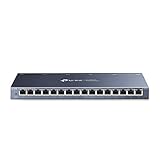
- One Switch Made to Expand Network-16× 10/100/1000Mbps RJ45 Ports supporting Auto Negotiation and Auto MDI/MDIX
- Gigabit that Saves Energy-Latest innovative energy-efficient technology greatly expands your network capacity with much less power consumption and helps save money
- Reliable and Quiet-IEEE 802.3X flow control provides reliable data transfer and Fanless design ensures quiet operation
- Plug and Play-Easy setup with no software installation or configuration needed
- Advanced Software Features-Prioritize your traffic and guarantee high quality of video or voice data transmission with Port-based 802.1p/DSCP QoS and IGMP Snooping
Latency is a separate consideration: YouTube defines stream latency as the delay from capture by the camera or encoder to display for viewers. Lower-latency settings can increase playback buffering, and YouTube says 4K/2160 streams use normal latency. ABR alone does not make a stream low-latency. See Manage live stream settings and YouTube’s encoder guidance.
When specialized encoder settings matter
For a straightforward webcam broadcast, the phrase “adaptive bitrate” is not a reason by itself to purchase dedicated encoder hardware. Software or hardware encoders become useful when your production needs call for screen capture, external audio/video devices, or multiple cameras. Compare options by the inputs you need, supported codecs and resolutions, reliability, and the complexity you are prepared to manage.
HDR is a specialized workflow, not a prerequisite for ordinary ABR. YouTube documents additional protocol and encoder requirements, including HEVC and 10-bit configuration. If you plan an HDR broadcast, follow the current YouTube HDR streaming setup rather than applying standard SDR settings by assumption.
Or let it run in the cloud
For a different use case—keeping uploaded videos looping as a 24/7 YouTube stream—StreamNeo is a cloud service, not an ABR setting or a camera-broadcast encoder. Upload a recording or build a playlist, add your YouTube stream key once, and go live. StreamNeo loops the uploaded video from the cloud, so nothing has to stay on at home. It streams the file as uploaded, up to 4K 60fps, at one price per slot; it can automatically recover if YouTube drops the stream. The first day is free with no card. Monthly pricing is $9.99 per month.
Quick Recap
Start your StreamNeo free day.
Product prices and availability are accurate as of the date/time indicated and are subject to change. Any price and availability information displayed on Amazon at the time of purchase will apply.

