
Accenture AI Refinery is an enterprise framework and service, not a new language model. Announced on July 23, 2024, it paired Accenture’s consulting and AI framework with NVIDIA AI Foundry to help businesses customize and deploy models from Meta’s Llama 3.1 collection using company data and processes. The launch described a way to build and operate tailored AI systems; it did not establish independent performance results or disclose standard pricing.
What Accenture and NVIDIA announced
Accenture announced AI Refinery as part of its foundation model services, built on NVIDIA AI Foundry. Accenture said clients could use it to create custom Llama models informed by their enterprise data and processes. It also said it would use the framework internally, beginning with marketing and communications. NVIDIA identified Accenture as the first adopter of AI Foundry for custom Llama 3.1 models for internal and client use.
The announcement came on the same day Meta released Llama 3.1. That timing matters: the news was about a service framework for tailoring and deploying existing models, not an Accenture-developed foundation model.
What AI Refinery is designed to do
Accenture described four elements in the launch announcement. These are the company’s descriptions of the framework, not independently audited capabilities.
#1 Best Overall
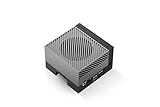
- The NVIDIA Jetson AGX Orin 64GB Developer Kit makes it easy to get started with Jetson Orin. Compact size, lots of connectors, and up to 275 TOPS of AI performance make this developer kit perfect for prototyping advanced AI-powered robots and other autonomous machines.
- The developer kit includes a Jetson AGX Orin 64GB module, and can emulate all the Jetson Orin modules. It supports multiple concurrent AI application pipelines with the NVIDIA Ampere GPU architecture, next-generation deep learning and vision accelerators, high-speed IO and fast memory bandwidth. Now you can develop solutions using your largest and most complex AI models to solve problems such as natural language understanding, 3D perception, and multi-sensor fusion.
- Jetson runs the NVIDIA AI software stack, and use-case specific application frameworks are available, including Isaac for robotics, DeepStream for vision AI, and Riva for conversational AI. You can save significant time with NVIDIA Omniverse Replicator for synthetic data generation (SDG), and by using NVIDIA TAO toolkit to fine-tune pretrained AI models from the NGC catalog.
- Jetson ecosystem partners offer additional AI and system software, developer tools, and custom software development. They can also help with cameras and other sensors, as well as carrier boards and design services for your product.
- With the computing capability of more than 8 Jetson AGX Xavier systems in a developer kit that integrates the latest NVIDIA GPU technology with the world’s most advanced deep learning software stack, you’ll have the flexibility to create tomorrow’s AI solution as well as today’s.
Customize models for a business domain
Accenture described refining prebuilt foundation models with client data and business processes. NVIDIA’s announcement named NeMo as a customization component and described Llama 3.1 405B and Nemotron-4 340B as a route to generating synthetic training data. The launch material does not specify the data-handling terms, training recipe, or architecture used for a particular client.
Select a model for the task
Accenture’s Switchboard platform was described as selecting a model, or combination of models, according to business context and factors such as cost or accuracy. The announcement did not provide a model-by-model comparison or explain how buyers could inspect or tune those selection decisions.
Make enterprise information available to AI
Accenture described an “enterprise cognitive brain” that scans and vectorizes corporate information into an enterprise-wide index. NVIDIA separately named NeMo Retriever microservices for retrieval-augmented generation (RAG), a method that retrieves relevant information to provide context for a model’s response. The two descriptions relate to enterprise knowledge access, but the announcements do not define them as one product or establish the exact architecture for a customer deployment.
Build agent-based workflows
Accenture described an agentic architecture in which systems can reason, plan, and propose tasks for execution with minimal human oversight. This is a description of intended functionality, not evidence that autonomous actions were deployed without human review. Buyers should establish which actions an agent may take, what approvals are required, and how activity is logged before allowing it to affect business systems or customers.
Recommended Free Tools
How NVIDIA AI Foundry fits in
NVIDIA described AI Foundry as an end-to-end model service that combines NVIDIA software, infrastructure, and expertise with open community models and its partner ecosystem. Its July 2024 announcement named several components relevant to AI Refinery:
- NeMo: for model customization.
- Llama 3.1 405B and Nemotron-4 340B: described as a way to generate synthetic training data.
- NIM inference microservices: for serving models.
- NeMo Retriever microservices: for retrieval-augmented generation.
NVIDIA said custom models could be deployed through customers’ preferred cloud and MLOps/AIOps platforms, including on NVIDIA-Certified Systems. This describes the available deployment approach at announcement time; it does not identify a particular client’s cloud, system configuration, or commercial terms.
Rank #2

- AGX Orin 64GB Development Kit makes it easy to get started with AGX Orin. Its compact size, rich interfaces, and AI performance of up to 275 TOPS make it ideal for building advanced AI robots and other autonomous machine prototypes.
- The development kit includes AGX Orin 64GB module and can emulate all Orin modules. It utilizes the Ampere GPU architecture, next-generation deep learning and vision accelerators, high-speed I/O, and fast memory bandwidth. You can leverage the largest and most complex AI models to develop solutions for problems such as natural language understanding, 3D perception, and multi-sensor fusion.
- Jetson runs AI software and provides application frameworks for specific use cases, such as Isaac for robotics, DeepStream for visual AI, and Riva for conversational AI. Using Omniverse Replicator for Synthetic Data Generation (SDG) can save you significant time; while fine-tuning pre-trained AI models from the NGC catalog using the TAO toolkit can further enhance your results.
- Yahboom offers four kits for users to choose from. The AIlarge model voice module utilizes examples of AI large models and multimodal models; it provides 1TB/2TB SSDs with pre-flashed driver image files; and an 8MP USB industrial camera for image processing.
- It offers various online and offline mainstream AI large model development materials. The system is pre-configured with AI vision examples, ROS case studies, and AI large models. It supports offline/online deployment of large models for voice interaction, real-time video analysis, and visual positioning, helping you quickly get started with localized AI agent development.
Which Llama 3.1 models were involved?
NVIDIA’s July 23, 2024 announcement described Llama 3.1 models in three sizes:
| Model | Parameter size | Context |
|---|---|---|
| Llama 3.1 8B | 8 billion | NVIDIA listed this as one of the Llama 3.1 collection’s model sizes. |
| Llama 3.1 70B | 70 billion | NVIDIA listed this as one of the Llama 3.1 collection’s model sizes. |
| Llama 3.1 405B | 405 billion | NVIDIA listed this as one of the Llama 3.1 collection’s model sizes and cited it in the synthetic training data approach. |
NVIDIA said the Llama 3.1 collection was trained on more than 16,000 H100 GPUs. It also claimed in the 2024 launch announcement that Llama 3.1 NIM microservices could deliver “up to 2.5x higher throughput” than inference without NIM. That is a vendor claim, not an independently verified benchmark for an AI Refinery deployment; actual results would depend on the workload and implementation.
Quick wins for a faster PC:
Scan for outdated or missing drivers - takes under a minuteDriver Scan →Repair Windows errors before they cause bigger problemsFix Now →Fix the driver behind crashes, sound loss and screen glitchesFind Drivers →How the offering expanded in 2025
Accenture’s later announcements described a move from custom model services toward industry-specific agents and tools for building agent teams. These dated company updates show direction, not proof that every listed solution reached general availability or production deployment.
AI Refinery for Industry
On January 6, 2025, Accenture announced AI Refinery for Industry with 12 initial agent solutions and said it planned to expand the collection. Examples included revenue growth management for consumer goods, a clinical trial companion for life sciences, industrial asset troubleshooting, and B2B marketing. Accenture said the platform was available on public and private cloud platforms.
Accenture also reported that more than 600 of its marketing professionals were using agents, with the system accessing over 20 data sources. Those are Accenture-reported deployment details, not an independent evaluation of business outcomes.
Agent builder and additional use cases
On March 18, 2025, Accenture announced an agent builder intended to let business users build or customize agent teams without coding, with governance and guardrails described as built into the platform. The same release listed use cases in telecom call-center assistance, insurance underwriting, order-to-cash, and commercial credit sales intelligence.
Crashes, No Sound, or Screen Glitches?
Random freezes, missing sound and display glitches usually trace back to one bad driver. Find and replace yours safely.Free scan · under a minutePC Slower Than It Used to Be?
A free scan shows the junk files, broken settings and background clutter dragging Windows down - then fixes them in one click.Free scan · Windows 10 & 11Rank #3

- 【Core Parameters】★AI Perf:34-67 TOPS ★GPU:512-core NVIDIA Ampere architecture GPU with 16 Tensor Cores ★CPU:6-core Arm Corte-A78AE v8.2 64-bit CPU 1.5MB L2 + 4MB L3 ★Memory:4GB 64-bit LPDDR5 51 GB/s ★Storage: external NVMe via M.2 Key M (NOTE:SUB Board No SD Card Slot)
- 【Empowered by Large Al Model, Enhanced Human-Computer Interaction】Jetson Orin Super leverages three AI models and incorporates an AI voice interaction module. This multimodal visual system matches the scene being described, enabling environmental awareness and AI visual gameplay. Combined with a large-scale voice module and camera, it enables speech-to-text, semantic analysis, natural conversation, and real-time video analysis, enabling advanced embodied AI applications.
- 【AI Upgrade】Jetson Orin Nano series modules are compact in size but can deliver up to 34-67 TOPS of AI performance, with power consumption ranging from 7 watts to 25 watts. Compared to the Jetson Nano B01, it offers up to 80 times the performance and sets a new standard for entry-level edge AI.
- 【Highly compatible carrier board】Yahboom's carrier board is fully compatible with orin nano module. Compared to carrier boards that use Jetson Nano on the market, the newly upgraded circuit supports 25W power mode, which enables larger and more complex neural networks and fully leverages the performance of the core module. The resources, size, and interfaces of the Yahboom carrier board are consistent with the official board, with the only difference addition of power switch button.
- 【Tutorial materials provided】The JETSON system based on Ubuntu 22.04 provides a complete desktop Linux environment with accelerated graphics, supporting NVIDI-ACUDA 12.6, TensorRT 10.7.0, cuDNN 9.6.0, OpenCV 4.10.0, etc. The performance on AI LLM, VLM and visual Transformer is significantly improved compared with the previous generation.
Accenture named several external projects with distinct status descriptions: ESPN’s FACTS avatar was a research-and-development pilot with SEC Nation; HPE was developing a solution with HPE Private Cloud AI; Noli was an AI-powered beauty shopping platform built with Accenture; and the United Nations was working with Accenture on a multilingual research agent. “Pilot,” “developing,” and “working to develop” should not be read as completed general availability or independently verified results.
The March release said Accenture was developing more than 50 industry-specific agent solutions and set a goal of more than 100 by year-end 2025. Those were plans stated in March 2025; the announcement alone does not confirm that the goal was reached.
Independent reader supportYour contribution helps us test, update, and keep practical guides available for everyone.What an enterprise buyer should verify
The launch announcements describe a broad set of components, but do not provide a head-to-head comparison, customer-specific price/performance results, or enough detail to settle several implementation questions. Before choosing AI Refinery or another enterprise customization approach, ask for answers tied to your intended workload:
- Data and customization: Which of your data sources are used for fine-tuning, retrieval, or both? Where is data stored and processed, and what are the retention and access controls?
- Model choice: Which models are supported for your use case, how does Switchboard select among them, and can your team set limits or require a particular model?
- Deployment and sovereignty: Which cloud, region, and infrastructure options are available to your organization, and what restrictions apply to moving data or models?
- Evaluation and safeguards: How are quality, retrieval accuracy, bias, and unsafe outputs evaluated? What guardrails, monitoring, audit logs, and human approvals are included?
- Integration effort: Which business systems need to connect, who builds and maintains those integrations, and what implementation work falls to your team?
- Cost and performance: What is the total cost under your expected usage, and what latency, throughput, and accuracy does a representative test show?
Accenture’s launch described cost and accuracy as model-selection factors, and NVIDIA outlined deployment components, but the announcements do not answer these buyer-specific questions for a particular organization.
What the announcements establish—and what they do not
The July 2024 releases establish that Accenture presented AI Refinery as an enterprise framework and service built on NVIDIA AI Foundry, with Llama 3.1 as the launch model family. Accenture described model customization, model selection, enterprise data indexing, and agentic architecture; NVIDIA described the software and infrastructure stack. The 2025 releases document Accenture’s stated expansion into industry agents and an agent builder.
The releases are vendor announcements, not independent comparative studies of AI Refinery. Company-reported metrics and projected benefits should be treated accordingly. For example, Accenture’s March 2025 release attributed to a telecom agent-assist solution claims of 25× faster call processing, a 2.6× improvement in call efficiency, and a 24% improvement in overall call accuracy; those figures were not independently verified in the announcement. The same release estimated that as much as 50% of property-and-casualty insurance submissions were left untouched in traditional processes. Accenture also cited separate research about industry-tailored solutions and ROI; that is a secondary citation to the underlying research, not independent confirmation within the announcement.
For primary descriptions and dated claims, see Accenture’s July 23, 2024 launch announcement, NVIDIA’s July 23, 2024 AI Foundry announcement, Accenture’s January 6, 2025 Industry announcement, and Accenture’s March 18, 2025 update.
Quick Recap
Product prices and availability are accurate as of the date/time indicated and are subject to change. Any price and availability information displayed on Amazon at the time of purchase will apply.
Free tools Windows power users keep installed
One-click scans. No signup required.

