
iTechGuides is reader-supported. When you buy through links on our site, we may earn an affiliate commission. As an Amazon Associate I earn from qualifying purchases. Learn more
RAM prices rise when demand for memory bits grows faster than available output, and fall when inventories build, consumer demand weakens or new capacity reaches production. The cycle is intensified by artificial-intelligence servers: the same factories, advanced packaging and testing resources that make high-bandwidth memory (HBM) and high-density server DDR5 cannot produce an equivalent quantity of ordinary PC or phone memory at the same time.
That is why a retailer’s price for a desktop kit can move differently from contract prices paid by cloud companies. To understand the market, separate application demand, product mix, inventory timing, manufacturing capacity and supplier competition.
Why RAM prices move in cycles
Dynamic random-access memory (DRAM) is manufactured in enormous, capital-intensive facilities. A new fab, process generation or advanced packaging line requires years of planning, construction, equipment installation and yield improvement. Once a line is running, output cannot be increased or reduced instantly. This creates a lag between a change in demand and a change in supply.
What’s actually slowing this PC down?
Pick the symptom - the matching free tool is one click away.
When PC makers, phone companies or cloud providers order more memory than suppliers have available, inventories shrink and prices rise. When customers cut orders while wafers and finished modules continue to arrive, inventories accumulate and prices fall. Because the major DRAM products are standardized enough to be substituted within a device class, suppliers compete intensely during oversupply and gain pricing power during shortages.
#1 Best Overall

- Boosts System Performance: 32GB DDR5 RAM laptop memory kit (2x16GB) that operates at 5600MHz, 5200MHz, or 4800MHz to improve multitasking and system responsiveness for smoother performance
- Accelerated gaming performance: Every millisecond gained in fast-paced gameplay counts—power through heavy workloads and benefit from versatile downclocking and higher frame rates
- Optimized DDR5 compatibility: Best for 12th Gen Intel Core and AMD Ryzen 7000 Series processors — Intel XMP 3.0 and AMD EXPO also supported on the same RAM module
- Trusted Micron Quality: Backed by 42 years of memory expertise, this DDR5 RAM is rigorously tested at both component and module levels, ensuring top performance and reliability
- ECC Type = Non-ECC, Form Factor = SODIMM, Pin Count = 262-Pin, PC Speed = PC5-44800, Voltage = 1.1V, Rank And Configuration = 1Rx8
The cycle operates at several price levels:
- Contract prices: negotiated periodically between DRAM suppliers and large OEMs, smartphone vendors and cloud providers.
- Spot prices: shorter-term trades for available chips and modules, which can react faster to shortages or inventory liquidation.
- Retail module prices: prices paid for DIMMs or laptop modules after packaging, distribution, brand margins, promotions and regional taxes.
These prices do not have to change on the same day. A falling contract price may take time to appear in retail channels, while a retailer can discount old inventory even when supplier contracts are firm.
AI changes which memory gets priority
Different workloads value different memory
PCs and smartphones are seasonal, highly price-sensitive markets. A buyer may postpone a laptop upgrade or choose a lower memory configuration when prices rise. AI training and inference servers behave differently. Cloud and enterprise operators can justify expensive accelerator systems when additional memory improves model throughput, and each system can require large amounts of HBM plus substantial server DDR5.
Samsung reported that cloud-provider and enterprise AI investment drove strong HBM and server demand in the second quarter of 2024 even as PC demand remained relatively weak. That divergence matters: total memory demand can be healthy while the particular DDR4 or low-capacity modules sold to consumers are under pressure.
The Tool Desk
Outbyte PC Repair FREEClear out junk files and repair common Windows errorsFree Scan →Outbyte Driver Updater FREEScan for outdated or missing drivers - takes under a minuteDriver Scan →HBM competes for scarce resources
HBM is not a normal DIMM and is not a drop-in PC upgrade. It is a high-bandwidth memory product assembled with an accelerator package, using stacked dies, specialized interconnects, advanced packaging and demanding test procedures. A wafer, packaging tool or test slot devoted to HBM cannot simultaneously produce the same quantity of conventional DDR4 or DDR5.
Rank #2
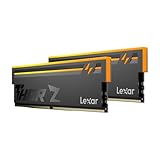
- Unleash Next-Gen Dominance: Experience Lexar DDR5 RAM performance with the Lexar THOR Z Series RGB DDR5 RAM 32GB Kit (2x16GB). Clocking at a blistering 6000MHz with low CL38 latency, this DDR5 desktop memory delivers up to 6000 MT/s for a full-throttle advantage. Whether you're building a high-end gaming rig or a professional workstation, this Lexar 32GB RAM kit ensures your system keeps pace with next-gen titles
- Sleek & Robust Thermal Design: Engineered for both aesthetics and endurance, this Lexar DDR5 RAM 6000MHz features an all-new streamlined design. The solid, sandblasted aluminum heatsink fuses a minimalist, razor-sharp aesthetic with uncompromising thermal control. This Lexar THOR Z Series armor ensures your DDR5 memory stays cool under pressure, delivering sustained peak performance during intense gaming sessions
- Game in Style with Brighter RGB Lighting: Elevate your build's aesthetics with the enhanced customizable RGB lighting on this Lexar RGB DDR5 RAM. Brighter and more vibrant than previous generations, the Lexar THOR Z Series RGB DDR5 RAM allows you to synchronize lighting effects with your components, creating a truly immersive gaming atmosphere that stands out from the crowd
- On-die ECC & PMIC for Rock-Solid Stability: Go beyond speed with reliability. This Lexar DDR5 RAM kit integrates On-die Error Correction Code (ECC) to automatically correct data errors, vastly improving stability and reliability for your critical tasks. The onboard Power Management Integrated Circuit (PMIC) ensures efficient power delivery, boosting the overall power efficiency of your DDR5 desktop memory for a longer-lasting, more stable system
- Seamless Compatibility with Intel & AMD: Worry-free upgrade guaranteed. The Lexar THOR Z Series DDR5 RAM is built for broad compatibility with the latest platforms. It fully supports Intel XMP 3.0 and AMD EXPO one-click overclocking, making it effortless to achieve the rated speeds. Trust Lexar DDR5 RAM to deliver seamless performance with mainstream DDR5 motherboards
Samsung said it was concentrating capacity on HBM, server DRAM and server SSDs for AI applications, which constrained conventional PC and mobile DRAM supply. Its plans included expanding HBM3E and high-density DDR5. SK hynix described HBM3E expansion and HBM4 development while moving to advanced processes needed for competitive DDR5 and LPDDR5.
How product mix creates an opportunity cost
Chipmakers do not simply ask, “How many gigabytes can this factory make?” They ask which product will produce the best risk-adjusted return from each constrained resource. Switching a line may require new masks, qualification, packaging recipes, test programs and customer approvals. During the transition, usable output can fall.
Suppose a facility can run either a conventional DRAM design or a product for a server or accelerator. Choosing HBM may offer a higher selling price and margin, but it also requires customers with validated designs and packaging capacity. Choosing DDR4 may use a mature, efficient process, yet expose the company to falling prices as PC demand weakens. The decision is therefore an economic trade-off, not a simple technology preference.
Do these 3 things before closing this tab:
1Scan for outdated or missing drivers - takes under a minute2Repair Windows errors before they cause bigger problems3Fix the driver behind crashes, sound loss and screen glitchesWhat chipmakers evaluate before changing production
- Expected selling price and gross margin. Management estimates what customers will pay over the period in which the output becomes available, not only today’s spot quote.
- Committed volume and customer qualification. Server and accelerator customers often require lengthy validation. A product with a signed, forecastable order can be preferable to a higher theoretical price with no approved buyers.
- Durability of demand. Suppliers assess whether AI-server investment, enterprise refreshes or handset shipments are likely to persist, rather than treating a one-week spike as a permanent trend.
- Technology readiness and yield. New nodes, stacked dies and advanced packages are valuable only when the factory can produce enough passing parts at an acceptable cost.
- Inventory position. High inventories of a product reduce the urgency to add output and can force price concessions. Scarce inventory supports tighter allocation and firmer contracts.
- Cost and time to change a line. A move between products can consume engineering time, require new equipment or interrupt output. The expected margin gain must exceed those costs.
- Alternative use of equipment. TrendForce reported that some lines can switch between NAND and DRAM when relative profitability changes. That flexibility is useful, but it is limited by process compatibility and transition time.
SK hynix CFO Kim Woohyun summarized the approach: “While maintaining the profitability-first commitment, the company will make flexible investment decisions in line with market situation.” In practice, that means protecting returns while retaining the ability to redirect capital as prices, inventories and customer demand change.
Rank #3

- Requires overclocking/BIOS adjustments. Maximum speed and performance depends on system components, including motherboard and CPU.
- G.SKILL Flare X5 Series DDR5 U-DIMM Memory Kit, Model: F5-6000J3636F16GX2-FX5
- Non-ECC, DDR5 U-DIMM, 288-pin, for Desktop PC & Gaming
- Includes JEDEC default profile, and AMD EXPO & Intel XMP 3.0 memory overclock profile
- Do not mix memory kits. Memory kits are sold in matched kits that are designed to run together as a set. Mixing memory kits will result in stability issues or system failure.
DDR4, DDR5 and HBM are different decisions
| Product | Typical role | What drives demand | Upgrade or compatibility point |
|---|---|---|---|
| DDR4 | Mature PCs, servers and embedded systems | Large installed base, replacement demand and low-cost systems | Requires a DDR4-compatible motherboard and CPU; DDR4 and DDR5 slots are not interchangeable |
| DDR5 | Current-generation PCs and servers | New platform launches, higher server capacity and bandwidth needs | Requires a DDR5-compatible platform; module speed and density support vary by CPU and board |
| HBM | Accelerator packages for AI and high-performance computing | AI training, inference and other bandwidth-intensive workloads | Integrated into the accelerator package; it is not a user-replaceable DIMM |
DDR4 and DDR5 are both system memory standards, but a motherboard designed for one normally cannot accept the other. HBM serves a different physical and electrical role altogether. Samsung’s documented 128GB DDR5 product illustrates that even within DDR5, density and intended market differ: a high-density server module should not be treated as interchangeable with every consumer DIMM.
Inventory and contract timing can reverse the trend
Large buyers negotiate supply contracts ahead of the quarter in which memory is consumed. If a cloud provider accelerates server deployment, suppliers may secure higher prices before a retail shortage is visible. If PC and phone customers cut orders, distributors can be left with stock purchased at an earlier price.
TrendForce reported global DRAM revenue above US$28 billion in the fourth quarter of 2024, up 9.9% from the previous quarter. It attributed the increase to server DDR5 contract-price gains and HBM shipments. The same market can weaken in the following quarter: TrendForce expected a slow season in the first quarter of 2025 and warned that conventional DRAM prices could decline as customers cleared inventory.
This is why “RAM is expensive” needs a product and date attached. A high-end server or HBM contract may be firm while mature desktop DDR4 is discounted. Conversely, a retailer can raise a particular kit’s price because its distributor is temporarily short even when industry-wide revenue is falling.
Rank #4

- Elevated performance for gamers & creators: 128GB kit DDR5 for enhanced productivity—accelerate demanding tasks and enjoy higher frame rates with this high-speed RAM
- Enhanced PC performance: Crucial Pro RAM 128GB kit with 2x64GB DDR5 operating at the speed of 5600MHz with 5200MHz or 4800MHz downclock support
- Top-tier RAM capacity: 128GB DDR5 RAM kit (2x64GB) compatible with latest Intel Core Ultra Series 2 & 14th Gen Core CPUs and AMD Ryzen 9000 Series desktop CPUs and above
- Low-profile, matte black heat spreader: Enhance your gaming rig with a sleek, modern look. With our integrated low-profile heat spreader, Crucial DDR5 Pro can even fit in smaller PCs
- Supports Intel XMP 3.0 and AMD EXPO on the same module: Achieve easy performance recovery on CPUs that suppress rated memory speeds with Intel XMP 3.0 or AMD EXPO turned on in the UEFI/BIOS settings. Get the full value of your investment without overpaying for performance
Capacity additions and process transitions take years
Adding supply is not as simple as ordering more wafers. A company must fund a fab, obtain equipment, qualify materials, bring the process to a stable yield and then qualify the resulting parts with customers. Advanced HBM also needs packaging and test capacity, which can become a bottleneck even when front-end wafer capacity is available.
Process transitions create another temporary constraint. Mature DDR4 and LPDDR4X lines may be economical to run, but suppliers can redirect investment toward newer DDR5, LPDDR5 or HBM products. TrendForce reported that mature DDR4 and LPDDR4X prices were falling in late 2024 because supply was ample and demand was weakening. A producer may still keep some legacy output for customers, yet reduce expansion because the return is lower than for newer products.
Independent reader supportYour contribution helps us test, update, and keep practical guides available for everyone.Supplier concentration and regional competition
The leading DRAM suppliers are Samsung, SK hynix and Micron. TrendForce’s fourth-quarter 2024 figures put their DRAM revenue at US$11.25 billion, US$10.46 billion and US$6.4 billion respectively. These are quarterly market figures, not permanent market shares; product mix, exchange rates, shipment timing and AI allocations can change the ranking.
Free tools Windows power users keep installed
One-click scans. No signup required.
Taiwanese and Chinese suppliers also affect competition, especially in older-node DDR4. More suppliers and mature process capacity can accelerate price declines when demand is weak. In advanced HBM and leading server memory, qualification requirements and packaging complexity make it harder for a new producer to add competitive supply quickly.
Best Value
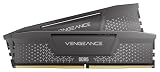
- Disclaimer: Maximum Speed requires overclocking/PC BIOS adjustments. Maximum speed and performance depend on system components, including motherboard and CPU
- AMD EXPO & Intel XMP 3.0 Compatible Only: Dual memory profiles allow you to easily select optimized settings for your platform, whether you’re running an AMD or Intel processor
- Onboard Voltage Regulation: Enables easier, more finely-tuned, and more stable overclocking through CORSAIR iCUE software than previous generation motherboard control
- Maximum Bandwidth and Tight Response Times: Optimized for peak performance on the latest AMD and Intel DDR5 motherboards
- Hand-Sorted, Tightly-Screened Memory Chips: Ensure consistent high-frequency performance with aggressive timing options
Evidence from recent industry results
| Metric | Reported value | How to interpret it |
|---|---|---|
| Global DRAM revenue, Q4 2024 | More than US$28 billion, up 9.9% quarter over quarter | TrendForce (2025); growth was driven by server DDR5 contracts and HBM shipments |
| Global DRAM revenue, Q2 2024 | US$22.9 billion, up 24.8% quarter over quarter | TrendForce (2024); reflects a strong rebound during that quarter, not a guaranteed annual rate |
| Q2 2024 DRAM contract-price adjustment | 13%–18% | TrendForce (2024); contract movement, not a universal retail-module increase |
| SK hynix FY2024 revenue | 66.193 trillion won | Company release issued in 2025 reporting 2024 results |
| SK hynix FY2024 operating profit | 23.4673 trillion won | Company release issued in 2025 reporting 2024 results |
| HBM share of SK hynix Q4 2024 DRAM revenue | More than 40% | Company statement; this is a quarterly revenue mix, not a share of all memory bits produced |
How to tell what is making your RAM purchase expensive
Check the generation first
Confirm whether your system requires DDR4 or DDR5. A cheaper DDR4 kit is not a bargain if your motherboard supports only DDR5, and a faster DDR5 kit cannot compensate for an incompatible platform.
Compare capacity, not just the advertised speed
Compare the total gigabytes and price per gigabyte among modules that your CPU and motherboard support. A high-density server module and a consumer desktop kit may both be labeled DDR5 but target different electrical, firmware and reliability requirements.
Account for latency and module configuration
Rated data rate, latency timings, rank layout and the number of modules can affect real compatibility and performance. Use the platform’s memory-support list when available, especially for servers or high-capacity configurations.
Crashes, No Sound, or Screen Glitches?
Random freezes, missing sound and display glitches usually trace back to one bad driver. Find and replace yours safely.Free scan · under a minuteWindows Errors? Fix Them Before They Spread
Repair common Windows errors and clear accumulated junk for a smoother, more stable PC - no reinstall needed.Free scan · no reinstallSeparate a temporary retail spike from a market shortage
Check several sellers and module capacities, and note the date and region of each quote. A promotion ending, a distributor stockout or currency movement can change one listing without proving that all DRAM prices have risen.
What could make prices fall again?
- PC or smartphone demand weakens and customers reduce orders.
- Cloud and enterprise buyers finish an inventory rebuild.
- New fab output reaches acceptable yield.
- HBM and server capacity expands enough to relieve competition for shared resources.
- Suppliers keep mature DDR4 or LPDDR4X lines running while demand remains sufficient, increasing available supply.
Each factor works with a delay. Announced capacity is not the same as shipping capacity, and a lower spot price does not guarantee an immediate reduction in a long-term contract.
Bottom line for buyers and builders
RAM becomes expensive when scarce manufacturing and packaging capacity is pulled toward products with stronger, more durable demand—currently especially HBM and server DDR5—while consumer demand or inventories move in the opposite direction. Chipmakers decide what to make by comparing expected margin, qualified customer volume, technology readiness, inventory and the cost of changing production. For a purchase, identify the required generation and module type first, then compare capacity, speed, latency, platform support and price per gigabyte using prices from the same date and region.
Quick Recap
Product prices and availability are accurate as of the date/time indicated and are subject to change. Any price and availability information displayed on Amazon at the time of purchase will apply.
Quick wins for a faster PC:
Repair Windows errors before they cause bigger problemsFix Now →Fix the driver behind crashes, sound loss and screen glitchesFind Drivers →Clear out junk files and repair common Windows errorsFree Scan →
