
Recommended Free Tools
iTechGuides is reader-supported. When you buy through links on our site, we may earn an affiliate commission. As an Amazon Associate I earn from qualifying purchases. Learn more
Memory-chip prices and semiconductor stocks swing because demand, usable supply and inventory rarely move in sync. AI data-center construction is lifting demand for high-bandwidth memory (HBM), server DRAM and enterprise SSDs faster than manufacturers can add and qualify capacity. Because chip fabs carry high fixed costs, a change in average selling prices (ASPs), utilization or product mix can move operating profit far more than revenue. The same cycle explains why RAM and SSD prices rise, why margins at major producers expand and contract, and why memory stocks can change direction before consumer prices do.
The short answer: a supply-and-demand cycle amplified by fixed costs
Memory is a cyclical, capital-intensive business. Manufacturers spend heavily on wafer fabrication, advanced packaging, testing and qualification before a new bit of output can be sold. When bit demand increases faster than qualified capacity, prices rise. When customers reduce orders or new capacity arrives into a soft market, prices fall.

Three forces determine the size of the move:
- Demand mix: AI systems consume HBM and large volumes of server DRAM, while cloud and enterprise deployments also require NAND-based SSDs.
- Usable supply: A fab, packaging line or announced expansion does not add saleable bits until it is running at yield and customer products are qualified.
- Operating leverage: Fixed factory costs are spread across the bits that can be sold. Higher ASPs and utilization can therefore lift profit quickly; lower prices and underused capacity can produce steep losses.
Inventory acts as the short-term amplifier. Customer destocking can push orders and prices down even when long-term demand is intact. Conversely, lean inventories can make a normal rebound look like a shortage. The cycle turns when demand, inventory and qualified capacity come back into balance.
Crashes, No Sound, or Screen Glitches?
Random freezes, missing sound and display glitches usually trace back to one bad driver. Find and replace yours safely.Free scan · under a minuteWindows Errors? Fix Them Before They Spread
Repair common Windows errors and clear accumulated junk for a smoother, more stable PC - no reinstall needed.Free scan · no reinstallHow AI changes the memory market
HBM raises the value of each bit
High-bandwidth memory is a high-value DRAM product used alongside AI accelerators. It requires advanced integration and packaging, so it cannot be treated as interchangeable with every conventional DRAM output. Allocating advanced capacity to HBM can limit the supply of conventional DRAM, tightening that market even when total DRAM wafer starts are rising.
#1 Best Overall

- Capacity per Module: 64MB
- Number of Pins: 72
- Type: EDO DRAM
- Form Factor: SIMM
- Manufacturer Warranty: Lifetime
That trade-off helps explain why AI investment can affect ordinary computer memory. If manufacturers prioritize HBM to meet accelerator demand, fewer resources may be available for standard server, PC or mobile DRAM. The result can be stronger pricing across more than one DRAM category, depending on customer inventories and production decisions.
Server DRAM and enterprise SSD demand expand together
AI data centers need large memory pools close to the processor and fast storage for training data, checkpoints and serving workloads. Server DRAM demand rises with system memory configurations, while enterprise SSD demand rises with data volume and performance requirements. This is different from a consumer-only recovery: data-center buyers can purchase higher-value products and may sign longer supply commitments when availability matters.
Micron Technology’s 2026 filing describes the situation directly: “The AI-driven growth in the data center has accelerated demand for memory and storage at a rate greater than our ability and the industry’s ability to increase supply.” That statement describes a supply constraint, not a guarantee that prices will rise indefinitely. New fabs, packaging capacity, customer qualification and a change in AI capital spending can all alter the balance.
Quick wins for a faster PC:
Clear out junk files and repair common Windows errorsFree Scan →Fix the driver behind crashes, sound loss and screen glitchesFind Drivers →DRAM, NAND and HBM: what is actually being priced?
| Market segment | What buyers use it for | Cycle characteristics |
|---|---|---|
| Conventional DRAM | System working memory in PCs, phones and servers | Pricing responds to bit demand, inventory and the amount of wafer capacity allocated away to higher-value products such as HBM. |
| HBM | High-bandwidth memory paired with AI and other high-performance accelerators | Higher-value product with advanced packaging and qualification requirements; increasing HBM output can constrain conventional DRAM supply. |
| NAND flash | Persistent storage, including solid-state drives | Enterprise SSD demand is benefiting from AI-server growth, while consumer and enterprise inventories still determine near-term pricing. |
“Memory prices” therefore is not one number. A consumer SSD, a server DIMM and an HBM stack can have different contracts, qualification cycles, costs and customers. An index or retail quote may describe only one slice of the market.
Why RAM and SSD prices rise or fall
1. Demand changes faster than bits can be supplied
Memory makers cannot instantly add output. Wafer capacity must be built, equipment installed, yields improved and products qualified by customers. If cloud providers increase orders before those steps are complete, buyers compete for the bits already available and ASPs rise.
2. Product allocation changes the effective supply
Manufacturers allocate constrained tools and packaging to products with the best strategic or economic return. More HBM can mean less conventional DRAM supply. More enterprise SSD output may not immediately help a consumer drive shortage if the products use different qualification, controller or NAND configurations.
3. Inventory moves before end demand does
When distributors, PC makers or cloud customers hold excess inventory, they reduce new orders and may sell existing stock at lower prices. Spot prices can weaken before a producer’s contract prices reset. Once inventories become lean, even a modest demand improvement can cause urgent replenishment and a sharp price response.
The Tool Desk
Outbyte Driver Updater FREEFix the driver behind crashes, sound loss and screen glitchesFind Drivers →Outbyte PC Repair FREERepair Windows errors before they cause bigger problemsFix Now →Rank #2
4. Capacity announcements are not the same as qualified output
A company can announce a fab or packaging expansion years before it contributes saleable bits. Investors should separate current utilization and shipped output from future capacity that is funded, installed, yielding and accepted by customers. Treating every announced wafer start as immediate supply is a common source of bad forecasts.
How memory-company margins work
ASP, cost per bit and utilization
Gross and operating margins are shaped by three linked variables:
- ASP: the price received for each unit or bit. A tight market can lift ASPs rapidly; a glut can force discounts.
- Cost per bit: process improvements, higher density and manufacturing learning can reduce the cost of producing each bit.
- Utilization: the share of available fab and packaging capacity producing saleable output. High utilization spreads fixed costs over more bits.
Micron’s 2025 filing attributed improved consolidated gross margin to higher ASPs, manufacturing cost reductions and inventory-related effects, while warning that ASP volatility can hurt the business. The warning matters because a cost reduction is durable only if prices do not fall faster than costs improve.
Why profit changes faster than revenue
Fab depreciation, engineering staff and much of the manufacturing footprint remain in place when production is cut. In a downturn, those fixed expenses are spread over fewer profitable bits, and inventory write-downs can deepen the loss. In an upswing, the reverse happens: scarce output sells at higher prices while much of the cost base is already committed, allowing incremental revenue to flow disproportionately to operating profit.
Product mix can hide the cycle
A company shipping more HBM or enterprise SSDs can report a better mix even if lower-value consumer products remain weak. Conversely, a quarter with strong bit shipments may still show weaker margins if the mix shifts toward products with lower ASPs or if qualification and ramp costs rise. Read ASP, bits shipped and cost per bit together rather than relying on revenue alone.
Why memory stocks are unusually volatile
Expectations move before reported results
Stocks price the next contract reset, inventory turn or capacity decision, not just the last quarter. A rumor of customer cuts can lower a share price while current earnings are still strong. A sign that inventories are lean can lift shares before the company reports higher ASPs.
AI enthusiasm meets a cyclical industry
AI creates a powerful secular demand story, but memory remains cyclical. Investors must weigh accelerator deployments against possible delays in data-center construction, changes in customer capital spending, export restrictions, product qualification timing and new supply. A single strong quarter is not proof of a permanent new normal.
Rank #3
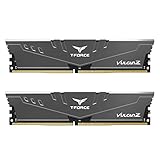
- Simple design to perfectly protect the cooling module with high thermal conductive adhesive
- Supports Intel & AMD motherboards
- Selected high-quality IC
- Supports XMP2.0
- Energy saving with ultra-low working voltage
Concentration increases sensitivity
Large memory suppliers serve a limited group of major customers and compete in markets where a few producers account for much of global output. A change in one customer’s inventory policy or one producer’s production plan can affect industry pricing expectations, making equity reactions larger than the immediate revenue impact.
Free tools Windows power users keep installed
One-click scans. No signup required.
Currency, capex and execution add another layer
Memory companies report in different currencies and spend heavily on equipment and facilities. Changes in capital-expenditure plans affect future supply, while yield, packaging and qualification execution determine whether that spending produces usable bits on schedule. These factors can move valuation even when spot prices are unchanged.
Independent reader supportYour contribution helps us test, update, and keep practical guides available for everyone.What recent company results illustrate
Samsung: tight supply and mix lifted Q4 2025
Samsung reported that limited supply, stronger conventional DRAM demand, expanded HBM sales and higher prices produced record Memory Business revenue and operating profit in the fourth quarter of 2025. The combination is instructive: the result came from both market pricing and product mix, not from unit volume alone.
SK hynix: a 49% operating margin in FY2025
SK hynix reported FY2025 revenue of 97.1467 trillion won and operating profit of 47.2063 trillion won, an operating margin of 49%. The company highlighted AI-memory competitiveness and high-value products including HBM, as well as demand for AI-server enterprise SSDs. These figures describe that fiscal year; they should not be extrapolated as a permanent industry margin.
Micron: growth with an explicit volatility warning
Micron’s filings connect margin improvement to ASPs, manufacturing cost reductions and inventory effects, while emphasizing that ASP volatility can damage results. Its 2026 commentary on AI demand indicates that supply expansion is struggling to keep pace, but future pricing still depends on capacity, qualification and customer inventories.
A practical framework for analyzing the next price move
- Identify the product: Separate conventional DRAM, HBM and NAND. Then distinguish consumer modules and drives from server memory and enterprise SSDs.
- Check the pricing channel: Spot prices show immediate transactions; contract prices reflect negotiated supply over an agreed period. They can move at different times.
- Measure inventory direction: Look for customer destocking, lean inventories or replenishment orders. Inventory often turns before end-market statistics.
- Measure usable supply: Ask how much capacity is currently producing qualified parts, not how much has merely been announced.
- Track allocation: Determine whether HBM, server DRAM or enterprise SSD demand is drawing capacity away from other products.
- Test the margin bridge: Compare ASP, bits shipped, cost per bit, utilization, product mix and inventory charges.
- Stress-test the stock thesis: Consider what happens if AI-capex growth slows, qualification slips, a new fab ramps faster than expected or customers rebuild inventories.
Common analytical mistakes and how to avoid them
- Calling a spot quote the market price: State whether the observation is spot, contract or a retail listing.
- Counting announced capacity as supply: Require installation, yield and customer qualification before adding it to a forecast.
- Extrapolating one quarter: Carry the date, product and region of every ASP or margin figure, and treat it as a point in the cycle.
- Ignoring mix: A higher share of HBM or enterprise SSDs can raise ASP and margin without equivalent bit growth.
- Assuming AI eliminates cyclicality: AI can accelerate demand, but inventory corrections and supply additions still operate.
- Watching revenue without costs: Pair revenue with cost per bit, utilization, capex and inventory effects to see operating leverage.
Where products fit in this market
A DRAM memory module is a direct consumer-facing expression of the pricing cycle; Micron lists modules among its product forms. A NAND-based enterprise SSD is a secondary fit because Micron lists SSD products and SK hynix has described AI-server eSSD demand and premium pricing. The relevant buyer question is not simply whether memory is expensive, but which product category is constrained and whether its supply is qualified.
What to monitor in the next filings
For each major producer, record ASP direction, bits shipped, cost per bit, utilization, product mix, inventory, capital expenditure and customer concentration. Compare management’s capacity timeline with actual qualified output. Recheck filings after guidance changes because AI-capital plans, inventory, pricing and capacity can change quickly. A durable upcycle requires demand to remain ahead of qualified supply without an inventory build that later reverses orders.
Quick Recap
Product prices and availability are accurate as of the date/time indicated and are subject to change. Any price and availability information displayed on Amazon at the time of purchase will apply.

