
What’s actually slowing this PC down?
Pick the symptom - the matching free tool is one click away.
iTechGuides is reader-supported. When you buy through links on our site, we may earn an affiliate commission. As an Amazon Associate I earn from qualifying purchases. Learn more
Vim vs. Neovim comes down to priorities, not a universal winner. Choose Vim for maximum portability, traditional compatibility, minimal dependencies, long-lived configurations, and Vim9script. Choose Neovim for first-class Lua, built-in LSP and Tree-sitter infrastructure, asynchronous APIs, embedded terminals, and a more extensible programming workflow. Both share Vim’s modal editing model.
Neovim began as a fork and continuation of Vim, so Vim users will recognize its modes, commands, motions, registers, macros, windows, buffers, and scripting concepts. The projects are now separate editors, however, with different codebases, configuration conventions, APIs, compatibility policies, and architectural goals.
Key takeaways
- Vim and Neovim share the same core modal-editing concepts, so knowledge of Vim motions, operators, text objects, macros, and commands transfers substantially.
- Vim is the safer choice for ubiquitous availability, traditional compatibility, minimal configurations, long-lived scripts, and Vim9script.
- Neovim is the stronger choice for first-class Lua, built-in LSP and Tree-sitter infrastructure, asynchronous integrations, embedded terminals, and remote UI clients.
- Neovim supports most Vim plugins, but not every Vim plugin, Vim9script configuration, provider integration, or UI assumption migrates unchanged.
- Neither editor automatically becomes a complete IDE: language servers, parsers, formatters, completion systems, debuggers, and other external tools still require setup.
Vim vs. Neovim at a glance
The shortest useful comparison is that Vim emphasizes continuity and broad traditional compatibility, while Neovim emphasizes extensibility and editor-core integration. Feature availability can still vary by operating system, build options, plugin versions, and configuration.
| Area | Vim | Neovim |
|---|---|---|
| Relationship | The original project, derived from vi | A maintained Vim fork and continuation |
| Core editing model | Modal editing with Vim commands and motions | Largely the same modal editing model |
| Primary scripting direction | Vimscript and actively developed Vim9script | Vimscript remains available, with first-class Lua; Vim9script is not a project goal |
| Asynchronous jobs | Supported in modern Vim | A central architectural capability with APIs and callbacks |
| Terminal | Terminal windows are supported in modern Vim | Embedded, scriptable terminal support is central to the design |
| LSP | Usually provided through plugins and external integrations | Built-in LSP client framework; language servers remain separate |
| Tree-sitter | Different integration model, often involving plugins | Built-in Tree-sitter APIs and integration |
| UI architecture | Traditional terminal and GUI execution models | Editor core separated from the UI, with RPC and remote-UI support |
| Typical configuration | ~/.vimrc and ~/.vim/ |
~/.config/nvim/init.lua or init.vim |
| Plugin compatibility | Native Vim plugins | Most Vim plugins, plus Neovim-specific plugins |
| Vim9script | Supported and actively developed | Explicitly not a project goal |
| Best fit | Portable, traditional, conservative, self-contained workflows | Extensible, programmable, modern programming workflows |
Neovim’s official project charter describes Neovim as a Vim-based editor intended to preserve Vim’s character while improving extensibility and usability. The charter also identifies support for Vim9script and turning Vim into an IDE as non-goals. That distinction explains why Neovim is not simply “Vim with a different name.”
Popular on Amazon

- Mini portable 60% compact layout: MK-BOX is a 68 keys mechanical keyboard have cute small size, but with separate arrow keys and F1-F12, Fn function keys you need, can use it for gaming or work while saving space.
- Mechanical red switch: characterized for being linear and smoother, slight key sound has no paragraph sense with minimal resistance, but fast action without a tactile bump feel which makes it easier to tap the keyboard.
- Classic charming blue LED backlit: Customize multiple illuminated LED light effects, supports about 16 backlight modes, press Fn + Ins can control it, FN + ←/→ control backlight speed, FN + ↑/↓ control backlight brightness.
- Full anti-ghosting keyboard: all 68 keys are no conflict, black grey red mash up design, ergonomic suspension double-color injection keycap, double kickstand feet adjustable typing angle and detachable usb cable, both practical and beautiful.
- Extensive compatibility: MageGee MK-Box mechanical keyboards use USB 2.0 connector making it compatible with Windows (2000, XP, ME, Vista, 7, 8), Linux and Mac, plug and play, no drivers or software required.
What are Vim and Neovim?
Vim is a mature, highly configurable modal text editor derived from the original Unix vi editor. Vim’s central idea is that editing is performed through modes and composable commands rather than primarily through menus or mouse actions.
Neovim is a maintained fork and continuation of Vim. Neovim retained much of Vim’s editing behavior and scripting compatibility while refactoring important parts of the architecture to make asynchronous processing, APIs, external plugins, and alternative user interfaces easier to build.
Vim remains an actively developed project. Vim’s official download information identifies Vim 9.2 as the current stable major version in the supplied research, although the exact 9.2 patch should be checked on the official Vim download page before publication or installation. Neovim’s exact release should likewise be checked against its official release information rather than inferred from an old tutorial.
The Tool Desk
Outbyte PC Repair FREERepair Windows errors before they cause bigger problemsFix Now →Outbyte Driver Updater FREEScan for outdated or missing drivers - takes under a minuteDriver Scan →What is the same in Vim and Neovim?
Vim and Neovim use substantially the same editing language. A user who learns Vim’s normal-mode movement and operator system can usually apply that knowledge directly in Neovim.
- Normal mode: navigate, delete, change, copy, paste, repeat, and combine commands.
- Insert mode: enter text normally.
- Visual mode: select characters, lines, or rectangular blocks.
- Command-line mode: run Ex commands such as
:write,:quit,:substitute, and:help. - Buffers: hold edited files or other text-like content.
- Windows: display buffers in a split layout.
- Tabs: organize collections of windows.
- Registers: store yanked text, deleted text, macros, and other values.
- Marks: save locations for navigation.
- Macros: record and replay command sequences.
- Folds: hide and reveal sections of a file.
- Quickfix and location lists: collect search, compiler, diagnostic, or navigation results.
- Undo history: provide granular reversal of editing actions.
- Text objects: operate on structures such as words, sentences, paragraphs, quotes, and parentheses.
Neovim’s official introduction and migration documentation states that editor and Vimscript features, apart from Vim9script, are mostly identical. “Mostly” matters: shared commands do not guarantee identical plugin APIs, configuration paths, providers, terminal behavior, or UI behavior.
For example, the editing command ciw—change inner word—has the same basic meaning in both editors. A macro recorded in one editor often transfers to the other. A large configuration that depends on a specific plugin API or directory convention may not.
Why was Neovim created?
Neovim was created to refactor Vim around a more extensible editor core. The important difference is architectural rather than merely cosmetic: Neovim separates more of the editor’s core from the user interface and exposes APIs that external programs can use.
Do these 3 things before closing this tab:
1Scan for outdated or missing drivers - takes under a minute2Clear out junk files and repair common Windows errors3Fix the driver behind crashes, sound loss and screen glitchesNeovim’s documented direction includes:
- UI separation: user interfaces can communicate with the editor core rather than being tightly coupled to the traditional implementation.
- RPC and APIs: external programs and UI clients can interact with the editor through structured interfaces.
- Process separation: external plugins can run outside the core editor process.
- Asynchronous jobs: shell commands and integrations can run without requiring the editor to wait synchronously for every result.
- libuv-based facilities: platform and I/O operations support modern asynchronous workflows.
- Extensible scripting: Lua is built in and is a first-class configuration and plugin language.
- XDG-style directories: configuration, data, state, and cache files follow Neovim’s directory conventions.
The central Vim-versus-Neovim differences document also explains that Neovim includes its features as a unified build rather than Vim’s many combinations of optional compile-time features, and that Neovim’s UI is decoupled from the editor core.
Architectural modernization does not automatically mean that Neovim is always faster. Startup time and runtime responsiveness depend on plugins, language servers, file size, filesystem, terminal emulator, hardware, and configuration. The supplied research does not establish a universal performance winner.
How do Vim and Neovim configuration paths differ?
Vim commonly starts with a configuration file named ~/.vimrc and a runtime directory such as ~/.vim/. Exact locations can vary by operating system, packaging, and environment.
Neovim commonly uses an XDG-style layout. A new Lua-based Neovim configuration normally begins at ~/.config/nvim/init.lua; a Vimscript configuration can use ~/.config/nvim/init.vim. Typical Neovim data, state, and cache directories include:
Windows Errors? Fix Them Before They Spread
Repair common Windows errors and clear accumulated junk for a smoother, more stable PC - no reinstall needed.Free scan · no reinstallOutdated Drivers Are Slowing You Down
One free scan finds every outdated or missing driver and matches the right update for your exact hardware.Free scan · exact hardware match~/.local/share/nvim/
~/.local/state/nvim/
~/.cache/nvim/Neovim’s official documentation describes init.lua as the normal Lua configuration entry point and provides migration guidance for Vim users. Neovim also supports init.vim, so switching editors does not require immediately rewriting every Vimscript file in Lua.
Use these commands to identify the installed versions and configuration locations:
vim --version
nvim --version
Inside Neovim, the following commands are especially useful:
Also popular on Amazon

- 【Single-Cable Solution for Any PC/Mac】Enables one-cable connection to all laptops and desktops via USB-C or USB-A, fully compatible with Windows10/11 and macOS. MUST NOTE: If the screen shows “No Signal,” please check driver installation as instructed in the manual.
- 【Mechanical Keyboard & Touchscreen Combo】Experience a new workflow paradigm with our integrated 12.8-inch laminated touchscreen and mechanical keyboard. Interact intuitively by touch while enjoying superior typing precision.
- 【Fully Customizable with Premium Linear Feel】A hot-swappable keyboard for effortless personalization, powered by our Clicky Tactile Switches that deliver a undeniable feedback with every keystroke, turning typing into a precise and rhythmic ritual.
- 【Customizable RGB Backlight & CNC Aluminum Build】Customize your setup with 108 RGB Lighting Combinations (controlled via FN+DEL mode, FN+HOME color, FN+PGUP switch). This portable monitor for laptop gaming sessions lets you create the perfect ambiance with customizable backlighting options. Housed in a premium CNC aluminum body, this small portable monitor is as durable as it is sleek, offering a professional look and feel.
- 【180° Flexibility & Ultra-Portable Design】This 12.8" portable monitor is engineered for adaptability. The 180° hinge allows you to lay it flat or find the perfect viewing angle. Its all-in-one design with a integrated keyboard and high-quality CNC aluminum construction makes it the ultimate durable and portable workstation.
:echo $MYVIMRC
:echo stdpath('config')
:checkhealth
$MYVIMRC shows the configuration file currently in use when the variable is set. stdpath('config') reports Neovim’s active configuration directory. :checkhealth diagnoses many Neovim configuration, provider, executable, and environment problems.
Inside either editor, :version reports version and build information:
:versionIs Vimscript or Lua better?
Neither language is universally better. Vimscript is deeply integrated into Vim, remains available in Neovim, and continues to evolve through Vim9script. Lua is attractive in Neovim because Lua 5.1 is built in and Neovim’s APIs and ecosystem are designed to work naturally with it.
Vim 9.2 continues Vimscript development through Vim9script. Vim’s official project information describes modern Vim9script capabilities including enums, generic functions, and tuples; specific language behavior should be checked against the official Vim release information.
Neovim’s Lua documentation states that its Lua 5.1 engine is built in and always available, and that Lua configuration and plugins can be discovered and loaded through Neovim’s runtime conventions.
Recommended Free Tools
The practical trade-offs are:
| Question | Vimscript and Vim9script | Lua in Neovim |
|---|---|---|
| Where is it most central? | Vim, especially for traditional and Vim9script configurations | Neovim’s modern configuration and plugin ecosystem |
| Does it transfer to both editors? | Much Vimscript transfers, subject to API and feature differences | Neovim Lua configuration does not transfer directly to Vim |
| Does the language remove complexity? | No; large Vim configurations can still be complex | No; plugins, LSP, completion, formatters, and UI layers can make Lua setups complex |
| Who should favor it? | Vim users, portable configurations, and people interested in Vim9script | New Neovim configurations and users building API-heavy integrations |
Calling Vimscript “bad” and Lua “good” oversimplifies the decision. A well-maintained small Vimscript configuration can be easier to understand than a large Lua distribution assembled from many plugins. The relevant question is which editor and ecosystem solve the user’s actual problem with acceptable maintenance.
Are Vim plugins compatible with Neovim?
Most basic Vimscript plugins work in Neovim, but Vim and Neovim are not fully plugin-compatible. A plugin that uses ordinary commands, mappings, options, and broadly compatible Vimscript has a good chance of working. A plugin that depends on Vim-specific internals, UI behavior, compiled features, providers, or Vim9script may require changes or may not work at all.
Neovim’s project documentation describes compatibility with most Vim plugins, including Ruby and Python plugins, while the differences reference documents exceptions and replacements. Neovim-specific plugins can also depend on APIs that Vim does not provide.
A useful compatibility hierarchy is:
- Basic Vimscript plugin: often works in both editors.
- Plugin using editor APIs or compiled integrations: may require conditional code or a different implementation.
- Neovim-specific plugin: may not work in Vim because Vim lacks the required API.
- Vim9script plugin: is not a safe Neovim migration target because Neovim’s charter explicitly lists Vim9script support as a non-goal.
Common migration failures include:
- A plugin assumes that the configuration is in
.vimrcrather than Neovim’s configuration directory. - A plugin expects Vim’s embedded Python or Ruby interface instead of Neovim’s provider model.
- A plugin relies on Vim9script.
- A plugin expects Vim’s UI behavior or terminal escape handling.
- A plugin calls a deprecated or removed Neovim API.
- A plugin’s documentation targets an older Neovim release.
- The plugin installs successfully but its required language server, parser, formatter, runtime, or executable is missing.
Plugin-manager success proves only that files were installed. It does not prove that the plugin’s external dependencies, provider, parser, language server, or editor API are available.
Which editor is better for LSP?
Neovim has a built-in LSP client framework, while Vim can use LSP through plugins and external integrations. Neovim’s built-in framework reduces the need to install a separate core LSP client, but users still need to install and configure an appropriate language server.
Neovim’s LSP documentation describes capabilities including:
- Go-to-definition navigation.
- Find references.
- Hover documentation.
- Diagnostics.
- Symbol and workspace operations.
- Rename operations.
- Code actions.
LSP is a set of cooperating parts rather than a single feature:
| Part | What it does | Who supplies it |
|---|---|---|
| Editor LSP client | Communicates with the language server and displays results | Built into Neovim; commonly supplied by a plugin or integration in Vim |
| Language server | Provides language-specific definitions, diagnostics, symbols, and actions | A separate executable or runtime for the chosen language |
| Installer or configuration layer | Installs, locates, and configures servers | A plugin, package manager, operating-system package, or manual setup |
| User interface | Shows completion, diagnostics, references, symbols, and code actions | The editor plus optional completion and UI plugins |
Vim is not incapable of LSP. Vim users can assemble comparable functionality with plugins and external tools. The difference is that Neovim supplies a core LSP client framework designed as part of the editor, whereas Vim users generally choose an integration layer and maintain more of the surrounding stack themselves.
Quick wins for a faster PC:
Clear out junk files and repair common Windows errorsFree Scan →Fix the driver behind crashes, sound loss and screen glitchesFind Drivers →Repair Windows errors before they cause bigger problemsFix Now →What is the difference between Tree-sitter, LSP, and ctags?
Tree-sitter, LSP, and ctags solve different problems. Tree-sitter parses the current file incrementally, LSP provides project-level semantic information through a language server, and ctags offers lightweight symbol indexing and navigation.
Also popular on Amazon
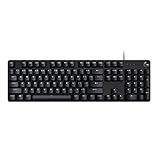
- Take your gaming skills to the next level: The G413 SE is a full size mechanical keyboard with gaming-first features and the durability and performance necessary to compete
- Tenkeyless option: Compact, TKL layout PC gaming keyboards are also available (G413 TKL SE)
- 6-Key rollover anti-ghosting performance: Experience reliable key input with this anti-ghosting keyboard versus non-gaming full-size mechanical keyboards
- Premium color, material and finish: Elevate your gaming setup with this light up keyboard featuring a sleek, black-brushed aluminum top case and white LED lighting
- PBT keycaps: Heat- and wear-resistant, this computer gaming keyboard features the most durable material used in keycap design
| Technology | Primary scope | Typical strengths | What it does not replace |
|---|---|---|---|
| Traditional syntax highlighting | Current file text patterns | Simple, widely supported highlighting | Structural parsing or project semantics |
| Tree-sitter | Current file’s syntax tree | Incremental parsing, structural highlighting, scope analysis, and syntax-aware features | Project-wide semantic analysis from a language server |
| LSP | Project or workspace | Definitions, references, diagnostics, hover information, rename, and code actions | Low-level parsing in the editor itself |
| ctags | Indexed symbols | Lightweight and fast navigation | Rich semantic understanding and many language-aware actions |
Neovim documents these distinctions in its LSP and syntax-intelligence documentation. Tree-sitter does not “understand the whole project” in the way an LSP server can. Neovim’s built-in Tree-sitter APIs also do not mean every parser, query, language grammar, or third-party Tree-sitter plugin is permanently stable or automatically installed.
How do terminal and asynchronous workflows differ?
Both modern Vim and Neovim can run asynchronous jobs and terminal workflows, but Neovim makes process integration, callbacks, embedded terminals, and external interfaces central design principles.
Vim added asynchronous job support in Vim 8.0, and Vim 8.1 highlighted terminal windows and asynchronous capabilities in its official release announcement. Vim can therefore support builds, tests, linting, shell commands, and terminal-based work without the claim that these features are Neovim-exclusive.
Neovim’s difference is emphasis and composition. Its architecture is designed around:
- Running shell commands without blocking the editor unnecessarily.
- Receiving process output through callbacks or events.
- Embedding a scriptable terminal inside the editor.
- Building plugins that communicate with external processes.
- Connecting remote or alternative UI clients through APIs and RPC.
- Automating builds, tests, formatting, and linting as asynchronous tasks.
For a user who mostly edits text, the distinction may be invisible. For a developer who wants a programmable terminal workspace, asynchronous diagnostics, interactive build commands, or an external front end, Neovim’s architecture usually offers the more direct foundation.
How do the UI and GUI models differ?
Vim traditionally runs in a terminal and also provides GUI variants such as GVim. Neovim provides a terminal UI and separates the editor core from external GUI or UI clients that communicate through its API.
Neovim’s official charter and differences documentation describe the core/UI separation and support for advanced external interfaces. This separation makes it possible to build a graphical front end without modifying the editor core for every UI feature.
Free tools Windows power users keep installed
One-click scans. No signup required.
Editor comparisons should not treat font rendering, clipboard behavior, terminal escape handling, or graphical performance as properties of Vim or Neovim alone. Those results also depend on the terminal emulator, GUI client, operating system, clipboard provider, font, display scaling, and configuration.
Which editor is more available on remote systems?
Vim has the operational advantage on many Unix-like systems because users are more likely to encounter Vim or vi when connecting over SSH, entering a recovery environment, opening a container, or working on a minimal server. Vim’s official homepage notes that Vim is included as vi with most UNIX systems and Apple OS X, although exact availability and feature parity vary by distribution and build.
That advantage does not mean every system has a full-featured current Vim. A distribution may provide a minimal build, an older version, or a package whose optional features were excluded. Neovim may be available separately, but the package may be absent from a minimal server or older operating-system repository.
A practical operational arrangement is:
- Learn the shared Vim fundamentals first.
- Use Neovim as the primary development environment if its LSP, Tree-sitter, Lua, terminal, or UI capabilities solve a real need.
- Keep a small, dependency-light Vim configuration for emergency SSH and recovery work.
- Do not assume that a preferred Neovim distribution, language server, parser, or provider exists on every remote machine.
What are Vim’s main strengths?
Vim is strongest when continuity, portability, and a low-dependency workflow matter more than a modern integrated programming stack.
- Maximum traditional compatibility: Vim behavior, Vimscript, older configuration patterns, and established plugins are familiar across many environments.
- Availability: Vim or vi is commonly present on Unix-like systems and remote machines.
- Long-lived configurations: a carefully maintained Vim configuration can remain useful across many machines and operating-system changes.
- Vim9script: Vim continues developing its own modern scripting language direction.
- Minimalism: a text-editing workflow can remain small without adopting a large plugin, parser, language-server, and provider stack.
- Mature operational expectations: decades of deployment make Vim a sensible fallback for scripts, rescue systems, and constrained environments.
Vim is especially compelling when the existing configuration already solves the user’s problems. Migrating merely because another editor has a longer feature list can replace a known, productive workflow with new dependency and maintenance work.
What are Neovim’s main strengths?
Neovim is strongest when the editor is treated as a programmable development environment rather than only as a modal text editor.
- First-class Lua: Lua 5.1 is built into Neovim and works naturally with its API and plugin ecosystem.
- Built-in LSP infrastructure: Neovim includes an editor-side LSP client framework for language-aware development.
- Tree-sitter integration: Neovim provides built-in APIs for incremental syntax parsing and structural features.
- Asynchronous architecture: jobs, callbacks, and external processes are central to modern integrations.
- Embedded terminal: terminal sessions can be used and scripted within the editor.
- Remote UI support: external interfaces can connect to the editor core through APIs and RPC.
- Composable ecosystem: users can build completion, diagnostics, navigation, testing, formatting, and UI workflows around a common programmable core.
These strengths are most valuable to programmers who have a specific need for language intelligence, asynchronous automation, a programmable terminal workspace, or an alternative UI. They are not automatically benefits for someone who only needs fast modal editing.
Also popular on Amazon

- 1.RGB Side Lighting & Rainbow Effects Designed to impress, this backlit mechanical keyboard features 13 preset LED rainbow mixed lighting effects and stunning RGB side-edge illumination.(RGB only available for side lighting) Whether you're gaming in low light or showing off your setup, the immersive lighting transforms any desktop into a glowing command center. It's a visual upgrade to your mechanical gaming keyboard experience.
- 2.Premium Build with Full Size Metal Panel Crafted with a rugged metal top plate, this wired keyboard offers outstanding durability and a refined, tactile feel. Its solid construction ensures long-lasting reliability, even during intense gaming marathons. Ideal for serious gamers, this 104keys mechanical keyboard combines aesthetics and strength in a sleek full size computer keyboard design.
- 3. Flexible and Portable: Detachable USB Cable This wired mechanical keyboard comes equipped with a 1.8-meter detachable USB cable, offering easy portability and convenient cable management. Whether at home, at a LAN party, or traveling, this gaming keyboard ensures a stable and efficient keyboard setup every time. A must-have full size keyboard for gamers who value flexibility and performance in one package.
- 4. Smooth Red Switches & Full-Key Rollover Equipped with smooth, linear red switches, this mechanical gaming keyboard delivers ultra-responsive typing and fast actuation, perfect for both competitive gaming and everyday use. Full-key rollover ensures every keystroke is registered, even during rapid-fire actions. Enjoy seamless accuracy and quiet performance with this advanced mechanical keyboard.
- 5. Smart Shortcuts and Software Customization Access media controls, calculator, and other functions with FN+F1–F11 shortcuts. Take it further with customization software that lets you remap keys, record macros, and personalize lighting. Whether you’re playing or working, this 104 keys gaming mechanical keyboard adapts to your needs—offering unmatched versatility in a keyboard gaming environment.
What does Neovim cost to maintain?
Both Vim and Neovim have a zero purchase price, but a Neovim setup can have a higher ownership cost in time and dependencies. The additional cost is usually not a license fee; it is the work of maintaining optional plugins, language servers, formatters, linters, debuggers, completion systems, parsers, providers, and project-specific configuration.
A modern Neovim programming environment may involve:
- A plugin manager.
- One or more completion and UI plugins.
- Language servers for each programming language.
- Tree-sitter parsers and queries.
- Formatters and linters.
- Debug adapters and debugger interfaces.
- Node.js, Python, Ruby, or other provider runtimes.
- Project-specific settings and executable paths.
That stack can be powerful, but “built in” does not mean “ready to use.” Neovim’s LSP framework does not install every language server, and Tree-sitter integration does not install every parser or guarantee compatibility with every third-party plugin. Vim can also support these workflows, but the integration may require more third-party assembly.
Is Vim or Neovim more stable?
“Stable” needs to be defined. Vim has decades of maturity and conservative compatibility expectations, which makes Vim particularly attractive for long-lived scripts, remote machines, rescue environments, and configurations that should change slowly. Neovim is also a mature, actively maintained project, but its separate APIs and faster-moving ecosystem can create migration work for configurations and plugins.
Neither blanket statement is accurate:
- “Vim is stable and Neovim is unstable” is too broad.
- “Neovim is always more modern and therefore better” ignores dependency and maintenance costs.
- “Vim is abandoned” is false; official Vim pages continue to document releases and development.
For a minimal editor on a server, Vim’s compatibility and availability can be the more important form of stability. For a plugin-rich development environment, Neovim’s APIs may provide a better foundation, even though the resulting configuration has more moving parts.
Which editor should beginners learn?
Beginners deciding whether to learn modal editing can choose either editor because the fundamental motions and commands are largely shared. The more important beginner decision is whether the goal is to learn editing fundamentals or to install a complete programming environment immediately.
| Beginner goal | Practical starting choice | Reason |
|---|---|---|
| Learn modal editing and commands | Either Vim or Neovim | The core modes, motions, operators, and text objects transfer substantially |
| Work on arbitrary remote Unix systems | Vim fundamentals first | Vim or vi is more likely to be available on minimal systems |
| Build a programming-focused configuration | Neovim is often the more direct starting point | Lua, built-in LSP infrastructure, Tree-sitter APIs, and asynchronous integrations are first-class parts of the ecosystem |
| Use a small, low-maintenance setup | Vim or a minimal Neovim configuration | A large distribution is optional and adds maintenance regardless of editor |
Do not copy a large configuration distribution before learning what each part does. A small configuration makes errors easier to diagnose and makes the differences between the editor, plugin manager, language server, parser, formatter, and terminal visible.
Which editor should existing Vim users choose?
Existing Vim users should stay with Vim unless Neovim solves a concrete problem. Neovim is worth evaluating when the user specifically wants first-class Lua, built-in LSP infrastructure, Tree-sitter integration, remote UI support, or a more composable asynchronous workflow.
Migration is less compelling when:
- The current Vim configuration is reliable and productive.
- The perceived problem is mainly insufficient knowledge of Vim commands.
- The proposed migration is motivated by copying someone else’s configuration.
- The new editor would add plugins and external dependencies without improving a real workflow.
Vim knowledge is not wasted in Neovim. The editing core transfers, but configuration and plugin code should be treated as a porting project rather than assumed to be drop-in compatible.
What’s actually slowing this PC down?
Pick the symptom - the matching free tool is one click away.
Which editor should programmers choose?
Programmers choosing a new editor will often prefer Neovim if they want an extensible, terminal-centered development environment with built-in LSP and Tree-sitter infrastructure. Vim remains a strong choice for programmers who prefer a smaller traditional setup, already have a productive Vim configuration, or prioritize portability over integration convenience.
Neovim is a good fit when the workflow requires several of the following:
- Go-to-definition, diagnostics, rename, references, and code actions through LSP.
- Syntax-aware selection, highlighting, or structural navigation through Tree-sitter.
- Asynchronous builds, tests, formatting, linting, and shell jobs.
- An embedded terminal used as part of the editor workflow.
- Lua-based configuration and plugin development.
- Integration with an external UI or automation process.
Vim is a good fit when programming work is mainly editing, search, macros, shell commands, Git, and lightweight navigation, or when comparable language tooling is already available through a known plugin setup.
Which editor should sysadmins and remote users choose?
Sysadmins, SREs, and frequent SSH users should learn Vim’s shared fundamentals and keep Vim available even if Neovim is the preferred local editor. Remote hosts may lack Neovim, a current version, the user’s configuration, language servers, provider runtimes, clipboard support, or a compatible terminal environment.
Neovim can be excellent on a controlled workstation or development server. It is less useful to assume that the same setup can be transported unchanged to every emergency environment. A minimal Vim configuration is a practical fallback because portability is part of the job rather than merely an editor preference.
Also popular on Amazon

- 【75% Space‑saving Layout】The KN85 series is a compact 85‑key keyboard (13.68" × 5.51" × 1.77") that keeps all the essentials (F1–F12, arrows, shortcuts) without the number pad. It frees up 25% of desk space for better mouse movement. Designed for small desks, laptop setups, gamers and minimalists. For frequent number‑pad input, choose our full‑size KN104 with a complete dedicated numpad, or opt for our new KN98 model — compact 99‑key that retains the numpad while saving desktop real‑estate
- 【Tri-Mode Connectivity for Multi-Device Workflow】Connect via USB‑C, 2.4GHz wireless, or Bluetooth 5.0 (3 channels supported), with ultra‑low latency (USB 2ms, 2.4G 5ms, BT 11ms). Switch seamlessly between Windows and Mac to work across your PC, laptop, tablet, smartphone, or gaming console. Perfect for programmer, student, creator, or hybrid worker. The built‑in 4000mAh rechargeable battery ensures stable wireless performance. Continue typing while charging via wired mode when power runs low
- 【Creamy Thocky Typing Sound】The gasket mount absorbs harsh vibrations and hollow echoes to produce a smooth marbly thock, rather than loud clacky taps. Each keypress feels softly cushioned. Whether you’re working late at home or typing in a shared office space, the mellow, ASMR-like tone makes every keystroke a genuinely enjoyable experience
- 【Hot-swap for Tailored Sound & Tactile】Pre-lubed Bsun linear switches (45-50gf actuation) deliver a buttery response. Compatible with both 3 pin and 5pin switches, they enables solder-free swapping. From beginners to frequent typists and dedicated writers, craft your preferred typing signature without complex modding
- 【RGB Backlighting & Programmable】A warm ambient glow surrounds PBT keycaps and case edges, creating a calm, inviting desk vibe for late-night workspace. Adjust hues and brightness through shortcut keys or companion software. The KN85 driver (Windows only, wired/2.4G mode) lets you remap keys and set custom macros to boost your daily productivity
Which editor should plugin authors target?
Plugin authors should decide whether portability or Neovim-specific capabilities matter more, then state the compatibility boundary explicitly. A plugin targeting both editors should avoid assuming that configuration paths, optional features, providers, UI behavior, APIs, or scripting languages are identical.
| Plugin goal | Likely target | Important consideration |
|---|---|---|
| Maximum installation reach | Vim and Neovim | Use shared commands and test both environments; avoid editor-specific assumptions |
| Modern UI, RPC, Lua, or Neovim APIs | Neovim | Document that Vim is unsupported or provide a separate compatibility path |
| Vim9script features | Vim | Neovim’s charter does not make Vim9script support a project goal |
| Legacy Vim deployments | Vim first | Account for old versions, optional features, and minimal builds |
“Vim-compatible” should be explained precisely. It may mean that the main commands work, while optional integrations involving Python, Ruby, terminal behavior, UI clients, parsers, or external executables still differ.
How should you migrate from Vim to Neovim?
A safe Vim-to-Neovim migration is incremental: inventory the existing configuration, test compatibility, move only the parts that solve a real problem, and retain a minimal fallback.
Do these 3 things before closing this tab:
1Clear out junk files and repair common Windows errors2Fix the driver behind crashes, sound loss and screen glitches3Repair Windows errors before they cause bigger problems- Record both versions. Run
vim --versionandnvim --versionon the systems involved. - Inventory plugins. Separate ordinary Vimscript plugins from plugins using compiled extensions, providers, Vim9script, UI assumptions, or undocumented internals.
- Identify Vim9script. Treat Vim9script files as a migration risk because Neovim does not list Vim9script support as a goal.
- Check providers. Identify Python, Ruby, Node.js, or other external runtimes required by the configuration and plugins.
- Start with
init.vimif useful. Neovim can load Vimscript, so rewriting everything in Lua is not required on day one. - Move configuration incrementally. Port paths, options, mappings, autocommands, and plugins in separate steps.
- Test real workflows. Test filetypes, completion, diagnostics, LSP navigation, terminal jobs, clipboard operations, macros, search, formatting, and project commands.
- Run health checks. Use
:checkhealthin Neovim to find provider, executable, and environment problems. - Keep a fallback. Maintain a small dependency-light Vim configuration for SSH, recovery systems, and machines without Neovim.
- Do not blame the plugin manager first. A plugin may be installed correctly while its parser, language server, executable, provider, or runtime is missing.
Neovim’s migration documentation is the appropriate reference for configuration discovery and editor-specific differences. A successful migration is not measured by how much of a large configuration was copied; it is measured by whether the new editor improves the intended workflow without creating disproportionate maintenance.
What are the most common failure modes?
A Vim configuration loads but behaves incorrectly
Check assumptions about ~/.vimrc, ~/.vim/, autocommand events, terminal escape handling, GUI commands, and provider availability. A configuration can start successfully while failing only when a particular filetype, command, or plugin is used.
A plugin installs but its feature does not work
Check the external dependency rather than only the plugin installation. Completion, diagnostics, formatting, debugging, and syntax features may require a language server, parser, formatter, debugger, executable, or runtime.
Python or Ruby integration fails
Check the editor’s provider model, the installed runtime, provider packages, version compatibility, and the result of Neovim’s :checkhealth. Vim’s embedded integration assumptions do not automatically map to Neovim.
Quick wins for a faster PC:
Fix the driver behind crashes, sound loss and screen glitchesFind Drivers →Repair Windows errors before they cause bigger problemsFix Now →A Neovim tutorial does not work in Vim
Look for Lua modules, vim.* APIs, built-in LSP calls, Tree-sitter APIs, asynchronous interfaces, or Neovim-specific configuration paths. A tutorial written for Neovim may need a different Vim plugin or Vimscript implementation.
Neovim feels more complicated than expected
Separate the editor from the distribution. A plugin manager, completion engine, LSP installer, formatter, debugger, parser manager, and UI layer are optional components, not evidence that modal editing itself is inherently complicated.
Vim or Neovim: a practical decision guide
| Your priority | Recommended default | Why |
|---|---|---|
| Only vi or Vim may be available | Vim fundamentals and Vim | Traditional availability is more valuable than local tooling |
| Maximum compatibility with old scripts and plugins | Vim | Vim is the compatibility baseline for traditional configurations |
| Vim9script | Vim | Vim9script is supported and actively developed in Vim |
| New programming-focused configuration | Neovim | Lua, LSP, Tree-sitter, asynchronous APIs, and terminal workflows are direct priorities |
| Existing Vim setup already works | Stay with Vim | Migration adds cost unless it solves a defined problem |
| Remote UI or editor automation | Neovim | Core/UI separation, RPC, and external APIs are central to its architecture |
| Minimal configuration and few dependencies | Vim or minimal Neovim | Neither a large plugin stack nor a full IDE setup is required for modal editing |
| IDE-like development environment | Neovim, with caution | Neovim provides useful infrastructure, but servers, parsers, formatters, completion, and debuggers still require setup |
Final recommendation
Choose Vim for maximum traditional compatibility, ubiquitous availability, minimal dependencies, long-lived configurations, and Vim9script. Choose Neovim for first-class Lua, built-in LSP and Tree-sitter infrastructure, asynchronous APIs, embedded terminals, remote UIs, and a modern programmable development workflow.
Choose either editor if the primary goal is modal editing: the transferable Vim fundamentals matter more than the brand name. Existing Vim users should not migrate without a concrete benefit, while new programming-focused users will often find Neovim’s architecture the more direct starting point. For remote and operational work, keep Vim fundamentals and a minimal Vim configuration available even when Neovim is the preferred daily editor.
Free tools Windows power users keep installed
One-click scans. No signup required.
Frequently Asked Questions
Can Neovim run Vim configuration files?
Neovim can run many Vimscript configurations through init.vim, but compatibility is not complete. Configuration paths, APIs, providers, UI behavior, plugins, and Vim9script can require changes.
Can Vim provide LSP and Tree-sitter features?
Vim can provide language-server and syntax-intelligence workflows through plugins and external tools, but Neovim includes an LSP client framework and Tree-sitter integration as editor infrastructure. Comparable functionality in Vim may require more third-party assembly.
Is Neovim faster than Vim?
There is no universal performance winner established by this comparison. Startup and runtime responsiveness depend on the editor version, plugins, language servers, files, filesystem, terminal emulator, hardware, and configuration.
Do I need to rewrite Vimscript in Lua to use Neovim?
No. Neovim supports Vimscript, so a user can begin with init.vim and migrate incrementally. Lua is an optional first-class configuration and plugin language, not a mandatory rewrite requirement.
The Bottom Line
Bottom line: Vim is the portability and compatibility choice; Neovim is the extensibility and modern-programming-workflow choice. Learn the shared modal editing model, then choose the editor whose architecture reduces the work in your actual environment.

