
Vicuna is generally the better choice for conversational chat, especially across multiple turns; Alpaca is the more useful choice for studying an early, reproducible instruction-tuning experiment. Neither is a sensible default for a new production application in 2026: both are early-generation models with significant licensing, reliability, and maintenance caveats.
The comparison depends on the exact checkpoint. Original Alpaca is a 7B model based on the first LLaMA release; Vicuna has multiple releases, including 7B and 13B variants, and later versions based on Llama 2. Parameter count, prompt template, context settings, quantization, and runtime can all affect results.
Vicuna vs. Alpaca at a glance
| Dimension | Stanford Alpaca | Vicuna |
|---|---|---|
| Best fit | Reproducing or teaching an early instruction-tuning experiment | Historical chatbot experimentation and multi-turn conversation |
| Best-known release | Alpaca 7B, fine-tuned from LLaMA 7B | 7B and 13B variants across several releases; identify the exact checkpoint before comparing |
| Fine-tuning data | 52,000 synthetic instruction-response demonstrations, generated in a Self-Instruct style using text-davinci-003 | User-shared ShareGPT conversations, cleaned and formatted for conversational fine-tuning |
| Primary design emphasis | Instruction following and a simple research recipe | Assistant-style, multi-turn dialogue |
| Commercial-use posture | Stanford’s original release prohibited commercial use | Depends on the exact release and applicable LLaMA or Llama 2 license; review the terms |
| New production project in 2026 | Not recommended by default | Not recommended by default |
These are related early LLaMA-derived models, not unrelated systems trained from scratch. Their tuning data and intended interaction style explain the practical difference better than a single universal score.
What Alpaca is
Stanford’s Alpaca 7B was fine-tuned from Meta’s LLaMA 7B using 52,000 instruction-following demonstrations generated with text-davinci-003 in the style of Self-Instruct. Stanford reported that reproducing the training cost less than $600 under the project’s original conditions; that historical estimate is not a current cost quote. The project published training code, data, and its generation process, making Alpaca influential as an accessible early instruction-tuning research artifact. Stanford’s Alpaca announcement
#1 Best Overall

- EVOLUTION AMD RYZEN AI MAX+ 395 MINI PC - GMKtec EVO-X2 is the next evolution in AI mini PC Ryzen Strix Halo series. Thanks to AMD Simultaneous Multithreading (SMT) the core-count is effectively doubled, to 32 threads. Ryzen AI Max+ 395 has 64 MB of L3 cache and can boost up to 5.1 GHz, depending on the workload. The Ryzen AI Max+ 395 is currently rated as the "most powerful x86 APU" on the market for AI computing.
- AI NPU with XDNA 2 ARCHITECTURE - Powered by 16 “Zen 5” CPU cores, 50+ peak AI TOPS XDNA 2 NPU and a truly massive integrated GPU driven by 40 AMD RDNA 3.5 CUs, the Ryzen AI MAX+ 395 is a transformative upgrade and delivers a significant performance boost over the competition. The Ryzen AI Max+ 395 excels in consumer AI workloads like the llama.cpp-powered application: LM Studio. Shaping up to be the must-have app for client LLM workloads, LM Studio allows users to locally run the latest language model without any technical knowledge required and unleash their creativity and productivity.
- AMD RADEON 8090S iGPU GAMING PC - The AMD Radeon RX 8060S offers all 40 CUs with up to 2.9 GHz graphics clock and uses the new RDNA 3.5 architecture. The powerful iGPU is positioned between an RTX 4060 and 4070 laptop GPU and therefore enables gaming in FHD at maximum details in most demanding games. The 8060S can also utilize the full 128GB pool, which is perfect for running LLMs such as Deepseek 70B Q8, which runs comfortably on this machine.
- EIGHT CHANNEL LPDDR5X - LPDDR5X is a new ground breaking memory small form factor installed on-board. With blazing speeds up to to 8000MT/s, it runs 1.5x faster than the DDR5 SODIMMs; 90% better performance over DDR5 SODIMMs in video conferencing and photo editing; 30% better performance in productivity apps; 12% better performance in digital content workloads.
- QUAD SCREEN 8K DISPLAY SUPPORT - EVO-X2 AI Mini PC support 4-screen 4K/8K output via HDMI 2.1 (8K@60Hz), DisplayPort 1.4 (4K@60Hz), and dual USB 4 40Gbps Transfer speed (supporting PD3.0/DP1.4/DATA). Ideal for gaming, video editing, and multitasking, it provides expansive and crisp multi-display support.
That research value does not make it a production-ready assistant. Stanford identified hallucination, toxicity, stereotypes, misinformation, and inadequate safety measures as limitations. The original demo is disabled, and Stanford stated that the release was for academic research, with commercial use prohibited.
What Vicuna is
Vicuna is a conversational model from the FastChat project. It was fine-tuned on user-shared ShareGPT conversations, with the project describing cleaning, formatting, filtering, and splitting long conversations to fit model context limits. Its training format and implementation were aimed more directly at chat and multi-turn exchanges. FastChat has released multiple variants, including v1.1, v1.3, and v1.5, in 7B and 13B sizes; later releases include models based on Llama 2. FastChat project and documentation
Do not assume every checkpoint called Vicuna has the same base model, context window, data, or license. A comparison or installation guide should name the complete model ID and version. Claims about the size of the ShareGPT training set also vary across descriptions of releases, so a number attached to one version should not be generalized to all Vicuna models.
Which model performs better?
Chat and multi-turn dialogue: Vicuna
Vicuna is usually the stronger pick for ordinary assistant-style conversation because conversational exchanges and multi-turn behavior were central to its fine-tuning. It is more likely to sustain a natural dialogue than Alpaca, whose defining recipe emphasized synthetic instruction-response examples. This is a use-case judgment, not proof that Vicuna wins every prompt or benchmark.
Short, direct instructions: task-dependent
Alpaca was explicitly built to follow instructions and can handle simple, single-turn requests. Stanford reported a close result in a preliminary blind pairwise comparison with text-davinci-003: Alpaca won 90 comparisons and lost 89. Stanford also characterized the evaluation as limited in scale and diversity. It should be read as a historical experiment, not a current score or evidence that Alpaca matches modern hosted models. Stanford’s account of Alpaca’s evaluation
Vicuna may be preferable when the instruction is part of a dialogue, depends on prior turns, or asks for a conversational role. Results can change with the checkpoint, prompt template, and task; do not turn the chat advantage into a claim of universal instruction-following superiority.
Factuality, coding, and structured output: neither is a dependable default
Fluent wording is not evidence of accuracy. Neither model should be trusted for high-stakes factual decisions, reliable production coding, tool calling, or strict schema compliance without application-specific evaluation and safeguards. The evidence here does not establish a universal winner for coding, summarization, or structured output.
Why old benchmark claims need context
Stanford’s HELM materials include Alpaca 7B and Vicuna v1.3 7B and 13B among evaluated models; those are specific checkpoints, not interchangeable representatives of every release. HELM Classic results FastChat’s MT-Bench and Chatbot Arena research also discusses limitations of language-model judges, including position and verbosity bias. FastChat evaluation research A chat preference score does not necessarily measure factual accuracy, and a result for a 13B Vicuna should not be presented as a size-matched comparison with Alpaca 7B.
Free tools Windows power users keep installed
One-click scans. No signup required.
Rank #2

- Built for Local AI Development: AMD Ryzen AI Halo is designed for local AI development and inference, featuring 128GB unified memory and support for up to 200B parameter models to build and run intensive AI workloads locally.
- 128GB Unified Memory: Features 128GB LPDDR5x unified memory at 8000 MT/s with 256 GB/s memory bandwidth, providing a shared memory pool across the CPU, GPU, and NPU to support larger AI models.
- AMD Ryzen AI Max+ 395 Processor: Features 16 cores, 32 threads, and Zen 5 architecture, paired with AMD Radeon 8060S integrated graphics featuring 40 RDNA 3.5 compute units and an AMD XDNA 2 NPU with up to 50 TOPS.
- Linux AI Developer Platform: Purpose-built for Linux-based AI development with full AMD ROCm software support and preloaded tools, models, and workflows optimized for local AI development.
- Compact, Connected Design: Includes a 2TB M.2 SSD, 10GbE LAN, Wi-Fi 7, Bluetooth 5.4, USB-C connectivity, and HDMI 2.1b.
To make a meaningful local comparison, keep the prompt and system message, model size, decoding settings, token limit, context, quantization, runtime, and hardware consistent. Use the correct template for each checkpoint. Evaluate distinct tasks—such as context retention, factual questions, refusals, and formatting—rather than treating a polished answer or one informal prompt as a benchmark.
Which is easier to run locally?
The answer depends on whether “easy” means reproducing training or loading a ready checkpoint. Alpaca’s original contribution was a comparatively simple research recipe; that does not guarantee an effortless modern inference setup. Vicuna is often more convenient for chat experimentation because FastChat documents local command-line inference and model-serving workflows.
Run a documented Vicuna checkpoint with FastChat
-
Install FastChat’s model-worker and web interface extras in an environment compatible with the selected checkpoint:
pip3 install "fschat[model_worker,webui]". -
Launch the Vicuna 7B v1.5 CLI example:
python3 -m fastchat.serve.cli --model-path lmsys/vicuna-7b-v1.5.Quick wins for a faster PC:
Clear out junk files and repair common Windows errorsFree Scan →Scan for outdated or missing drivers - takes under a minuteDriver Scan →Special offer. See more information about Outbyte and uninstall instructions. Please review EULA and Privacy policy. -
Check the checkpoint’s current model card and FastChat installation guidance for package compatibility, access requirements, context configuration, and license terms. In the documented workflow, weights are downloaded from Hugging Face. FastChat notes that Transformers 4.31 or later is required for its 16K versions. FastChat installation guide
These commands are documentation examples, not a guarantee that every package version, checkpoint, or dependency will remain unchanged. A working command also does not resolve the model’s license or make its outputs reliable.
Choose size and quantization with care
-
At the same parameter count, Alpaca and Vicuna have broadly similar baseline memory demands because both derive from LLaMA-family models. The exact requirement depends on precision, context length, KV cache, runtime, and checkpoint.
-
A 7B checkpoint is generally the more practical starting point on consumer hardware; a 13B model typically needs more memory and runs more slowly. A model that loads may still be too slow for interactive use.
Special offer. See more information about Outbyte and uninstall instructions. Please review EULA and Privacy policy.Rank #3
 GMKtec EVO-X2 AI Mini PC AMD Ryzen Al Max+ 395 Up to 5.1GHz, 16C/32T
- EVOLUTION AMD RYZEN AI MAX+ 395 MINI PC - GMKtec EVO-X2 is the next evolution in AI mini PC Ryzen Strix Halo series. Thanks to AMD Simultaneous Multithreading (SMT) the core-count is effectively doubled, to 32 threads. Ryzen AI Max+ 395 has 64 MB of L3 cache and can boost up to 5.1 GHz, depending on the workload. The Ryzen AI Max+ 395 is currently rated as the "most powerful x86 APU" on the market for AI computing.
- AI NPU with XDNA 2 ARCHITECTURE - Powered by 16 “Zen 5” CPU cores, 50+ peak AI TOPS XDNA 2 NPU and a truly massive integrated GPU driven by 40 AMD RDNA 3.5 CUs, the Ryzen AI MAX+ 395 is a transformative upgrade and delivers a significant performance boost over the competition. The Ryzen AI Max+ 395 excels in consumer AI workloads like the llama.cpp-powered application: LM Studio. Shaping up to be the must-have app for client LLM workloads, LM Studio allows users to locally run the latest language model without any technical knowledge required and unleash their creativity and productivity.
- AMD RADEON 8090S iGPU GAMING PC - The AMD Radeon RX 8060S offers all 40 CUs with up to 2.9 GHz graphics clock and uses the new RDNA 3.5 architecture. The powerful iGPU is positioned between an RTX 4060 and 4070 laptop GPU and therefore enables gaming in FHD at maximum details in most demanding games. The 8060S can also utilize the full 64GB pool, which is perfect for running LLMs such as Deepseek 32B, which runs comfortably on this machine.
- EIGHT CHANNEL LPDDR5X - LPDDR5X is a new ground breaking memory small form factor installed on-board. With blazing speeds up to to 8000MT/s, it runs 1.5x faster than the DDR5 SODIMMs; 90% better performance over DDR5 SODIMMs in video conferencing and photo editing; 30% better performance in productivity apps; 4% better performance in digital content workloads.
- QUAD SCREEN 8K DISPLAY SUPPORT - EVO-X2 AI Mini PC support 4-screen 4K/8K output via HDMI 2.1 (8K@60Hz), DisplayPort 1.4 (4K@60Hz), and dual USB 4 40Gbps Transfer speed (supporting PD3.0/DP1.4/DATA). Ideal for gaming, video editing, and multitasking, it provides expansive and crisp multi-display support.
-
Four-bit quantization can reduce memory needs, but may affect output quality. Compare models at the same quantization level; a 4-bit model versus an FP16 model is not a fair quality test.
-
Longer conversations consume additional memory through the context and KV cache. A model seeming to forget earlier turns may have hit a context limit rather than having an inherent memory defect.
A precise RAM or speed promise would require specifying the checkpoint, quantization format, inference backend, context length, and hardware. CPU inference is possible but generally slower than GPU inference.
Licensing and commercial use
Downloading weights, viewing source code, or finding a model on a public repository does not by itself grant unrestricted commercial rights. Review the exact checkpoint terms, its underlying base-model license, and any relevant data or distribution restrictions.
Do these 3 things before closing this tab:
1Fix the driver behind crashes, sound loss and screen glitches2Clear out junk files and repair common Windows errors3Scan for outdated or missing drivers - takes under a minute-
Alpaca: Stanford’s original release explicitly prohibited commercial use, citing the underlying LLaMA license, restrictions associated with data generated from text-davinci-003, and inadequate safety. Do not treat a community derivative as covered by the original terms without checking that derivative’s own terms. Stanford’s Alpaca announcement
-
Vicuna: FastChat says Vicuna is based on LLaMA and should be used under the applicable LLaMA model license; the project released delta weights to comply with that license. Later checkpoints may have different base-model terms. Review the exact repository and license rather than assuming Vicuna is commercially usable or “open source.” FastChat project and documentation
For a paid product, verify the exact model and base-model licenses, data provenance, distribution method, and current terms, and obtain legal review when appropriate. Using a hosted service does not automatically grant rights the model license does not provide.
Independent reader supportYour contribution helps us test, update, and keep practical guides available for everyone.Are either safe or reliable enough for production?
Not by default. Stanford documented Alpaca’s hallucination, toxicity, stereotyping, misinformation, limited evaluation coverage, and weak safety protections. Vicuna’s conversational training data can produce natural exchanges, but that does not establish factual reliability or safety; user-shared data also raises provenance, privacy, and quality questions. A more natural answer can still be wrong.
Rank #4
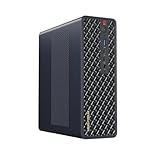
- 【Leading AI Mini Workstation】MINISFORUM AI MS-S1 Max Workstation comes with AMD Ryzen AI Max+ 395 processor, which uses AMD's latest generation Zen 5 architecture. It has 16 Cores and 32 Threads, the boost clock is up to 5.1GHz. The overall processor performance is up to 126 TOPS, and the NPU performance reaches up to 50 TOPS. AMD Ryzen AI enables improved productivity, advanced collaboration, and improved efficiency.
- 【AMD Radeon 8060S Graphics 】The MS-S1 Max Mini PC equipped with AMD Radeon 8060S Graphics which built on the new generation of RDNA 3.5 architecture AMD graphics, it brings ultra-high frame rate experiences and advanced content creation features anywhere and delivers staggering performance. It can handle all your computing and multimedia tasks efficiently.
- 【Five 8K Video Output】This MS-S1 Max Workstation comes with five video outputs, 1x HDMI (8K@60Hz), 2x USB4(40Gbps,Alt DP2.0,PD out 15W) and 2x USB4 V2(80Gbps,Alt DP2.0,PD out 15W) Outputs, which support multiple monitors display at the same time and provide a larger and wider filed of view and improve your work efficiency. It is used in fields that require high-performance computing and graphics processing, including digital signage and securities trading, as well as work that uses CAD, such as engineering design, scientific calculations, animation production, and post-production for movies and television
- 【 Fast and Stable Wire & Wireless Speed】It comes with Two 10G Lan Ports for wired connection and and Wi-Fi 7 / BT5.4 for wireless connection, which increased the network speed greatly and expand its functions and improved performance of computer to a large extent and allows you to use more networks such as software routers (OpenWRT / DD-WRT / Tomato etc.), firewalls, NAT, network isolation etc.
- 【Large Storage & Flexible Expandability】This Workstation equipped with 64GB LPDDR5-8000MHz + 2TB M.2 2280 PCIe4.0 SSD. There is another PCIe4.0 SSD slot available for up to 8TB, these SSD slots are compatible with RAID0 and RAID1, you can store movies, videos, photos, important files easily. What’s more, it also comes with 1x standard PCIex16 slot(PCIe4.0x4) inside.
Before deploying either model, evaluate the exact checkpoint in the intended application. At minimum, test factuality, prompt injection and jailbreak resistance, privacy leakage and memorization, toxicity and bias, refusal behavior, long-context degradation, output-format compliance, latency, throughput, and failure recovery. Do not use either as an unsupervised decision-maker for medical, legal, financial, or other high-stakes work.
Should you use Vicuna or Alpaca in 2026?
-
Choose Vicuna for historical experimentation where chatbot behavior and multi-turn conversation are the subject.
-
Choose Alpaca to reproduce or teach the early Stanford instruction-tuning recipe and study synthetic demonstrations.
-
Choose neither by default for a new production system, sensitive information, dependable tool use, long-context work, or a commercial product that needs clear rights and active maintenance.
What’s actually slowing this PC down?
Pick the symptom - the matching free tool is one click away.
Special offer. See more information about Outbyte and uninstall instructions. Please review EULA and Privacy policy.
For a current deployment, compare maintained models against your own requirements: release and support activity, commercial terms, context length, quantized formats, tool support, safety documentation, benchmark methodology, and hardware. Model catalogs and licenses change, so verify current terms and availability rather than relying on an old tutorial or a static ranking.
Frequently confused details
“Vicuna is 90% as good as ChatGPT” is not a current capability guarantee
That widely repeated line refers to an early project evaluation, not a standardized score that applies to all Vicuna versions or current ChatGPT systems. The result depends on which model, prompts, evaluator, and comparison method were used.
“Open source” does not answer the rights question
Public code, downloadable weights, reproducible training, transparent data, and commercial permission are separate properties. Check them individually for the exact model release.
Historical availability is not ongoing support
A model mentioned in an old tutorial may no longer have a working demo, maintained hosted endpoint, current security updates, or clear provider support. Stanford says the original Alpaca demo is disabled. Stanford’s Alpaca announcement
Recommended Free Tools
Quick Recap
Product prices and availability are accurate as of the date/time indicated and are subject to change. Any price and availability information displayed on Amazon at the time of purchase will apply.

