
Free tools Windows power users keep installed
One-click scans. No signup required.
For a desktop PC, choose a USB Wi-Fi adapter if you want the simplest installation, portability, or a way to add Wi-Fi without opening the case. Choose a PCIe Wi-Fi card if you want an internal, installed solution and your PC has a compatible free slot and enough room. Neither type is inherently faster: compare the exact Wi-Fi generation, antennas, host interface, router support, operating system, and radio conditions.
How USB adapters and PCIe cards differ
| Factor | USB Wi-Fi adapter | PCIe Wi-Fi card |
|---|---|---|
| Installation | Connect it to an available compatible USB port. Driver setup may still be required. | Power down the PC, open the case, install the card in a free compatible PCIe slot, then install its driver. |
| Portability | Can be moved between computers. | Installed as a desktop component. |
| Space and connections | Needs a free USB port; the USB generation may affect performance. | Needs a compatible free PCIe slot and case and bracket clearance. Low-profile bracket availability depends on the model. |
| Antenna placement | Varies by model. The cited Archer TBE6500U is listed with high-performance antennas. | Varies by model. The Archer TBE550E has two antennas on a cable-connected magnetic base that can be placed on a desk. |
| Performance | Depends on the adapter, Wi-Fi generation, antennas, USB interface, router, and local conditions. | Depends on the card, Wi-Fi generation, antennas, router, and local conditions. The connector type alone does not establish a speed advantage. |
TP-Link Editorial Group’s September 16, 2026 guide similarly says speed depends more on a model’s Wi-Fi generation and antenna quality than on its format. That is useful buying guidance, not a result from a controlled USB-versus-PCIe benchmark.
Is a PCIe Wi-Fi card faster?
Not automatically. USB versus PCIe describes how the device connects to the PC; it does not, by itself, tell you the wireless generation, antenna design, or real-world throughput. A USB adapter can be a suitable choice when its specifications match your router and the USB port meets the device’s requirements. A PCIe card may suit a permanent installation, but its form factor is not proof that it will deliver faster Wi-Fi.
Manufacturer speed figures are maximum signal or link rates, not promised internet speeds. For example, TP-Link lists maximum physical rates of 2,882 Mbps on 6 GHz, 2,882 Mbps on 5 GHz, and 688 Mbps on 2.4 GHz for its Archer TBE6500U USB adapter. TP-Link lists up to 5,764 Mbps on 6 GHz, 2,882 Mbps on 5 GHz, and 688 Mbps on 2.4 GHz for its Archer TBE550E PCIe card. These are separate product specifications derived from IEEE specifications, not a matched comparison or independent test. Actual results depend on the access point, interface, operating system, ISP or network path, and environment. See the manufacturers’ TBE6500U specifications and TBE550E specifications.
#1 Best Overall
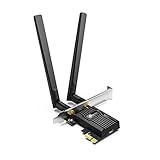
- 𝐍𝐞𝐱𝐭 𝐆𝐞𝐧 𝐖𝐢𝐅𝐈 𝟔 - Reach incredible speeds up to 2.4 Gbps (2402 Mbps in 5 GHz or 574 Mbps on 2.4 GHz) with ultra-low latency and uninterrupted connectivity using Wi-Fi 6 technologies¹
- 𝐌𝐢𝐧𝐢𝐦𝐢𝐳𝐞𝐝 𝐋𝐚𝐠 𝐟𝐨𝐫 𝐘𝐨𝐮𝐫 𝐏𝐂 - The networking card is equipped with OFDMA and MU-MIMO technology to reduce lag so you can enjoy ultra-responsive real-time gaming, or an immersive VR experience on even the busiest networks
- 𝐁𝐫𝐨𝐚𝐝𝐞𝐫 𝐑𝐚𝐧𝐠𝐞 - 2 powerful signal-boost, high-gain antennas greatly inrease range for a smoother online gaming experience in further away distances
- 𝐁𝐥𝐮𝐞𝐭𝐨𝐨𝐭𝐡 𝟓.𝟐 𝐟𝐨𝐫 𝐆𝐫𝐞𝐚𝐭𝐞𝐫 𝐒𝐩𝐞𝐞𝐝 𝐚𝐧𝐝 𝐑𝐚𝐧𝐠𝐞 - Equipped with the latest Bluetooth technology, Archer TX55E achieves 2x faster speeds and 4x broader coverage compared to Bluetooth 4.2 so you can connect your favorite devices such as game controllers, headphones, and keyboards for the ultimate setup.²
- 𝐂𝐮𝐭𝐭𝐢𝐧𝐠 𝐄𝐝𝐠𝐞 𝐖𝐏𝐀𝟑 - Protector your network with the latest WPA3 security protocol so your information transmitted via the wireless adapter is secure from hackers³
When a USB adapter is the better fit
- You want to add Wi-Fi without opening the PC case.
- You may want to move the adapter to another computer.
- Your desktop lacks a suitable free PCIe slot or has tight case clearance.
- You have an available USB port that meets the adapter’s stated interface requirements.
Check whether the adapter’s USB connection limits any advertised performance. TP-Link says USB 3.0 is required for the USB-related performance note on the TBE6500U page; confirm requirements on the page for the exact model you are considering.
When a PCIe card is the better fit
- You want a component installed in the desktop rather than a portable adapter.
- You are comfortable powering down and opening the case to install it.
- Your motherboard has a compatible free slot, and the card and bracket will fit.
- You want a model with a separate antenna base that can be positioned away from the back of the PC.
Antenna arrangements are model-specific. The TBE550E includes two antennas on a magnetic base and both standard and low-profile brackets, but those features should not be assumed for other PCIe cards.
Rank #2

- 𝐖𝐢-𝐅𝐢 𝟔 𝐓𝐞𝐜𝐡𝐧𝐨𝐥𝐨𝐠𝐲 Powered by Intel: The latest Wi-Fi 6 standard gives you incredible speed ultra-low latency and uninterrupted connectivity with OFDMA and MU-MIMO technology Utilizing next-generation Wi-Fi 6 technology Archer TX3000E is designed to excel in even the busiest of networks for next-level entertainment
- 𝐍𝐞𝐱𝐭-𝐠𝐞𝐧 𝐬𝐩𝐞𝐞𝐝𝐬 up to 2.4Gbps: Reach incredible speeds up to 2.4 Gbps (2402 Mbps on 5 GHz or 574 Mbps on 2 4 GHz) - Supports Windows 11, 10 (64bit) - Driver installation required via Website or included CD
- 𝐌𝐢𝐧𝐢𝐦𝐢𝐳𝐞𝐝 𝐥𝐚𝐠 for your PC: Revolutionary OFDMA reduces lag so you can enjoy ultra-responsive real-time gaming or an immersive VR experience
- 𝐁𝐫𝐨𝐚𝐝𝐞𝐫 𝐂𝐨𝐯𝐞𝐫𝐚𝐠𝐞: Two multi-directional and high-performance antennas with a magnetized base extends your existing Wi-Fi reception capabilities. Place the magnetized antenna base anywhere on your desktop to find the optimal location for signal reception. Easily install with low profile bracket.
- 𝐁𝐥𝐮𝐞𝐭𝐨𝐨𝐭𝐡 𝟓.𝟑 𝐟𝐨𝐫 𝐆𝐫𝐞𝐚𝐭𝐞𝐫 𝐒𝐩𝐞𝐞𝐝𝐬 𝐚𝐧𝐝 𝐂𝐨𝐯𝐞𝐫𝐚𝐠𝐞: Archer TX3000E is equipped with the latest Bluetooth 5.3 Technology achieving 2x faster speeds and 4x broader coverage than Bluetooth 4.2. Connect as many devices as you want including game controllers headphones and keyboards for the ultimate setup
Check compatibility before buying
Match the adapter to your router
Choose a wireless generation and features supported by your router or access point. A Wi-Fi 6E or Wi-Fi 7 adapter cannot add those capabilities to an access point that lacks them. Support for a band or channel width also does not guarantee it is available in every region: TP-Link says 320 MHz operation on 6 GHz may be unavailable in some countries or regions because of regulations.
Confirm operating-system and driver support
Check the exact product’s supported operating systems and driver availability. TP-Link lists the TBE550E for Windows 11 64-bit only. Intel lists Windows 10, Windows 11, and Linux for its AX210 module, but that does not establish support for every retail card built around the module. Use the device or chipset vendor’s current driver for the exact hardware and OS; an operating-system update may require a driver update.
Outdated Drivers Are Slowing You Down
One free scan finds every outdated or missing driver and matches the right update for your exact hardware.Free scan · exact hardware matchPC Slower Than It Used to Be?
A free scan shows the junk files, broken settings and background clutter dragging Windows down - then fixes them in one click.Free scan · Windows 10 & 11Rank #3

- Intel WI-FI 6E AX210 module built-in
- Dedicated spectrum in 6GHz band for maximum speed and ultra-low latencies
- Support dual-stream Wireless in the 2.4GHz, 5GHz and 6GHz bands
- IEEE 802.11.acR2plusax compliant
- High speed wireless connection up to 2400Mbps
Check the physical fit and interface
For USB, confirm you have a compatible open port and meet the manufacturer’s USB-generation requirement. For PCIe, check the motherboard slot, the case’s available space, and the bracket format. A low-profile bracket is model-specific, so verify the included accessories rather than assuming one is supplied.
Independent reader supportYour contribution helps us test, update, and keep practical guides available for everyone.What the product examples do—and do not—show
The following specifications illustrate how two products differ; they are not independent recommendations or a direct performance test.
Rank #4

- INTEL AX200 CHIPSET: Genuine Intel silicon delivers 2400Mbps on 5GHz and 574Mbps on 2.4GHz via 802.11ax; proven driver stability and broad router compatibility, the same wireless module used in premium laptops
- LOW-LATENCY GAMING AND 4K STREAMING: OFDMA and MU-MIMO keep response times short when several devices share the network; built for competitive matches, 4K playback and VR headsets on desktop PCs
- BLUETOOTH 5.2 BUILT IN: Pairs wireless controllers, headsets, keyboards and mice directly from the card, so no USB dongle is needed; WPA3 encryption secures the wireless connection
- FITS ANY DESKTOP, WINDOWS 11 AND 10: Installs in any PCIe x1, x4, x8 or x16 slot; standard and low-profile brackets both included for towers and slim SFF cases; auto-detected on 64-bit Windows, no driver disc
- TWO 5dBi HIGH-GAIN ANTENNAS: Detachable antennas extend usable range and cut dead spots across the home; includes card, two antennas, pre-installed standard bracket, low-profile bracket and quick-start guide
| Example | Published specification | Other relevant details |
|---|---|---|
| TP-Link Archer TBE6500U (USB) | 2,882 Mbps on 6 GHz + 2,882 Mbps on 5 GHz + 688 Mbps on 2.4 GHz, maximum physical signal rates listed by TP-Link; actual throughput and coverage are not guaranteed. | Feature operation depends on compatible access-point and PC operating-system support. TP-Link’s page says USB 3.0 is required for its USB-related performance note. |
| TP-Link Archer TBE550E (PCIe) | Up to 5,764 Mbps on 6 GHz + 2,882 Mbps on 5 GHz + 688 Mbps on 2.4 GHz, maximum physical signal rates listed by TP-Link. | Two antennas on a magnetic base; standard and low-profile brackets included; listed for Windows 11 64-bit. |
| Intel Wi-Fi 6E AX210 (module example) | Intel says Wi-Fi 6 with 1024-QAM and 160 MHz channels can deliver up to 2.4 Gbps peak data rate under those conditions. | Dual-stream support across 2.4, 5, and 6 GHz. This is an illustration of technical dependencies, not a tested retail-card recommendation. |
The product pages do not show a controlled test comparing USB and PCIe devices under matched conditions. Their figures cannot establish that one connection type is faster in everyday use. Intel’s AX210 details are in its product specifications.
Quick Recap
Best Value

- Optimized Speed Dual-Band Wi-Fi - Up to 1200 Mbps Wi-Fi speeds (867 Mbps on 5 GHz band and 300 Mbps on 2.4 GHz band).*
- Bluetooth 5.0 - With reliable Bluetooth technology, enjoy seamless connectivity with game controllers, headphones, keyboards, mice, and more.
- Broad Wireless Range - Two external antennas enables optimized Wi-Fi coverage and stability.
- Easy Installation - Plug the adapter into an available PCI-E slot to upgrade your desktop (both standard and low profile brackets included)
- Windows Compatibility - Supports Windows 10/11
A practical decision rule
- Choose USB if avoiding case installation or being able to move the adapter matters most.
- Choose PCIe if you prefer an installed desktop component and have a compatible slot, clearance, and supported OS.
- Compare individual models against your router, the adapter’s antenna arrangement and host-interface requirements, and the wireless features available where you live.
- Treat advertised rates as specifications, not a prediction of internet speed; real performance depends on the whole connection and local conditions.
Product prices and availability are accurate as of the date/time indicated and are subject to change. Any price and availability information displayed on Amazon at the time of purchase will apply.
Do these 3 things before closing this tab:
1Fix the driver behind crashes, sound loss and screen glitches2Clear out junk files and repair common Windows errors3Scan for outdated or missing drivers - takes under a minute
