
Free tools Windows power users keep installed
One-click scans. No signup required.
If Windows or another operating system installer cannot see the drives in a Dell PowerEdge T430 with a PERC H730, first check whether the controller has a virtual disk to present. The installer normally sees the virtual disk—not the individual drives in a hardware RAID set. If a virtual disk is present but absent from setup, check the installer’s storage-driver support and confirm that the USB installer was booted in the intended firmware mode. Do not create or initialize an array until you know whether it contains data you need.
This guide is about the Dell PowerEdge T430, not the Lenovo ThinkPad T430. The ThinkPad is a different platform and does not use the PowerEdge’s PERC H730 setup.
What the installer should see
The PERC H730 is a Dell SAS RAID controller, and Dell lists H730 support for the PowerEdge T430 family. With hardware RAID, the operating system installer is generally offered a controller-created virtual disk as its install target. It should not be expected to list each physical member drive separately.
If setup shows no target disk, distinguish among three situations before changing anything:
#1 Best Overall

- CPU Speed: 2.5Ghz
- 192GB of RAM
- CPU Manufacturer: Intel
- No virtual disk exists: the controller may see physical drives, but there is no logical target for the installer.
- A virtual disk exists, but setup cannot see it: the installer may need a compatible PERC driver, or the controller/OS combination may not be supported by the installer.
- The installer USB will not boot or the disk is not bootable: check firmware boot mode and how the USB was prepared; this is different from a missing storage driver.
Check the controller and virtual disk without risking data
- Identify the hardware and OS. Confirm that the machine is a PowerEdge T430, record the H730 variant (for example, Adapter or Mini Monolithic), note the drive/backplane cabling, and write down the exact operating-system release you intend to install.
- Open the H730 configuration utility. In the controller utility, check controller health, whether the expected physical drives are visible and healthy, and whether the intended virtual disk exists and is in a usable state. Utility entry steps and labels can vary with firmware and configuration.
- Protect any existing array. If the virtual disk contains data to preserve, do not initialize it, delete it, or create a replacement virtual disk over it. Record its configuration and resolve any controller or drive fault before proceeding.
- Decide whether a new virtual disk is actually needed. Create one only for a fresh array or after confirming that existing data is expendable and the planned RAID layout is correct. Creating or initializing storage can destroy access to existing data.
Match UEFI or legacy mode to the installer and boot volume
The server’s firmware mode and the installer’s boot entry need to agree. For a boot volume larger than 2 TB, use UEFI with a GPT disk layout and start the installer from its UEFI boot entry. Use legacy BIOS only when the intended operating system and disk layout call for it.
A Dell community report about one T430/H730 configuration described legacy BIOS exposing only 2 TB; after changing to UEFI, that system failed to boot the USB and appeared not to see the adapter. That report shows how a mode or media mismatch can complicate diagnosis, but it does not establish that all T430 systems behave the same way.
Rank #2
- 2x 1.9Ghz Six Core E5-2609v3 CPUs
- 32GB of ECC DDR4 RAM
- 3 x Dell 2TB 7.2K 6Gbps 3.5'' SAS Drives
- H730 1GB 12Gbps Raid Controller
- 2x 750W Redundant Power Supplies
- In System Setup, select the intended boot mode.
- Prepare or recreate the installation USB for that mode. For UEFI, verify that the firmware boot menu offers a UEFI entry for the USB.
- Boot the installer from the matching entry, then check whether the H730 virtual disk appears.
- If the USB itself does not boot, test a freshly created, unmodified installer USB and disconnect unrelated USB storage while troubleshooting.
Load the PERC driver when Windows setup lists no disk
A supported installer may need a PERC storage driver before it can access the H730 virtual disk. Dell’s Lifecycle Controller OS Driver Pack guide identifies the PERC H730 Adapter as SAS RAID and maps driver revision 6.602.07.00 to 64-bit Windows Server 2008 R2, Windows Server 2012, and Windows Server 2012 R2. That specific mapping does not establish driver support for newer Windows client releases, newer Windows Server releases, or any Linux distribution.
- For one of the listed Windows Server releases, obtain the matching 64-bit H730 driver for the exact controller variant and OS from Dell.
- Extract or otherwise prepare the driver files as required by Dell’s package instructions, and place them on a second USB drive accessible to Windows setup.
- In Windows setup, choose Load driver when no install disk is listed, browse to the driver files, and select the matching PERC H730 driver.
- After the driver loads, check whether the intended virtual disk appears. If it does not, return to controller health, virtual-disk state, OS support, and boot-mode checks rather than creating another array blindly.
For a newer OS or a Linux distribution, confirm support for the exact OS release and H730 variant through Dell’s current support information and the OS vendor’s documentation. The archived mapping above should not be treated as proof of compatibility beyond the releases it names.
Rank #3

- Dell PowerEdge T440 Tower Server for Small Businesses, Branch Locations, and Home Offices
- Dual (2) Intel Silver 4110 8-Core 2.1GHz 11MB CPUs; 128GB DDR4 PC4-21300 2666MHz Registered Memory
- 16TB (4 x 4TB) 7.2K 12Gb/s SAS 3.5" HDDs for High Capacity Storage; PERC H330 12Gb/s RAID Controller
- Windows Server 2019 Standard Retail
When firmware may be relevant
Firmware is worth checking after confirming the virtual disk and installer mode, especially if the controller reports a problem or an otherwise supported setup still fails. Dell’s H730 firmware page lists version 25.5.8.0001, released December 8, 2020, and marks that package as requiring a restart. Because that is a dated listing, verify the current package and applicability rather than assuming it is the latest version for every H730 variant.
- Record the current firmware, controller variant, array configuration, and virtual-disk state before an update.
- Confirm the Dell package applies to the installed H730 variant; do not use a package based only on the server model name.
- Make and verify backups before firmware maintenance. Do not update as a substitute for diagnosing a missing or unhealthy virtual disk.
Dell’s release notes also describe changes affecting background initialization and capacity expansion. They note that beginning with firmware 25.5.7.0005, RAID-level migration or capacity expansion is blocked when a virtual disk uses the controller’s maximum target ID. That maintenance restriction is not, by itself, an explanation for an installer failing to list a disk.
Rank #4
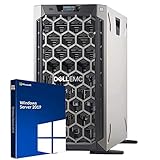
- 3.5 Inch Hot Plug Hard Drive PowerEdge T340 Tower Server Chassis
- Microsoft Windows Server 2019 Standard Operating System
- Processors: Intel Xeon E-2124 Quad-Core 3.3GHz 8MB CPU, Up To 4.3GHz Turbo
- Memory: 32GB (2 x 16GB) DDR4 PC4-21300 2666MHz Unbuffered Memory
- Hard Drive: 8TB (4 x 2TB) 7.2K RPM 6Gb/s SATA 3.5 Inch HDDs in RAID
Choose the fix that matches the symptom
| What you observe | First check | What to do next |
|---|---|---|
| Physical drives are visible in the controller, but setup has no target disk | Whether the intended virtual disk exists and is healthy | Preserve an existing virtual disk; create one only if this is a fresh array and its data can be discarded. |
| The virtual disk exists, but Windows setup does not list it | Whether the OS release and H730 driver are covered by Dell’s support information | For Server 2008 R2, 2012, or 2012 R2, try the matching 64-bit driver through Load driver; verify support separately for other OS releases. |
| The USB installer will not start, or UEFI appears not to detect it | Firmware boot mode and the USB’s boot entry | Recreate or test the installer media for the selected mode and confirm that the firmware menu shows its UEFI entry when using UEFI. |
| A boot volume larger than 2 TB is required | Whether the server is using UEFI and the install layout is GPT | Use UEFI/GPT; do not rely on legacy BIOS for a boot volume of that size. |
| Controller or drive health is abnormal | Drive visibility, cabling, and controller status | Resolve the storage fault and protect existing data before attempting OS installation. |
After the operating system installs
Install the Dell chipset, storage, and management components appropriate to the exact OS and server configuration. Then verify in the operating system that the expected virtual disk is present and that the PERC controller and drives report healthy status.
Quick Recap
Best Value
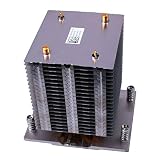
- New with Grease
- Fit Models: for Dell PowerEdge Tower Server T430
- PN: WC4DX, 0WC4DX
- You will receive: 1x Heatsink
- Ensure it is compatible with your model and check pictures for more details
Product prices and availability are accurate as of the date/time indicated and are subject to change. Any price and availability information displayed on Amazon at the time of purchase will apply.
Quick wins for a faster PC:
Fix the driver behind crashes, sound loss and screen glitchesFind Drivers →Clear out junk files and repair common Windows errorsFree Scan →
