
Free tools Windows power users keep installed
One-click scans. No signup required.
The top 4 Gantt Chart Solutions for React are Bryntum Gantt, DHTMLX React Gantt, Syncfusion React Gantt Chart, and KendoReact Gantt. Bryntum leads for advanced scheduling, DHTMLX for configurable integration and exports, Syncfusion for eligible small teams and suite users, and KendoReact for React applications already using Telerik’s UI ecosystem.
A React Gantt component is not merely a collection of bars on a calendar. The right product determines how your application represents task hierarchies, dependencies, calendars, resources, editing, persistence, accessibility, exports, and scheduling rules.
The shortlist below uses official product and documentation material available on August 18, 2026. Prices, license terms, React compatibility, and release details are time-sensitive, so verify them with each vendor before purchasing.
Key takeaways
- Bryntum Gantt is the strongest candidate when dependency-aware scheduling, constraints, resources, baselines, and critical-path workflows are core product features.
- DHTMLX React Gantt combines a mature JavaScript Gantt engine with an official React wrapper, configurable state ownership, resource features, and export options whose availability depends on license and configuration.
- Syncfusion React Gantt is especially attractive to existing Syncfusion customers and organizations that meet Syncfusion’s community-license conditions: less than $1 million in annual gross revenue, five or fewer developers, and ten or fewer employees.
- KendoReact Gantt is a premium React component distributed through
@progress/kendo-react-gantt; the Gantt is not included in KendoReact’s free tier. - A read-only timeline without dependencies, resource calculations, or drag-to-reschedule behavior may not justify a full commercial Gantt component.
What are the top 4 Gantt Chart Solutions for React?
The top four React-compatible options serve different buying priorities rather than representing one universal winner.
What’s actually slowing this PC down?
Pick the symptom - the matching free tool is one click away.
#1 Best Overall

- Safe, Low-Odor Ink: Certified non-toxic whiteboard markers meet ASTM D-4236 standards, making them safe for both kids and adults.
- Get the Richest Color: For the most vibrant and saturated results, we recommend using these markers on a standard porous whiteboard. Please note that on hard, non-porous surfaces like glass, acrylic or blackboard, the ink may lighten and appear less bold.
- Reinforced Magnetic Caps: Built-in Reinforced Magnets in Pen Cap, adhesive freely on any metal & magnetic surface; No worry about weak absorption & drop for the magnets on the white board pen.
- 1-2mm Precise Lines: The fine point dry erase markers work great for writing clearly, making it easier to fill the days on your calendar board/ whiteboard with more information; The marker with a small eraser can be used directly to erase small mistakes.
- Vibrant 12 Colors for Highlight and Color Coding: 12 bold colors magnetic whiteboard marker include Blue, Light green, orange, brown, yellow, red, aubergine, black, green, light blue, dark green, purple.
| Solution | Best fit | React integration | Main differentiator | Primary caution |
|---|---|---|---|---|
| Bryntum Gantt for React | Complex, scheduling-heavy applications | Dedicated BryntumGantt React component and wrappers |
Scheduling depth, constraints, resources, and customization | Commercial cost and implementation complexity |
| DHTMLX React Gantt | Mature, configurable Gantt applications | Official React wrapper around the DHTMLX Gantt engine | Configuration, integrations, state-binding choices, and exports | License boundaries and JavaScript-engine integration model |
| Syncfusion React Gantt Chart | Syncfusion ecosystem users and qualifying small organizations | React component in the Syncfusion suite | Suite breadth, editing, CRUD, and community-license eligibility | Community-license restrictions and broad-suite dependency |
| KendoReact Gantt | Existing Telerik/KendoReact applications | React-specific premium component | React-first suite integration, UI consistency, and documented accessibility | Premium licensing and poor value if the Gantt is the only needed control |
What is a Gantt chart component?
A Gantt chart component displays a project as hierarchical rows and time-based bars, but a serious interactive Gantt also lets users edit tasks, create relationships, inspect progress, and work with project rules.
Common capabilities include parent and child tasks, start and end dates, progress, milestones, multiple time scales, zooming, current-date markers, working days, holidays, dependencies, and drag-to-reschedule interactions. More advanced products add resource assignments, calendars, baselines, critical-path analysis, capacity views, and automatic date calculation.
Three categories are often confused in React search results:
- Visualization-only timelines display dates and bars but may not understand dependencies, calendars, or project logic.
- Interactive Gantt components add task hierarchy, editing, filtering, dependency links, drag operations, and CRUD workflows.
- Scheduling engines calculate dates from dependencies, constraints, working-time calendars, resources, and project rules. The visual chart is only one part of the product.
If users expect a successor task to move when its predecessor changes, or expect a warning when a resource is overallocated, a timeline renderer alone is not enough.
PC Slower Than It Used to Be?
A free scan shows the junk files, broken settings and background clutter dragging Windows down - then fixes them in one click.Free scan · Windows 10 & 11Outdated Drivers Are Slowing You Down
One free scan finds every outdated or missing driver and matches the right update for your exact hardware.Free scan · exact hardware matchHow should you evaluate a React Gantt component?
Evaluate the integration model and the scheduling model separately. A component can look React-friendly while leaving important state and scheduling behavior inside an underlying chart engine.
1. React integration model
Check whether the vendor provides an official React package or wrapper, JSX/TSX examples, TypeScript declarations, event callbacks, ref or API access, and guidance for Vite, Next.js, and other build systems.
DHTMLX’s React documentation describes an official wrapper, React components for templates and editors, and both React-managed and Gantt-managed data-binding approaches. Bryntum documents its dedicated BryntumGantt component, JSX customization, TypeScript and JavaScript setup, and Redux integration. KendoReact distributes its Gantt through @progress/kendo-react-gantt.
Also determine whether custom task bars, cells, editors, tooltips, and context menus can contain React components. Confirm how the component behaves when React state, Redux, Zustand, or another state library updates the task collection.
2. Scheduling and dependency requirements
List the rules your application actually needs before comparing feature checklists. Important questions include whether the product supports finish-to-start, start-to-start, finish-to-finish, and start-to-finish dependencies; lag and lead time; constraints; auto-scheduling; critical path; conflict detection; manual scheduling; and working-time calendars.
KendoReact documents all four common dependency types. Bryntum documents task constraints, dependency-aware scheduling, and conflict-resolution capabilities. DHTMLX documents work-time calculation and auto-scheduling in its Gantt documentation. Do not infer that equivalent-looking feature names behave identically; test the exact scheduling rules with representative projects.
3. Editing, persistence, and data flow
Compare inline editing, task dialogs, custom editors, drag-and-drop rescheduling, CRUD operations, validation, optimistic updates, undo and redo, lazy loading, pagination, and server synchronization.
Syncfusion documents cell and dialog editing, programmatic task operations, CRUD, and custom editing interfaces. KendoReact documents creating, updating, and deleting records, sorting, filtering, task editing, and flat-data conversion utilities. DHTMLX documents save and batch-save callbacks as well as integration with state libraries such as Redux Toolkit, Zustand, and MobX.
The Tool Desk
Outbyte Driver Updater FREEFix the driver behind crashes, sound loss and screen glitchesFind Drivers →Outbyte PC Repair FREERepair Windows errors before they cause bigger problemsFix Now →Rank #2

- ASSORTED COLORS: This pack of dry erase markers includes 12 markers in a broad range of colors including black, blue, light blue, purple, red, pink, green, light green, yellow, orange, and brown
- LOW ODOR INK: Enjoy a pleasant writing experience with low odor dry erase markers that write, draw, and erase cleanly
- CHISEL TIP VERSATILITY: The chisel tip dry erase marker design allows for versatile writing, allowing you to create both thick and thin lines with ease
- AMAZON BRAND QUALITY: These white board dry erase markers have the quality and reliability typical of this brand, making them a trusted choice for your writing, drawing, and erasing needs
4. Resources and project controls
Resource assignment, resource views, utilization, capacity, baselines, S-curves, calendars, multiple projects, cross-project dependencies, and work-breakdown structures matter when the chart is used for workforce planning, construction, manufacturing, or portfolio management.
Bryntum lists resource assignment, resource histograms, baselines, critical-path tools, S-curves, constraints, and scheduling conflict handling. DHTMLX lists resource management and work-time calculation. Verify the exact resource and portfolio features in the product version and license tier you plan to deploy.
5. Customization and interoperability
Inspect support for custom task-bar rendering, grid columns, cell templates, tooltips, editors, themes, CSS variables, row height, multi-column headers, context menus, localization, and right-to-left layouts.
Bryntum supports custom task-bar HTML, React customization, configurable task editors, and multiple themes. KendoReact documents custom columns, column menus, multi-column headers, row-height configuration, filtering, sorting, and time-slot customization. DHTMLX exposes its underlying API, templates, plugins, event handlers, React templates, and inline editors.
6. Export requirements
Export is a separate buying criterion, not a checkbox to assume from the presence of a Gantt view. Ask whether the product supports PDF, PNG or image output, Excel, CSV, Microsoft Project, Primavera, local export, server-side export, watermarks, and export of custom fields.
DHTMLX advertises PDF, PNG, Excel, and Microsoft Project import/export options, but its product page indicates that availability can vary by configuration and license tier. Do not treat the four products as equivalent exporters without testing the exact output and license terms.
7. Accessibility
Test keyboard navigation, focus management, screen-reader semantics, ARIA behavior, high-contrast themes, task-editor accessibility, dependency controls, and drag interactions using your real customizations.
Telerik states that KendoReact Gantt supports keyboard navigation and claims WCAG 2.1 AA and Section 508 compliance. That is a vendor claim, not independent audit evidence, and custom task bars, editors, menus, and keyboard shortcuts still require application-level testing.
Recommended Free Tools
Which React Gantt solution is best for advanced scheduling?
Bryntum Gantt for React is the strongest candidate for advanced scheduling. Bryntum positions the product around a dedicated scheduling engine, dependency-aware date calculation, constraints, resources, baselines, critical-path workflows, and highly interactive data.
Why choose Bryntum?
- A dedicated
BryntumGanttcomponent supports React integration. - React wrappers, JSX customization, TypeScript and JavaScript setup, and Redux integration are documented on the product pages.
- The product includes a task editor and resource-assignment editing.
- Bryntum documents constraints, dependency-aware scheduling, conflict handling, resource histograms, baselines, critical-path functionality, and S-curves.
- Custom task-bar HTML and multiple themes support deeply tailored applications.
Bryntum also markets an efficient rendering engine and asynchronous scheduling for large data sets. Those are vendor positioning claims, not independent benchmarks. Measure initial rendering, memory, drag operations, and scheduling recalculation with your own task tree and dependency graph.
When is Bryntum a poor fit?
Bryntum may be excessive for a read-only timeline or a small application that has no dependency propagation, resource planning, or calendar logic. Commercial pricing was not surfaced as a concrete public amount in the reviewed product material, so obtain a current quote and confirm developer seats, renewal terms, deployment rights, support, and framework compatibility.
Choose Bryntum if: scheduling behavior is core product functionality and the team values depth and customization over minimum setup.
Rank #3
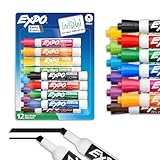
- Dry erase markers with the most vibrant ink yet from EXPO
- Vibrant ink makes it easier to read information from a distance
- Made for the whiteboard and beyond, writing pops on most non-porous surfaces like glass, acrylic, and more!
- Easily and cleanly erases with an EXPO eraser or dry cloth
- Versatile chisel tip creates multiple line widths
Is DHTMLX React Gantt the best configurable option?
DHTMLX React Gantt is the strongest configurable and integration-oriented choice. DHTMLX provides an official React wrapper over its JavaScript Gantt engine, giving teams access to a mature Gantt API while allowing React components in templates, lightboxes, and inline editors.
Why choose DHTMLX?
- React teams can choose between React-managed data and Gantt-managed data, depending on state and performance needs.
- The underlying Gantt API, templates, plugins, and event handlers provide extensive configuration.
- Documentation covers Redux Toolkit, Zustand, MobX, and other state-management approaches.
- Work-time calculation, auto-scheduling, resource management, dynamic loading, and smart rendering are documented.
- PDF, PNG, Excel, and Microsoft Project export/import options are advertised, subject to configuration and license.
DHTMLX’s wrapper-and-engine architecture is both an advantage and a trade-off. Teams comfortable with a specialized JavaScript engine gain a broad API; teams expecting every chart state change to be naturally owned by React must design synchronization carefully.
How much does DHTMLX React Gantt cost?
The DHTMLX product page displayed annual license tiers observed on August 18, 2026: Individual at $799, Commercial at $1,599, Enterprise at $2,999, and Ultimate at $5,999. The displayed terms varied by developer count, project count, support, add-ons, export modules, and SaaS rights; treat those figures as dated list-price signals rather than a universal quote. See the DHTMLX React Gantt product page before purchase.
The React documentation states that the React Gantt component is available under Commercial, Enterprise, and Ultimate licenses, while Community-edition users should follow a different legacy or integration path. Confirm the intended wrapper, export modules, SaaS rights, source-code rights, developer limits, and project limits in writing.
Do these 3 things before closing this tab:
1Fix the driver behind crashes, sound loss and screen glitches2Clear out junk files and repair common Windows errors3Scan for outdated or missing drivers - takes under a minuteChoose DHTMLX if: the team needs a mature, highly configurable engine with serious integration or export requirements and is prepared to select the correct commercial tier.
Is Syncfusion React Gantt best for existing Syncfusion users?
Syncfusion React Gantt is most compelling for existing Syncfusion customers and organizations that qualify for the community license. The component is part of Syncfusion’s wider React suite and documents CRUD, cell editing, dialog editing, programmatic operations, and custom editing interfaces.
Why choose Syncfusion?
- The React Gantt fits an existing Syncfusion component ecosystem.
- Editing supports cell and dialog workflows, custom interfaces, and programmatic task changes.
- NPM distribution, a free trial, and suite-level vendor support are available buying paths.
- Syncfusion states that its licensing is per developer without runtime, royalty, or deployment fees.
Who qualifies for Syncfusion’s community license?
Syncfusion states that eligible organizations and individuals must meet all of its listed conditions: less than $1 million USD in annual gross revenue, five or fewer developers, and ten or fewer total employees. The conditions are cumulative, so a project is not automatically free merely because the project is small. Review the Syncfusion React Components licensing information for current eligibility, developer counting, contractor treatment, subsidiaries, and renewal terms.
A broad suite can reduce vendor fragmentation when an application also needs grids, forms, calendars, charts, themes, and other controls. The same breadth can be unnecessary dependency and bundle complexity when the requirement is only one lightweight timeline. Verify the current Gantt package, React support, export modules, and feature licensing before committing.
Choose Syncfusion if: the organization already standardizes on Syncfusion or clearly qualifies for the community terms and needs a full editing-capable component rather than a minimal chart.
Is KendoReact Gantt the best React-first suite option?
KendoReact Gantt is the best fit for teams already using Telerik or KendoReact and wanting a consistent React UI suite. Telerik describes the Gantt as built specifically for React, with hierarchical tasks in table and timeline views, sorting, filtering, editing, time-zone support, and customizable columns and time slots.
Why choose KendoReact?
- The Gantt is distributed through the
@progress/kendo-react-ganttpackage. - Supported task types include summary, regular, and milestone tasks.
- Four documented dependency types are finish-to-finish, finish-to-start, start-to-start, and start-to-finish.
- Editing and CRUD-style operations, sorting, filtering, and flat-data conversion utilities support application workflows.
- Custom columns, column reordering, multi-column headers, menus, row heights, time slots, and themes help align the Gantt with other KendoReact controls.
- KendoReact documents keyboard navigation and publishes its WCAG 2.1 AA and Section 508 claims.
KendoReact documents that when no time zone is specified, the component defaults to the browser’s local time zone. Test the application’s backend date model against browser locales, UTC values, daylight-saving transitions, and all-day tasks.
How much does KendoReact Gantt cost?
The KendoReact pricing page displayed annual per-developer subscription options observed on August 18, 2026: Lite Support at $649, Priority Support at $749, and Ultimate Support at $1,199 per developer per year. The page also listed a free tier with more than 50 components, while the full commercial tier included more than 120 premium components. The Gantt is identified as a premium component and requires a license key for trial or commercial use; without one, licensing warnings and watermarks appear. Check the KendoReact pricing page and Gantt getting-started documentation for current terms.
Quick wins for a faster PC:
Scan for outdated or missing drivers - takes under a minuteDriver Scan →Repair Windows errors before they cause bigger problemsFix Now →Rank #4

- Dry erase markers with the most vibrant ink yet from EXPO
- Vibrant ink makes it easier to read information from a distance
- Made for the whiteboard and beyond, writing pops on most non-porous surfaces like glass, acrylic, and more!
- Easily and cleanly erases with included EXPO eraser and cleaner spray
- Versatile chisel tip creates multiple line widths
KendoReact can be poor value when the Gantt is the only required component. KendoReact is more defensible when the application also needs the suite’s grids, forms, data visualizations, themes, and vendor support.
Choose KendoReact if: the application already uses KendoReact or the team values a React-specific component and consistent enterprise UI conventions across a larger suite.
How do the four React Gantt products compare?
The following comparison is qualitative because no controlled benchmark or uniform feature test was supplied. Vendor performance and accessibility statements should be validated against your application.
| Criterion | Bryntum | DHTMLX | Syncfusion | KendoReact |
|---|---|---|---|---|
| Integration model | Dedicated React wrapper | Official React wrapper over a JavaScript Gantt engine | React component in a wider suite | React-specific premium component |
| Scheduling depth | Strong candidate; constraints, dependencies, scheduling engine | Strong candidate; auto-scheduling and work-time features documented | Verify the exact scheduling feature set required | Verify advanced scheduling needs beyond documented Gantt behavior |
| Editing | Task editor and custom editing | Inline editors, lightboxes, templates | Cell, dialog, programmatic, and custom editing | Editing, sorting, filtering, and task operations |
| Resource planning | Resource assignment and histogram features documented | Resource management documented | Verify required resource views and calculations | Verify required resource views and calculations |
| Large-data signal | Vendor emphasizes efficient rendering and asynchronous scheduling | Smart rendering and dynamic loading documented | Benchmark the target workload | Benchmark the target workload |
| Accessibility evidence | Test the product and customizations | Test the product and customizations | Test the product and customizations | Telerik states WCAG 2.1 AA and Section 508 support |
| Observed pricing signal | Public price not surfaced in reviewed material | $799–$5,999 annual displayed tiers | Paid; community license subject to eligibility | $649–$1,199 per developer/year displayed tiers |
| Main risk | Cost and configuration complexity | License boundaries and wrapper architecture | Eligibility and suite complexity | Premium-only Gantt and broader suite cost |
Which product should you choose for common scenarios?
| Scenario | Recommended starting point | Why |
|---|---|---|
| Complex project-management SaaS | Bryntum or DHTMLX | Both are positioned for mature scheduling and interactive project behavior; test the specific dependency and resource model. |
| Scheduling-heavy application | Bryntum | Constraints, dependency-aware scheduling, conflict handling, and resource-planning features are central strengths. |
| Export and configurable integration | DHTMLX | Its documentation and product materials cover broad API access, state-binding choices, and multiple export/import formats. |
| Existing Syncfusion application | Syncfusion | The Gantt fits the existing suite and offers documented editing and CRUD workflows. |
| Small organization meeting community-license conditions | Syncfusion, subject to written eligibility confirmation | The stated revenue, developer, and employee thresholds may make the suite attractive. |
| Existing KendoReact application | KendoReact | The premium Gantt aligns with the existing React suite, themes, support model, and UI conventions. |
| Read-only timeline with no dependencies | Lightweight timeline or custom implementation | A full commercial scheduling component may add unnecessary licensing, bundle, and integration cost. |
What React integration problems should you test?
State synchronization
A Gantt can behave unpredictably when React and the chart engine both attempt to own the same task data. Decide whether React state or the component manages task mutations, use stable object identities, avoid replacing the entire task array on every drag event, debounce persistence where appropriate, and design rollback behavior for rejected server updates.
Test dependency updates after task moves, concurrent edits from two users, optimistic updates, server conflicts, undo and redo, and whether filtering or lazy loading changes the data sent back to the server. DHTMLX’s separate React-managed and Gantt-managed models are a useful reminder that state ownership is an architectural decision, not a minor prop setting.
SSR and hydration
Gantt components commonly need browser layout, DOM measurement, or other client-side behavior. Before using a Gantt in Next.js, Remix, or another SSR application, verify whether the component must be client-only, whether CSS must load in a particular order, whether a dynamic import is recommended, and whether hidden-container rendering causes incorrect dimensions or hydration mismatches.
DHTMLX publishes separate React integration guidance, including framework-specific material. Do not apply a universal dynamic(..., { ssr: false }) fix without checking the selected product’s current documentation and testing the actual page lifecycle.
Time zones and dates
Use one explicit date model across the browser, API, database, and Gantt. Common failures include ISO strings interpreted as UTC, browser-local conversion, daylight-saving shifts, inclusive versus exclusive end dates, midnight UTC milestones appearing on the previous day, and different working-day calendars by region.
Do these 3 things before closing this tab:
1Clear out junk files and repair common Windows errors2Fix the driver behind crashes, sound loss and screen glitches3Repair Windows errors before they cause bigger problemsTest a task crossing a daylight-saving transition, a task entered in one time zone and viewed in another, a midnight UTC date, a milestone, and weekend or holiday calendars. KendoReact’s documented browser-local default makes an explicit time-zone test especially important for distributed teams.
Large data sets and rendering
Do not select a product solely because a vendor uses phrases such as “fastest” or “optimized for large data.” DHTMLX documents smart rendering and dynamic loading, while Bryntum emphasizes efficient rendering and asynchronous scheduling, but neither statement replaces a workload-specific benchmark.
Benchmark 1,000, 10,000, and 50,000 tasks where those volumes match the application; deeply nested trees; dense dependency graphs; repeated drag-and-drop; resource-heavy views; filtering; sorting; initial load; repeated navigation; memory usage; and export performance. Run the test on target hardware and with the custom editors, templates, and scheduling rules enabled.
Accessibility after customization
Default accessibility can degrade when a team replaces task-bar markup, cell renderers, editors, context menus, drag handles, tooltips, or keyboard shortcuts. Re-run keyboard and screen-reader testing after every major customization. Verify focus order, visible focus, announcements, keyboard equivalents for drag operations, and error messages in custom editors.
Best Value

- Dry erase markers in bold black
- Fine tip perfect for accurate, detailed lines
- Low odor ink, ideal for home, classroom, and office use
- Erase cleanly and easily with an EXPO eraser
- Includes 4 black dry erase markers
Export fidelity
Export output can differ from the browser view because of virtualized rows, custom HTML, fonts, fixed versus scrollable timelines, date locales, large task counts, and browser-only rendering. Test exported PDFs, images, spreadsheets, and project files with real custom fields and long task names. Confirm whether export is local or server-backed and whether the selected license includes the required module.
What licensing traps should you check?
Check licensing before building a proof of concept that depends on a feature you cannot deploy. A free trial is not a free production license, a community license is not unrestricted free use, and a free UI-suite tier may exclude the Gantt.
- Developer seats: count every developer who builds or maintains the application, including relevant contractors and distributed teams.
- Project limits: DHTMLX’s displayed tiers varied by developer and project count.
- SaaS and redistribution: confirm whether embedding the Gantt in a hosted product requires additional permission or fees.
- Exports: verify whether PDF, Excel, Microsoft Project, server export, or local export requires a particular tier or add-on.
- Community eligibility: Syncfusion’s stated thresholds apply to revenue, developers, and total employees together.
- Premium components: KendoReact’s free tier does not include the premium Gantt.
- Renewal and support: compare annual renewal, support level, source-code rights, and deployment terms rather than comparing headline prices alone.
Prices and license terms in this article were observed on August 18, 2026 and can vary by geography, tax, negotiation, renewal, and enterprise agreement. Obtain the current terms from the vendor before purchase.
How should you run a React Gantt proof of concept?
- Model realistic data: include parent tasks, milestones, dependencies, holidays, resources, long durations, and the largest expected task count.
- Exercise scheduling: move predecessors, apply constraints, test lag and lead time, and confirm whether dates propagate as users expect.
- Test state ownership: drag a task, persist it, reject the server update, undo it, and resolve a concurrent update.
- Test framework behavior: build the component in the actual Vite, Next.js, or other React setup, including production bundling and route navigation.
- Test dates: use UTC, local time, different user locales, daylight-saving transitions, all-day tasks, milestones, and regional holidays.
- Test accessibility: complete the main workflow with keyboard-only input and a screen reader, including custom editors and dependency interactions.
- Test exports: export realistic schedules and inspect long labels, custom fields, fonts, pagination, and date formatting.
- Measure performance: record initial load, interaction latency, memory, recalculation time, and export time on target hardware.
- Confirm the contract: verify developer seats, projects, SaaS rights, add-ons, support, renewal, and deployment terms.
When is a lightweight timeline or custom implementation better?
A lightweight or custom solution is more appropriate when the application needs only a read-only timeline, a small number of bars, or a highly unusual visual design without dependencies, resource calculations, calendars, or drag-to-reschedule workflows.
Consider lightweight open-source timeline or Gantt libraries, general charting libraries with Gantt modules, project-management products with embeddable views, custom SVG or canvas rendering, or scheduler/resource-timeline components when the actual requirement is calendar allocation rather than project dependency management. These categories are not equivalent to the four full Gantt products, so compare them against the specific interaction and scheduling requirements.
Final recommendation
Choose Bryntum when the application needs the deepest scheduling model and advanced resource or project controls. Choose DHTMLX when mature configuration, API access, state-binding options, and export/import integration are central. Choose Syncfusion when the team already uses the Syncfusion suite or qualifies for its community-license terms. Choose KendoReact when the application is already standardized on KendoReact and the broader suite justifies the premium Gantt cost.
If the requirement is simply to show task bars on a timeline, do not overbuy a scheduling engine. The best React Gantt decision is the smallest product that reliably handles the project rules, editing model, accessibility requirements, data volume, and license obligations your application actually has.
Frequently Asked Questions
Which React Gantt component is best for advanced scheduling?
Bryntum Gantt is the strongest starting point for advanced scheduling because its product documentation covers constraints, dependency-aware scheduling, conflict handling, resource planning, baselines, and critical-path functionality. Benchmark Bryntum with the application’s own data before treating vendor performance claims as proven results.
Is DHTMLX React Gantt a native React component?
DHTMLX React Gantt is an official React wrapper around the DHTMLX JavaScript Gantt engine. The wrapper supports React integration and React templates, while the underlying engine provides the broader Gantt API, so state ownership and lifecycle synchronization need deliberate design.
Is KendoReact Gantt free?
KendoReact Gantt is a premium component and is not included in KendoReact’s free tier. Telerik’s getting-started documentation states that a license key is required for trial or commercial use; without one, licensing warnings and watermarks appear.
Can a small business use Syncfusion React Gantt for free?
A small business may qualify for Syncfusion’s community license, but Syncfusion states that all listed conditions must be met: less than $1 million USD in annual gross revenue, five or fewer developers, and ten or fewer total employees. Eligibility should be confirmed directly before production use.
The Bottom Line
Bottom line: Bryntum is the advanced scheduling choice, DHTMLX is the configurable integration and export choice, Syncfusion is the ecosystem and eligibility-value choice, and KendoReact is the suite-integrated React choice. For a simple read-only timeline, a lighter alternative may be the more responsible purchase.
What’s actually slowing this PC down?
Pick the symptom - the matching free tool is one click away.
Quick Recap
Product prices and availability are accurate as of the date/time indicated and are subject to change. Any price and availability information displayed on Amazon at the time of purchase will apply.

