
iTechGuides is reader-supported. When you buy through links on our site, we may earn an affiliate commission. As an Amazon Associate I earn from qualifying purchases. Learn more
The best Graylog alternative in 2026 depends on the workload: OpenSearch is the closest broad open-source replacement, Wazuh is stronger for SIEM and endpoint security, and Loki, SigNoz, OpenObserve, and VictoriaLogs target different observability or storage needs. License models also differ, so “open source” does not mean the same thing for every option.
Graylog is unusually integrated: Graylog Open combines ingestion, parsing, pipelines, search, dashboards, alerts, and retention management. A replacement must therefore be judged against the specific Graylog edition and use case being replaced—not merely against whether a product can receive log messages.
This ranking covers direct log-management replacements, security platforms, observability suites, and lower-level components. The last five entries are architectural building blocks rather than one-to-one Graylog replacements.
Quick wins for a faster PC:
Repair Windows errors before they cause bigger problemsFix Now →Scan for outdated or missing drivers - takes under a minuteDriver Scan →Clear out junk files and repair common Windows errorsFree Scan →Key takeaways
- OpenSearch is the closest broad open-source Graylog alternative for self-hosted search, dashboards, security controls, and large-scale log analytics.
- Wazuh is the strongest security-focused choice for SIEM, XDR, endpoint monitoring, vulnerability detection, and compliance workflows.
- Grafana Loki is a strong Kubernetes and cloud-native option, but its label-oriented search model differs materially from Graylog’s field and full-text workflow.
- OpenObserve and SigNoz are more suitable when the goal is an integrated logs-plus-metrics-plus-traces platform rather than a syslog-first SIEM.
- Fluent Bit, rsyslog, syslog-ng, and OpenTelemetry Collector are collection or routing components, not complete Graylog-equivalent products by themselves.
- Graylog Open is source-available under SSPL terms, while the shortlist also includes Apache- and GPL-licensed projects, mixed-license products, open-core platforms, and source-available software.
What is the best Graylog alternative in 2026?
OpenSearch is the best general Graylog alternative when an organization wants self-hosted centralized log management, full-text search, dashboards, access controls, alerting, and analytics under a permissive open-source project. OpenSearch describes its search and analytics suite as Apache 2.0 and supports on-premises, hybrid, and multicloud deployments through its observability and security ecosystem.
Popular on Amazon

- Take command of your network with the Cable Matters Network Toolkit with Carrying Case; 7-in-1 Ethernet cable tool kit includes tools to build, test, and deploy an Ethernet network with custom Ethernet cables; Ethernet network tester and builder kit is ideal for IT professionals and DIYers alike
- Build the perfect Ethernet cables with the RJ45 Ethernet crimper kit; Ethernet crimping tool features a built-in cutter, stripper, and crimper in one; Cat6 crimping tool supports 8P8C/RJ-45, 6P6C/RJ-12, 6P4C/RJ11 network cables; The network cable crimping tool includes a 8-pack of Cat6 RJ45 modular plugs and boots; Get started immediately with an ethernet connector kit
- The toolkit also includes a punch down tool and punch down stand for simple crimping work; 110 block tool uses spring-action for fast, low-effort cable seating and termination with reversible cut/punch blade; Punch down tool kit stand provides a stable, level surface to work with in the field; Solid keystone jack palm tool supports RJ11 and RJ45 connectors while using a punch tool
- Test your network cables with the network cable tester; Network & cable testers ensure the correct pin connections in RJ11, RJ45, and ISDN cables; Ethernet tester verifies integrity of cable shielding for noise reduction; RJ45 tester features LED lights and an easy-to-use interface for verifying cable status quickly
- The network cable toolkit includes a durable carrying case for storage and transport; Network tools fit securely in the bag for easy access in the field; Access all networking tools quickly, including the punchdown tool, Ethernet crimping tool, Cat5 crimper kit, and Cat6 ends
Wazuh is the better choice for SIEM and endpoint security. Elastic Stack is the mature, highly flexible option for teams that can accept its current mixed licensing and operational complexity. Grafana Loki fits Kubernetes and Grafana-centered environments, while OpenObserve and SigNoz are compelling for simpler unified observability.
What is Graylog being replaced for?
A Graylog alternative can mean several different things. Centralized syslog collection, application troubleshooting, compliance retention, SIEM, Kubernetes logging, full observability, and low-cost archival have different technical requirements.
| Requirement | Strongest candidates | Important qualification |
|---|---|---|
| Centralized syslog and general log management | OpenSearch, Elastic, OpenObserve, VictoriaLogs | OpenSearch and Elastic generally require more components and operations than Graylog. |
| SIEM, XDR, and endpoint security | Wazuh, Security Onion, Elastic Security, UTMStack | These platforms are security-centric and may be excessive for application troubleshooting. |
| Kubernetes and container logs | Grafana Loki, OpenSearch, OpenObserve | Loki uses labels rather than treating every log field like a conventional full-text index. |
| Logs, metrics, and traces | SigNoz, OpenObserve, OpenSearch, Grafana stack | Observability platforms are not automatically SIEMs. |
| High-volume, lower-cost storage | VictoriaLogs, ClickHouse, OpenSearch, OpenObserve | Storage cost depends on retention, replicas, compression, queries, and operational design. |
| Collection and forwarding only | Fluent Bit, rsyslog, syslog-ng, OpenTelemetry Collector | These tools need a separate search, dashboard, alerting, or security backend. |
Before choosing, identify whether the baseline is Graylog Open, Graylog Enterprise, Graylog Security, or Graylog Cloud. Graylog’s source-available product information, pricing page, and Fall 2025 feature matrix distinguish capabilities such as security, RBAC, compliance, data management, and support between editions.
Free tools Windows power users keep installed
One-click scans. No signup required.
How do the top Graylog alternatives compare?
| Rank | Alternative | Best for | Graylog replacement fit | Open-source qualification | Main weakness |
|---|---|---|---|---|---|
| 1 | OpenSearch | Broad self-hosted log management | High | Apache 2.0 project | More operationally demanding |
| 2 | Wazuh | SIEM, XDR, endpoint security | Medium-high | GPLv2 and Apache 2.0 components | Not a neutral log platform |
| 3 | Elastic Stack | Search, analytics, detection engineering | High | Mixed licensing; verify component and feature | Complexity and licensing |
| 4 | Grafana Loki | Kubernetes and Grafana users | Medium | Open-source project | Different label-based search model |
| 5 | OpenObserve | Simple unified observability | Medium-high | Open-source edition; verify feature boundaries | Smaller ecosystem |
| 6 | SigNoz | OpenTelemetry logs, metrics, and traces | Medium | Open-source self-hosted edition plus cloud | Less SIEM-oriented |
| 7 | VictoriaLogs | Efficient high-volume log storage | Medium | Open-source VictoriaMetrics ecosystem component | Needs additional security and UI layers |
| 8 | Security Onion | Network security monitoring | Medium | Open-source distribution with commercial support options | Not a general application-log platform |
| 9 | ClickStack / ClickHouse | SQL-oriented, large-volume analytics | Medium | ClickHouse core is open source; qualify ClickStack packaging | Architecture requires assembly |
| 10 | UTMStack | Smaller-team SIEM/XDR | Medium | Verify current licensing and edition | Smaller ecosystem |
| 11 | Fluent Bit plus a backend | Lightweight collection and routing | Low alone | Open-source collector | No search or investigation UI |
| 12 | rsyslog | Traditional syslog ingestion | Low alone | Open-source collector/router | No analytics platform |
| 13 | syslog-ng | Advanced syslog routing | Low alone | Community and commercial editions differ | No complete Graylog workflow |
| 14 | Security Onion components or Elastic Agent stack | Composable security telemetry | Medium-low | Deployment stack; components have different licenses | Not one product |
| 15 | Logstash plus Kibana or OpenSearch Dashboards | Teams building their own platform | Medium | Components and licenses differ | Many moving parts |
1. OpenSearch: the closest broad open-source replacement
OpenSearch is the closest general-purpose Graylog replacement for organizations that want self-hosted search, dashboards, analytics, access controls, and observability without Graylog’s licensing model. The OpenSearch observability platform and observability stack documentation cover log ingestion, full-text search, dashboards, alerting, and OpenTelemetry-related workflows.
OpenSearch provides strong full-text and structured-field search, visualizations, security roles, tenants, and a broad ecosystem. OpenSearch can be deployed on premises, in a private cloud, or through a managed service. OpenSearch is often the strongest starting point for a Graylog Open migration because the platform can serve as the storage, search, dashboard, and security foundation.
The trade-off is operational complexity. A production design may require Data Prepper, Fluent Bit, OpenTelemetry Collector, Logstash, or another ingestion layer. Graylog users must recreate inputs, parsing rules, pipelines, streams, dashboards, alerts, index policies, and access controls rather than expecting a one-click import.
Choose OpenSearch when the team has search-cluster expertise or wants a flexible platform foundation. Do not choose OpenSearch solely because the software is open source if the organization lacks capacity for storage planning, upgrades, backup, high availability, and incident response.
2. Wazuh: the best security-focused alternative
Wazuh is the strongest Graylog alternative for SIEM, XDR, endpoint monitoring, vulnerability detection, file-integrity monitoring, compliance, and security-event analysis. Wazuh’s architecture includes a universal agent, Wazuh server, Wazuh indexer, and Wazuh dashboard, as described in the official Wazuh quickstart documentation.
Wazuh is a better fit than a generic log platform when the organization needs endpoint telemetry, security detections, compliance content, and an agent-led security workflow. Wazuh’s documentation identifies GPLv2 and Apache 2.0 components and provides separate installation paths through its installation guide.
Wazuh is not necessarily the best replacement for a neutral operational logging system. A team collecting firewall, router, Linux, and application logs may find Wazuh’s security-first interface and endpoint-management requirements more than it needs. Wazuh is most compelling when replacing Graylog Security or adding a security platform, not when simply searching application errors.
3. Elastic Stack: the mature search and analytics ecosystem
Elastic Stack is a highly capable Graylog alternative for full-text search, analytics, observability, and security detection engineering, but Elastic licensing and feature availability must be checked by component, version, and tier. Elastic’s Elastic Stack overview, licensing information, and pricing page should be consulted before publication or procurement.
What’s actually slowing this PC down?
Pick the symptom - the matching free tool is one click away.
Elastic offers a mature ecosystem around Elasticsearch, Kibana, agents, ingest pipelines, observability features, and security content. Elastic is a strong choice for organizations that need sophisticated queries, many integrations, and a large pool of operational knowledge.
Elastic is more complex to operate than Graylog. Capacity planning, memory use, index lifecycle design, ingest architecture, dashboard maintenance, and security configuration require experienced operators. The phrase “Elastic is open source” is too broad: describe Elastic components and features as open source or source available only after confirming the exact current license and edition.
4. Grafana Loki: the best Kubernetes and cloud-native option
Grafana Loki is a strong Graylog alternative for Kubernetes, containers, and teams already using Grafana, but Loki’s label-oriented design is materially different from Graylog’s conventional field and full-text workflow. Loki is presented in the official Loki product information as a log aggregation system designed to work with Grafana.
Also popular on Amazon

- Multifunctional Network Cable Tester: TESMEN TLP-123A Supports RJ45 and RJ11, enabling rapid detection of line connectivity, short circuits, open circuits, miswiring, and cable shielding status. An essential tool for troubleshooting line faults and network maintenance, it effectively boosts your work efficiency
- Convenient and Efficient: Featuring one-button operation and a test speed adjustment gear on the main control unit for enhanced flexibility. Clear LED indicators provide intuitive test result displays, making it easy for both professionals and home users to operate
- Portable and Durable: Compact and lightweight design for easy portability. Constructed with high-quality plastic housing for robust structure, ensuring both durability and stability. Ideal for home wiring, IT equipment setup, electrical maintenance, and LAN DIY projects
- Detachable design: The main control unit and remote unit can be separated and used independently, allowing you to test both ends of long cables. This makes it ideal for wall-mounted ports, long-distance cabling, or structured cabling systems, perfect for homes, offices, or professional IT environments
- What you will get: 1 * TLP-123A Network Cable Tester, 1 * user manual, 2 * AAA batteries
Loki can be efficient when labels are bounded, stable, and meaningful. Loki works naturally alongside Grafana dashboards and the broader Grafana ecosystem, including metrics and tracing tools. Loki is therefore attractive for cloud-native operations teams that want logs close to their existing observability workflow.
Outdated Drivers Are Slowing You Down
One free scan finds every outdated or missing driver and matches the right update for your exact hardware.Free scan · exact hardware matchWindows Errors? Fix Them Before They Spread
Repair common Windows errors and clear accumulated junk for a smoother, more stable PC - no reinstall needed.Free scan · no reinstallHigh-cardinality labels are the major edge case. Values such as request IDs, user IDs, or other highly variable fields should not automatically become labels. Graylog users who routinely search arbitrary fields and message text may prefer OpenSearch or Elastic unless the Loki label and structured-metadata design is carefully planned. The Loki documentation explains the platform’s current architecture and query model.
5. OpenObserve: a simpler all-in-one observability option
OpenObserve is a promising Graylog alternative for small and midsize teams that want logs, metrics, traces, dashboards, alerts, pipelines, and object-storage-friendly deployment in one platform. The project is available through the OpenObserve repository, while its log-management overview describes its positioning relative to other platforms.
OpenObserve emphasizes a single-binary deployment model and a lower-operational-cost approach compared with traditional Elasticsearch-style architectures. Those are project or vendor positioning claims, not universal benchmarks. Storage savings and performance depend on ingestion volume, retention, query patterns, hardware, replication, and configuration.
OpenObserve’s self-hosted open-source edition can appeal to teams that want a shorter deployment path than OpenSearch or Elastic. The ecosystem is smaller, and enterprise feature boundaries should be verified for the exact release. OpenObserve is a practical shortlist candidate for general logs plus observability, but it is not automatically a substitute for the security content and endpoint workflows of Wazuh or Elastic Security.
6. SigNoz: the OpenTelemetry-native alternative
SigNoz is a Graylog alternative for application teams that need logs, metrics, and distributed traces in an OpenTelemetry-oriented observability platform. SigNoz documents its product and self-hosted deployment through its official site and self-hosting documentation.
SigNoz is especially relevant to microservice and application-performance teams moving beyond syslog-only monitoring. OpenTelemetry instrumentation and collectors can bring logs, metrics, and traces into a common workflow, making SigNoz more APM-oriented than traditional Graylog deployments.
SigNoz is not a direct replacement for a SOC that investigates firewalls, Windows events, identity events, endpoint activity, and threat intelligence. Teams choosing SigNoz should separately verify RBAC, compliance reporting, detection content, case management, and security-enrichment requirements.
7. VictoriaLogs: efficient log storage with a smaller surface area
VictoriaLogs is a good Graylog alternative when the main goal is efficient, high-volume log storage and querying rather than an integrated SIEM. VictoriaMetrics presents the product on its VictoriaLogs page and documents its operation through the VictoriaLogs documentation.
The Tool Desk
Outbyte Driver Updater FREEScan for outdated or missing drivers - takes under a minuteDriver Scan →Outbyte PC Repair FREEClear out junk files and repair common Windows errorsFree Scan →VictoriaLogs can suit infrastructure teams that prioritize a modest resource profile, economical retention, common ingestion protocols, and Grafana integration. VictoriaLogs is more specialized than Graylog: security detections, enrichment, multi-tenant operations, compliance reports, and a complete investigation workflow may require additional components.
Choose VictoriaLogs when storage efficiency and straightforward querying matter most. Choose Wazuh, Security Onion, or Elastic Security when the central requirement is security operations rather than log retention.
8. Security Onion: network-security monitoring in a distribution
Security Onion is a strong Graylog alternative for network visibility, intrusion detection, threat hunting, and SOC operations, not for generic application logging. Security Onion’s official site and documentation describe its security-monitoring distribution and deployment model.
Security Onion is useful when the organization needs a purpose-built network-security platform with pre-integrated monitoring and analysis workflows. Security Onion is generally a better fit than Graylog for dedicated network detection and threat hunting.
Security Onion can require substantial hardware, storage, and deployment planning. Its components and integrations can change between releases, so a production design should verify the exact current release rather than relying on an old component list. Security Onion is a poor fit for a developer who only needs a lightweight application-log search interface.
Also popular on Amazon
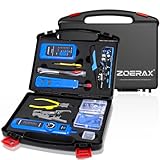
- ✅【All-in-One Professional Kit with Sturdy Case】This premium network tool kit comes in a lightweight yet heavy-duty case that keeps all tools securely organized. Perfect for easy transport and storage, it’s your go-anywhere solution for home, office, server rooms, engineering projects, and network installations.
- ✅【Complete Tool Set for Pros & DIYers】Equipped with a high-performance Cat6A/Cat6/Cat5e/Cat5 pass-through crimper, wire tracker, 110/88 punch down tool, network stripper, wire cutter, 10 Cat6 pass-through connectors, and RJ45 boots. Everything you need for reliable and lasting connections.
- ✅【Versatile Ethernet Crimper with Tool-Free Adjustment】Master cable making with this multi-function crimping tool. Works with both pass-through and non-pass-through RJ45/RJ11/RJ12 connectors. Also strips, cuts, and crimps metal dovetail clips & terminals. The unique rotating knob allows quick adjustments—no screwdriver needed!
- ✅【Ergonomic 110/88 Punch Down Tool】Features a comfortable grip and interchangeable, reversible blades for 110 and 110/88 standards. Makes clean terminations in one smooth action—ideal for Cat6a, Cat6, Cat5e, and Cat5 cables.
- ✅【Smart Wire Tracker & Cable Tester】Quickly locate breaks and identify wires across connected devices like routers, switches, and PCs. Supports tracking of RJ11, RJ45, and other metal cables (with adapter). Tests network and telephone lines for opens, shorts, miswires, and reversed connections.
9. ClickStack and ClickHouse-based logging
ClickHouse-based logging is a Graylog alternative for data-platform teams that need high-volume analytical queries, long retention, and SQL rather than a turnkey log-management interface. ClickHouse provides the analytical database foundation through its official site, documentation, and observability use cases.
Columnar storage and SQL can make ClickHouse attractive for large event datasets, logs, and traces. ClickStack or a similar ClickHouse-based architecture can be powerful when the team is comfortable designing schemas, ingestion, dashboards, alerting, access control, and retention.
ClickHouse is not the shortest path to a Graylog-like experience. Buyers should verify the current ClickStack packaging, features, support model, and licensing before describing the complete solution as open source. ClickHouse Cloud may remove infrastructure work, but it does not remove the need to design a logging architecture.
Do these 3 things before closing this tab:
1Clear out junk files and repair common Windows errors2Fix the driver behind crashes, sound loss and screen glitches3Repair Windows errors before they cause bigger problems10. UTMStack: an integrated SIEM candidate
UTMStack is worth evaluating for smaller security teams seeking an integrated SIEM/XDR platform, but its current license, release activity, repository status, and self-hosted feature boundaries require verification before publication or deployment. UTMStack’s product information is available at utmstack.com and its project presence at GitHub.
UTMStack’s security-first positioning can be more integrated than assembling a collector, search engine, dashboard, and detection layer independently. That integration may appeal to small SOCs and MSP-style deployments.
UTMStack has a smaller ecosystem and less established migration guidance than OpenSearch, Elastic, or Wazuh. Do not call UTMStack fully open source unless the exact 2026 licensing page supports that wording.
11. Fluent Bit plus a backend
Fluent Bit is a lightweight Graylog alternative only at the collection and routing layer; Fluent Bit alone does not provide Graylog’s search, dashboards, retention interface, alerting, or SIEM workflow. Fluent Bit describes its capabilities on its official site and documentation.
Recommended Free Tools
Fluent Bit is useful for Kubernetes, containers, filtering, routing, and forwarding logs to OpenSearch, Loki, OpenObserve, ClickHouse-related pipelines, cloud services, or another backend. Fluent Bit is a strong building block when the organization already operates a visualization and analytics platform.
Choose Fluent Bit as part of an architecture, not as a replacement for the complete Graylog experience.
12. rsyslog: the traditional syslog collection layer
rsyslog is an excellent Graylog alternative for reliable syslog ingestion, filtering, and forwarding, but rsyslog is not a search or visualization platform. The rsyslog site and rsyslog documentation cover its collection, routing, and filtering capabilities.
rsyslog is a sensible choice for firewalls, switches, routers, Unix servers, and other traditional syslog sources when a separate backend will handle indexing, dashboards, alerting, and retention. rsyslog is lightweight and mature, but it does not replace Graylog’s web-based investigation workflow.
13. syslog-ng: advanced syslog routing and normalization
syslog-ng is a Graylog alternative at the transport and normalization layer, especially for organizations that need flexible source handling, message transformation, and reliable forwarding. The syslog-ng open-source product page describes its collection and log-management capabilities.
syslog-ng can centralize network and Unix logs before sending them to OpenSearch, Elastic, Loki, ClickHouse, or another analytics system. The community and commercial editions should be distinguished when evaluating features and support.
syslog-ng is not a complete Graylog replacement by itself because it does not provide the same integrated search, visualization, alerting, and investigation interface.
Also popular on Amazon

- Professional Network Tool Kit: Securely encased in a portable, high-quality case, this kit is ideal for varied settings including homes, offices, and outdoors, offering both durability and lightweight mobility
- Pass Through RJ45 Crimper: This essential tool crimps, strips, and cuts STP/UTP data cables and accommodates 4, 6, and 8 position modular connectors, including RJ11/RJ12 standard and RJ45 Pass Through, perfect for versatile networking tasks
- Multi-function Cable Tester: Test LAN/Ethernet connections swiftly with this easy-to-use cable tester, critical for any data transmission setup (Note: 9V batteries not included)
- Punch Down Tool & Stripping Suite: Features a comprehensive set of tools including a punch down tool, coaxial cable stripper, round cable stripper, cutter, and flat cable stripper, along with wire cutters for precise cable management and setup
- Comprehensive Accessories: Complete with 10 Cat6 passthrough connectors, 10 RJ45 boots, mini cutters, and 2 spare blades, all neatly organized in a professional case with protective plastic bubble pads to keep tools orderly and secure
14. Security Onion components or the Elastic Agent stack
A Security Onion or Elastic Agent-based deployment can replace parts of a Graylog security architecture, but it is a deployment stack rather than one directly interchangeable product. This approach is useful when analysts need network telemetry, endpoint telemetry, collection agents, processing, storage, and visualization assembled from specialized components.
The benefit is composability: the organization can select the collection and security components that match its environment. The cost is ownership of integrations, schemas, upgrades, dashboards, detection rules, access controls, and failure recovery. Components can also have different licenses, so the complete stack should never be labeled simply “open source” without checking each component.
This option is best for a platform or SOC team that values control and already has the expertise to operate a multi-service security pipeline.
15. Logstash plus Kibana or OpenSearch Dashboards
Logstash combined with Kibana or OpenSearch Dashboards is the “build your own Graylog” option for teams that prefer composability over a single integrated product. Elastic documents Logstash at elastic.co/logstash, while OpenSearch documents Logstash integration through its Logstash client guidance.
Logstash provides flexible ingestion and transformation, and the selected search and dashboard layer provides visualization and investigation. This architecture can be highly adaptable and can reuse existing team knowledge.
The trade-off is that pipeline maintenance becomes the team’s responsibility. A Graylog migration must recreate extractors, pipelines, streams, alerts, dashboards, index sets, field mappings, lookup tables, roles, integrations, and compliance reports. Components and licensing differ, so procurement should evaluate the complete combination rather than only the individual tools.
Which Graylog alternative is best for each use case?
| Use case | Recommended first choice | Why | Consider instead when |
|---|---|---|---|
| Closest open-source log-management platform | OpenSearch | Combines search, dashboards, analytics, security controls, and scalable self-hosting. | Choose OpenObserve for simpler deployment or Graylog when integration and lower operational burden matter more than license model. |
| SIEM, XDR, and endpoint security | Wazuh | Provides agents, endpoint monitoring, vulnerability detection, file-integrity monitoring, and security content. | Choose Security Onion for network-centric monitoring or Elastic Security for a larger detection-engineering ecosystem. |
| Application observability | SigNoz | Unifies OpenTelemetry-oriented logs, metrics, and traces. | Choose OpenObserve for an economical all-in-one platform or Grafana for an existing Grafana and Prometheus environment. |
| Kubernetes and cloud-native logs | Grafana Loki | Fits Grafana workflows and can be efficient with well-designed labels. | Choose OpenSearch or Elastic when arbitrary field and full-text investigation is more important. |
| High-volume efficient log storage | VictoriaLogs | Focused log storage and querying with a resource-efficient profile. | Choose ClickHouse for SQL-heavy analytics or OpenSearch for a broader search and security ecosystem. |
| Network-security monitoring | Security Onion | Purpose-built for network visibility, detection, and threat hunting. | Choose Wazuh for endpoint-centric security or a generic platform for application logs. |
| Only syslog collection and forwarding | rsyslog or syslog-ng | Mature, efficient collection and routing. | Choose Fluent Bit for container and Kubernetes pipelines. |
| Portable telemetry architecture | OpenTelemetry Collector plus a backend | Separates collection from the selected observability platform. | Choose an integrated product when the team cannot own the additional architecture. |
How should Graylog alternatives be evaluated?
A useful evaluation measures workflow coverage, operating burden, licensing, and total cost—not just whether a platform accepts logs.
Ingestion and processing
Check support for the actual sources in the environment: syslog UDP, TCP, or TLS; GELF; Windows events; files; containers; Kafka; HTTP and JSON; OpenTelemetry; cloud-provider logs; firewalls; network devices; and endpoint agents. Confirm whether each input is native or requires Fluent Bit, Logstash, Data Prepper, an OpenTelemetry Collector, or another component.
Search and data modeling
Test full-text search, structured-field search, timestamp handling, nested fields, source-IP queries, request-ID queries, saved searches, and query concurrency. A full-text or inverted-index system such as OpenSearch or Elastic behaves differently from Loki’s label-oriented model, ClickHouse’s SQL and columnar model, or VictoriaLogs’ specialized log-store model.
Operations and deployment
Compare single-binary deployment with multi-service architecture, Docker and Kubernetes support, virtual-machine and bare-metal options, air-gapped installation, backup and restore, upgrade procedures, storage requirements, high availability, and managed-cloud availability. A single-node demonstration is not evidence that a production HA design will be simple.
Wazuh’s installation documentation is a useful example of why requirements depend on the protected endpoints and workloads. Avoid treating one minimum hardware value as a universal production recommendation.
Security and compliance
Verify RBAC, SSO through SAML or OIDC, directory integration, audit logging, encryption, threat-intelligence enrichment, detection rules, MITRE ATT&CK mapping, file-integrity monitoring, vulnerability detection, compliance reports, case management, and multi-tenancy. A platform is not a SIEM merely because it can ingest firewall or authentication logs.
Total cost
Include compute, memory, hot and cold storage, object storage, replicas, backups, network egress, engineering time, content development, upgrade work, incident support, managed-service premiums, and retention duration. A free self-hosted license can still cost more than a paid integrated product when the organization must operate a large search cluster.
What does “open source” mean for Graylog alternatives?
“Open source” should be treated as a licensing classification, not as a synonym for free download, public source code, or free self-hosting.
Also popular on Amazon

- Used Book in Good Condition
| Label | Meaning | Examples or cautions |
|---|---|---|
| OSI-approved open source | License meets the Open Source Definition. | OpenSearch is presented as an Apache 2.0 project; Wazuh includes GPLv2 and Apache 2.0 components. |
| Source available | Source code can be inspected or modified under terms that may not satisfy OSI criteria. | Graylog Open is described by Graylog as source-available and subject to SSPL terms. |
| Open core | An open-source core exists alongside proprietary enterprise features. | Verify which RBAC, compliance, security, support, or data-management features are included. |
| Mixed licensing | Different components, versions, or features use different licenses. | Elastic requires component-, version-, and tier-specific review. |
| Open-source component | A collector, database, or dashboard is open source but is not a complete platform. | Fluent Bit, rsyslog, syslog-ng, and OpenTelemetry Collector need a backend or UI. |
Graylog’s source-available explanation means Graylog Open should not be casually grouped with Apache- or GPL-licensed projects as though the licenses were equivalent. Elastic’s Elastic License information likewise requires precise wording about the component and feature being evaluated.
How do you migrate from Graylog?
A Graylog migration is usually a rebuild and validation project rather than a one-click export. Use the following sequence.
- Define the baseline. Record whether the migration replaces Graylog Open, Enterprise, Security, or Cloud, and list the features currently in use.
- Inventory inputs and outputs. Document syslog, GELF, HTTP, Windows, cloud, application, endpoint, and agent inputs, plus every downstream destination.
- Measure the workload. Record ingestion volume, peak bursts, retention duration, hot and archive requirements, query patterns, replicas, and compliance constraints.
- Export and document configuration. Preserve Graylog inputs, extractors, pipelines, stream rules, index sets, rotation and retention policies, dashboards, alerts, lookup tables, roles, integrations, and reports.
- Map the data model. Decide how Graylog fields, streams, timestamps, source identifiers, severity, structured payloads, and pipeline transformations map to the destination platform.
- Select the ingestion layer. Use native inputs where available; otherwise evaluate Fluent Bit, rsyslog, syslog-ng, Logstash, Data Prepper, or OpenTelemetry Collector.
- Rebuild detection and access controls. Recreate alerts, correlation, RBAC, SSO, audit logging, threat-intelligence enrichment, compliance reports, and multi-tenancy where required.
- Test representative data. Include normal messages, malformed records, multiline logs, timezone differences, bursts, duplicate messages, delayed events, and high-cardinality fields.
- Run both systems in parallel. Compare ingestion completeness, parsing, timestamps, search results, alert timing, dashboard values, storage growth, and archive retrieval.
- Cut over gradually. Move low-risk sources first, keep Graylog read-only until retention and compliance obligations are satisfied, and maintain a rollback path.
Migration difficulty is highest when Graylog is being used as more than a basic collector. Pipelines, streams, lookup tables, index policies, dashboards, alerts, roles, and compliance reports usually need manual redesign for the target platform.
Recommended Free Tools
What are the main trade-offs?
Free software versus operating cost
Self-hosting shifts cost from licensing to infrastructure, storage, engineering, backup, upgrades, and support. A small Graylog installation can be less expensive overall than a free multi-node OpenSearch or Elastic deployment if the organization lacks search-cluster expertise.
Security platform versus log platform
Wazuh and Security Onion may be superior for security monitoring but unnecessarily complex for application debugging, audit trails, or network-device troubleshooting. Conversely, Loki, SigNoz, OpenObserve, and VictoriaLogs may accept security logs without providing equivalent detection, enrichment, investigation, compliance, or response features.
Self-hosted versus managed
Managed offerings can reduce operations but may introduce usage-based pricing, data-residency concerns, retention limits, egress charges, and vendor dependence. Self-hosted platforms are a poor fit for teams without Linux, storage, backup, upgrade, and incident-response expertise, even when the software itself is free.
Integrated product versus assembled stack
Graylog’s value comes partly from integrating collection, parsing, pipelines, search, dashboards, alerts, and retention. OpenTelemetry Collector, Fluent Bit, rsyslog, syslog-ng, ClickHouse, and Logstash can create a flexible architecture, but the operator becomes responsible for connecting and maintaining the layers.
What’s actually slowing this PC down?
Pick the symptom - the matching free tool is one click away.
Which managed services should buyers compare?
Managed services are worth considering when the team wants a Graylog alternative without operating the search, storage, and upgrade infrastructure. The following are relevant commercial options, but current prices and plan limits should be rechecked immediately before publication because the research cutoff is August 16, 2026.
| Service | Best fit | Commercial consideration |
|---|---|---|
| Amazon OpenSearch Service | AWS-heavy organizations | Usage depends on instances, storage, requests, and retention. |
| Elastic Cloud | Hosted Elastic search, observability, and security | Plan and usage pricing require workload assumptions. |
| Grafana Cloud | Managed Grafana and Loki observability | Free and paid tiers have ingestion, storage, and plan limits. |
| OpenObserve Cloud | Hosted logs and observability | Verify current ingestion, retention, and self-hosted commercial boundaries. |
| SigNoz Cloud | Managed OpenTelemetry observability | Check current ingestion and retention allowances. |
| Wazuh Cloud | Hosted security monitoring | Service pricing may require signup or sales contact. |
| VictoriaMetrics Cloud | Managed VictoriaMetrics ecosystem | Confirm whether the selected plan includes the required VictoriaLogs service. |
| ClickHouse Cloud | Managed high-volume event analytics | Still requires a logging architecture rather than providing a turnkey Graylog interface. |
| Security Onion Solutions | Support, training, and services around Security Onion | Support pricing generally requires contact. |
Managed services are poor fits for air-gapped environments, strict data-residency requirements, or organizations that must retain complete infrastructure control. ClickHouse Cloud is also a poor fit for buyers who want a ready-to-run Graylog-like interface without designing ingestion, schemas, dashboards, and alerting.
Final decision tree
- Want the closest broad open-source platform? Start with OpenSearch.
- Want endpoint security, SIEM, and XDR? Start with Wazuh.
- Want the most mature search and analytics ecosystem? Evaluate Elastic Stack, while reviewing the exact licenses and paid features.
- Want Kubernetes logs in an existing Grafana environment? Choose Grafana Loki if its label-based search model fits the investigation workflow.
- Want a simpler all-in-one observability platform? Compare OpenObserve and SigNoz.
- Want efficient, high-volume log storage? Evaluate VictoriaLogs or ClickHouse-based logging.
- Want network detection and threat hunting? Evaluate Security Onion.
- Want only collection and forwarding? Use Fluent Bit, rsyslog, or syslog-ng with a separate backend.
- Want a portable telemetry architecture? Use OpenTelemetry Collector with a deliberately selected backend.
No single platform universally replaces Graylog in 2026. OpenSearch is the safest first evaluation for general self-hosted log management, Wazuh is the strongest security-first evaluation, and observability platforms or collectors should be selected only when their narrower architecture matches the actual requirement.
Frequently Asked Questions
Is OpenSearch a true Graylog replacement?
OpenSearch is one of the closest broad open-source Graylog replacements because it provides search, dashboards, analytics, security controls, and alerting. OpenSearch generally requires more ingestion and operational assembly than Graylog, so Graylog pipelines, streams, dashboards, alerts, and retention policies must be redesigned during migration.
Quick wins for a faster PC:
Fix the driver behind crashes, sound loss and screen glitchesFind Drivers →Clear out junk files and repair common Windows errorsFree Scan →Scan for outdated or missing drivers - takes under a minuteDriver Scan →Is Wazuh better than Graylog for SIEM?
Wazuh is usually the stronger choice when SIEM means endpoint monitoring, XDR, vulnerability detection, file-integrity monitoring, compliance, and security-event analysis. Graylog or OpenSearch may be a better fit for neutral centralized logging and application troubleshooting.
Is Grafana Loki a full replacement for Graylog?
Grafana Loki can replace Graylog for many Kubernetes and cloud-native logging workflows, especially in organizations already using Grafana. Loki is not a feature-for-feature replacement because Loki uses a label-oriented model and does not automatically provide Graylog’s same integrated pipelines, arbitrary field search, and security-operations workflow.
Which Graylog alternatives are genuinely open source?
OpenSearch is an Apache 2.0 project, and Wazuh includes GPLv2 and Apache 2.0 components. Graylog Open is source-available under SSPL terms, while Elastic uses a mixed licensing model and several other products have open-core or edition-specific boundaries. Verify the exact component, version, and feature before making a licensing claim.
How difficult is it to migrate from Graylog?
A Graylog migration is usually a rebuild and validation project rather than a one-click export. Inputs, extractors, pipelines, streams, index sets, retention policies, dashboards, alerts, lookup tables, roles, integrations, and compliance reports commonly need to be mapped and recreated, followed by parallel operation and staged cutover.
Free tools Windows power users keep installed
One-click scans. No signup required.
The Bottom Line
Bottom line: Choose OpenSearch for the closest broad open-source Graylog alternative, Wazuh for SIEM and endpoint security, Elastic for mature search and detection engineering, Loki for Grafana-centered Kubernetes logging, OpenObserve or SigNoz for unified observability, VictoriaLogs for efficient log storage, and rsyslog, syslog-ng, or Fluent Bit only when a collection layer—not a complete Graylog replacement—is what you need.

