
Windows Errors? Fix Them Before They Spread
Repair common Windows errors and clear accumulated junk for a smoother, more stable PC - no reinstall needed.Free scan · no reinstallOutdated Drivers Are Slowing You Down
One free scan finds every outdated or missing driver and matches the right update for your exact hardware.Free scan · exact hardware matchChoose based on where employees start and end work. A fixed clock or shared tablet kiosk usually suits a team reporting to one site; mobile clocking is often a better fit for field staff or employees moving between locations. If your workforce does both, look for one timekeeping system that supports both methods.
How to choose between a time clock and a mobile app
Start with the work pattern, not the device. Map where employees punch in and out, then check whether the system can reliably capture those punches and send approved time records through your payroll workflow.
- One workplace and a shared punch point: A physical terminal or tablet kiosk gives employees a common place to record their time. A shared device can also avoid requiring staff to use personal phones.
- Field work or multiple sites: A mobile app can record location context at clock-in or clock-out. Some systems use geofences to restrict punches to configured areas; verify whether a punch outside the area is blocked or only flagged.
- A mixed workforce: Consider a platform combining mobile and kiosk or terminal punches in one timekeeping system, so managers can review records in a shared workflow.
A mobile punch may include location context, but GPS does not prove who made the punch. Likewise, a badge, PIN, photo, or biometric option has different identity and privacy implications. Treat location and identity controls as separate questions.
Compare the methods that match your sites
| Method | Best fit | What to verify |
|---|---|---|
| Physical time-clock terminal | Employees reporting to a fixed workplace with a common punch point | Identification options, hardware and maintenance costs, and how records reach payroll |
| Shared tablet kiosk | A fixed site that needs a common punch station without a dedicated terminal | Supported operating systems, kiosk mode, device ownership, and vendor setup requirements |
| Mobile app | Field teams or employees moving between work locations | When location is captured, whether geofences block or flag punches, and offline behavior |
| Combined system | Teams with both fixed-site and mobile work | Whether all punch methods feed the same approvals, edits, reporting, and payroll process |
These are general fits, not guarantees about a particular product. For example, ADP describes a Time Kiosk app that can turn a tablet or smartphone into a shared virtual clock, while Humanforce describes multiple clocking options. Check each vendor’s current device and feature requirements rather than assuming a particular tablet model will work.
#1 Best Overall
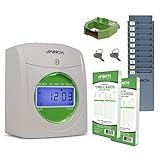
- Complete Solution - Includes HN3000 AutoAlign time clock, 100 time cards, rack, ribbon, and keys for instant tracking.
- Precise Punching - AutoAlign technology ensures accurate alignment for error-free payroll records.
- Robust Warranty - Two-year warranty with unlimited customer support (Monday–Friday) guarantees reliable performance.
- Simple Setup - Plug-and-play design with clear instructions enables tracking in minutes.
- Clear Printing - High-quality uPunch ribbons deliver legible, consistent punch punches.
Evaluate assurance, privacy, and connectivity
What a punch proves
Ask what the system actually verifies. A shared kiosk may use a PIN, badge, photo, or biometric method; a mobile app may attach location information or apply a geofence. These controls are not interchangeable. Teambridge distinguishes GPS context from biometric identity verification; do not treat location data as proof of identity or as a guarantee against buddy punching.
What location data is collected
Before rollout, establish what location information is recorded, when it is collected, who can access it, and how long it is retained. Product behavior varies: a system might capture a location snapshot at clock-in rather than continuously track a worker. Explain the selected system’s actual behavior to employees and consider the privacy implications of any biometric feature separately.
Rank #2

- VERSATILE 2-IN-1 SOLUTION: Includes uPunch CR1000 Digital Time Clock and Date Stamp, 50 time cards, one ribbon & 2 keys - perfect for small business time and document management.
- ACCURATE DIGITAL TIMEKEEPING: Eliminate manual errors in employee time tracking with this precise digital clock in machine for employees, easily monitoring arrival, break, lunch, and departure times.
- ADVANCED DATE STAMPING: Simplify document organization with built-in date stamp functionality, featuring preset messages and 3-way printing for efficient proof of receipt and processing.
- USER-FRIENDLY DESIGN: Strategically placed window in the cover allows for easy loading of time cards and documents, enhancing efficiency in daily operations.
- RELIABLE SUPPORT: Enjoy peace of mind with uPunch's commitment to quality, including warranty protection and dedicated customer support for all your time clock needs.
What happens without connectivity
Offline punching and later synchronization are product-specific. Ask the vendor whether punches queue without a connection, how the original punch time is preserved, and how managers see delayed or failed synchronization. Confirm the behavior in product documentation or a trial rather than assuming every app works the same way.
Check the timekeeping and payroll workflow
The punch interface is only one part of the system. Compare the records and controls that follow a punch, including:
Rank #3

- Ideal for tracking employees work time, document control and mail room requirements
- Automatically adjusts year, month, date and time as well as leap year and daylight savings
- Prints custom messages such as REC'D, PAID, FILE and more; Prints in multiple languages
- Ribbon Ink capacity indicator
- Made in the USA and has a One Year Factory Warranty
- Payroll integrations or export formats, and whether they support your pay rules.
- Overtime calculations and break handling.
- Exception alerts for missed, unusual, or out-of-area punches.
- Correction and approval steps, including who may edit records.
- Edit history, access controls, reports, and permissions for exporting pay-impacting data.
U.S. Chamber of Commerce guidance emphasizes accurate records and practical controls such as audit trails and access management. A device alone does not configure payroll correctly or ensure that someone reviews exceptions.
Understand the U.S. compliance question
For U.S. employers, the Chamber says the Fair Labor Standards Act (FLSA) does not require a specific time clock, but accurate timekeeping matters. That does not mean a particular device or configuration guarantees compliance. State and local requirements can differ, so check the rules that apply to your workforce and jurisdiction.
Rank #4
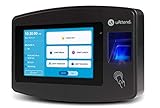
- Advanced Time Tracking: The uAttend JR2000 makes employee time tracking effortless and accurate, powered by a cloud-based system designed for business efficiency.
- Complete Payroll Tasks with Ease: With uAttend, we automate payroll with time and attendance data, handle tax filings, and make switching easy.
- Real-Time Data Access: View, track, and manage employee attendance in real-time from any device, providing flexibility and control no matter where you are.
- Easy Setup & User-Friendly Interface: Enjoy an intuitive interface and straightforward setup process, making it accessible for any team, from first-time users to tech-savvy managers.
- In-Depth Reporting Capabilities: Gain valuable insights into attendance trends, productivity, and labor costs with our comprehensive reporting tools.
When comparing systems, confirm that your process supports accurate records, overtime and breaks, neutral rounding settings where used, audit trails, access controls, and review of applicable state rules. This is general information, not legal advice.
Independent reader supportYour contribution helps us test, update, and keep practical guides available for everyone.Budget for more than the app or terminal
Compare total operating cost, not just a listed subscription price. Include software, hardware or device plans, setup, support, training, maintenance, and staff time spent resolving exceptions. The Chamber page gives broad small-business price guidance, but those figures are not a current quote or a universal market rate; obtain current vendor pricing for your configuration.
Quick wins for a faster PC:
Fix the driver behind crashes, sound loss and screen glitchesFind Drivers →Repair Windows errors before they cause bigger problemsFix Now →Scan for outdated or missing drivers - takes under a minuteDriver Scan →Best Value
![Pyramid Time Systems 2500 Auto-Aligning Time Clock Bundle [2500K1]](https://m.media-amazon.com/images/I/411v7QKnZiL._SL160_.jpg)
- AUTO-ALIGNING PUNCH CLOCK: Top-loading card feed automatically aligns each punch for clean, accurate time entries; no manual adjustments needed; reduces errors that slow down payroll
- RELIABLE TIME CARD MACHINE PERFORMANCE: Consistent printing keeps employee time records accurate pay period after pay period; automatic resets for Daylight Saving Time and short months mean less maintenance for busy managers
- VERSATILE TIMEKEEPING FOR ANY WORKPLACE: Records arrival, break, lunch, and departure times across 3 in/out punch cycles per day; double-sided time cards cover up to 31 days; choose 12-hour or 24-hour military time format
- COMPACT DESIGN, FLEXIBLE PLACEMENT: Small footprint fits on a desk or mounts on a wall to suit offices, retail, warehouses, and other workplaces; backlit LCDs show time, date, and day at a glance; tamper-proof security lock guards against time theft
- COMPLETE BUNDLE, READY TO USE: Includes 100 pyramid time cards, 2 ink ribbon cartridges, 2 security keys, and a 10-slot time card rack; everything a small business needs to start accurate employee time tracking without additional purchases
ADP’s page also summarizes its 2023 Workforce Management Benefits Study, which surveyed over 1,000 organizations with 25 or more employees. ADP reports estimated savings of two hours per employee per week for automated accrual tracking and two to three hours per employee per week for biometric identification at clock-in or clock-out. Those are ADP-reported estimates, not guaranteed results, and they do not directly compare mobile apps with physical clocks.
Quick Recap
A practical buying checklist
- Map work locations: Identify fixed sites, changing job sites, client locations, and employees who move between them.
- Choose who supplies the device: Decide among an employer-owned terminal or kiosk, a company phone, or an employee-owned phone.
- Define the punch controls: Specify whether you need a common punch point, location context, geofence enforcement, or a separate identity method.
- Test edge cases: Confirm offline behavior, delayed synchronization, missed punches, corrections, and geofence exceptions.
- Trace a record to payroll: Check integrations or exports, pay rules, approvals, permissions, and edit history using a representative workflow.
- Review employee impact and cost: Explain data collection and retention, then compare device, software, support, training, and administration costs.
Product prices and availability are accurate as of the date/time indicated and are subject to change. Any price and availability information displayed on Amazon at the time of purchase will apply.

