
A thermoelectric generator (TEG), also called a Seebeck generator, converts a sustained temperature difference directly into electrical energy. It can recover some electricity from waste heat without moving parts, but it does not generate useful power from temperature alone: heat must keep flowing from a hot side to a cooler side, and the cooler side must be able to reject that heat.
How a thermoelectric generator works
A temperature difference drives charge carriers through thermoelectric materials. This produces a voltage known as the Seebeck voltage. A practical module connects many thermocouples electrically in series, to build voltage, and thermally in parallel, so heat passes through them together.
In simplified form, the open-circuit voltage is proportional to the effective Seebeck coefficient and the temperature difference across the module: Voc ≈ Seff × ΔT. Here, ΔT is the difference between the module’s hot-side and cold-side temperatures—not simply the temperature of the heat source. Once a load is connected, current flows and the voltage at the terminals falls.
The module is only one part of the generator. A working system needs a heat source, good thermal contact to the module, and a cold-side heat sink or other route for heat to leave. Interface resistance, wiring, electrical resistance inside the module, and poor heat rejection all reduce the useful output.
The Tool Desk
Outbyte PC Repair FREERepair Windows errors before they cause bigger problemsFix Now →Outbyte Driver Updater FREEFix the driver behind crashes, sound loss and screen glitchesFind Drivers →#1 Best Overall
What temperature difference does a TEG need?
There is no single temperature-difference threshold that applies to every TEG. A small gradient can produce a voltage, but whether it produces enough power for a particular job depends on the module’s materials and geometry, its internal resistance, how much heat is available, and the electrical load. A module’s rated hot-side temperature and maximum temperature difference are separate limits; check both for the specific module.
The gradient must also be sustained under load. If the cold side warms because its heat sink is inadequate, or the hot source cannot supply enough heat, the temperature difference across the module shrinks and its output falls. A hot source by itself is not enough: the system must maintain a cooler side while heat continues to flow through the module.
Rank #2

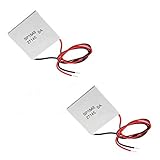
- HIGH HEAT TOLERANCE: Features graphite thermal transfer layer, withstands up to 227°C/440°F. Ideal for fireplace applications with efficient heat transfer. Maintains structural integrity through extended use with consistent performance
- REPAIR SOLUTION: Specifically engineered for fireplace fan repair, extends equipment lifespan. Simple replacement process requiring basic tools. Compatible with numerous fireplace fan types, offering versatile application. Addresses common generator wear issues
- UNIVERSAL CONNECTION: Standardized power generator interface ensures secure mounting. Stable electrical link maintains consistent current dance. Secure connection minimizes loosening risks while simplifying maintenance procedures for professionals
- EFFICIENT THERMAL TRANSFER: Graphite construction delivers superior heat conduction. Promotes even temperature distribution, preventing hot spots. Enhances thermoelectric generator output while maintaining safe operating temperatures.
- FUNCTIONAL RESTORATION: Revives fireplace fan's temperature difference generator capability. Restores equipment's power generation function. Essential for residential fireplace maintenance and technician repairs, solving frequent failure issues
How much electricity can a TEG produce?
Output varies widely with the application and test conditions. A 2025 review in Sensors reports that many autonomous-sensor applications it reviewed produce a few milliwatts to tens of milliwatts. He et al.’s 2024 review in Applied Thermal Engineering reports the following literature ranges:
| Application or system measure | Reported figure | How to interpret it |
|---|---|---|
| Wearable TEG power density | Below 100 μW/cm² | A review range for wearable applications; it is not a guaranteed output for a particular module. |
| Industrial TEG power density | 25–300 mW/cm² | A review range across industrial applications and conditions. |
| Geothermal TEG power density | 20–130 mW/cm² | A review range across geothermal applications and conditions. |
| TEG system efficiency | 2.5%–6.5% | A system-level literature range; the boundary and operating conditions differ among studies. |
| Estimated TEG system cost | US$2,000–15,000 per kW | An estimated range reported in the review, not a current quote for a module or installation. |
These figures cover different heat sources, temperature differences, module sizes, and system boundaries. Power density is not the same as total power: the total depends on the active module area and the conditions it can actually maintain. Treat a module’s nominal voltage as only one specification, not a prediction of usable watts.
Rank #3
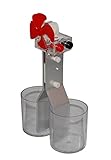
- Demonstrates the Seebeck Effect (Thermoelectric Effect): Shows how heat energy is directly converted into electricity using a thermocouple and aluminum conductors. Students observe voltage generation created by a temperature gradient.
- Clear Hot vs. Cold Water Demonstration: Designed to be immersed in 2–3" of water with each aluminum leg placed in separate cups (2 clear cups included). Equal temperatures produce no output — a strong temperature difference causes the fan to spin.
- Built-In Data Monitoring Capability: Features 4mm input/output terminals and a switch to redirect electricity to a meter for measurement. Allows students to monitor voltage output and analyze temperature differential vs. EMF production.
- Real-World Energy Application Example: Illustrates the same thermoelectric principles used in deep space probes such as NASA Voyager missions. Silent operation with no moving engine parts — an excellent example of applied renewable energy technology.
- Complete Classroom Teaching Kit: Includes thermoelectric generator assembly, fan, two clear immersion cups, and detailed instructions with sample student questions. Ideal for physics labs covering energy conversion, thermodynamics, heat transfer, and alternative energy.
How to match a TEG to an electrical load
A TEG can be approximated as a voltage source with an internal resistance. Maximum power transfer occurs when the external load resistance matches that internal resistance. At this maximum-power point, the voltage across the load is approximately half the open-circuit voltage, as described in the 2025 Sensors review. A changing heat source or temperature gradient can move that operating point.
- Find the module’s electrical and thermal specifications. Check its open-circuit voltage, internal resistance, hot-side temperature limit, maximum temperature difference, and the conditions used for any rated output.
- Estimate the operating gradient in the assembled system. Use the expected hot-side and cold-side temperatures at the module interfaces, not just the source temperature. Account for the heat sink and contact interfaces.
- Compare the load with the module’s internal resistance. For a simple resistive load, matching the resistance is the maximum-power condition. If the load voltage differs from what the TEG can provide, a power-management circuit may be needed.
- Choose conversion and storage around the real load. A boost converter, energy storage, and control may be useful when the TEG voltage is low or varies as the gradient changes. Their own operating requirements and losses affect what reaches the device.
- Recheck under the intended heat flow. Confirm that the cold side stays cool enough and the heat source sustains the gradient while the load is connected. Open-circuit voltage alone does not establish loaded power.
In the simplified Thevenin model, if the open-circuit voltage is Voc and internal resistance is Rint, the ideal matched-load maximum is Pmax = Voc2/(4Rint). This is a circuit-model result, not a promise of system output: thermal limits, changing conditions, converter losses, and heat-transfer constraints can lower delivered power.
Rank #4

- Saving Energy:The fan motor is powered by heat and no batteries or electricity is required, high in efficient and energy saving,useful and reliable.
- Easy to Install:You can use these accessories to directly replace the old fan or broken parts of the broken fan,so that you can reuse the fan.Because these thermoelectric generator motor accessories are light and compact,you can quickly complete a simple installation in a few minutes.
- Work:Brass coil has good electrical conductivity,which also ensures low temperature rise and low noise,stable in working.
- Good Durability:These wood fireplace fan repair and replacement parts combine high-quality aluminum alloy and brass materials,are not easy to malfunction,and have -term use durability.The aluminum alloy shell of the motor has low temperature rise,high efficiency, low internal loss.
- Match:Due to the universal design,the fireplace fan motor and the generator make the furnace match perfectly.These thermoelectric generator motor sets have strong adaptability and are suitable for most fireplace fans on the market.
Where TEGs are useful—and what constrains them
Reviews discuss TEG use in autonomous sensor nodes, Internet of Things devices and wireless sensor networks, wearable and medical equipment, automotive and industrial waste-heat recovery, aerospace systems, and geothermal applications. The fit depends on whether a site has a durable temperature gradient and whether the recovered electricity justifies the thermal hardware.
- Small sensors: Milliwatt-scale output may suit low-power monitoring or intermittent operation, often with energy storage and power management.
- Wearable devices: Body heat offers a small gradient, so the power density reported for wearable systems is much lower than industrial ranges.
- Industrial or geothermal recovery: These settings can have more substantial heat flows, but they also require suitable interfaces, heat exchangers or sinks, and a system design matched to the source.
TEGs are solid-state and silent, with no moving parts in the module, which can make them attractive where low maintenance matters. The trade-offs are modest conversion efficiency and system cost. Thermal integration is central: contact resistance, heat-sink design, material durability, operating environment, geometry, and maintenance can matter as much as the thermoelectric material itself.
Outdated Drivers Are Slowing You Down
One free scan finds every outdated or missing driver and matches the right update for your exact hardware.Free scan · exact hardware matchPC Slower Than It Used to Be?
A free scan shows the junk files, broken settings and background clutter dragging Windows down - then fixes them in one click.Free scan · Windows 10 & 11Best Value

- AND SELF POWERED: The thermoelectric module act as a small generator to drive the fan motor. No batteries or electricity required.Just remove the motor and generator sheet before the wood-burning stove fan heating fireplace fan, and replace it directly.
- REPLACEMENT: The motor and generator are important parts of the fireplace fan, the old or bad can be replaced directly, so that the fan can be reused.When your fireplace fan fails and cannot rotate, you only need to replace this accessory to resume normal
- HIGH EFFICIENCY AND LOW NOISE: The motor shell is made of aluminum alloy, possess low temperature rise, high efficiency and low internal loss. Coil made of brass, possess good electrical conductivity, not easy to heat, long service life. Stable and low noise.
- UNIVERSAL AND PRACTICAL: Simply remove the motor and generator pieces in front of the stove fan or heating fireplace fan and replace them directly, these accessories are adaptable and suitable for most fireplace fans on the market.
- REPAIR ACCESSORIES: If your fireplace fan is broken, you only need to spend a small amount of money to buy this accessory to repair the damaged fan, the fan can work again and save your money.
What to check before choosing a TEG module
- Hot-side temperature limit and maximum temperature difference.
- Expected sustained temperature difference and available heat flow in the installed system.
- Open-circuit voltage, internal resistance, and output conditions.
- Cold-side heat-sink or heat-exchanger requirements.
- Module dimensions and whether rigid or flexible geometry fits the installation.
- Durability, material toxicity, and suitability for the operating environment.
- Module, installation, and maintenance costs, compared with the value of recovered power.
Recent development areas include flexible micro-TEGs, improved thermoelectric figure of merit, segmented or cascaded materials, better contact and interface engineering, geometries suited to curved surfaces, and improved thermal management. The practical challenge remains connecting the module to a real heat source and electrical load without losing too much of the temperature gradient at interfaces, in wiring, or through inadequate heat rejection.
Quick Recap
Product prices and availability are accurate as of the date/time indicated and are subject to change. Any price and availability information displayed on Amazon at the time of purchase will apply.

