
The Tool Desk
Outbyte Driver Updater FREEFix the driver behind crashes, sound loss and screen glitchesFind Drivers →Outbyte PC Repair FREERepair Windows errors before they cause bigger problemsFix Now →The best wireless gaming mouse for most competitive players in 2026 is the Razer Viper V4 Pro. It combines a versatile right-handed symmetrical shape, roughly 49g of weight, an updated 50,000-DPI sensor, 8,000Hz wireless polling, and an advertised battery life of up to 180 hours at 1,000Hz. It costs $159.99 from Razer in the United States at the time of writing.
That is not a universal answer. The Logitech G PRO X2 SUPERSTRIKE is more interesting if you specifically want adjustable click actuation and Rapid Trigger. The Corsair SABRE v2 PRO ULTRALIGHT is the better lightweight-value choice at 36g, while the Razer DeathAdder V4 Pro is more comfortable for many right-handed palm-grip users. For MMO players, the Corsair Scimitar Elite Wireless SE is a better fit than any lightweight FPS mouse.
Choose by shape, grip, wireless mode, and button layout first. DPI and 8,000Hz polling are useful specifications, but they should not decide the purchase on their own.
Quick recommendations
The prices below are US prices observed in 2026 product pages or reviews. Retail prices, promotions, stock, and regional availability can change, so verify the live price before ordering. Battery figures are manufacturer claims unless explicitly identified otherwise, and the operating mode matters.
What’s actually slowing this PC down?
Pick the symptom - the matching free tool is one click away.
| Mouse | Price observed | Weight | Wireless modes | Battery claim | Best for | Main drawback |
|---|---|---|---|---|---|---|
| Razer Viper V4 Pro | $159.99 | Under 49g black; about 50g white | 2.4GHz, USB-C wired | Up to 180 hours at 1,000Hz | Most competitive players | No Bluetooth; expensive; not truly left-handed |
| Logitech G PRO X2 SUPERSTRIKE | $179.99 launch price | About 61g | LIGHTSPEED 2.4GHz, USB-C wired | Up to 90 hours | Adjustable clicks and Rapid Trigger | Niche benefits; unusual click feel; no Bluetooth |
| Corsair SABRE v2 PRO ULTRALIGHT | $99.99 list; $79.99 promotion observed | 36g | 2.4GHz, USB-C wired | Up to 70 hours at 1,000Hz; about 16 hours at 8,000Hz | Minimum weight at a reasonable price | Short high-polling battery life; only five buttons; no Bluetooth |
| Razer DeathAdder V4 Pro | $169.99 | 56–57g | 2.4GHz, USB-C wired | Up to 150 hours after the relevant firmware update | Right-handed palm grip | Right-handed only; no Bluetooth |
| Logitech G502 X LIGHTSPEED / PLUS | Varies by retailer and RGB version | About 104g | LIGHTSPEED 2.4GHz, USB-C wired | Up to 130 hours with RGB disabled | Mixed genres, productivity, macros | Heavy for low-sensitivity FPS |
| Logitech G305 LIGHTSPEED | $59.99 direct | About 102g with AA battery | LIGHTSPEED 2.4GHz | Up to 250 hours on one AA battery | Cheap, proven wireless gaming | Old feet, heavy shell, no rechargeable battery |
| Razer Cobra HyperSpeed | Varies by retailer | 62g | 2.4GHz, Bluetooth 5.0, USB-C wired | Up to 110 hours | Small hands and travel | Only five buttons; right-handed side-button layout |
| Corsair Scimitar Elite Wireless SE | Varies by retailer | 161g | See current product listing | Not used as its primary advantage | MMO and MOBA button-heavy layouts | Very heavy and right-handed |
| Razer Viper V3 HyperSpeed | $69.99 direct | 82g | 2.4GHz, USB-C wired | Up to 280 hours on one AA battery | Affordable esports shape with long battery life | Separate HyperPolling dongle needed for 8,000Hz |
| MCHOSE L7 Pro | About $100-class enthusiast pricing, depending on seller | About 40.7g | Varies by configuration | Varies by configuration | Low-weight enthusiasts willing to accept support risk | One-year warranty and less established customer support |
Shortest version: buy the Viper V4 Pro for a balanced competitive mouse, the Superstrike only if its adjustable click system matters to you, the SABRE v2 PRO if weight and price dominate, and the G502 X or Scimitar if you need controls that a lightweight FPS mouse cannot provide.
Best overall: Razer Viper V4 Pro
The Razer Viper V4 Pro is the safest high-end recommendation for most competitive wireless buyers. Its right-handed symmetrical shell is less specialized than a tall ergonomic design, and its approximately 49g black weight makes large mouse movements easier than with a 100g-class productivity or MMO mouse.
#1 Best Overall

- The next-generation optical HERO sensor delivers incredible performance and up to 10x the power efficiency over previous generations, with 400 IPS precision and up to 12,000 DPI sensitivity
- Ultra-fast LIGHTSPEED wireless technology gives you a lag-free gaming experience, delivering incredible responsiveness and reliability with 1 ms report rate for competition-level performance
- G305 wireless mouse boasts an incredible 250 hours of continuous gameplay on just 1 AA battery; switch to Endurance mode via Logitech G HUB software and extend battery life up to 9 months
- Wireless does not have to mean heavy, G305 lightweight mouse provides high maneuverability coming in at only 3.4 oz thanks to efficient lightweight mechanical design and ultra-efficient battery usage
- The durable, compact design with built-in nano receiver storage makes G305 not just a great portable desktop mouse, but also a great laptop travel companion, use with a gaming laptop and play anywhere
Razer lists its Focus Pro 50K Optical Sensor Gen-3, 8,000Hz wireless polling, USB-C wired operation, and up to 180 hours of battery life at 1,000Hz. Those figures are product-page claims, not promises that every user will achieve the same runtime. Battery life will vary with polling rate, firmware, lighting, and usage.
Why it is the best default
- Good competitive balance: it is light without being an extreme 36g design, and its shape accommodates claw and fingertip grips particularly well.
- Fast wireless performance: the dedicated 2.4GHz receiver is the mode to use for gaming, and independent testing places it among the fastest wireless mice.
- Practical battery life: 180 hours at 1,000Hz is much more useful for most players than a short runtime obtained only at 8,000Hz.
- Modern controls: the mouse uses Razer’s current optical-switch platform and updated click and wheel hardware.
- Less specification chasing required: the 50,000-DPI maximum is far beyond what most people use, but the important point is consistent tracking at ordinary sensitivity settings.
PC Gamer currently names the Viper V4 Pro its best wireless gaming mouse, while RTINGS ranks it immediately below the Logitech G Pro X2 SUPERSTRIKE and reports exceptionally low click and sensor latency. Those rankings reflect different priorities rather than a definitive scientific winner: the Viper is the better all-round recommendation, while the Logitech has more unusual click technology.
Limitations to know before buying
- There is no Bluetooth mode, so it is less convenient for tablets, travel, and switching between computers.
- Its shell is symmetrical, but it is not a genuinely left-handed mouse. The side-button arrangement favors right-handed use.
- It has a focused five-button layout, or six programmable controls according to Razer’s product description, rather than a large MMO-style button array.
- At $159.99, it is not an obvious upgrade for someone already satisfied with a Viper V3 Pro. The newer sensor, polling capability, click and wheel updates, and battery claim are improvements, but comfort and existing performance may not justify replacing a working mouse.
Best high-end alternative: Logitech G PRO X2 SUPERSTRIKE
The Logitech G PRO X2 SUPERSTRIKE launched on February 10, 2026, at $179.99. It is the most technically distinctive mouse in this comparison because its Haptic Inductive Trigger System, or HITS, replaces conventional left- and right-click switches with inductive sensing and haptic feedback.
In Logitech’s software, you can adjust actuation, configure Rapid Trigger-style reset behavior, and change click-feedback intensity. The primary clicks can also be nearly silent compared with ordinary mechanical-click implementations. It weighs approximately 61g, uses Logitech’s HERO 2 sensor with a maximum of 44,000 DPI, supports up to 8,000Hz wireless polling, and is advertised for up to 90 hours of battery life.
Who should buy it?
Choose the Superstrike if you are a competitive player who genuinely wants to experiment with click behavior. Adjustable actuation can be useful for players who want a shorter trigger point, while Rapid Trigger can make repeated click input feel more immediate in games where reset behavior matters. Silent primary clicks are another legitimate reason to choose it.
Logitech has promoted an advantage of up to 30ms, but that figure should be treated as a manufacturer claim and interpreted alongside independent testing. RTINGS found that the latency advantage is small in practical terms. The lowest actuation settings can also produce accidental clicks, and the haptic feedback may feel somewhat mushy if you prefer a crisp mechanical click.
What the Superstrike gives up
- Higher price: it costs more than the Viper V4 Pro and substantially more than the SABRE v2 PRO.
- Shorter advertised battery life: up to 90 hours, with haptic features affecting power use.
- No Bluetooth: it is a LIGHTSPEED 2.4GHz and wired mouse.
- Different balance and feel: independent reviews describe a somewhat front-heavy feel, so the same specifications will not suit every hand.
- UHMWPE feet: RTINGS and Tom’s Hardware note that they do not glide as freely as many competing PTFE feet. A mouse pad and personal glide preference can change how noticeable this is.
The Superstrike is therefore not automatically the best mouse for everyone. It is the best choice for a particular feature set, not necessarily the best value or the most comfortable general-purpose shape.
Best lightweight value: Corsair SABRE v2 PRO ULTRALIGHT
At 36g, the Corsair SABRE v2 PRO ULTRALIGHT is the choice for buyers who want the least mass without paying flagship prices. Corsair lists it at $99.99, although a $79.99 promotional listing has also appeared.
It uses Corsair’s MARKSMAN S sensor, rated up to 33,000 DPI, 750 IPS, and 50G, and supports 8,000Hz polling. Its dimensions are approximately 119.25 × 62.55 × 38.21mm. The shape is better suited to fingertip and claw users than to people who want a full palm rest.
The key compromise is battery life. Corsair advertises up to 70 hours at 1,000Hz, while its FAQ gives approximately 16 hours at 8,000Hz. That is a clear example of why polling rate and battery figures must be read together. At 1,000Hz, it is practical for regular use; at 8,000Hz, frequent charging becomes part of the ownership experience.
- Five-button layout.
- No Bluetooth.
- USB-C wired mode and 2.4GHz receiver.
- Mechanical switches rated for up to 100 million clicks, although a cycle rating is not a guarantee against every type of switch, wheel, or shell failure.
- Configuration through Corsair’s browser-based Web Hub rather than a required installed application.
Buy it if 36g will genuinely improve your low-sensitivity aim or large swipes. Do not buy it simply because the number is lower: a heavier mouse with a better-fitting hump can be more comfortable and more controllable for a different hand.
Best ergonomic competitive mouse: Razer DeathAdder V4 Pro
The Razer DeathAdder V4 Pro is the better answer for right-handed players who prefer an ergonomic, fuller shell and palm or relaxed claw grip. Razer lists a 56g weight in the United States, while other regional specifications put it near 57g.
Its Focus Pro 45K Optical Sensor Gen-2, fourth-generation optical switches, six programmable controls, and up to 8,000Hz polling place it firmly in the competitive category. Razer originally packaged it with a 120-hour battery claim, then revised the advertised figure to up to 150 hours after an optimized firmware update. Update the mouse before judging its battery behavior; the relevant Razer support page documents the firmware information.
Rank #2
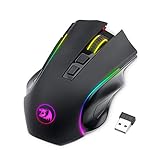
- 【𝐅𝐮𝐥𝐥𝐲 𝐏𝐫𝐨𝐠𝐫𝐚𝐦𝐦𝐚𝐛𝐥𝐞 𝐆𝐚𝐦𝐢𝐧𝐠 𝐌𝐨𝐮𝐬𝐞】- Redragon Wireless Gaming Mouse All buttons can be programmed with the driver and support macro editing. You can remap the buttons, assignment of complex macro functions, change RGB backlit effects, and adjust DPI (250-8000) to fit your different needs
- 【𝐄𝐧𝐡𝐚𝐧𝐜𝐞 𝐘𝐨𝐮𝐫 𝐆𝐚𝐦𝐢𝐧𝐠 𝐈𝐦𝐦𝐞𝐫𝐬𝐢𝐨𝐧】UP to 9 RGB light effects can be chosen, you also can adjust backlit effects with 16.8 million color combinations by drivers to create your fancy gaming environment, and match your game style and desktop layout
- 【𝟑-𝐌𝐨𝐝𝐞 𝐂𝐨𝐧𝐧𝐞𝐜𝐭𝐢𝐨𝐧】Type-C Wired, Bluetooth and 2.4GHz 3 connectivity modes can easily and seamlessly connect with devices within 10 meters and easily switch between the 3 modes for efficient multitasking.
- 【𝐇𝐢𝐠𝐡-𝐏𝐫𝐞𝐜𝐢𝐬𝐢𝐨𝐧 𝐆𝐚𝐦𝐢𝐧𝐠 𝐌𝐨𝐮𝐬𝐞】-The wireless mouse features adjustable DPI(250-8000) and 4 adjustable polling rates ( 125Hz/250Hz/500Hz/1000Hz), you can easily adjust the moving speed, and experience a smooth, fast response and accurate tracking gaming experience
- 【𝐏𝐨𝐰𝐞𝐫𝐟𝐮𝐥 𝐁𝐚𝐭𝐭𝐞𝐫𝐲 𝐋𝐢𝐟𝐞】The rechargeable mouse has a long battery life between 35 hours (RGB on) and 70 hours (RGB off) on a single charge, providing you with nonstopping use. It will auto-sleep after 1 minute of inactivity for power saving. The wireless mouse gaming also can be used while charging
The DeathAdder shape is taller and more obviously right-handed than the Viper. It generally makes more sense for larger hands and palm grip, while the flatter Viper is easier to reposition with a claw or fingertip grip. No Bluetooth mode is listed, so it remains a receiver-first gaming mouse.
Windows Errors? Fix Them Before They Spread
Repair common Windows errors and clear accumulated junk for a smoother, more stable PC - no reinstall needed.Free scan · no reinstallOutdated Drivers Are Slowing You Down
One free scan finds every outdated or missing driver and matches the right update for your exact hardware.Free scan · exact hardware matchBest versatile mouse for gaming and productivity: Logitech G502 X
The Logitech G502 X LIGHTSPEED and RGB-equipped G502 X PLUS make more sense than a lightweight esports mouse for people who play several genres and use the same mouse for work. RTINGS highlights the right-handed ergonomic shell, 12 programmable inputs, tilt and free-scroll wheel functions, low click latency, and battery life of up to 130 hours with RGB disabled.
Its approximately 104g weight is the reason it is not a serious replacement for a 36–50g mouse in low-sensitivity competitive FPS play. But weight is not a defect when the goal is stable desktop control, comfortable palm support, wheel navigation, profile switching, and extra bindings. The non-RGB G502 X LIGHTSPEED is the sensible version for most buyers; choose the PLUS for its lighting and appearance rather than a performance advantage.
Best wireless gaming mice by budget
Under $60: Logitech G305 LIGHTSPEED
The Logitech G305 LIGHTSPEED remains the safest established-brand budget choice at $59.99 direct from Logitech. It uses one AA battery and is advertised for up to 250 hours, with Logitech’s dedicated LIGHTSPEED receiver.
The egg-shaped shell is symmetrical in outline but not truly ambidextrous in button usability. At approximately 102g with the battery installed, it is much heavier than current premium FPS mice. Its stock feet are also dated compared with newer competitors. Still, it offers dependable basic wireless performance, a familiar shape, and unusually long battery life for the money. It is a good first wireless gaming mouse, a backup, or a practical choice for someone who does not want to charge a mouse.
Free tools Windows power users keep installed
One-click scans. No signup required.
Around $70: Razer Viper V3 HyperSpeed
The Razer Viper V3 HyperSpeed is an affordable AA-powered esports alternative. Razer lists it at $69.99, with an 82g weight, a 30,000-DPI sensor, and up to 280 hours from one AA battery.
It is heavier and less modern than the Viper V4 Pro, but its long battery life is useful for people who dislike charging. Its major technical catch is that you need a separate HyperPolling dongle to use 8,000Hz; it is not the appropriate purchase if high polling is the main reason you are shopping.
Around $80: Logitech G305 X SUPERLIGHT
The Logitech G305 X SUPERLIGHT updates the familiar G305 concept with a rechargeable battery, a HERO 44K sensor, RGB, approximately 59g of weight, and up to 130 hours of advertised battery life. PCGamesN lists a US price of $79.99, but the 8,000Hz-capable receiver is not included in the box.
Its egg-shaped shell can work well for small or medium hands and claw or fingertip grips, but shape preference is personal. Independent coverage praises its FPS performance and build quality while criticizing the stock feet and lack of multi-device Bluetooth pairing. PC Gamer also liked the shape and weight but scored it 70, so it is a strong value candidate rather than an automatic winner.
Around $100: SABRE v2 PRO or MCHOSE L7 Pro
The SABRE v2 PRO is the lower-risk established-brand choice with a clear 36g specification, 8,000Hz support, and browser-based configuration. The MCHOSE L7 Pro is an enthusiast alternative at roughly 40.7g, and reviews report performance close to much more expensive FPS mice.
MCHOSE needs a support-risk warning. RTINGS notes a one-year warranty and mixed customer-service feedback compared with two-year coverage from Logitech and Razer. It may be excellent value if the shape suits you and the seller is reliable, but its lower weight should not be treated as compensation for uncertain firmware support, replacement parts, or warranty service.
Choose by hand shape and grip
Palm grip
Palm users generally benefit from a taller hump, fuller rear support, and a shell that lets the hand rest rather than hover. Consider the Razer DeathAdder V4 Pro first for competitive play, followed by the Logitech G502 X LIGHTSPEED if you need many controls. The Razer Basilisk V3 X HyperSpeed is another ergonomic option. The Keychron M5 is more productivity-oriented and can suit users willing to trade some fast-shooter agility for an ergonomic desktop shape.
Claw grip
The Viper V4 Pro, G PRO X2 SUPERSTRIKE, Logitech G305 X SUPERLIGHT, and MCHOSE L7 Pro are the most relevant candidates. A rear hump can support the palm while the fingertips remain arched over the buttons. Compare hump position and side curvature, not just the published length and width.
Do these 3 things before closing this tab:
1Repair Windows errors before they cause bigger problems2Fix the driver behind crashes, sound loss and screen glitches3Clear out junk files and repair common Windows errorsFingertip grip
Fingertip users usually prefer a shorter or lower-profile shell that does not force the palm into contact. The Corsair SABRE v2 PRO, G305 X SUPERLIGHT, and Razer Cobra HyperSpeed are sensible starting points. Very small ambidextrous models may also work, but side-button placement remains important.
Rank #3

- Pentakill, 5 DPI Levels - Geared with 5 redefinable DPI levels (default as: 500/1000/2000/3000/8000), easy to switch between different game needs. Dedicated demand of DPI options between 500-8000 is also available to be processed by software.
- 3 Modes Connect Tech - Cables truly will affect your detailed battle reaction, M612 PRO geared with BT and 2.4Ghz receiver offers you the purest and preciser mouse moving experience and hype your KDA rise again.
- Any Button is Reassignable - 9 programmable buttons are all editable with customizable tactical keybinds in whatever game or work you are engaging. 1 rapid fire + 2 side macro buttons offer you a better gaming and working experience.
- Comfort Grip with Details - The skin-friendly frosted coating is the main comfort grip of the mouse surface, which offers you the most enjoyable fingerprint-free tactility. The left side equipped with rubber texture strengthened the friction and made the mouse easier to control.
- 7 Decent Backlit Modes - Turn the backlit on and make some kills in your gaming battlefield. The hyped dynamic RGB backlit vibe will never let you down when decorating your gaming space.
Small hands
PC Gamer’s small-hand pick is the Razer Cobra HyperSpeed. It weighs 62g, supports 2.4GHz, Bluetooth 5.0, and USB-C, and is advertised for up to 110 hours. It has only five buttons, and its side-button layout is right-handed.
The G305 X SUPERLIGHT is another possibility for small or medium hands because of its compact egg shape and approximately 59g weight. Check the actual dimensions and hump placement before buying; two mice with similar length can feel very different in the hand.
Large hands
Large-handed palm or relaxed-claw users should begin with the DeathAdder V4 Pro or G502 X. The Viper V4 Pro can still work for large hands, especially with claw grip, but its flatter symmetrical profile will not provide the same palm support. Avoid treating a length specification as a guaranteed fit range.
Quick wins for a faster PC:
Fix the driver behind crashes, sound loss and screen glitchesFind Drivers →Clear out junk files and repair common Windows errorsFree Scan →Scan for outdated or missing drivers - takes under a minuteDriver Scan →Left-handed users
Be careful with the word ambidextrous. A symmetrical shell does not mean the side buttons are usable from both hands. The Viper V4 Pro and G305, for example, should not be assumed to be fully left-handed simply because their outlines are symmetrical.
PC Gamer continues to recommend the older Logitech G Pro as an ambidextrous option, with an eight-button layout and approximately 80g weight. Confirm which side buttons are installed and whether unused buttons can be removed or disabled. The Corsair M75 Wireless is another genuinely ambidextrous choice because its side buttons can be moved from one side to the other, although it is not the strongest overall performer.
Best wireless mouse by game genre
| Genre or use | Best starting points | Why |
|---|---|---|
| Competitive FPS | Viper V4 Pro, Superstrike, SABRE v2 PRO | Low weight, fast receiver performance, focused button layouts |
| Tactical FPS and click-timing games | Superstrike, Viper V4 Pro | The Superstrike’s adjustable actuation and Rapid Trigger have a stronger case if you specifically want those controls |
| MMO or MOBA | Scimitar Elite Wireless SE, Razer Naga V2 Pro | Many accessible side buttons; the Scimitar has 16 buttons and the Naga offers modular side panels including a 12-button grid |
| Mixed gaming and productivity | G502 X LIGHTSPEED or PLUS | Ergonomic shell, 12 programmable inputs, tilt wheel, and free scrolling |
| Casual gaming and travel | G305, Viper V3 HyperSpeed, Cobra HyperSpeed | Long battery options, lower prices, or Bluetooth convenience depending on model |
The Scimitar Elite Wireless SE weighs 161g. That makes it a specialist MMO/MOBA mouse, not a failed FPS mouse. Likewise, the 104g G502 should be judged by its controls and comfort rather than against a 36g esports model.
What actually makes a wireless gaming mouse good in 2026?
Use this priority order when comparing models:
- Shape and hand fit. A mouse that supports your hand is more valuable than a higher sensor number.
- Grip compatibility. Palm, claw, and fingertip grips need different hump heights and contact points.
- Wireless stability. A reliable 2.4GHz receiver is more important than Bluetooth availability for competitive gaming.
- Click latency and consistency. Modern gaming mice are already fast; small measured differences may not be visible in play.
- Sensor consistency. Look for accurate tracking at your actual sensitivity, not the maximum DPI printed on the box.
- Weight and balance. Lower weight helps some low-sensitivity players, but stability and comfort can favor more mass.
- Battery life at your real polling rate. A 180-hour 1,000Hz claim and a 16-hour 8,000Hz claim are not contradictory; they describe different use.
- Button layout. Five or six buttons are usually enough for FPS, while MMO, simulation, and productivity users may need ten or more.
- Feet and glide. PTFE, UHMWPE, pad surface, edge finishing, and personal preference all affect movement.
- Software, onboard memory, and firmware. A mouse should retain important settings and receive useful fixes without excessive software dependence.
- Warranty and customer service. This matters particularly when buying from smaller brands.
- Price and availability. A discounted previous-generation mouse can be a better purchase than a new flagship if the shape already suits you.
RTINGS’ buying guidance similarly emphasizes shape, hand size, grip style, connection type, weight, and button count instead of specification chasing. Its latency testing also indicates that differences among already-fast mice can be practically imperceptible during gameplay.
Recommended Free Tools
Wireless versus wired: is wireless as fast?
For current gaming mice using a dedicated 2.4GHz USB receiver, the old assumption that wireless necessarily introduces noticeable gaming lag is no longer reliable. Independent testing places modern esports-oriented wireless mice close to wired performance, and the convenience of eliminating cable drag can be more noticeable than any small latency difference.
There are three different connection experiences:
- 2.4GHz receiver: use this for competitive gaming. Place the receiver close to the mouse and use the included extension cable when available.
- Bluetooth: useful for laptops, tablets, travel, casual games, and battery conservation. It generally has higher latency and less consistency than a gaming receiver.
- USB wired: useful for charging, firmware updates, troubleshooting, or continuing to play when the battery is empty, provided the particular mouse supports simultaneous wired use.
Bluetooth is therefore a convenience feature, not an automatic gaming feature. The Cobra HyperSpeed and some other models are more versatile because they offer Bluetooth, but use their dedicated receiver when testing competitive performance.
Does 4,000Hz or 8,000Hz polling matter?
Polling rate is how often the mouse reports its position to the computer. A 1,000Hz mouse reports at up to 1,000 times per second; an 8,000Hz mouse reports more frequently. The higher rate can make motion updates more granular, especially on high-refresh displays with high frame rates.
NVIDIA’s system-latency guidance notes that moving from 125Hz to 1,000Hz can reduce average system latency by approximately 3ms. The improvement above 1,000Hz becomes progressively smaller. A practical hierarchy is:
- 125Hz: outdated for serious gaming.
- 500Hz: acceptable for casual use.
- 1,000Hz: the sensible default for most players.
- 2,000–4,000Hz: potentially useful with high-refresh displays and high frame rates.
- 8,000Hz: an enthusiast feature for high-end competitive setups, not a requirement.
High polling can increase battery drain and system workload. The SABRE v2 PRO’s advertised difference—up to 70 hours at 1,000Hz versus approximately 16 hours at 8,000Hz—shows the cost clearly. Start at 1,000Hz. Test higher settings only if you have a high-refresh monitor, consistently high frame rates, and a reason to evaluate the change. If a game stutters after enabling 4,000Hz or 8,000Hz, return to 1,000Hz.
How much DPI do you need?
Almost nobody needs the maximum DPI advertised by a modern gaming mouse. The Viper V4 Pro reaches 50,000 DPI, the Superstrike 44,000 DPI, and the SABRE v2 PRO 33,000 DPI, but most players use much lower sensitivity.
Rank #4
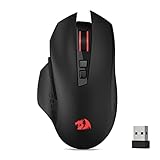
- Wireless for Boundless Winning - Cables truly will affect your detailed battle reaction, Redragon M656 wireless gaming mouse with 2.4Ghz nano receiver offers you the purest mouse moving experience and hype your KDA rise again.
- 5 Adjustable DPI Levels - Geared with 5 on-board DPI levels (1000/1500/2000/2400/4000) which allow your mouse movements to be registered to each pinpoint location. 5 DPI levels are free to DIY with software, enable to switch swiftly in game.
- Easy Keybinding with Macro - All 7 programmable buttons are all editable with customizable tactical keybinds in whatever game or work you are engaging. 2 side macro buttons offer you better gaming and working experience.
- Ultra Long-lasting Core - Equipped with the PAW3104 Optical Pixart sensor, the mouse consumption is further optimized with 500Hz Polling Rate in 3 levels. Smart ECO sleep mode helps for saving battery power when using the mouse intermittently (battery not included).
- Essential Software Suportted - With Redragon Pro driver, select your preferred style in red LED to fit your using vibe. All 7 buttons are ready to be assigned with complex or convenient macros, custom keybinds to the buttons you are used to mostly.
DPI—also called CPI by some manufacturers—is a sensor capability, not a recommended setting. The useful questions are:
- Does the sensor track accurately at your chosen DPI?
- Can you set the sensitivity precisely enough for your game?
- Does the mouse avoid unwanted smoothing, spinout, or inconsistent behavior at your actual speed?
- Can you keep the same effective sensitivity across games?
Buy for tracking consistency and shape, not the largest number on the specification sheet.
Recommended Free Tools
Switches, feet, and software
Mechanical switches
Mechanical switches provide the familiar tactile and audible click feel and are often less expensive. Depending on the implementation, traditional electrical contacts can be associated with eventual double-click problems. A stated rating such as 100 million clicks is a laboratory durability target, not a guarantee that the entire mouse will last that long without wheel, shell, cable, battery, or firmware problems.
Optical switches
Optical switches avoid conventional electrical contact bounce and are common in modern Razer and other premium mice. They can reduce one category of switch failure, but they still have a click feel that may or may not suit you. Optical does not automatically mean a better shell, better wheel, or better long-term support.
Inductive switches
The Superstrike’s inductive HITS system is different from both mechanical and optical designs. It enables adjustable actuation, haptic feedback, and Rapid Trigger behavior. Those features are valuable if you want to configure the click response, but they also create a distinctive feel that some reviewers found mushier than a crisp conventional click.
Feet and glide
Mouse feet are easy to overlook. PTFE feet are common and often glide freely, while the Superstrike’s UHMWPE feet have received criticism from RTINGS and Tom’s Hardware for not gliding as freely as some competing PTFE implementations. Your pad texture, humidity, pressure, and preference matter, so a feet material is not by itself a complete performance ranking.
Quick wins for a faster PC:
Clear out junk files and repair common Windows errorsFree Scan →Scan for outdated or missing drivers - takes under a minuteDriver Scan →Repair Windows errors before they cause bigger problemsFix Now →Software and onboard memory
Before buying, check whether the mouse stores DPI, polling, button, and lighting profiles onboard. The SABRE v2 PRO uses Corsair’s browser-based Web Hub rather than requiring a conventional installed application. Other brands use their own software and pairing utilities. Firmware support is particularly important for new products: the DeathAdder V4 Pro’s revised battery claim is an example of a product whose practical behavior changed after firmware optimization.
Setup for reliable wireless performance
- Connect the receiver directly to the PC. Use the included extension cable to place it near the mouse. Logitech includes a receiver-extension cable with the G305 for this purpose.
- Keep the receiver away from interference. Do not hide it behind a metal PC case or place it beside dense USB 3.x cable clutter if you can avoid it.
- Update both mouse and receiver firmware. Use the manufacturer’s software or support utility before evaluating latency, battery life, or disconnections.
- Begin at 1,000Hz. Confirm stable operation and battery behavior before trying 2,000Hz, 4,000Hz, or 8,000Hz.
- Disable pointer acceleration if you want consistent competitive input. In Windows, open Settings > Bluetooth & devices > Mouse > Additional mouse settings > Pointer Options, then clear Enhance pointer precision. Microsoft’s mouse-settings documentation covers the relevant controls.
- Use wired mode when necessary. Most rechargeable models can be used over USB-C, but verify simultaneous charging and use for the specific mouse.
Wireless stutter and disconnection troubleshooting
If the cursor stutters, disconnects, or feels inconsistent, work through this order:
- Move the receiver from the rear of the PC to a position closer to the mouse.
- Try another direct USB port.
- Move the receiver away from metal surfaces and USB 3.x cable clusters.
- Charge the mouse or replace the AA battery, then retest at 1,000Hz.
- Update the mouse and receiver firmware.
- Use the manufacturer’s own pairing tool to re-pair the mouse. Logitech, Razer, Corsair, SteelSeries, and smaller brands do not share one universal pairing sequence.
- Test the mouse in wired mode. If wired mode is stable but wireless is not, the problem is likely receiver placement, pairing, interference, firmware, or the radio hardware.
- Use Bluetooth only as a diagnostic or productivity fallback. Do not use Bluetooth to judge the competitive receiver mode.
- If the issue appears on multiple computers and also occurs in wired mode, contact the manufacturer or pursue warranty service.
How the evidence should be interpreted
The recommendations above combine different types of evidence:
- Manufacturer specifications: weight, sensor maximum, connection modes, advertised battery life, polling capability, and direct pricing from Razer, Logitech, and Corsair.
- Independent testing: RTINGS’ latency, sensor, build, comfort, and product testing.
- Hands-on reviews and buying guides: PC Gamer, Tom’s Hardware, Tom’s Guide, and TechRadar, which provide subjective impressions of shape, click feel, balance, and value.
- Editorial judgment: matching a mouse to a grip, genre, hand, and tolerance for charging rather than ranking all products by one specification.
Manufacturer battery and performance claims should not be confused with independent measurements. Shape, click feel, balance, and comfort are also inherently more subjective than weight or dimensions. Current buying guides disagree: RTINGS and Tom’s Guide favor the Superstrike, PC Gamer favors the Viper V4 Pro overall, and TechRadar’s current guide still lists the older DeathAdder V3 Pro despite the arrival of newer 2026 models. That disagreement is why this guide separates the best general recommendation from the best specialist choices.
PC Slower Than It Used to Be?
A free scan shows the junk files, broken settings and background clutter dragging Windows down - then fixes them in one click.Free scan · Windows 10 & 11Crashes, No Sound, or Screen Glitches?
Random freezes, missing sound and display glitches usually trace back to one bad driver. Find and replace yours safely.Free scan · under a minutePlatform compatibility note
Windows PC support is the primary assumption for the products in this guide. USB receiver support on PlayStation, Xbox, macOS, tablets, and other devices varies by model, operating system, USB port, software availability, and game. Bluetooth availability does not guarantee that every platform or game will accept the mouse. Check the manufacturer’s support page and the console or game’s current accessory compatibility information before buying for anything other than a Windows PC.
Frequently Asked Questions
Are wireless gaming mice as fast as wired mice?
A modern gaming mouse using its dedicated 2.4GHz USB receiver can deliver extremely low latency and, in practice, may feel as fast as a wired model. Wireless is not categorically better: it adds battery management and possible radio interference, while wired operation is useful for charging and troubleshooting. Compare receiver-mode testing, not Bluetooth performance.
Best Value

- ICONIC ERGONOMIC FORM WITH 9 CUSTOMIZABLE CONTROLS — Favored by millions worldwide, the mouse’s signature shape perfectly supports different grips, while its numerous easy-access buttons allow for an endless combination of commands and macros
- RAZER HYPERSPEED WIRELESS AND BLUETOOTH — Unleash seamless, low-latency performance that's faster than other wireless tech or switch to Bluetooth for longer hours of gaming. Outfitted with multi-device support for a streamlined setup
- UP TO 285 HOURS OF BATTERY LIFE — With up to 535 hours on Bluetooth and 285 hours on Razer HyperSpeed Wireless, last longer in the heat of battle with a mouse designed to play the long game. May vary depending on usage conditions
- RAZER 5G ADVANCED 18K OPTICAL SENSOR — Tailor the mouse to the playstyle with a new, robust set of sensitivity settings. Enjoy responsive, pixel-precise aim with an ultra-reliable sensor that tracks movement with zero spinouts
- RAZER MECHANICAL MOUSE SWITCHES GEN-2 — With new gold-plated contact points, the switches are less prone to degrading and have a longer lifespan of up to 60-million clicks, so gamers can enjoy crisp execution that’s just as consistent
Is Bluetooth good enough for gaming?
Bluetooth is suitable for browsing, productivity, travel, casual games, and conserving battery. For competitive gaming, use the included 2.4GHz receiver because Bluetooth generally has higher latency and less consistent reporting.
Do I need 4,000Hz or 8,000Hz polling?
Most players should start at 1,000Hz. Higher polling can make motion updates more granular on high-refresh, high-frame-rate systems, but the improvement above 1,000Hz is progressively smaller. It can also increase system workload and battery drain. Use 8,000Hz as an enthusiast option, not a requirement.
Does high polling reduce battery life?
Usually, yes. For example, Corsair advertises the SABRE v2 PRO for up to 70 hours at 1,000Hz but approximately 16 hours at 8,000Hz. Always compare battery claims at the polling rate and connection mode you intend to use.
What weight is best for a wireless gaming mouse?
There is no universal best weight. A 36–50g mouse can make large, low-sensitivity FPS swipes easier, while a 100g-class ergonomic mouse can feel steadier and provide better palm support or more controls. Shape, balance, and grip should come before the scale number.
Is an optical switch better than a mechanical switch?
Optical switches avoid traditional electrical contact bounce and are common in premium mice, but they do not guarantee better comfort or total product longevity. Mechanical switches provide a familiar click and can be excellent. The Logitech Superstrike’s inductive system adds adjustable actuation and haptic feedback, but its feel is more specialized.
Can a wireless mouse be used while charging?
Many rechargeable models support wired USB-C use while charging, but this is not a universal guarantee. Confirm it for the exact model. A wired connection is also useful for firmware updates and diagnosing whether a problem is wireless-specific.
Do these 3 things before closing this tab:
1Repair Windows errors before they cause bigger problems2Scan for outdated or missing drivers - takes under a minute3Clear out junk files and repair common Windows errorsWhat is the best wireless mouse for left-handed gamers?
Do not assume a symmetrical shell is fully left-handed. The older Logitech G Pro remains a commonly recommended ambidextrous choice, provided the side-button configuration suits you. Corsair’s M75 Wireless is another option because its side buttons can be moved between sides. Confirm button placement and whether unused buttons can be removed or disabled.
What is the best wireless gaming mouse under $50 or $75?
The verified established-brand recommendation closest to $50 is the Logitech G305 LIGHTSPEED at $59.99 direct from Logitech. Around $70, the Razer Viper V3 HyperSpeed is a strong AA-powered esports alternative at $69.99. Prices fluctuate, so a sale may bring newer models into the target range.
Which models work on Mac, Windows, PlayStation, or Xbox?
The dossier establishes Windows PC use but does not verify a universal compatibility list for every product and platform. Receiver support, Bluetooth support, USB host behavior, software, and individual games differ. Check the exact manufacturer support page and platform documentation before buying for a console, Mac, tablet, or other device.
How do I fix wireless stutter or disconnections?
Move the receiver closer to the mouse with its extension cable, avoid metal and crowded USB 3.x areas, try another direct USB port, charge or replace the battery, update mouse and receiver firmware, and re-pair through the manufacturer’s utility. Test wired mode. If the problem follows the mouse across multiple computers and also affects wired mode, use warranty support.
What’s actually slowing this PC down?
Pick the symptom - the matching free tool is one click away.
Should I buy the latest flagship or an older discounted model?
Buy the older model when its shape already suits you and the discount is substantial. A newer sensor or 8,000Hz mode is not automatically visible in game. Consider the latest model when it provides a meaningful improvement for your use—such as the Viper V4 Pro’s low weight and long 1,000Hz battery claim, or the Superstrike’s adjustable clicks—not merely a larger DPI number.
The Bottom Line
For most competitive wireless buyers, choose the Razer Viper V4 Pro. Choose the Logitech G PRO X2 SUPERSTRIKE if adjustable actuation, Rapid Trigger, or silent haptic clicks are the reason you are upgrading. Choose the Corsair SABRE v2 PRO for a much lighter and cheaper design, the DeathAdder V4 Pro for right-handed palm comfort, the G502 X for mixed gaming and productivity, and the Scimitar Elite Wireless SE for MMO controls. Whichever model you choose, set it up over 2.4GHz, start at 1,000Hz, and make shape and grip fit the deciding factors.
Quick Recap
Product prices and availability are accurate as of the date/time indicated and are subject to change. Any price and availability information displayed on Amazon at the time of purchase will apply.

