
Do these 3 things before closing this tab:
1Clear out junk files and repair common Windows errors2Fix the driver behind crashes, sound loss and screen glitches3Repair Windows errors before they cause bigger problemsiTechGuides is reader-supported. When you buy through links on our site, we may earn an affiliate commission. As an Amazon Associate I earn from qualifying purchases. Learn more
If you want survival-horror tension without another remake, start with Alien: Isolation for sustained stalking, SOMA for science-fiction story and philosophical dread, SIGNALIS for compact retro-style survival horror, Dead Space (2008) for combat and resource pressure, or Amnesia: The Dark Descent for hiding, puzzles and psychological fear.
These are original releases rather than remakes. They cover five different ways to make the player feel vulnerable: an intelligent pursuer, an isolated underwater facility, a tightly structured classic format, weapon-dependent dismemberment, and near-total avoidance of direct combat. The result is a better starting list than simply looking for games that resemble one famous series.
| # | Preview | Product | Price | |
|---|---|---|---|---|
| 1 |

|
Beneath - PlayStation 5 | $25.64 | Buy on Amazon |
| 2 |
|
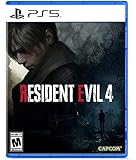
Resident Evil 4 - PS5 | $15.99 | Buy on Amazon |
| 3 |

|
Unholy - PlayStation 5 | $35.00 | Buy on Amazon |
| 4 |

|
Project Songbird - PlayStation 5 | $29.99 | Buy on Amazon |
| 5 |

|
Silent Hill 2 (PS5) | $22.99 | Buy on Amazon |
What counts as a non-remake survival-horror game?
A non-remake game is an original release, not a later reconstruction of an earlier title. That distinction matters because a remake can substantially change a game’s pacing, camera, combat, story presentation or resource economy. This list therefore treats the 2008 edition of Dead Space as its own recommendation and keeps it separate from the 2023 remake.
The Tool Desk
Outbyte Driver Updater FREEFix the driver behind crashes, sound loss and screen glitchesFind Drivers →Outbyte PC Repair FREERepair Windows errors before they cause bigger problemsFix Now →“Survival horror” is also broader than a single formula. Some games make survival difficult by limiting ammunition and supplies. Others remove reliable combat and make every pursuit a hiding problem. Still others place the pressure in puzzles, uncertainty, or the fear that the world’s rules have stopped making sense. The five choices below are deliberately distinct rather than five versions of the same experience.
Popular on Amazon
- Story: Created by two passionate brothers, Beneath fuses Lovecraftian horror with an action movie narrative set deep in the arctic ocean. You will race against time to find a cure for your daughter, fighting for survival as you travel between a series of research stations and discover the dark intentions of the Omnium Corporation.
- Survival: Face a terrifying array of foes, from ruthless soldiers to grotesque Lovecraftian monstrosities. With limited ammunition you must manage your supplies, upgrade your arsenal and make smart use of environmental hazards to survive.
- Supernatural: Nightmares have awoken in the depths. With your sanity slipping, you become vulnerable to the twisted visions and Eldritch abominations that attack your body and mind.
- Going Old School: Created as a love letter to the classics by a micro studio founded by two brothers with a lifelong passion for the genre.
- Fight For Your Life: Soldiers are hunting you with maximum aggression and unearthly horrors stalk your every move. Use a variety of upgradable weaponry to survive close quarter fights in destructible environments. Keep your wits as you face nightmarish visions and creatures. Explore the remains of research stations, investigating emails, PDA’s and survivor accounts to unravel a dark conspiracy.
- Pursuit and evasion: the central threat is being found and staying alive long enough to move on.
- Resource pressure: weapons, ammunition or other supplies force decisions instead of constant fighting.
- Puzzle pressure: progress requires interpreting an environment while danger interrupts concentration.
- Psychological or cosmic dread: the horror comes from identity, isolation, machines, occult implications or an uncaring universe.
- Presentation: first-person immersion, third-person action or a classic fixed-style structure can change how vulnerable you feel.
Choose the entry that matches the kind of pressure you enjoy. A player who dislikes combat may find Dead Space less appealing, while someone who wants an active weapon-based loop may find Amnesia too passive. The comparison below makes those trade-offs explicit.
At-a-glance comparison
| Game | Primary survival pressure | Presentation | Setting and horror | Puzzle emphasis | Best fit |
|---|---|---|---|---|---|
| Alien: Isolation | Prolonged stealth and enemy pursuit | First-person | Science-fiction station stalked by a xenomorph | Moderate; navigation and problem solving support evasion | Players who want sustained cat-and-mouse tension |
| SOMA | Vulnerability created by isolation and psychological uncertainty | First-person | Underwater PATHOS-II facility; science-fiction and machine consciousness | Moderate; exploration and environmental problem solving | Players who prioritize narrative and ideas |
| SIGNALIS | Limited resources, dangerous encounters and constrained progression | Classic survival-horror presentation | Cosmic dread and psychological horror | High relative to its compact structure | Players who want a concentrated retro-style experience |
| Dead Space (2008) | Combat decisions, dismemberment and resource management | Third-person action-horror | Science-fiction body horror | Light to moderate; the combat loop is the priority | Players who want weapons without losing survival pressure |
| Amnesia: The Dark Descent | Hiding, pursuit and psychological stress | First-person | Occult and psychological dread | High; environmental puzzles are central | Players who prefer avoiding direct combat |
The table is a decision aid, not a quality ranking. Each game is strongest in a different column. The detailed sections explain what that difference feels like in play and what kind of player should begin there.
Alien: Isolation is the choice for prolonged stealth tension
Why it stands out
Alien: Isolation puts Amanda Ripley on a remote station while a xenomorph stalks her. Its defining feature is not an inventory puzzle or a sequence of short scares; it is the extended pressure of being hunted. The threat can turn a routine movement through the station into a decision about noise, cover, timing and whether the next room is safe enough to enter.
That pursuit-focused design makes it the clearest recommendation for readers asking for tension rather than constant combat. You are not simply clearing rooms. You are trying to remain undetected, create distance and make progress while the enemy’s presence keeps changing the risk of every route. The fear comes from sustained uncertainty: a quiet corridor may be useful, but it is never automatically secure.
What the experience emphasizes
- Evasion over firepower: survival depends primarily on staying out of the creature’s path and choosing when movement is worth the risk.
- First-person immersion: the close viewpoint makes vents, corridors and hiding places feel immediate rather than abstract.
- Long-form tension: the game’s appeal is the accumulation of pursuit pressure, not just isolated shock moments.
- Environmental problem solving: navigation and practical obstacles matter because every delay can extend exposure.
Who should play it first
Begin here if your ideal horror scenario is being tracked by a threat you cannot casually defeat. It is especially suitable for players who enjoy stealth games but want the enemy’s pursuit to remain the main source of anxiety. If you want frequent weapon upgrades and a more conventional combat rhythm, start with Dead Space (2008) instead.
Also popular on Amazon
- Reawaken a Classic – Resident Evil 4 preserves the essence of the original game, now reconstructed using Capcom’s proprietary RE Engine to deliver realistic visuals and additional narrative depth to the iconic story that was not possible at the time of the original release.
- Modernized Gameplay – The team from 2019’s Resident Evil 2 returns to build upon the series’ modern approach to survival horror. Engage in frenzied combat with the Ganados villagers, explore a European village gripped by madness, and solve puzzles to access new areas and collect useful items for Leon and Ashley’s constant struggle to survive.
- Overwhelming Hordes – Face hordes of rabid enemies that threaten to overwhelm Leon with even more diverse methods of attack than in the original release.
- Survive on a Knife’s Edge – Years of intense training have taught Leon new ways to use his knife, helping to even the odds against the unrelenting onslaught of enemies. By parrying enemy attacks, you can avoid debilitating damage and evade lunging enemies seeking to grab Leon and hold him in place. Make smart use of scavenged knives to deliver precise finishing moves on vulnerable enemies, and even use the element of surprise to quietly dispatch unsuspecting foes before they break.
- Survive on a Knife’s Edge – Years of intense training have taught Leon new ways to use his knife, helping to even the odds against the unrelenting onslaught of enemies. By parrying enemy attacks, you can avoid debilitating damage and evade lunging enemies seeking to grab Leon and hold him in place. Make smart use of scavenged knives to deliver precise finishing moves on vulnerable enemies, and even use the element of surprise to quietly dispatch unsuspecting foes before they break.
SOMA is the strongest narrative and philosophical choice
The premise and setting
Frictional Games describes SOMA as a science-fiction horror game with a stark premise: “The radio is dead, food is running out, and the machines have started to think they are people.” The story unfolds in the underwater PATHOS-II facility, where isolation is not just a backdrop but a source of pressure. The setting gives the game room to ask what makes a person a person while still operating as a survival-horror environment.
The underwater location changes the emotional texture of the game. There is no easy sense of escape from PATHOS-II, and the facility’s machines create uncertainty about whether a voice, body or presence should be understood as human. The horror is therefore both physical and conceptual: danger comes from the environment, while the larger fear comes from what consciousness and identity mean in a damaged world.
Crashes, No Sound, or Screen Glitches?
Random freezes, missing sound and display glitches usually trace back to one bad driver. Find and replace yours safely.Free scan · under a minuteWindows Errors? Fix Them Before They Spread
Repair common Windows errors and clear accumulated junk for a smoother, more stable PC - no reinstall needed.Free scan · no reinstallWhat the experience emphasizes
- Story-led science fiction: exploration serves a narrative about isolation, machines and personhood.
- First-person vulnerability: the viewpoint keeps the player close to the facility’s spaces and discoveries.
- Psychological pressure: questions about identity and machine consciousness continue after an immediate threat has passed.
- Environmental progression: moving through PATHOS-II requires attention to surroundings and the consequences of each discovery.
Who should play it first
Choose SOMA if you want the story to be the reason you keep moving forward. It suits players who enjoy science-fiction settings, philosophical questions and a steadily escalating sense that the world’s definitions are unreliable. If your priority is a tightly repeatable combat loop, it is a less direct match than Dead Space (2008).
SIGNALIS is the best compact retro-style option
Classic structure with cosmic dread
SIGNALIS combines a compact, classic survival-horror structure with cosmic and psychological themes. PlayStation describes it as a tense experience of cosmic dread and classic psychological survival horror. Nintendo’s official product page identifies Elster as the protagonist and lists a Nintendo Switch release on 27/10/2022.
The appeal is concentration. Rather than stretching one pursuit concept across a long campaign, SIGNALIS uses a focused format in which exploration, resource decisions, puzzles and unsettling revelations reinforce one another. The classic structure makes backtracking and careful observation meaningful, while the cosmic element keeps the story from feeling like a straightforward haunted-house scenario.
Also popular on Amazon
- A Unique Gameplay Blend - Combines meticulous exploration, intriguing puzzle solving, infiltration and stealth with innovative shooting dynamics.
- A Versatile Unique Weapon - Use four different emotions: anger, fear, sadness and desire to interact with the environment (destroy obstacles, trigger mechanisms, overload circuits, illuminate your way) or to confuse, lure or damage your opponents.
- Masks! - Everybody in the unholy world hides behind a mask and it can be the difference between life or death. Build your own mask to get new skills and improve your abilities or wear other masks to infiltrate, confuse your enemies and impersonate your opponents.
- Languages - English voice. Chinese (Simplified), Chinese (Traditional), English, French (France), German, Italian, Japanese, Korean, Polish, Portuguese (Brazil), Russian, and Spanish in-game text.
What the experience emphasizes
- Compact survival-horror pacing: locations, items and puzzles are arranged for a concentrated experience rather than an open-ended sandbox.
- Cosmic and psychological horror: dread comes from forces and ideas that are difficult to understand, not only from a visible attacker.
- Classic progression: inventory choices, exploration and environmental clues reward players who examine spaces carefully.
- Retro presentation: the style supports a deliberate, old-school sense of uncertainty and discovery.
Optional physical edition
Readers who specifically want a console copy can look for the SIGNALIS Nintendo Switch edition listed by Nintendo. Availability, price and stock are changeable, so confirm current details with the retailer or Nintendo listing before buying. The edition is a format option, not a separate game or remake.
Recommended Free Tools
Who should play it first
Start with SIGNALIS if you want a shorter, denser alternative to sprawling modern horror games. It is a strong fit for players who like classic survival-horror structure but want cosmic and psychological themes rather than a conventional monster story.
Dead Space (2008) is the combat-forward original
Keep the editions separate
The original Dead Space released in 2008. EA lists that Classic edition separately from the 2023 version, which it labels a remake. For a non-remake shortlist, the 2008 release is the relevant choice.
This distinction is more than a date check. The 2008 edition represents the original design balance: third-person action-horror, deliberate dismemberment-focused combat, science-fiction body horror and resource management. You are expected to fight, but ammunition and supplies still create pressure. Every encounter asks whether you should spend resources now or preserve them for the next threat.
What the experience emphasizes
- Combat with consequences: weapons are central, but limited resources prevent every encounter from becoming routine target practice.
- Dismemberment: the combat concept makes enemy anatomy and shot placement part of survival rather than decoration.
- Science-fiction body horror: the setting turns industrial and technological spaces into sources of physical threat.
- Third-person readability: the viewpoint lets you track movement and equipment while keeping the character exposed in hostile spaces.
Who should play it first
Choose the 2008 game when you want the most active, weapon-based entry on this list without abandoning survival-horror resource decisions. It is the natural bridge for players who enjoy action games but still want ammunition scarcity, disturbing environments and a persistent sense that a bad fight can leave them unprepared.
Free tools Windows power users keep installed
One-click scans. No signup required.
Also popular on Amazon
- A dark, enthralling 4-5 hour narrative to keep you hooked and guessing until the end. Gorgeous visuals as you traverse numerous and diverse environments, presented with a cinematic, film-like aesthetic. Ranged and melee combat with upgradeable weapons to help you survive your nightmarish journey.
- A stellar voice cast, starring Valerie Rose Lohman (What Remains of Edith Finch, Wolfenstein: Youngblood), Jonah Scott (Dying Light 2: Stay Human, Date Everything), and Aleks Le (Persona 3: Reload, Marvel Rivals, Ghost of Yotei).
- A beautifully dynamic and haunting soundtrack composed and performed by Jacob Noska, and Jonah Henthorne: members of the band Auric Echoes.
- The puzzles you encounter are more than your standard key hunt. Project Songbird rewards those with an eye for detail, making each puzzle a challenge of creativity and wits.
- The combat of Project Songbird offers a variety of approaches inspired by the classics of the survival horror genre. Melee and gunplay is slow and weighty, and ammo is incredibly scarce. However, combat isn't your only option, as you have a multitude of tools at your disposal to aid in sneaking past any creatures that wish to do you harm.
Amnesia: The Dark Descent is the clearest no-combat recommendation
Hiding and puzzles instead of fighting
Frictional Games identifies Amnesia: The Dark Descent as a first-person survival-horror title. Its defining appeal is the opposite of a combat-led game: you survive by hiding, reading the environment and solving puzzles while psychological dread makes it harder to remain calm and methodical.
Because direct confrontation is not the organizing principle, the game changes how you evaluate a room. A useful object may be part of a puzzle, a hiding place may be safer than a corridor, and a delay spent understanding the environment may also increase your exposure. Fear comes from having to think while your instinct is telling you to run.
What the experience emphasizes
- First-person psychological dread: the viewpoint keeps the player close to darkness, sound and environmental details.
- Hiding and avoidance: survival depends on breaking contact and remaining unseen rather than winning a firefight.
- Environmental puzzles: progression requires interpreting spaces and using their objects logically.
- Vulnerability without an arsenal: the absence of a conventional combat solution makes each pursuit feel consequential.
Who should play it first
Begin with Amnesia if you want the purest version of “I cannot fight my way out.” It is also a good first choice for players who enjoy puzzle games and atmospheric horror more than weapon upgrades. If prolonged pursuit is your priority and you want a more explicitly science-fiction setting, choose Alien: Isolation.
How to choose the right game for your taste
If you want the enemy to be the main source of tension
Pick Alien: Isolation. Its identity is built around being stalked over an extended period, so evasion and route selection matter more than building a powerful loadout.
If you want the story to stay with you after the credits
Pick SOMA. PATHOS-II, machine consciousness and questions about identity make it the most explicitly narrative and philosophical option here.
Also popular on Amazon
- Fully Remade to terrify modern audiences
- KONAMI's intense psychological horror masterpiece SILENT HILL 2 is made exclusively for PlayStation 5
- The main protagonist James Sunderland searches for clues in the namesake town, after receiving a mysterious letter from his wife Mary… who has long been dead
- Experience the eerie monsters and other manifestations of James' consciousness reworked after 20 years
- Made with state-of-the-art technology to play on modern entertainment systems in 4K
If you want a concise, classic-feeling structure
Pick SIGNALIS. Its compact format, careful progression and cosmic-psychological themes deliver a concentrated survival-horror experience rather than a long action campaign.
If you want weapons, dismemberment and scarce supplies
Pick Dead Space (2008). It is the combat-centered choice, provided you select the original 2008 edition rather than the 2023 remake.
If you want to avoid direct combat
Pick Amnesia: The Dark Descent. Hiding and environmental puzzles are the core loop, and the first-person perspective keeps that vulnerability immediate.
A sensible play order for newcomers
There is no required chronology because these games are independent experiences. A gradual route through the different forms of survival horror can reduce the chance that one unfamiliar design overwhelms you:
- Dead Space (2008): start with the most familiar action-horror structure and learn how resource pressure changes combat decisions.
- Alien: Isolation: move from fighting threats to avoiding a persistent pursuer.
- SIGNALIS: try a compact, classic structure with stronger emphasis on puzzles and cosmic themes.
- Amnesia: The Dark Descent: remove direct combat and focus on hiding, environmental reasoning and psychological dread.
- SOMA: finish with the most story-led option if you want the philosophical questions surrounding horror to take center stage.
You can reverse that order without losing anything. The useful principle is to alternate the source of pressure: combat, pursuit, classic resource-and-puzzle structure, pure avoidance and narrative uncertainty.
Practical tips for getting more from these games
Use headphones and a manageable session length
Sound cues, silence and sudden changes in environmental noise are important to first-person and pursuit-focused horror. Headphones can make those contrasts clearer, but intense games are easier to enjoy in sessions short enough that fatigue does not turn every decision into frustration.
Do not play every title as an action game
In Dead Space (2008), learn the combat and resource loop. In Alien: Isolation and Amnesia, treat escape and concealment as legitimate progress rather than signs that you are playing incorrectly. In SIGNALIS, examine rooms and inventory decisions carefully. In SOMA, give the environment and conversations time to establish the story’s questions.
Check the edition before purchasing
- For Dead Space, verify that the listing says 2008 or Classic if you specifically want the original non-remake.
- For SIGNALIS, the Nintendo Switch product page identifies a release date of 27/10/2022; current stock and pricing can change.
- For every game, confirm the platform and regional availability at the point of purchase because those details can change over time.
The short verdict
There is no single best non-remake survival-horror game for every player. Alien: Isolation is the standout for sustained pursuit, SOMA for narrative and philosophical science fiction, SIGNALIS for compact retro-style horror, Dead Space (2008) for combat and resource management, and Amnesia: The Dark Descent for hiding and environmental puzzles. Start with the pressure type you actually want, and this list gives you a distinct next step instead of another version of the same game.

