
The Tool Desk
Outbyte Driver Updater FREEFix the driver behind crashes, sound loss and screen glitchesFind Drivers →Outbyte PC Repair FREEClear out junk files and repair common Windows errorsFree Scan →iTechGuides is reader-supported. When you buy through links on our site, we may earn an affiliate commission. As an Amazon Associate I earn from qualifying purchases. Learn more
The 13-inch MacBook Air with M5 is the best lightweight laptop for most people in 2026. It combines a 2.7-pound fanless design, strong performance, long claimed battery life, a good display, and a mature software ecosystem without the noise of a cooling fan.
If you need Windows, choose the 13-inch Microsoft Surface Laptop for the most straightforward experience. Choose the Dell XPS 13 when minimum weight and price matter most, the Acer Swift Air 14 when ports and screen space matter more, the Framework Laptop 13 Pro for repairability, or the Asus Zenbook A16 when you want an unusually light 16-inch computer.
This is a current 2026 shortlist assembled from independent lab testing, hands-on editorial evaluations, and manufacturer specifications. The laptops were not all tested by one publication under one identical protocol, so battery figures and performance comparisons should be read with that limitation in mind.
Our picks at a glance
| Laptop | Best for | Weight or size note | Operating system | Main strengths | Important caveat |
|---|---|---|---|---|---|
| MacBook Air 13-inch M5 | Best overall | 2.7 lb; 13-inch | macOS | Silent operation, performance, battery efficiency, ecosystem | Limited ports and no user-upgradeable memory |
| Microsoft Surface Laptop 13-inch | Best lightweight Windows laptop | 2.7 lb; 13-inch 3:2 touchscreen | Windows 11 on ARM | Simple design, useful ports, compact size | ARM compatibility and modest 1920×1280 60Hz display |
| Dell XPS 13 DX13260 | Lightest Windows value | About 1 kg, or 2.2 lb | Windows | Very low weight and relatively low starting price | Few ports and configuration-dependent pricing |
| Acer Swift Air 14 | Budget choice with ports | 14-inch; slightly heavier than the XPS 13 | Windows | USB-A, two Thunderbolt 4 ports, headphone jack, larger display | Evidence is hands-on rather than a comparable full lab review |
| Framework Laptop 13 Pro | Repairability and upgrades | 3.17 lb in the tested configuration | Windows or optional Ubuntu support | Modular components, replaceability, upgradeability | Expensive, heavier, and can run warm under sustained load |
| Asus Zenbook A16 | Large-screen portability | 16-inch; unusually light for its size | Windows on ARM | Large workspace, fast Snapdragon X2 Elite Extreme, many ports | Battery results, chassis feel, and ARM compatibility need scrutiny |
How to interpret the evidence: Apple and Microsoft battery figures below are controlled manufacturer claims, not independent editorial results. We identify hands-on evaluations and lab testing where that distinction matters, and we do not assign a single unified score to laptops tested using different methods.
1. MacBook Air 13-inch M5: best overall lightweight laptop
The MacBook Air 13-inch M5 is the best all-around choice if macOS works for your software needs. It is light enough for a daily commute, completely silent because it is fanless, and fast enough for office work, programming, photo editing, video calls, and moderate creative workloads. Its combination of portability, battery efficiency, display quality, and Apple-device integration makes it the easiest recommendation for most buyers.
Apple announced the M5 MacBook Air on March 3, 2026, with availability beginning March 11. The 13-inch model weighs 2.7 pounds, measures 0.44 inches at its tallest point, starts with a 512GB SSD, supports Wi-Fi 7 and Bluetooth 6, and has two Thunderbolt 4 ports. Apple rates it for up to 18 hours of battery life. That number comes from Apple’s controlled testing and should not be treated as a guaranteed result for every workload, brightness level, or application.
Popular on Amazon
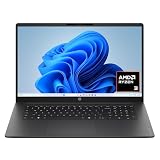
- FULL HD IPS DISPLAY - Enjoy vibrant, crystal-clear images with 178-degree wide-viewing angles
- AMD RYZEN 3 30 PROCESSOR - Everyday performance you can count on; Multitask, stream, game casually, and edit photos smoothly with responsive power and vibrant HDR visuals
- ENJOY UP TO 14 HOURS AND 15 MINUTES OF BATTERY LIFE - HP Fast Charge restores battery from 0 to 50% in approximately 45 minutes
- AMD RADEON 610M GRAPHICS - Experience smooth entertainment; Built for streaming and multitasking, enjoy realistic visuals and efficient performance for work and play
- STORAGE AND MEMORY - 512 GB PCIe NVMe M.2 SSD offers fast speed and efficient storage; and 8 GB LPDDR5 RAM memory boosts performance with higher bandwidth
Independent category evidence supports its position, although it is not all from the exact M5 model. Tom’s Guide’s current 2026 laptop guide places the MacBook Air family at the top of its overall laptop class using lab testing and hands-on reviews. RTINGS also continues to rank the MacBook Air family at the top of its lightweight-laptop category; its displayed lightweight recommendation is an older M4 generation, so that result should not be misrepresented as a direct M5 lab result. RTINGS says it has tested more than 155 laptops, while PCWorld describes its laptop recommendations as personally tested and vetted using benchmarks and usability standards.
What to buy
For most people, the sensible configuration is 16GB of memory and 512GB of storage. Move to 24GB or more memory and additional storage if you regularly edit large video projects, compile substantial software projects, run virtual machines, or work with large creative files. Apple does not make these memory and storage upgrades user-replaceable, and the upgrades are expensive because they must be selected at purchase.
Why you might not want it
- Windows-only software: macOS is not a substitute for applications, drivers, games, or workplace tools that require Windows.
- Ports: Two Thunderbolt 4 ports and a headphone jack are useful, but many desk setups will need a hub or dock.
- Screen size: The 13-inch display is excellent for portability but can feel cramped for split-screen spreadsheets, research, and development work.
- Memory: Unified memory is not user-upgradeable, so buying too little can shorten the useful life of the machine.
Best for: Students, commuters, professionals, and Apple-device owners who want the best balance of weight, silence, performance, and battery efficiency.
2. Microsoft Surface Laptop 13-inch: best lightweight Windows laptop
The Surface Laptop 13-inch is the best straightforward Windows recommendation. It has the familiar clamshell format, a 3:2 touchscreen, a useful selection of built-in ports, and a 2.7-pound weight that matches the 13-inch MacBook Air.
Microsoft lists a Snapdragon X Plus eight-core processor, a 13-inch 1920×1280 display running at 60Hz, USB-C, USB-A, and a headphone jack. The company claims up to 16 hours of active web use or up to 23 hours of local video playback. Those are controlled Microsoft test figures, and the difference between web use and local video playback shows why battery numbers from different manufacturers are not directly comparable.
Free tools Windows power users keep installed
One-click scans. No signup required.
The 3:2 aspect ratio is particularly useful for documents, web pages, coding, and long spreadsheets because it provides more vertical space than a typical 16:9 display. The resolution and refresh rate are practical rather than premium, however, so this is not the choice for buyers specifically seeking a high-refresh or high-resolution screen.
Microsoft lists a starting price of $949.99 for the 13-inch model at the time covered by this guide. Check the exact memory and storage configuration before buying: options vary, and a low starting price may not represent the configuration you actually need.
The ARM compatibility question
The Surface Laptop uses a Snapdragon ARM processor. Windows itself is designed to run on this platform, and many mainstream applications work normally, but specialized x86 software, older drivers, some games, and unusual peripherals can behave differently from their Intel- or AMD-based counterparts. Before buying, check the requirements for professional software, laboratory equipment, VPN clients, printer or audio drivers, and games you cannot replace.
Do not generalize the 2.7-pound weight to the entire Surface Laptop family. Microsoft lists the 13.8-inch version at 2.96 pounds and the 15-inch version at 3.67 pounds. Those larger models may still be portable, but they are not equally lightweight by the definition used here.
Quick wins for a faster PC:
Fix the driver behind crashes, sound loss and screen glitchesFind Drivers →Clear out junk files and repair common Windows errorsFree Scan →Best for: Buyers who need Windows, want a conventional laptop with USB-A and a headphone jack, and are comfortable verifying ARM application compatibility.
3. Dell XPS 13 DX13260: best ultra-light Windows value
The Dell XPS 13 DX13260 is the portability-first Windows option. Notebookcheck reports a weight of approximately 1 kilogram, or about 2.2 pounds, making it one of the lightest conventional Windows laptops in this group.
Windows Central reported a June 2026 launch with pricing starting at $599 for students and $699 for other buyers. Treat those as dated starting prices, not a promise that every configuration costs that amount. Dell’s processor, memory, display, and storage combinations can change the value substantially, so compare the complete specification rather than choosing solely by the headline price.
The XPS 13 makes the most sense for students and travelers who want the smallest possible Windows laptop and are willing to carry an adapter or hub. Its unusually light chassis comes with fewer built-in expansion options than the Acer Swift Air 14. That trade-off is easy to accept if you mostly use wireless accessories, but frustrating if you regularly connect USB drives, projectors, cameras, wired networking, or multiple displays.
Do these 3 things before closing this tab:
1Scan for outdated or missing drivers - takes under a minute2Clear out junk files and repair common Windows errors3Fix the driver behind crashes, sound loss and screen glitchesBest for: Students and frequent travelers who prioritize minimum weight and a relatively accessible starting price over port selection.
4. Acer Swift Air 14: best budget lightweight Windows laptop for ports
The Acer Swift Air 14 is the better budget-oriented choice when a very light laptop still needs practical built-in connectivity and more screen space than a 13-inch machine. Windows Central’s hands-on comparison describes it as a roughly $699-class Windows laptop with an aluminum frame, a larger display, a full-size USB-A port, two Thunderbolt 4 ports, and a headphone jack.
Those ports reduce the need for a travel hub, especially for people who still use USB-A accessories. The 14-inch format also gives documents and side-by-side windows more breathing room than the smallest ultraportables.
The evidence needs to be labeled accurately: the available current coverage is a hands-on evaluation and direct comparison with the 2026 Dell XPS 13, not a completed independent lab review equivalent to the evidence available for some of the other recommendations. It is therefore inappropriate to present a standardized battery or performance ranking for the Swift Air 14 when the same protocol was not used.
Compared with the XPS 13, the Swift Air 14 is slightly larger and heavier. It uses Wi-Fi 6E and Bluetooth 5.3 rather than Wi-Fi 7 and Bluetooth 6, and the comparison reports a lower-resolution display without Dolby Vision. Those differences may not matter for office work, but they are relevant if you care about wireless longevity, display quality, or high-end media playback.
Best for: Budget-conscious Windows buyers who want a larger screen and more built-in ports than the lightest 13-inch alternatives provide.
5. Framework Laptop 13 Pro: best for repairability and upgrades
The Framework Laptop 13 Pro is the specialist choice for buyers who would rather maintain and upgrade a laptop than replace it when one component fails or becomes outdated. Framework’s design centers on modularity, replaceable components, optional Ubuntu support, and a more serviceable construction than most thin laptops.
Framework says the redesign includes a 74Wh battery, LPCAMM2 memory, a CNC-aluminum chassis, a power-optimized touchscreen, and a haptic touchpad. LPCAMM2 is important here because it is a newer memory format designed to combine the efficiency of modern low-power memory with a more serviceable form factor than soldered laptop RAM. The practical benefit is not that every buyer will upgrade immediately; it is that the machine offers more long-term flexibility than a MacBook Air or most mainstream ultraportables.
Tom’s Hardware measured the review configuration at 3.17 pounds. Its tested system used an Intel Core Ultra X9 388H, 64GB of memory, and a 2TB SSD, and cost approximately $4,023 as configured. That price describes a high-end review unit, not necessarily the entry configuration, but it illustrates how quickly the Framework becomes expensive when equipped with premium components.
Also popular on Amazon

- Intel Celeron N4120: 4 Cores & Threads, 1.1GHz Base Clock, Up to 2.6GHz Boost Clock, 4MB Cache, Intel UHD Graphics 600. The perfect combination of performance, power consumption, and value helps your device handle multitasking smoothly and reliably with four processing cores to divide up the work.
Tom’s Hardware reported strong benchmark performance but also found that the top configuration could run warm and throttle under sustained stress because of its single-fan cooling design. Ars Technica likewise characterized the product as expensive even before high-end configuration costs. This is a premium modular computer, not a low-cost ultraportable.
Who should buy it?
- People who want to replace or upgrade more components themselves.
- Linux users who value optional Ubuntu support.
- Owners who expect to keep a laptop for many years and place serviceability above minimum weight.
- Technical buyers who understand that modularity can add cost, thickness, or weight.
Best for: Repairability, Linux support, modular ownership, and long-term serviceability—not for the lightest possible travel setup or the best price-to-performance ratio.
6. Asus Zenbook A16: best large-screen lightweight option
The Asus Zenbook A16 is for buyers who want a 16-inch workspace without accepting the usual weight of a large laptop. Its chassis is notably light for its display size, and Tom’s Hardware highlights its high-end Snapdragon X2 Elite Extreme processor, extensive ports, and 48GB of memory in the tested system.
What’s actually slowing this PC down?
Pick the symptom - the matching free tool is one click away.
Tom’s Hardware lists a tested price of $1,699.99. Its review praises the processor speed and portability but gives a mixed verdict: the chassis feel does not fully match the price, and battery life was not long enough to be a clear strength.
Because the Zenbook A16 uses an ARM-based Snapdragon platform, the same compatibility checks that apply to the Surface Laptop apply here, with even more reason to investigate if you depend on specialist Windows applications, drivers, older games, or unusual peripherals. A fast processor does not solve a driver or application compatibility problem.
Best for: Buyers who need a much larger workspace for timelines, spreadsheets, creative tools, or multitasking but still want a substantially lighter machine than a conventional 16-inch laptop.
What counts as lightweight?
There is no universal official cutoff. For this guide, lightweight means approximately 3 pounds or less for a 13- to 14-inch laptop. Larger-screen models are included only when they deliver unusually low weight for their display size.
Recommended Free Tools
This definition keeps the MacBook Air, Surface Laptop 13, Dell XPS 13, and the relevant Acer and Framework configurations in the same useful conversation while acknowledging that a 16-inch laptop should not be judged by exactly the same absolute standard as a 13-inch model. The weights here come from manufacturer specifications and independent review data, not one unified laboratory measurement.
Independent reader supportYour contribution helps us test, update, and keep practical guides available for everyone.How to choose the right one
Choose macOS for efficiency and silence
Choose the MacBook Air M5 if silent operation, Apple-device integration, battery efficiency, and low carry weight matter more than Windows-only application compatibility. It is the safest overall recommendation when your software is available for macOS.
Choose Windows for software and hardware flexibility
Choose the Surface Laptop 13 for the most uncomplicated Windows experience in a compact body, but verify ARM compatibility first. Choose the Dell XPS 13 if every ounce matters and you can tolerate a limited port selection. Choose the Acer Swift Air 14 if USB-A, two Thunderbolt 4 ports, a headphone jack, and a larger screen are more valuable than absolute minimum weight.
Choose Framework for ownership control
Choose the Framework Laptop 13 Pro when repairability, modular components, Linux support, and long-term serviceability justify a higher purchase price. It is the most philosophically different laptop in this group: its key advantage is not simply what it does on day one, but what you can replace or upgrade later.
Choose the Zenbook A16 for screen area
Choose the Zenbook A16 only if the 16-inch display is important enough to outweigh its mixed battery assessment, chassis concerns, and ARM software caveats. It is a size-and-portability compromise, not the default pick for everyone.
Configuration advice before you buy
- Set a realistic memory target. For ordinary office, school, and web use, 16GB is the sensible baseline. Heavy creative work, software development, virtual machines, and large datasets justify 24GB, 32GB, or more where available.
- Do not underbuy storage. A 512GB SSD is a more comfortable starting point than 256GB for most people. Video libraries, photo catalogs, games, virtual machines, and development environments can consume space quickly.
- Check the exact configuration. Entry prices often describe a lower-memory, lower-storage, or different-display model. This is especially important for the Dell XPS 13, Surface Laptop, Framework, and Zenbook A16.
- Audit your applications before choosing ARM Windows. Make a list of essential work software, VPNs, device drivers, games, printers, audio interfaces, and specialist equipment. Confirm support for Snapdragon Windows rather than assuming that an x86 application will behave perfectly.
- Budget for connectivity. The MacBook Air and Dell XPS 13 are especially likely to need a USB-C hub or dock. The Surface Laptop and Acer Swift Air 14 include more convenient legacy ports.
- Compare the complete price on the day you order. Prices, configurations, availability, and retailer inventory can change quickly during 2026. The Dell XPS 13, Acer Swift Air 14, and ARM-based Windows models deserve an especially careful final check.
Useful accessories for a lightweight laptop
A lightweight laptop is easiest to live with when its carry kit is also compact. A 13-inch laptop sleeve protects the MacBook Air, Surface Laptop 13, and XPS 13 without adding much bulk. A 65W USB-C laptop charger can replace a heavier desktop charger for compatible systems, while a USB-C hub for MacBook Air is useful when you need USB-A, HDMI, or card-reader connectivity. A Thunderbolt 4 dock makes more sense for a permanent desk setup with monitors, storage, and wired accessories. None of these accessories is mandatory; choose based on the ports you actually use.
How this guide evaluates the evidence
The phrase “expert tested” covers more than one kind of evidence here. RTINGS and PCWorld describe systematic testing and evaluation practices; Tom’s Guide combines lab testing with hands-on reviews in its current 2026 laptop guide; Tom’s Hardware provides independent testing for the Framework Laptop 13 Pro and Zenbook A16; and Windows Central provides current hands-on comparisons for the Dell XPS 13 and Acer Swift Air 14. Manufacturer pages supply official dimensions, ports, battery claims, configurations, and launch pricing.
Those sources do not use identical test equipment, workloads, review configurations, or battery procedures. We therefore use them to establish each laptop’s role and trade-offs rather than inventing a single cross-brand performance or battery score. In particular, Apple’s “up to 18 hours” and Microsoft’s “up to 16 hours active web use” and “up to 23 hours local video playback” are manufacturer claims, not results from a shared independent test.
Windows Errors? Fix Them Before They Spread
Repair common Windows errors and clear accumulated junk for a smoother, more stable PC - no reinstall needed.Free scan · no reinstallOutdated Drivers Are Slowing You Down
One free scan finds every outdated or missing driver and matches the right update for your exact hardware.Free scan · exact hardware matchFrequently Asked Questions
Is the MacBook Air M5 better than the Surface Laptop 13?
For most buyers who can use macOS, the MacBook Air M5 is the stronger overall lightweight choice because of its silent fanless design, performance, battery efficiency, and Apple ecosystem. The Surface Laptop 13 is better if you need Windows applications, USB-A, or a conventional Windows workflow. Check Snapdragon ARM compatibility before buying the Surface.
What is the lightest laptop in this guide?
The Dell XPS 13 DX13260 is the lightest conventional Windows option listed, at approximately 1 kilogram, or 2.2 pounds, according to reported review specifications. The MacBook Air 13 and Surface Laptop 13 each weigh 2.7 pounds.
Are Snapdragon Windows laptops compatible with all Windows software?
No. Many mainstream applications work, but specialist x86 software, older drivers, some games, and unusual peripherals can have compatibility differences on ARM-based Windows laptops. Verify every application and device that is essential to your work before choosing the Surface Laptop 13 or Zenbook A16.
How much RAM should a lightweight laptop have in 2026?
Sixteen gigabytes is the recommended baseline for most school, office, and web users. Consider 24GB or more for sustained video editing, software development, virtual machines, large creative projects, or other memory-intensive workloads. On laptops with non-upgradeable memory, choose carefully at purchase.
Do I need a USB-C hub with a lightweight laptop?
Not necessarily. The Surface Laptop 13 and Acer Swift Air 14 include USB-A and other useful connections, while the MacBook Air and Dell XPS 13 have more limited port selections. Buy a hub or dock only if your actual peripherals require ports the laptop does not provide.
The Bottom Line
Buy the MacBook Air 13-inch M5 for the best overall combination of portability, silence, performance, and battery efficiency. Choose the Surface Laptop 13-inch when Windows is non-negotiable, the Dell XPS 13 when minimum weight and starting price lead, the Acer Swift Air 14 when ports and screen space matter, the Framework Laptop 13 Pro when repairability is worth the premium, and the Asus Zenbook A16 when a large display is the priority.
Before ordering, verify the exact memory, storage, display, processor, price, and software compatibility for the configuration currently available. The models and their commercial details can change during 2026.

