
What’s actually slowing this PC down?
Pick the symptom - the matching free tool is one click away.
Gmail is the best email service for most people because it combines a generous free tier, excellent search, reliable spam filtering, and the broadest everyday integration. But it is not the best choice for everyone: choose Outlook.com if you rely on Microsoft 365, Proton Mail for privacy with reasonable usability, Tuta Mail for the strongest default mailbox encryption, Fastmail for paid conventional email and custom domains, iCloud Mail if you live in Apple’s ecosystem, and Zoho Mail for low-cost custom-domain business email.
This comparison reflects US consumer and small-business plans and policies checked on August 9, 2026. Storage limits, prices, features, and account policies can change, so verify the provider’s pricing and support pages before subscribing. “Best” here is an editorial recommendation based on features and policies—not an independent deliverability or performance test.
Quick recommendations
| Best for | Recommended service | Why | Main drawback |
|---|---|---|---|
| Most people | Gmail | Excellent search, spam filtering, compatibility, and Google integration; 15 GB is included with a free Google Account. | The 15 GB is shared with Google Drive and Photos, and the service ties you closely to Google. |
| Microsoft users | Outlook.com | Strong integration with Microsoft 365, OneDrive, Windows, Outlook apps, Calendar, Contacts, Focused Inbox, and rules. | Microsoft has separate mailbox and cloud-storage quotas that can both affect mail. |
| Privacy-oriented mainstream email | Proton Mail | Zero-access encryption for stored mail, automatic end-to-end encryption between Proton users, and a polished web and mobile experience. | Full third-party-client support requires the paid Proton Mail Bridge service, and external mail is not automatically end-to-end encrypted. |
| Maximum mailbox encryption | Tuta Mail | Encrypts the mailbox, subjects, attachments, contacts, calendar, and search index by default. | No IMAP, POP, or SMTP; you must use Tuta’s web, mobile, or desktop clients. |
| Paid conventional email | Fastmail | Ad-free paid service with custom domains, aliases, migration tools, calendar, contacts, and standard client support on qualifying plans. | It is not equivalent to Proton or Tuta’s provider-blind end-to-end encryption, and there is no permanent free plan. |
| Apple users | iCloud Mail | Excellent integration with iPhone, iPad, Mac, Apple Mail, iCloud+, and Hide My Email. | Only 5 GB of free iCloud storage is shared with other iCloud data. |
| Large free mailbox | Yahoo Mail | Standard accounts include 15 GB of mailbox storage, with larger paid storage options. | Yahoo’s inactivity policy can result in messages being deleted after 12 months of inactivity. |
| Low-cost custom-domain business mail | Zoho Mail | Affordable business plans, domain hosting, aliases, administration, migration tools, and team features. | The free business tier is region-limited and does not include IMAP, POP, or ActiveSync. |
The shortest decision rule: use Gmail unless you have a specific reason not to. Choose Outlook for Microsoft 365, Proton for privacy, Tuta for maximum encryption, Fastmail for paid interoperability, iCloud for Apple, and Zoho for budget business hosting.
Comparison table
| Provider | Free storage or plan | Custom domain | Third-party clients | Privacy model | Best use |
|---|---|---|---|---|---|
| Gmail | 15 GB shared with Gmail, Drive, and Photos | Business-oriented Google Workspace rather than ordinary free Gmail | IMAP supported; some Gmail third-party-account hub features are changing | TLS and encryption at rest; not default end-to-end encryption | Best overall free email |
| Outlook.com | 15 GB mailbox, separate from 5 GB Microsoft cloud storage | Microsoft 365 or business hosting rather than ordinary free Outlook.com | Broad Microsoft and third-party app support | Standard provider encryption; enterprise options vary | Microsoft ecosystem |
| Proton Mail | Up to 1 GB dedicated Mail storage on Free | Paid plans; Mail Plus supports one domain | Proton Mail Bridge on paid plans | Zero-access storage encryption; E2EE between Proton users | Private mainstream email |
| Tuta | 1 GB on Free | Paid plans; listed personal tiers support three or ten domains | No IMAP, POP, or SMTP | Encrypts the mailbox, calendar, contacts, search index, subjects, and attachments | Maximum privacy |
| Fastmail | Paid Individual plan lists 60 GB total | Yes | Yes on qualifying plans; Basic is web/mobile-only | Paid, ad-free conventional email; not equivalent to E2EE | Paid personal email and custom domains |
| iCloud Mail | Uses Apple’s 5 GB free iCloud storage | iCloud+; up to five domains and three active addresses per domain | IMAP and SMTP; no POP | Apple ecosystem privacy controls; not an E2EE mailbox | Apple users and families |
| Yahoo Mail | 15 GB standard mailbox | Not a normal custom-domain hosting choice | Standard client access varies by plan and security settings | Conventional provider encryption | Casual, storage-heavy use |
| Zoho Mail | Up to five free business users, 5 GB each, in selected data centers | Yes | Paid plans include IMAP, POP, and ActiveSync | Business-focused security and administration | Budget custom-domain business email |
What is an email service?
An email service hosts your mailbox and handles receiving, storing, filtering, and sending messages. Gmail, Outlook.com, Proton Mail, Tuta Mail, Fastmail, iCloud Mail, Yahoo Mail, and Zoho Mail are email providers.
#1 Best Overall

- Compact Mouse: With a comfortable and contoured shape, this Logitech ambidextrous wireless mouse feels great in either right or left hand and is far superior to a touchpad
- Durable and Reliable: This USB wireless mouse features a line-by-line scroll wheel, up to 1 year of battery life (2) thanks to a smart sleep mode function, and comes with the included AA battery
- Universal Compatibility: Your Logitech mouse works with your Windows PC, Mac, or laptop, so no matter what type of computer you own today or buy tomorrow your mouse will be compatible
- Plug and Play Simplicity: Just plug in the tiny nano USB receiver and start working in seconds with a strong, reliable connection to your wireless computer mouse up to 33 feet / 10 m (5)
- Better than touchpad: Get more done by adding M185 to your laptop; according to a recent study, laptop users who chose this mouse over a touchpad were 50% more productive (3) and worked 30% faster (4)
An email client is the app you use to access that mailbox. Apple Mail, Microsoft Outlook, Thunderbird, and a provider’s own web or mobile app are clients. A single client can often connect to several providers, although services such as Tuta deliberately require their own apps.
Email hosting usually means hosting mail for a domain that you own, such as you@example.com. Free consumer addresses such as you@gmail.com or you@outlook.com are not the same thing as custom-domain hosting. Google Workspace, Microsoft 365 business email, Fastmail, Proton Mail’s paid plans, Tuta’s paid plans, iCloud+, and Zoho Mail can host custom domains at specific plan levels.
Finally, email marketing platforms such as Mailchimp, Brevo, and HubSpot are designed for newsletters and campaigns. They are not replacements for a normal personal mailbox. Bulk sending from a consumer mailbox can trigger abuse controls, throttling, or account suspension.
How to choose the right email provider
1. Decide whether privacy or convenience comes first
“Encrypted email” can describe several different protections:
The Tool Desk
Outbyte PC Repair FREERepair Windows errors before they cause bigger problemsFix Now →Outbyte Driver Updater FREEFix the driver behind crashes, sound loss and screen glitchesFind Drivers →- TLS in transit: protects a connection between mail servers or between an app and a server, but does not necessarily prevent the provider from accessing the stored message.
- Encryption at rest: protects stored data against some forms of unauthorized access, but the provider may still hold the keys.
- Zero-access encryption: the provider says it cannot normally decrypt stored mailbox contents.
- End-to-end encryption: the message is encrypted on the sender’s device and decrypted only by the intended recipient’s client or a secure message page.
- Password-protected external mail: the recipient receives a notification and opens the encrypted message through a secure link using a shared password.
These protections are not interchangeable. Tuta offers the broadest encrypted-mailbox model in this comparison. Proton Mail provides a strong balance of privacy and usability, with automatic end-to-end encryption between Proton users and password-protected mail for ordinary external recipients. Gmail, Outlook.com, Fastmail, iCloud Mail, and Yahoo Mail should not be described as equivalent provider-blind E2EE mailboxes.
For Gmail specifically, Google documents TLS and distinguishes ordinary encryption from client-side encryption available only to certain Google Workspace editions. Google also says personal Gmail ads are selected using online activity and are not based on scanning Gmail contents for ad targeting; that does not make Gmail a privacy-first mailbox. See Google’s Gmail encryption documentation and Gmail ads and privacy explanation.
2. Understand the storage number
A headline such as “15 GB free” is not enough. The important questions are whether the storage is shared with files and photos, whether it is per user or per account, and what happens when the quota is full.
| Service | Storage detail | What happens at the limit |
|---|---|---|
| Gmail | 15 GB shared across Gmail, Google Drive, Google Photos, and some other Google data. | Gmail may stop sending and receiving. Google says content may be deleted if the account remains over quota for two years. Details and quota consequences. |
| Outlook.com | 15 GB mailbox storage, separate from 5 GB Microsoft cloud storage. Microsoft 365 subscribers get a 100 GB Outlook.com mailbox. | Either the mailbox quota or Microsoft cloud quota can prevent sending and receiving. Microsoft’s limits. |
| Proton Mail | Free provides up to 1 GB dedicated Mail storage. Mail Plus provides 15 GB shared with Proton Drive. | A downgrade below the storage limit can prevent sending or receiving until space is freed or the plan is restored. Plans and downgrade behavior. |
| Tuta | 1 GB Free; listed paid tiers provide 20 GB or 500 GB depending on plan. | Check the plan’s limits before importing a large archive. |
| Fastmail | The current Individual plan lists 60 GB total: 50 GB for mail, calendar, and contacts, plus 10 GB for files. | Storage is part of the paid plan and is not the same as a large free cloud quota. |
| iCloud Mail | Mail uses the user’s iCloud storage, which starts at 5 GB shared with other iCloud data. | New messages cannot be received when iCloud storage is full. Apple’s explanation. |
| Yahoo Mail | 15 GB for standard accounts; Yahoo Mail Plus provides 200 GB, and Yahoo’s storage options can bring the combined total to 1.2 TB. | Large storage is useful for archives, but inactivity remains a major policy risk. Yahoo storage policy. |
| Zoho Mail | Free business tier provides up to five users with 5 GB each in selected data centers. Paid tiers provide more storage and administration. | Plan and regional availability must be checked before creating a business around the free tier. |
3. Check client and protocol compatibility
App compatibility can be more important than storage. If you need Apple Mail, Outlook desktop, Thunderbird, Linux mail clients, or a local archive workflow, check whether the provider supports standard protocols or requires a bridge.
- Gmail: supports standard IMAP access.
- Outlook.com: works with Microsoft’s apps and supports third-party configurations, although account type and authentication settings matter.
- Proton Mail: third-party access is provided through Proton Mail Bridge and requires a paid subscription. Bridge lets supported desktop clients use Proton Mail without turning Proton into a conventional unencrypted mailbox.
- Tuta Mail: does not support IMAP, POP, or SMTP by design. Use Tuta’s web, mobile, or desktop apps.
- Fastmail: supports third-party apps on qualifying paid plans; its Basic plan is limited to Fastmail’s web and mobile apps.
- iCloud Mail: supports IMAP and SMTP, but not POP. Apple lists
imap.mail.me.comon port 993 andsmtp.mail.me.comon port 587. Some third-party configurations require an app-specific password. See Apple’s current mail settings. - Zoho Mail: paid plans include IMAP, POP, and ActiveSync; the free business plan does not.
Practical rule: do not choose Tuta if you require a conventional mail client. If you want Proton Mail inside Apple Mail, Outlook, or Thunderbird, budget for a paid plan with Bridge.
4. Separate aliases from custom addresses
Email providers use “alias” to describe several different things:
- An account alias is an additional address delivering to the same inbox.
- Plus addressing, such as
name+shopping@example.com, is easy to create but easy for websites to remove or guess. It is not a strong privacy feature. - A masked or hide-my-email address is usually random and can be disabled when it starts receiving spam.
- A custom-domain address uses a domain you own, such as
billing@example.com. - A catch-all accepts mail sent to any address at your domain, including addresses you have not explicitly created. It can be convenient but may increase spam.
Proton Free and Mail Plus allow up to 10 hide-my-email aliases; higher plans allow unlimited aliases. Paid Proton plans support custom domains, and Mail Plus includes one domain and catch-all support according to Proton’s plan information. Tuta’s listed personal paid tiers provide 15 or 30 additional addresses and three or ten custom domains. iCloud+ includes Hide My Email and supports up to five custom domains, with up to three personalized active addresses per domain. Outlook.com supports Microsoft-account aliases and sending from an alias, but its +sitename feature is not a replacement for a true sending alias. Zoho permits up to 29 additional aliases per mailbox, or 30 including the primary address.
Sources: Proton aliases, Tuta pricing, Apple custom domains, Apple Hide My Email, Outlook aliases, and Zoho limits.
Free tools Windows power users keep installed
One-click scans. No signup required.
5. Decide whether you need a custom domain
A provider address is convenient, but owning you@yourdomain.com makes it easier to change mailbox providers without changing the address printed on your résumé, invoices, website, or family documents.
Custom-domain hosting requires more responsibility. You must renew the domain, protect your registrar account, maintain DNS records, and configure at least MX, SPF, DKIM, and ideally DMARC. A misconfigured domain can cause messages to land in spam or fail authentication. A custom domain improves portability; it does not automatically improve privacy or security.
For a personal domain, Fastmail is the strongest conventional choice, Proton is attractive when privacy is also important, and iCloud+ works well for Apple households. For a small business, Zoho is the low-cost specialist, while Google Workspace and Microsoft 365 provide broader office-suite administration. Tuta is the encryption-first choice if every user accepts its app-only model.
Rank #2
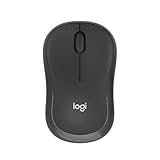
- Pair and Play: With fast, easy Bluetooth wireless technology, you’re connected in seconds to this quiet cordless mouse —no dongle or port required
- Less Noise, More Focus: Silent mouse with 90% reduced click sound and the same click feel, eliminating noise and distractions for you and others around you (1)
- Long-Lasting Battery Life: Up to 18-month battery life with an energy-efficient auto sleep feature, so you can go longer between battery changes (2)
- Comfortable, Travel-Friendly Design: Small enough to toss in a bag; this slim and ambidextrous portable compact mouse guides either your right or left hand into a natural position
- Long-Range: Reliable, long-range Bluetooth wireless mouse works up to 10m/33 feet away from your computer (3)
Keep the domain registered independently of the email provider where practical. If you cancel the mailbox subscription, the domain should remain yours and be ready to point to another host. Fastmail supports domain sharing between users on qualifying plans; iCloud+ allows a custom domain to be shared with up to five other people; Zoho is built around domain administration.
Do these 3 things before closing this tab:
1Scan for outdated or missing drivers - takes under a minute2Clear out junk files and repair common Windows errors3Fix the driver behind crashes, sound loss and screen glitches6. Consider recovery and portability
Privacy and recoverability can pull in opposite directions. A provider with access to your mailbox may be better positioned to restore an account, while a provider designed so it cannot decrypt your mailbox cannot simply read or restore inaccessible contents when you lose the required credentials.
Whichever service you choose:
- Enable two-factor authentication, preferably with a hardware security key or authenticator app.
- Save backup codes offline.
- Add a recovery email or phone only if you are comfortable with the privacy trade-off.
- Do not use one provider mailbox as the only recovery address for every other account.
- Export important mail, contacts, and calendars periodically.
- For a business, keep at least one additional administrator or recovery contact.
Before moving an old archive, check whether the new service accepts IMAP, MBOX, or EML, and whether folders, labels, attachments, inline images, contacts, and calendars transfer correctly. Tuta specifically lists EML and MBOX import through its desktop clients.
Detailed reviews
Gmail: the best overall email service
Choose Gmail if: you want the easiest free option, excellent search, broad compatibility, and tight integration with Google services.
A free Google Account includes 15 GB shared between Gmail, Google Drive, Google Photos, and some other Google data. That is generous for ordinary mail, but it is not 15 GB reserved solely for messages. Large photo libraries, Drive files, and attachments can consume the same quota. Gmail offers labels, filters, categories, archive, snooze, search operators, and mature spam filtering. It also connects naturally to Google Calendar, Docs, Meet, Android, Drive, and Photos.
Gmail uses transport and server-side protections rather than default provider-blind end-to-end encryption. Messages between ordinary Gmail and outside providers should not be treated as E2EE. Google says personal Gmail advertising does not use the contents of messages for ad targeting, but users who want to minimize ecosystem dependence or provider access should consider Proton or Tuta instead.
Free Gmail is not a normal custom-domain host. A professional address under your own domain generally means Google Workspace, which is a separate business-oriented subscription. Gmail does support IMAP, making it comparatively easy to use with desktop clients and migration tools.
Important 2026 watch item: reports about Gmail’s third-party-account features—including POP import, Gmailify, and sending from other accounts—have conflicting effective dates. An August 8, 2026 report discussed January 2027, while an earlier January 6 report described changes beginning in January 2026. The reported Google support page is Google’s Gmail help page; check its live wording before relying on Gmail as a universal inbox for other providers. The August report and January report should be treated as secondary reporting, not as a settled replacement for Google’s documentation.
Skip Gmail if: provider-blind encryption, a provider-independent public address, or freedom from Google’s ecosystem matters more than convenience.
Quick wins for a faster PC:
Fix the driver behind crashes, sound loss and screen glitchesFind Drivers →Clear out junk files and repair common Windows errorsFree Scan →Outlook.com: the best choice for Microsoft users
Choose Outlook.com if: you use Windows, Microsoft 365, OneDrive, Outlook desktop, or Microsoft’s calendar and contacts.
Free Outlook.com includes a 15 GB mailbox, separate from Microsoft’s 5 GB free cloud-storage quota. Microsoft 365 subscribers receive a 100 GB Outlook.com mailbox. The separation sounds helpful, but it creates an important edge case: exceeding either the email quota or the Microsoft cloud quota can prevent sending and receiving.
Outlook.com provides folders, categories, flags, rules, search, snooze, calendar, contacts, and Focused Inbox. Rules apply to new incoming messages and are ordered, so review their order when multiple rules could affect the same mail. Microsoft-account aliases can receive mail and can be used for sending from a different address.
Outlook.com uses a conventional provider-encryption model rather than default provider-blind E2EE. It is a strong practical choice for users who want an integrated productivity account, not for someone selecting an email provider primarily for maximum mailbox privacy.
Recommended Free Tools
Skip Outlook.com if: you dislike Microsoft account dependencies, need a privacy-first encrypted mailbox, or want one simple storage quota with no cloud-service interaction.
Proton Mail: the best mainstream privacy choice
Choose Proton Mail if: you want stronger privacy than Gmail or Outlook without giving up a polished web and mobile experience.
Rank #3

- 【Dual Mode Wireless Bluetooth Mouse】: Switch easily between two devices—connect one via Bluetooth (BT5.2/3.0) and the other using a 2.4G USB receiver. No drivers needed; just plug and play. Enjoy a reliable connection up to 33 feet. Note: You can't use both modes simultaneously; the USB receiver is stored in the mouse.
- 【Rechargeable Wireless Mouse】: Equipped with a 500mAh lithium-ion battery, it charges in 2 hours for over 7 days of use and 30 days on standby. The mouse sleeps after 5 minutes of inactivity to save power and can be woken with any click.
- 【Colorful LED Breathing Light】: Features 7 colorful LED lights that change randomly, adding a fun atmosphere to your workspace.
- 【Portable Mouse】Compact size (4.4 x 2.3 x 1.1 inches) makes it easy to fit in your laptop bag. Lightweight and ergonomic, it's perfect for travel. Contact us anytime for support.
- 【Wide Compatibility】: Works with laptops, PCs, tablets, and smartphones across various operating systems, including Android, Windows, and Mac. Ideal for home, office, and travel.
Proton’s Free plan provides one address and up to 1 GB of dedicated Mail storage. Mail Plus provides up to 15 GB shared with Proton Drive, up to 10 addresses, one custom domain, catch-all support, and Proton Mail Bridge access. Paid plans also support custom domains and additional aliases.
Proton says messages and attachments stored in the mailbox use zero-access encryption, and messages between Proton users are end-to-end encrypted. Proton also supports password-protected messages to ordinary external recipients. That feature is important: a message sent from Proton to a normal Gmail, Outlook, or Yahoo address is not automatically E2EE after it reaches that provider. The sender must use password-protected mail or another compatible encryption method.
Crashes, No Sound, or Screen Glitches?
Random freezes, missing sound and display glitches usually trace back to one bad driver. Find and replace yours safely.Free scan · under a minuteWindows Errors? Fix Them Before They Spread
Repair common Windows errors and clear accumulated junk for a smoother, more stable PC - no reinstall needed.Free scan · no reinstallMessage bodies and attachments receive stronger protection than all metadata. Subject lines and sender and recipient addresses are not end-to-end encrypted in the same way, because mail delivery and useful mailbox operation require some information to remain available.
Proton’s main practical compromise is interoperability. Paid subscribers can use Proton Mail Bridge with supported desktop clients, but free users cannot simply add Proton to Apple Mail, Outlook, or Thunderbird as an ordinary IMAP account. For many users this is a reasonable privacy trade-off; for people with an established local-client workflow, it is a decisive limitation.
Skip Proton if: you require free IMAP access, need a fully conventional mail server, or expect all messages to external recipients to be automatically end-to-end encrypted.
Tuta Mail: the best choice for maximum encryption
Choose Tuta Mail if: your priority is encrypting as much of the mailbox as possible and you accept using Tuta’s own applications.
Tuta says it encrypts the mailbox, message contents, subjects, attachments, contacts, calendar, inbox rules, and search index. Email addresses and dates remain visible because mail delivery requires them. Search is performed against an encrypted index rather than exposing a plaintext server-side index, which is a significant privacy differentiator.
The Free plan includes 1 GB of storage, one calendar, and three labels. Tuta’s listed paid personal tiers include a 20 GB plan with 15 extra addresses and three custom domains, and a 500 GB plan with 30 extra addresses and ten custom domains. Tuta can send encrypted messages to external recipients through a shared password and secure message page.
The trade-off is deliberate and substantial: Tuta does not provide IMAP, POP, or SMTP. You cannot use it as a normal account inside Apple Mail, Outlook desktop, Thunderbird, or another conventional client. Tuta’s open-source web, mobile, and desktop clients are the supported way to access the mailbox.
Skip Tuta if: standard protocols, local mail archives, an existing enterprise client, or multi-provider access are non-negotiable.
Fastmail: the best paid conventional email service
Choose Fastmail if: you are willing to pay for ad-free conventional email, want your own domain, and need standard client compatibility without buying a complete office suite.
Fastmail’s current Individual pricing page lists 60 GB total storage: 50 GB for mail, calendar, and contacts, plus 10 GB for files. The service offers custom domains, additional addresses, masked email, migration tools, calendar, contacts, search, rules, snooze, scheduled sending, and offline support. Fastmail positions its paid service as having no ads or tracking.
Third-party apps are supported on qualifying paid plans. Fastmail’s Basic plan is limited to the provider’s web and mobile apps, so check the exact plan before assuming IMAP access. This is a more conventional architecture than Proton or Tuta: Fastmail’s strengths are paid service, interoperability, aliases, and domain management—not a provider-blind end-to-end-encrypted mailbox.
Fastmail is particularly attractive for a personal domain, family domain, freelancer, or small organization that wants to keep the public address while retaining the ability to migrate later.
What’s actually slowing this PC down?
Pick the symptom - the matching free tool is one click away.
Skip Fastmail if: you need a permanent free plan, want a large ecosystem bundle, or require the strongest end-to-end encryption rather than conventional email with privacy-oriented policies.
Rank #4

- Your hand can relax in comfort hour after hour with this ergonomically designed mouse. Its contoured shape with soft rubber grips, gently curved sides and broad palm area give you the support you need for effortless control all day long.
- You’ve got the control to do more, faster. Flipping through photo albums and Web pages is a breeze, especially for right-handers—with three standard buttons plus Back/Forward buttons that you can also program to switch applications, go full screen and more. And side-to-side scrolling plus zoom gives you the power to scroll horizontally and vertically through your music library, maps and Facebook feeds, and zoom in and out of photos and budget spreadsheets with a click.* * Requires Logitech SetPoint software (Windows) or Logitech Control Center software (Mac OS X)
- Two years of battery life practically eliminates the need to replace batteries. ** The On/Off switch helps conserve power, smart sleep mode extends battery life and an indicator light eliminates surprises. ** Battery life may vary based on user and computing conditions.
- The tiny Logitech Unifying receiver stays in your laptop. There’s no need to unplug it when you move around, so there’s less worry of it being lost. And you can easily add compatible wireless mice and keyboards to the same wireless receiver.
iCloud Mail: the best email service for Apple users
Choose iCloud Mail if: your everyday devices are an iPhone, iPad, and Mac, and you want mail to appear naturally in Apple Mail.
Apple provides 5 GB of free iCloud storage, shared with other iCloud data. iCloud Mail uses that quota, so a full iCloud account can prevent new mail from being received. iCloud+ adds Hide My Email and custom-domain support. Apple allows up to five custom domains, with up to three personalized active addresses per domain, and a domain can be shared with up to five other people.
iCloud Mail supports IMAP and SMTP but not POP. Apple lists imap.mail.me.com on port 993 and smtp.mail.me.com on port 587. Some third-party setups require an app-specific password. Hide My Email is useful for shopping, newsletters, and services where you want to disable an address later.
iCloud Mail is not designed to compete with Zoho, Google Workspace, or Microsoft 365 for advanced business administration, retention, complex shared mailboxes, or broad team controls. It is best understood as integrated personal email for Apple users, especially those already paying for iCloud+.
Skip iCloud Mail if: you use multiple platforms, need extensive administrative controls, or want a privacy architecture equivalent to Tuta or Proton.
Yahoo Mail: the best option for a large casual mailbox
Choose Yahoo Mail if: you want a large free mailbox and do not need a tightly integrated office or device ecosystem.
Yahoo’s standard accounts receive 15 GB of mailbox storage. Yahoo Mail Plus provides 200 GB, and Yahoo says its Mail Plus and storage options can bring the combined total to 1.2 TB. That makes Yahoo useful for newsletters, shopping, secondary accounts, and archives.
The major warning is inactivity. Yahoo says messages may be subject to deletion after 12 months of account inactivity unless the user has Yahoo Mail Plus. This makes Yahoo a poor choice for an address that may be forgotten for long periods. Keep the account active and maintain an independent backup of important mail.
Yahoo uses a conventional provider-encryption model and is not a normal custom-domain hosting choice. It is a practical storage-focused mailbox, but it offers a weaker productivity ecosystem and fewer compelling reasons for a new professional identity.
Zoho Mail: the best low-cost custom-domain business service
Choose Zoho Mail if: you need email at your own domain for a freelancer, small business, or team and want low per-user costs with administrative controls.
Zoho’s free business tier supports up to five users on one domain with 5 GB per user, but the tier is available only in selected data centers. It does not include IMAP, POP, or ActiveSync. That last limitation matters if employees need Apple Mail, Outlook desktop, mobile mail apps, or synchronized business devices.
Recommended Free Tools
Zoho’s listed US pricing shows Mail Lite starting at $1 per user per month billed annually for 5 GB, with a 10 GB tier listed at $1.25 per user per month billed annually. Mail Premium is listed at $4 per user per month billed annually for 50 GB of mail storage plus 50 GB of retention storage. Prices and regional availability should be confirmed at checkout.
Paid plans add custom domains, aliases, IMAP, POP, ActiveSync, migration, and business administration. Zoho also supports up to 29 additional aliases per mailbox. Its wider business ecosystem includes services such as WorkDrive, Writer, Sheet, Cliq, Meeting, and administrative tools.
Skip Zoho if: you want the simplest personal mailbox, do not need a domain, or expect the free tier to work with standard mail clients.
Independent reader supportYour contribution helps us test, update, and keep practical guides available for everyone.Gmail vs. Outlook.com vs. Proton Mail
These are the three most sensible starting points for many readers.
The Tool Desk
Outbyte Driver Updater FREEFix the driver behind crashes, sound loss and screen glitchesFind Drivers →Outbyte PC Repair FREEClear out junk files and repair common Windows errorsFree Scan →Best Value

- 【Plug and Play for Home/Office/School】The wireless computer mouse features 2.4GHz connectivity, delivering a stable, interference-free connection up to 32ft. Designed for 𝐦𝐞𝐝𝐢𝐮𝐦 𝐭𝐨 𝐥𝐚𝐫𝐠𝐞 𝐬𝐢𝐳𝐞𝐝 𝐡𝐚𝐧𝐝𝐬, it ensures comfortable use all day. Simply plug in the USB-A receiver for instant pairing—no drivers needed. 📌📌 If the mouse isn’t suitable, place the USB receiver in the battery compartment and return both.
- 【3 Levels Adjustable DPI】This travel USB mouse offers 3 adjustable DPI settings (800, 1200, 1600), allowing you to customize sensitivity for precise design work. Effortlessly switch to match your task and elevate your productivity. 📌 Please remove the film at the bottom of the mouse before use.
- 【Effortless Browsing】Equipped with forward and backward buttons, this computer mice streamlines your workflow, making it easy to navigate through web pages and files with a simple click. 📌Side button does not work on Mac.
- 【Visible Indicator Light】 The pc mouse features a visual indicator for DPI levels and low battery alerts. The red light flashes once for 800 DPI, twice for 1200 DPI, and three times for 1600 DPI. When the battery level is below 10%, the light flashes red until the mouse is completely out of power.
- 【Click to Wake】With smart sleep mode, it saves power by standby after 10 inactive minutes, just 2-3 clicks to wake. This efficient design delivers 3x longer battery life than motion-wake mice. Engineered for durability, its buttons and scroll wheel are tested for 10 million clicks, ensuring long-term reliability and consistent performance.
| Category | Gmail | Outlook.com | Proton Mail |
|---|---|---|---|
| Free storage | 15 GB shared with Google services | 15 GB mailbox, plus separate 5 GB Microsoft cloud storage | Up to 1 GB dedicated Mail storage |
| Search and organization | Best-in-class search, labels, filters, categories, archive, and snooze | Folders, rules, categories, flags, Focused Inbox, and calendar integration | Labels, folders, filters, aliases, and encrypted search |
| Ecosystem | Drive, Photos, Calendar, Docs, Meet, Android | OneDrive, Office, Teams, Windows, Outlook apps | Drive, Calendar, VPN, Pass, and privacy-focused services |
| Privacy | Not default E2EE; Google says Gmail contents are not scanned for ad targeting | Conventional provider encryption | Zero-access storage encryption and E2EE between Proton users |
| External encryption | No ordinary built-in E2EE for outside recipients | No ordinary built-in E2EE for outside recipients | Password-protected messages can encrypt mail to non-Proton recipients |
| Third-party clients | IMAP | Broad support with authentication considerations | Paid Bridge required |
| Custom domain | Google Workspace rather than free Gmail | Microsoft 365 or business hosting rather than ordinary free Outlook.com | Paid plans |
Choose Gmail for the strongest general-purpose free experience, Outlook.com if your files and work already live in Microsoft 365, and Proton Mail if the privacy model justifies a smaller free mailbox and possible Bridge subscription.
Proton Mail vs. Tuta Mail vs. Fastmail
These three services appeal to people who are more deliberate about email, but they solve different problems.
- Proton Mail is the best balance for a privacy-conscious user who still wants a polished mainstream service. It encrypts stored mail and provides E2EE within Proton, but Bridge is required for standard desktop clients on paid plans.
- Tuta Mail encrypts more mailbox components by default, including subjects and the search index. It is the strongest architecture for maximum privacy, but its lack of IMAP, POP, and SMTP makes it the least interoperable.
- Fastmail is the best paid conventional service. It is easier to use with standard clients and custom domains, but it should not be presented as equivalent to Proton or Tuta for end-to-end encryption.
Best services for a custom domain
| Need | Best fit | Reason |
|---|---|---|
| Personal domain with normal apps | Fastmail | Paid conventional email, custom domains, aliases, migration, and qualifying third-party-client support. |
| Personal domain plus privacy | Proton Mail | Custom domains on paid plans and stronger stored-mail encryption. |
| Maximum encryption | Tuta Mail | Broad mailbox encryption and external password-protected mail, provided users accept Tuta clients. |
| Apple family domain | iCloud+ | Up to five domains, three active addresses per domain, and sharing with up to five other people. |
| Low-cost small business | Zoho Mail | Low per-user pricing, aliases, domain administration, migration, and business controls. |
| Full office-suite business hosting | Google Workspace or Microsoft 365 | Better choices when email must be administered alongside documents, identity, storage, meetings, and collaboration. |
For a professional address, buy and control the domain independently where possible. Keep registrar recovery details separate from mailbox recovery details. A provider can host the mailbox, but ownership of the domain gives you a route to another provider if pricing, features, or policies change.
Important limits and failure modes
When storage fills up
Do not wait for the first failed message. Set a reminder to review storage, especially with Gmail, Outlook.com, and iCloud Mail, where email shares space with other services or quotas.
- In Gmail, delete large Drive files, Photos items, and messages when the shared Google quota is full.
- In Outlook.com, check both the mailbox quota and Microsoft cloud storage quota.
- In iCloud, inspect backups, Photos, Drive, and other iCloud data as well as mail.
- In Proton, be careful when downgrading a plan below the amount of Mail and Drive data already stored.
- With Yahoo, do not confuse large capacity with permanent retention; maintain activity and backups.
When the account is abandoned
Use a domain you control for a long-term professional or family identity. If you use a provider address, log in periodically, maintain recovery options, and export irreplaceable messages. Yahoo’s 12-month inactivity policy deserves particular attention. Google’s over-quota deletion policy also means that a neglected account with a full quota should not be treated as a permanent archive.
When encryption must reach an ordinary recipient
Proton-to-Proton mail is E2EE by default. Proton-to-Gmail is not automatically E2EE after delivery to Gmail. Use Proton’s password-protected message feature or PGP when the content genuinely requires end-to-end protection. Tuta offers a similar password-protected external-mail workflow. The recipient must open a secure page or use the shared password, which creates extra usability and password-recovery friction.
When you need one inbox for several providers
A provider’s web interface may not remain a reliable universal hub. Gmail’s reported changes to third-party-account import and send-as features are especially important to verify before moving other mailboxes into Gmail. Safer approaches include a desktop client with multiple IMAP accounts, a mobile app that supports multiple accounts, or forwarding when replying from the original address is not essential.
When you send newsletters or bulk mail
Do not use a personal Gmail, Outlook.com, Proton, Fastmail, or similar mailbox for legitimate bulk campaigns. Use an email-marketing or transactional-email provider with consent records, unsubscribe handling, domain authentication, and appropriate sending limits. Consumer mailboxes are designed for person-to-person communication, not campaign distribution.
A practical migration checklist
- Choose the identity: decide whether a provider address is sufficient or whether you should own a custom domain.
- Check compatibility: confirm IMAP, POP, SMTP, ActiveSync, Bridge, mobile apps, desktop apps, and export options before paying.
- Secure the account: enable two-factor authentication, save backup codes offline, and add recovery methods.
- Move the archive: test IMAP, MBOX, or EML import with a small folder before moving everything. Confirm folders, labels, attachments, and dates.
- Move contacts and calendars: mail migration does not necessarily include address books and calendars.
- Configure a custom domain carefully: update MX, SPF, DKIM, and DMARC records and test delivery to Gmail, Outlook, and other providers.
- Keep the old account temporarily: forward or monitor it while changing logins, subscriptions, financial accounts, and recovery addresses.
- Export independently: retain a backup that is not dependent on the provider account you are trying to replace.
- Update account recovery: never leave the old mailbox as the only recovery address for important accounts.
Final decision tree
- Want free, familiar, and easy? Gmail.
- Already use Microsoft 365, Windows, OneDrive, or Outlook? Outlook.com.
- Use Apple devices and already pay for iCloud+? iCloud Mail.
- Want privacy without giving up too much convenience? Proton Mail.
- Want the broadest default encryption and accept proprietary apps? Tuta Mail.
- Want paid, ad-free conventional email with your own domain? Fastmail.
- Want inexpensive custom-domain business mail? Zoho Mail.
- Want a large casual mailbox and can keep it active? Yahoo Mail.
Frequently Asked Questions
What is the best free email service?
Gmail is the best free choice for most people because of its search, spam filtering, compatibility, and Google integration. Its 15 GB quota is shared with Google Drive and Photos. Outlook.com is the better free choice for Microsoft users, while iCloud Mail is more natural for Apple users.
Which email service is the most private?
Tuta has the broadest default encrypted-mailbox model in this comparison, including encrypted subjects and search index. Proton Mail is the better balance of privacy and mainstream usability, with zero-access storage encryption and end-to-end encryption between Proton users. Neither service automatically makes every message to an ordinary Gmail or Outlook recipient end-to-end encrypted.
Can Proton Mail or Tuta be used with Apple Mail or Thunderbird?
Proton Mail can be used with supported third-party clients through Proton Mail Bridge, which requires a paid plan. Tuta does not support IMAP, POP, or SMTP, so it must be used through Tuta’s web, mobile, or desktop applications.
Which email service is best for a custom domain?
Fastmail is the strongest paid conventional choice for a personal domain. Zoho Mail is the best low-cost business option. Proton Mail and Tuta are better when privacy is more important than conventional client compatibility, while iCloud+ is convenient for Apple families.
Is a custom-domain email address more secure?
Not automatically. A custom domain improves portability because you can change mailbox providers without changing your public address, but security depends on the mail host, account protection, DNS configuration, and domain registrar security. Configure MX, SPF, DKIM, and DMARC correctly and keep the domain renewed.
What happens when a free email account is inactive?
Policies vary. Yahoo warns that messages may be deleted after 12 months of inactivity unless the user has Mail Plus. Google also has deletion policies for accounts that remain over storage quota for two years. Keep important accounts active and maintain independent backups.
The Bottom Line
For most people, choose Gmail. It remains the strongest all-around free mailbox, provided you accept shared Google storage and ecosystem dependence. Move to Outlook.com for Microsoft integration, iCloud Mail for Apple integration, Proton Mail for privacy, Tuta Mail for maximum encryption, Fastmail for paid conventional email and custom domains, or Zoho Mail for inexpensive small-business hosting. If the address matters professionally or must survive a provider change, own the domain yourself and keep an independent backup.

