
iTechGuides is reader-supported. When you buy through links on our site, we may earn an affiliate commission. As an Amazon Associate I earn from qualifying purchases. Learn more
For most still photographers, the Fujifilm X100VI is the best compact camera overall. Choose the Ricoh GR IV or GR IIIx if you want a smaller everyday-carry street camera, the Sony RX100 VII if you need a 24–200mm-equivalent zoom in your pocket, and the Canon PowerShot V1 if video and livestreaming are the priority. The Canon G7 X Mark III is still worthwhile only at a substantial discount, while the Panasonic LUMIX TZ99/DC-ZS99 is the practical long-zoom travel option.
Compact cameras are not one category anymore. The best choice depends on whether you want the highest still-image quality from a small body, a genuinely pocketable street camera, a long travel zoom, or a creator-focused video tool.
Quick verdicts
| Pick | Best for | What makes it stand out | Main compromise |
|---|---|---|---|
| Fujifilm X100VI | Photography overall | 40.2MP APS-C sensor, stabilized 35mm-equivalent f/2 lens, excellent controls and hybrid viewfinder | Fixed lens, premium price and relatively large body |
| Ricoh GR IV | Pocketable street photography | Very small APS-C body, fast operation and 28mm-equivalent fixed lens | Fixed wide lens and no built-in viewfinder |
| Ricoh GR IIIx | Everyday carry with a normal perspective | 262g APS-C camera with a 40mm-equivalent lens | Fixed lens, no built-in electronic viewfinder |
| Sony RX100 VII | Pocketable zoom | 24–200mm-equivalent optical zoom, built-in EVF and small body | One-inch sensor and slow f/4.5 telephoto end |
| Canon PowerShot V1 | Vlogging and livestreaming | Creator-friendly 16–50mm zoom, vari-angle screen, fan and microphone/headphone ports | Larger body and little telephoto reach |
| Canon PowerShot G7 X Mark III | Bright-lens value when discounted | 24–100mm-equivalent f/1.8–2.8 zoom and one-inch sensor | Older autofocus and video platform |
| Panasonic LUMIX TZ99 / DC-ZS99 | Affordable long-zoom travel | 30x optical zoom in a conventional travel-camera design | Small sensor and weaker low-light performance |
How to read this guide: These are specification-led editorial recommendations synthesized from manufacturer information and published review coverage, not claims of personal hands-on testing. Prices, stock and regional model names can change, so treat availability as a point-in-time check rather than a permanent ranking.
1. Fujifilm X100VI: best compact camera for photography
The Fujifilm X100VI is the most complete small camera here for still photographers who want image quality, direct controls and a deliberate shooting experience. It combines a 40.2-megapixel APS-C X-Trans CMOS 5 HR sensor with a fixed 23mm f/2 lens, equivalent to 35mm on a full-frame camera.
That combination is versatile enough for travel, family photography, documentary work and everyday images. The 35mm-equivalent view is wide enough for environmental scenes but still natural for people and details. Its five-axis in-body stabilization is rated at up to six stops, which can help when photographing static subjects in lower light. The camera also has Fujifilm’s hybrid optical/electronic viewfinder, an articulating touchscreen and 6.2K video recording.
Popular on Amazon
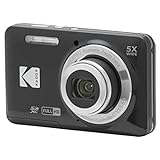
- 16MP Sensor: Captures detailed photos with a CMOS sensor for everyday shooting
- Optical Zoom: 5x optical zoom with a 28mm wide angle lens for flexible framing indoors or outdoors
- Full HD Video: Records 1080p video for travel clips, family moments, or simple vlogging
- Memory Support: Works with Class 10 SD, SDHC, or SDXC cards up to 512GB
- Rechargeable Battery: Included LB-012 lithium-ion battery charges in the camera over USB with the supplied adapter in about 2 hours; charge it for at least 4 hours before first use to maximize battery life
The fixed lens is both the X100VI’s appeal and its defining limitation. There is no optical zoom. You need to be comfortable moving yourself, composing with a 35mm-equivalent perspective, or using the camera’s digital tele-converter modes when a tighter view is needed. A 478g body with battery and card is also noticeably larger and heavier than the Sony RX100 VII or either Ricoh GR model. It is small compared with an interchangeable-lens camera, but it is not the most discreet pocket camera.
Choose it if: you want one premium compact primarily for photography and value a large sensor, tactile controls, a viewfinder and a classic fixed-lens experience.
Skip it if: you need a true zoom, a very small trouser-pocket body, or a camera designed mainly for video.
2. Ricoh GR IV: best truly pocketable street camera
The Ricoh GR IV is the strongest choice for photographers who want an APS-C camera small enough to carry constantly. Its design prioritizes fast access to exposure controls, quick startup and spontaneous still photography over viewfinder use, long zooms or creator features. It uses a 26-megapixel-class APS-C sensor, a fixed 18.3mm lens equivalent to 28mm, and sensor-shift stabilization.
The 28mm-equivalent lens gives a wider documentary perspective than the X100VI or GR IIIx. It works well for street scenes, architecture, travel documentation and candid everyday images where you want to show the surroundings. The small body and snap-focus approach also suit photographers who prefer setting distance and exposure quickly rather than waiting for a conventional autofocus workflow.
This is a specialist camera, not a miniature travel zoom. The lens cannot zoom, and there is no built-in viewfinder. Framing is done on the rear screen, which is part of the camera’s minimalist design. If you regularly photograph distant subjects, want a traditional eye-level shooting experience, or find 28mm too wide for people, another model will be easier to live with.
Windows Errors? Fix Them Before They Spread
Repair common Windows errors and clear accumulated junk for a smoother, more stable PC - no reinstall needed.Free scan · no reinstallCrashes, No Sound, or Screen Glitches?
Random freezes, missing sound and display glitches usually trace back to one bad driver. Find and replace yours safely.Free scan · under a minuteChoose it if: your top priority is carrying an excellent stills camera everywhere and you prefer a wide 28mm-equivalent view.
Skip it if: you need optical versatility, a built-in EVF or a camera that is equally strong for video.
3. Ricoh GR IIIx: best compact camera for a 40mm perspective
The Ricoh GR IIIx takes the GR concept in a more general-purpose direction with a fixed 26.1mm f/2.8 lens equivalent to approximately 40mm. Its 24.24-megapixel APS-C sensor and three-axis sensor-shift shake reduction give it the image-quality and stabilization advantages expected from a serious stills camera, while its 262g body remains exceptionally light.
A 40mm-equivalent lens is often more comfortable than 28mm for portraits, street details, food, travel scenes and subjects that should fill more of the frame. It is still wide enough for many everyday situations, but it produces a less expansive perspective and asks you to stand slightly farther from people than a wider lens would.
The GR IIIx shares the GR IV’s essential trade-offs: a fixed lens, no built-in electronic viewfinder and a stills-first operating philosophy. It is a better fit than the GR IV when you find 28mm too wide, but it is not a replacement for a zoom camera. The GR IIIx also makes less sense for buyers whose main goal is sustained video or livestreaming.
Choose it if: you want a genuinely pocketable APS-C camera and prefer a normal-ish 40mm-equivalent perspective for people, details and everyday photography.
Also popular on Amazon

- 16MP Sensor: Captures detailed photos with a CMOS sensor for everyday shooting
- Optical Zoom: 4x optical zoom with a 27mm wide angle lens for flexible framing indoors or outdoors
- Full HD Video: Records 1080p video for travel clips, family moments, or simple vlogging
- Memory Support: Works with Class 10 SD, SDHC, or SDXC cards up to 512GB
- LCD Screen and Battery: 2.7in LCD screen with 2 AA alkaline batteries for convenient on-the-go use
Skip it if: you need a wide view for interiors and street scenes, an EVF, or a zoom lens.
4. Sony RX100 VII: best pocketable compact zoom
The Sony RX100 VII is the most versatile small zoom in this group. Its 20.1-megapixel one-inch stacked CMOS sensor sits behind an 8x optical zoom covering 24–200mm equivalent. It also includes a tilting touchscreen and a built-in electronic viewfinder.
Recommended Free Tools
That 24–200mm range is the reason to buy it. At the wide end, it handles travel scenes, buildings and group photographs. In the middle of the range, it works for ordinary snapshots and portraits. At 200mm equivalent, it can bring distant sightseeing subjects, performances and modestly distant wildlife closer without changing lenses.
The compromise is sensor size and aperture. The one-inch sensor is physically smaller than the APS-C sensors in the Fujifilm and Ricoh cameras, and the lens reaches a maximum aperture of f/4.5 at the telephoto end. That is a meaningful disadvantage indoors, at dusk or whenever you want strong background separation. The RX100 VII is therefore a versatility winner, not the outright image-quality winner.
The design is also quite slim, with limited grip area. Some photographers will appreciate the small footprint; others will want a wrist strap or a case with better handling. Although the model is mature rather than new, Sony continues to maintain support resources and software-compatibility information for it. Retail availability and pricing can vary substantially by region and seller, so compare current authorized, used and refurbished stock before buying.
Choose it if: one small camera must cover the widest range of travel situations and you do not want to change lenses.
What’s actually slowing this PC down?
Pick the symptom - the matching free tool is one click away.
Skip it if: your priority is the best low-light stills quality, shallow depth of field, or a fast prime-lens shooting experience.
5. Canon PowerShot V1: best compact camera for video-first creators
The Canon PowerShot V1 is a different proposition from the fixed-lens Ricoh and Fujifilm cameras. Canon positions it as a video/still hybrid built around a 1.4-type 22.3-megapixel sensor, a built-in 16–50mm-equivalent zoom for stills, optical and digital image stabilization, a vari-angle screen, microphone and headphone connections, and a built-in cooling fan.
Its Dual Pixel CMOS AF II autofocus, screen that faces the operator, audio connectivity and thermal management make it the clearest recommendation here for vlogging, livestreaming, product demonstrations and talking-head video. Canon also supports USB video and audio functions and Camera Connect livestreaming workflows. The fan is particularly important for creators who need more sustained recording than a slim, stills-first compact is designed to provide.
The lens is optimized for arm’s-length video rather than distant-subject photography. A 16–50mm-equivalent range is useful for keeping yourself in frame and for small indoor setups, but it does not offer the reach of the Sony RX100 VII or the 100mm-equivalent end of the G7 X Mark III. The 426g body is also larger than the most pocketable options.
Do these 3 things before closing this tab:
1Scan for outdated or missing drivers - takes under a minute2Repair Windows errors before they cause bigger problems3Fix the driver behind crashes, sound loss and screen glitchesChoose it if: you need a compact creator camera with a vari-angle display, headphone and microphone ports, USB workflows and cooling for extended video.
Skip it if: you mainly shoot distant travel subjects, want maximum pocketability, or care more about a fast stills prime than video ergonomics.
Also popular on Amazon
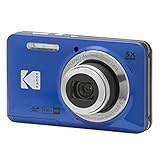
- 16MP Sensor: Captures detailed photos with a CMOS sensor for everyday shooting
- Optical Zoom: 5x optical zoom with a 28mm wide angle lens for flexible framing indoors or outdoors
- Full HD Video: Records 1080p video for travel clips, family moments, or simple vlogging
- Memory Support: Works with Class 10 SD, SDHC, or SDXC cards up to 512GB
- Rechargeable Battery: Included LB-012 lithium-ion battery charges in the camera over USB with the supplied adapter in about 2 hours; charge it for at least 4 hours before first use to maximize battery life
6. Canon PowerShot G7 X Mark III: best bright-lens value when discounted
The Canon PowerShot G7 X Mark III remains attractive when its price is substantially below newer or more capable alternatives. It has a 20.1-megapixel stacked one-inch sensor, a 24–100mm-equivalent 4.2x zoom and a bright f/1.8–2.8 maximum aperture. Canon’s specifications also list 4K recording and a tilting screen.
The bright lens is its main advantage. It is useful for indoor snapshots, food photography, casual portraits and social video, where the wide aperture can help maintain faster shutter speeds or produce more background blur than a slower travel zoom. The 24–100mm range is shorter than Sony’s 24–200mm, but the brighter aperture makes the Canon more comfortable in many ordinary low-light situations.
This is an older platform, so its autofocus and video features should not be treated as equivalent to the PowerShot V1. Demand for small creator cameras can also push the G7 X Mark III’s price above what its age justifies. Check the price against newer models, and do not mistake an inflated listing for a bargain. Canon continues to provide specifications and firmware information through its support pages, but support availability and retail inventory are separate questions.
Choose it if: you find a reasonably priced unit from a reputable seller and want a bright, compact general-purpose zoom.
Skip it if: its price approaches the cost of a newer creator camera, you need a 200mm-equivalent reach, or you want the latest autofocus and video workflow.
7. Panasonic LUMIX TZ99 / DC-ZS99: best long-zoom travel compact on a budget
The Panasonic LUMIX TZ99 / DC-ZS99 is the practical travel choice for buyers who care more about reach and convenience than premium low-light image quality. Panasonic lists it as a compact travel-zoom model with a Leica-branded 30x optical zoom and 4K video support. The TZ99 and DC-ZS99 naming can vary by market, so confirm the exact regional model before ordering accessories or downloading manuals.
The Tool Desk
Outbyte PC Repair FREERepair Windows errors before they cause bigger problemsFix Now →Outbyte Driver Updater FREEFix the driver behind crashes, sound loss and screen glitchesFind Drivers →A 30x zoom is useful for vacations, sightseeing, family trips and city travel, particularly when carrying interchangeable lenses is undesirable. It gives you far more reach than the X100VI, GR cameras or Canon V1 in a conventional point-and-shoot format.
The trade-off is the smaller sensor. Expect less low-light flexibility and less control over depth of field than from an APS-C camera. This is a convenience camera for getting a broad range of subjects into reach, not an enthusiast compact intended to match the image quality or handling of the Fujifilm and Ricoh models.
Choose it if: you want a light travel camera with much more optical reach than premium fixed-lens compacts provide.
Skip it if: you regularly shoot indoors or at night, want strong background separation, or expect advanced stills controls.
Free tools Windows power users keep installed
One-click scans. No signup required.
Fixed lens or zoom: the decision that matters most
Before comparing megapixels, decide whether you can live without optical zoom. The X100VI, GR IV and GR IIIx use fixed lenses. That allows each camera to be designed around one focal length and keeps the lens-and-sensor combination relatively compact, but it requires you to move your feet and accept the camera’s perspective.
- Choose the X100VI for a 35mm-equivalent view, a viewfinder, direct controls and the strongest all-round stills package.
- Choose the GR IV for a wider 28mm-equivalent documentary view and the smallest APS-C street camera in this selection.
- Choose the GR IIIx for a tighter 40mm-equivalent view that suits portraits, details and everyday carry.
- Choose a zoom if you photograph distant subjects, cannot move freely, or need one camera for architecture, people and wildlife at modest distances.
Sensor size: what you gain and what you give up
The APS-C sensors in the Fujifilm X100VI and Ricoh GR models are physically larger than the one-inch sensors in the Sony RX100 VII and Canon G7 X Mark III. In broad terms, APS-C gives the Fujifilm and Ricoh cameras more room to deliver low-light flexibility, control over depth of field and high-resolution stills. The larger sensor does not automatically make every photograph better, however: lens choice, subject distance, stabilization, autofocus and the photographer’s ability to carry the camera all matter.
Also popular on Amazon

- 16MP Sensor: Captures detailed photos with a CMOS sensor for everyday shooting
- Optical Zoom: 5x optical zoom with a 28mm wide angle lens for flexible framing indoors or outdoors
- Full HD Video: Records 1080p video for travel clips, family moments, or simple vlogging
- Memory Support: Works with Class 10 SD, SDHC, or SDXC cards up to 512GB
- Rechargeable Battery: Included LB-012 lithium-ion battery charges in the camera over USB with the supplied adapter in about 2 hours; charge it for at least 4 hours before first use to maximize battery life
One-inch cameras earn their place through smaller zoom designs. The RX100 VII’s 24–200mm range is a much more useful travel tool than a fixed 35mm or 40mm lens when you cannot get closer to a subject. The G7 X Mark III uses its smaller sensor with a brighter 24–100mm lens, making it a sensible casual and indoor option when discounted.
Independent reader supportYour contribution helps us test, update, and keep practical guides available for everyone.Which compact camera should you buy?
For the best photography experience
Buy the Fujifilm X100VI if its fixed 35mm-equivalent lens suits you and the larger body is acceptable. It is the most balanced stills-oriented choice, with the highest listed resolution here, stabilization, a viewfinder and a strong control layout.
Quick wins for a faster PC:
Repair Windows errors before they cause bigger problemsFix Now →Fix the driver behind crashes, sound loss and screen glitchesFind Drivers →Clear out junk files and repair common Windows errorsFree Scan →For everyday carry and street photography
Choose between the Ricoh GR IV and Ricoh GR IIIx by focal length rather than by general reputation. The GR IV’s 28mm-equivalent lens is better for context-rich scenes and tight spaces. The GR IIIx’s 40mm-equivalent lens is better when you prefer a more natural, subject-focused frame. Neither has a built-in viewfinder, so make sure screen-based composition suits you.
For travel when you need one lens to do everything
Buy the Sony RX100 VII. Its 24–200mm-equivalent zoom is the most convincing reason to accept a one-inch sensor. It is especially useful for sightseeing, events and distant subjects, but remember that the telephoto end is relatively slow at f/4.5.
For vlogging, livestreaming and creator work
Choose the Canon PowerShot V1. The vari-angle screen, fan, audio ports, stabilization and USB-oriented workflow make it materially different from a traditional compact camera. Its short zoom should be viewed as a benefit for arm’s-length video, not a flaw, unless you also need serious telephoto reach.
For the lowest sensible price
Look at the Panasonic LUMIX TZ99 / DC-ZS99 for long-zoom travel, or the Canon G7 X Mark III if you find a genuinely discounted, reputable listing. Do not pay a scarcity premium for an older model simply because it is small. Compare new, used and refurbished inventory, check the seller’s condition description and verify that the battery, charger and screen are in the advertised package.
Free tools Windows power users keep installed
One-click scans. No signup required.
Buying new, used or refurbished
Compact-camera pricing is unusually volatile. Popular models such as the X100VI and G7 X Mark III can have uneven stock, while older cameras such as the RX100 VII may remain available through some sellers but not others. A fair comparison should distinguish authorized new stock from used and refurbished inventory; the cheapest listing is not automatically the best value.
- New from an authorized retailer: the simplest route for warranty coverage and a known accessory package.
- Used: potentially worthwhile for mature models, but inspect the lens, zoom mechanism, screen, dials, ports, battery compartment and sensor for dust or damage.
- Refurbished: consider it when the refurbisher explains what was inspected, what warranty applies and which accessories are included.
For the RX100 VII and G7 X Mark III in particular, compare the asking price with newer alternatives before buying. For the X100VI and GR models, also account for the fact that paying more does not buy zoom flexibility; you are paying for a particular stills experience and sensor-and-lens combination.
Accessories worth buying
Accessories should solve a specific ownership problem rather than be added as a generic bundle. A compact camera case can protect a small body in a bag, while a wrist strap reduces the risk of dropping a camera when shooting one-handed. A screen protector, USB-C card reader and small travel tripod can also be useful depending on how you work.
Battery and charging compatibility
Check the exact camera before buying a spare camera battery or charger. For the X100VI, Fujifilm lists the NP-W126S battery and BC-W126S charger among compatible accessories. It also lists the PRF-49 protector filter, AR-X100 adapter ring, LH-X100 hood and X100 conversion lenses. Those parts are not universal: do not assume a filter, hood or battery advertised for another X100-series body will fit or perform identically.
What’s actually slowing this PC down?
Pick the symptom - the matching free tool is one click away.
Memory cards for 4K video
Buy a UHS-I SD card for camera only after checking the individual model’s recording modes and required write speed. A card that works for ordinary stills may not support every 4K or high-bitrate setting. The relevant requirement is the camera’s specified speed class and capacity limit, not simply the card’s advertised storage size. Format the card in the camera before important shoots and carry a second card if a trip cannot be repeated.
Creator accessories
For the Canon PowerShot V1, Canon identifies creator-focused accessories including a Bluetooth grip and compatible microphones. Match the microphone and grip to the V1’s connections and control functions rather than buying a generic creator kit. A camera travel tripod is useful for self-recording, product demonstrations and static livestream setups, but a small tabletop model will not replace a stable full-size tripod outdoors.
Compact camera comparison by priority
| If your priority is… | Start with… | Why |
|---|---|---|
| Maximum stills quality in a small, traditional camera | Fujifilm X100VI | APS-C sensor, 40.2MP resolution, stabilization, viewfinder and 35mm-equivalent f/2 lens |
| The smallest serious street camera | Ricoh GR IV | APS-C sensor, fixed 28mm-equivalent lens and fast minimalist operation |
| A pocketable camera for people and details | Ricoh GR IIIx | 40mm-equivalent view and 262g body |
| One pocket camera for wide and distant subjects | Sony RX100 VII | 24–200mm-equivalent optical zoom and built-in EVF |
| Vlogging and livestreaming | Canon PowerShot V1 | Vari-angle screen, cooling fan, audio ports, creator stabilization and USB functions |
| Bright lens at a reduced price | Canon PowerShot G7 X Mark III | 24–100mm-equivalent f/1.8–2.8 zoom, if priced sensibly |
| Maximum travel reach on a budget | Panasonic LUMIX TZ99 / DC-ZS99 | 30x optical zoom and 4K support |
Final buying advice
Start with the lens you can live with. Pick the X100VI for a premium 35mm-equivalent photography experience, the GR IV for a wider pocketable street camera, or the GR IIIx for a more normal 40mm perspective. Pick the RX100 VII when zoom range matters more than sensor size. Choose the V1 when video, audio and sustained recording are the job. The G7 X Mark III is worth considering only at a sensible discount, while the TZ99/DC-ZS99 is the practical long-zoom travel choice.
There is no single compact camera that combines the X100VI’s APS-C stills quality, the RX100 VII’s 200mm reach, the Ricohs’ minimal size and the V1’s creator hardware. The right purchase is the one whose compromise matches the way you actually shoot.
Recommended Free Tools
The Bottom Line
Bottom line: The Fujifilm X100VI is the best overall compact for photography, the Ricoh GR IV and GR IIIx are the best everyday-carry choices, the Sony RX100 VII is the most versatile pocketable zoom, and the Canon PowerShot V1 is the strongest video-first option. Buy the G7 X Mark III only when discounted, and choose the Panasonic TZ99/DC-ZS99 when long travel zoom matters most.

