
Recommended Free Tools
The 7 best language learning apps of 2025 depend on your goal: Duolingo is best for free habit-building, Babbel for structured adult study, Pimsleur for audio and travel, Busuu for community feedback, Memrise for native-speaker video, Rosetta Stone for immersion-style practice, and italki for live conversation. No single app guarantees fluency.
That distinction matters because “language learning app” can mean very different things. Some apps build a daily routine through short exercises; others teach a sequenced course, train spoken recall, expose you to natural video, or connect you with a human tutor. The right choice depends on your target language, current level, budget, available time, and the skill you need most.


This guide ranks seven mainstream options by use case rather than pretending there is one universal winner. Prices and features can change by country, platform, billing period, promotion, and account, so verify the final terms on the official product page before subscribing.
Key takeaways
- Duolingo is the strongest low-cost starting point because its core lessons remain free, while Super and Max add convenience and AI features.
- Babbel is the better fit for adults who want explicit explanations, practical dialogues, and a more conventional course sequence.
- Pimsleur emphasizes audio-led prompted speaking, while italki provides the most direct access to individualized human conversation.
- Memrise, Busuu, and Rosetta Stone solve different problems: native-speaker exposure, community feedback, and immersion-style repetition respectively.
- Completing an app course is not the same as becoming fluent; extended listening, original speaking, writing, and feedback still matter.
What are the 7 best language learning apps of 2025?
The best language learning apps of 2025 are best understood as winners for specific learners, not as an objective one-to-seven quality ranking. The following table gives the short answer.
| App | Best for | Main learning method | Course structure | Speaking practice | Free or paid signal | Main limitation |
|---|---|---|---|---|---|---|
| Duolingo | Free learners and daily habits | Gamified short lessons | Sequenced lessons with level progression that varies by language | Pronunciation and prompted exercises; limited open conversation | Core learning is free; Super and Max are paid tiers | Streaks and short exercises can outpace spontaneous communication |
| Babbel | Structured adult study | Explanations, dialogues, and course progression | More textbook-like and controlled than a game-based app | Dialogue and guided production | Primarily a paid subscription; check current offer | Narrower language selection and less appeal for free-only learners |
| Pimsleur | Travel, commuting, and audio learners | Listening and prompted recall | Audio-led course sequence | Frequent spoken responses without relying on a screen | Paid service; current cost varies by plan and location | Weak fit for extensive writing and visual grammar |
| Busuu | Structure plus community corrections | Course lessons, grammar, and user feedback | Organized levels with CEFR framing for supported material | Recorded or written production with community responses | Free and premium availability varies by plan and region | Correction speed and quality depend on the community |
| Memrise | Native-speaker video and phrases | Phrase exposure, review, and real-speaker clips | Better as a supplement than a complete curriculum | Exposure and recall more than sustained dialogue | Plan structure and features can change | Vocabulary recognition does not automatically create free conversation |
| Rosetta Stone | Immersion-style repetition | Images, context, repetition, and pronunciation | Systematic but translation-light | Pronunciation practice and modeled production | Paid plans and occasional lifetime offers; verify current terms | Grammar may feel opaque and progression can feel slow |
| italki | Live lessons and accountability | One-to-one instruction with independent teachers | No single fixed curriculum; depends on the teacher | Open-ended human conversation and correction | Pay per lesson or package; cost depends on teacher and frequency | Teacher quality, scheduling, and syllabus consistency vary |
How should you define “best” in a language learning app?
The best app is the one that fits the skill you need to develop and the study behavior you can sustain. Before comparing brands, evaluate course structure, target-language coverage, speaking, listening, grammar, writing correction, review, motivation, offline access, price, privacy, AI limitations, and the app’s proficiency ceiling.
- Course structure: A clear sequence helps learners who need a syllabus, while flexible practice may suit casual learners.
- Language coverage: An app’s reputation does not guarantee equally deep courses for every language, level, or variety.
- Speaking: Repeating a sentence, answering a predictable prompt, and having an open conversation are three different activities.
- Listening: Check whether the app offers only slow, scripted audio or also varied voices, accents, and natural-speed material.
- Grammar: Some apps explain rules directly; others expect learners to infer patterns from examples.
- Writing and correction: Human correction is different from automated matching or feedback from another learner.
- Retention: Spaced review can help recall, but recognizing a flashcard is not the same as producing language in context.
- Motivation: Streaks and points can support consistency, but lesson completion is not a measure of conversational ability.
- Practical constraints: Offline access, screen-free audio, subscription terms, and privacy may matter as much as teaching method.
Which app is best for free daily practice?
Duolingo: best free app and best for building a habit
Duolingo is the best first choice when low cost and daily consistency matter most. Short lessons, game-like feedback, and a low-friction interface make Duolingo especially useful for absolute beginners, casual learners, travelers starting ahead of a trip, and people who struggle to study regularly.
Duolingo says its core learning content remains free. The company describes Super as a paid tier that removes ads and adds convenience features such as unlimited hearts, while Max adds AI features including Video Call, Explain My Answer, and Roleplay. Feature availability and plan details can change, so check the official Duolingo site for the offer available to your account.
Duolingo’s weakness is the same feature that makes it easy to use: many activities are short and highly prompted. A learner can become excellent at recognizing the expected answer while still struggling to understand an unpredictable speaker, write an original paragraph, or maintain a conversation. Course depth also varies by language.
Verdict: Choose Duolingo if you need a free starting point or an app that helps you study every day. Keep Duolingo for review, then add real listening and speaking once basic sentences become familiar.
Which app offers the best structured course for adults?
Babbel: best structured course for adult learners
Babbel is the strongest fit for adults who want a more conventional course rather than a game-first experience. Babbel emphasizes explanations, practical dialogues, and a sense of progression, which can appeal to learners who want to understand why a sentence works instead of collecting points for completing an exercise.
Babbel’s course-style approach makes it a useful alternative to Duolingo for learners who value explicit instruction. Independent comparison coverage places Babbel among the more structured and conversation-oriented mainstream options, while the official Babbel site is the appropriate place to check current languages, plans, and subscription terms.
Babbel is not the best choice for every learner. Language selection is narrower than Duolingo’s, and a well-organized course still cannot provide the range of spontaneous interaction that comes from speaking with varied people. Subscription pricing is also promotion-sensitive, so do not treat an old review’s price as a permanent list price.
Quick wins for a faster PC:
Clear out junk files and repair common Windows errorsFree Scan →Fix the driver behind crashes, sound loss and screen glitchesFind Drivers →Verdict: Choose Babbel when you want a textbook-like path, practical dialogues, and explanations and are willing to pay for structure.
Which app is best for speaking and travel?
Pimsleur: best audio-first app for speaking and travel
Pimsleur is the best choice in this group for audio-first, prompted speaking practice. Pimsleur asks learners to listen, recall, and say useful language, making the service suitable for commuters, walkers, travelers, and people who do not want to spend every study session looking at a screen.
Independent testing describes Pimsleur lessons as hands-free and focused on speech and conversation. The official Pimsleur site should be used to confirm the current language catalog, plan, and access terms.
Pimsleur is less suitable as a complete literacy course. Audio-led learning does not automatically provide extensive spelling, reading, written correction, or visual grammar explanations. Pimsleur can also cost more than a gamified app, particularly if the learner wants several languages or studies for a long period.
The Tool Desk
Outbyte PC Repair FREERepair Windows errors before they cause bigger problemsFix Now →Outbyte Driver Updater FREEFix the driver behind crashes, sound loss and screen glitchesFind Drivers →Pimsleur is useful for travel phrases, but travel readiness has limits. Real conversations include regional accents, politeness conventions, interruptions, and unexpected vocabulary that a scripted course may not cover.
Verdict: Choose Pimsleur if the immediate goal is understanding and saying useful spoken phrases, especially while traveling or studying away from a desk.
italki: best for real human conversation
italki is the strongest option here for open-ended conversation because it connects learners with individual teachers rather than relying solely on automated exercises. A learner can look for teachers by language, availability, price, specialty, and lesson style, then use lessons for conversation, pronunciation correction, interview preparation, exam practice, or accountability.
italki is a category exception: it is a teacher marketplace, not one fixed self-study course. Lesson quality, price, scheduling, and curriculum consistency depend on the teacher. A learner who wants a syllabus should ask the teacher to provide one instead of assuming that every conversation lesson follows a complete progression. Explore the official italki marketplace for the current teacher and lesson options.
italki is also not automatically cheap. A low per-lesson price can become a substantial recurring cost when lessons are frequent, while irregular lessons may not create enough accountability or retrieval practice.
Verdict: Choose italki when the main obstacle is speaking with another person, not completing more app exercises. Pair it with a self-study course if you also need systematic grammar and vocabulary progression.
Which app is best for feedback and organized levels?
Busuu: best for structured study plus community corrections
Busuu is the best middle ground for learners who want organized lessons and occasional feedback from other users. Busuu combines course-style material and grammar content with opportunities to submit exercises for correction by members of its community, including speakers of the target language.
Community feedback can be valuable because it gives learners a reason to produce language rather than only recognize answers. The trade-off is variability: response speed, detail, and accuracy depend on who responds. A community correction is not automatically equivalent to expert instruction or a paid teacher.
Rank #3
Busuu’s CEFR framing can help learners understand the intended level of supported material, but CEFR alignment should be checked for the specific language and level rather than assumed across the entire catalog. Current plans and availability should be confirmed on the official Busuu site.
Verdict: Choose Busuu if you want more structure than a social practice feed and more human input than a completely solitary course, without booking regular one-to-one lessons.
Which app is best for natural phrases and native-speaker video?
Memrise: best for native-speaker video and phrase exposure
Memrise is the best supplement in this list for hearing native speakers use everyday phrases. Native-speaker clips can expose learners to pronunciation, rhythm, and expressions that feel less artificial than isolated textbook sentences. Review and phrase practice can also help learners retain useful vocabulary.
Memrise is usually a better companion to a systematic grammar course than a complete curriculum by itself. Familiarity with phrases does not guarantee that a learner can adapt those phrases to a new situation, write accurately, or sustain a conversation. Product structure and plan features have changed over time, so older reviews may not describe the current service. Check the official Memrise site before subscribing.
Outdated Drivers Are Slowing You Down
One free scan finds every outdated or missing driver and matches the right update for your exact hardware.Free scan · exact hardware matchPC Slower Than It Used to Be?
A free scan shows the junk files, broken settings and background clutter dragging Windows down - then fixes them in one click.Free scan · Windows 10 & 11Verdict: Choose Memrise when the learner needs natural audio and phrase exposure, particularly alongside Babbel, Duolingo, a class, or a tutor.
Which app is best for immersion-style learning?
Rosetta Stone: best for translation-light practice
Rosetta Stone is the best fit for learners who prefer inferring meaning from images and context instead of receiving frequent direct translations. The method is repetition-heavy and strongly associated with contextual, translation-light lessons and pronunciation practice.
Rosetta Stone can suit learners who enjoy an immersive-feeling routine and do not mind working out patterns from examples. The same method can frustrate learners who want a concise explanation of a grammar rule or faster progression through familiar material. App-based immersion should not be confused with real-world immersion: Rosetta Stone does not replace spontaneous social interaction and varied live input.
Plans and lifetime offers can change. Confirm the current language coverage and purchase terms on the official Rosetta Stone site rather than relying on an old “lifetime” promotion.
Free tools Windows power users keep installed
One-click scans. No signup required.
Verdict: Choose Rosetta Stone if contextual repetition feels intuitive to you and explicit grammar explanations are not essential to staying motivated.
How do the speaking methods differ?
“Speaking practice” is not one thing. The seven apps differ substantially in how much original language the learner must produce and whether another person responds.
Rank #4
| Speaking type | What the learner does | Best match in this list | What it does not prove |
|---|---|---|---|
| Pronunciation imitation | Repeats a model sentence or phrase | Duolingo or Rosetta Stone | That the learner can form original sentences or manage turn-taking |
| Prompted production | Recalls an answer to a predictable audio prompt | Pimsleur | That the learner understands unpredictable real speech |
| Phrase exposure | Watches and reviews native-speaker expressions | Memrise | That the learner can adapt vocabulary freely |
| Community production | Submits writing or speech for user responses | Busuu | That every correction is expert, fast, or complete |
| Open-ended conversation | Expresses original thoughts with a responsive person | italki | That one tutor provides a complete course unless you arrange one |
For conversational ability, a combination often works better than one app: Pimsleur plus italki adds recall practice to human interaction; Babbel plus italki adds a structured course to personalized correction; and Duolingo plus italki keeps the self-study cost low while adding real speaking.
Which app is best for beginners?
Duolingo is best for beginners whose biggest problem is starting and practicing consistently. Babbel is better for beginners who want explicit explanations and a conventional sequence. Pimsleur is better when a beginner needs basic spoken phrases for an upcoming trip. Busuu suits beginners who want a course with opportunities for community feedback, while Rosetta Stone suits beginners comfortable inferring meaning from context. Memrise is most useful as a supplement, not as the only beginner curriculum.
Beginners should check the target language before subscribing. Verify whether the app offers the desired language, how far the course progresses, whether explanations are available from English, whether speech recognition handles the language, whether native-speaker recordings are included, and whether the app teaches the desired variety, such as European or Latin American Spanish.
Which app should you choose for a specific goal?
| Your priority | Best starting choice | Why | What to add or verify |
|---|---|---|---|
| Spend as little as possible | Duolingo | Core lessons are free and easy to start | Add real listening and speaking; verify the target-language course depth |
| Follow a clear adult curriculum | Babbel | Explanations, dialogues, and progression are central | Add conversation if speaking is a priority |
| Prepare for basic travel interactions | Pimsleur | Audio-led recall supports saying useful phrases away from a screen | Practice regional variation, politeness, and unscripted listening |
| Receive occasional corrections | Busuu | Community exercises add a feedback layer | Do not treat community feedback as guaranteed expert teaching |
| Hear everyday native-speaker phrasing | Memrise | Native-speaker video and phrase exposure are its strengths | Use a structured course for grammar and progression |
| Learn through context and repetition | Rosetta Stone | Translation-light image-based practice suits immersion-style learners | Choose another resource if explicit grammar is important |
| Speak with a real person | italki | One-to-one lessons provide responsive interaction and correction | Choose a teacher and agree on goals, materials, and lesson format |
Are language learning apps effective?
Language learning apps can improve vocabulary, grammar, reading, listening, pronunciation, and study consistency, but no app should be described as a universal fluency guarantee. “Fluent” is not one standardized endpoint, and progress depends on the language pair, the learner’s first language, previous knowledge, study time, and amount of real-world interaction.
Duolingo’s published efficacy material describes a framework for evaluating course mastery and real-world communication. Duolingo also reports improvement across reading, writing, speaking, and listening in selected studies and has published peer-reviewed research comparing particular outcomes with university study. Those findings apply to the specified courses, learners, and tests; they do not establish that every learner will become fluent in every language. Because Duolingo develops the product and reports much of this evidence, readers should treat the findings as attributed company research rather than universal independent proof. See the Duolingo efficacy framework, its reported efficacy studies, and the company’s peer-reviewed research announcement.
Separate course completion, test performance, self-reported confidence, and real-world communicative ability. A learner can finish a course and still need practice understanding natural-speed speech, producing original language, writing, handling register and politeness, or responding when a conversation does not follow a scripted prompt.
What’s actually slowing this PC down?
Pick the symptom - the matching free tool is one click away.
What are the best app combinations?
| Goal or budget | Primary resource | Supplement | Division of labor |
|---|---|---|---|
| Lowest-cost foundation | Duolingo free tier | Free native or graded listening plus occasional conversation practice | Duolingo supplies routine; outside material supplies longer listening and original use |
| Speaking and travel | Pimsleur | italki | Pimsleur builds prompted recall; a teacher adds unscripted interaction and correction |
| Structured adult study | Babbel | italki | Babbel supplies sequence and explanations; a tutor supplies personalized speaking |
| Vocabulary and natural audio | Memrise | Babbel, Busuu, or another structured course | Memrise supplies phrase exposure; the primary course supplies grammar and progression |
Using more than one app is worthwhile only when each product has a clear job. A primary course plus one speaking or listening supplement is usually easier to sustain than several overlapping subscriptions.
Independent reader supportYour contribution helps us test, update, and keep practical guides available for everyone.How should you compare prices and free plans?
Do not compare language-app prices using a single headline number. Monthly, annual, family, lifetime, website, and app-store offers can all differ, and promotions may make an old review’s price misleading. Calculate the annual amount divided by the number of months you realistically expect to use the service, then compare that cost with the number of lessons or study sessions you will actually complete.
Duolingo explicitly presents core learning as free, with paid tiers focused on removing friction and adding features. Third-party reports have shown examples such as a Duolingo family plan priced at $9.99 per month or $119.99 annually during one NBC Select testing period, but that example is not a universal current price. The NBC Select comparison illustrates why every price needs a date, plan type, country, currency, and billing route.
For Babbel, Pimsleur, Busuu, Memrise, and Rosetta Stone, verify the exact checkout offer on the official site before purchase. For italki, avoid a monthly price claim because the effective cost depends on the teacher, lesson length, frequency, and package discounts.
Do these 3 things before closing this tab:
1Scan for outdated or missing drivers - takes under a minute2Repair Windows errors before they cause bigger problems3Fix the driver behind crashes, sound loss and screen glitchesBest Value
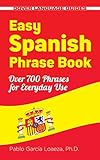
- Designed as a quick reference tool and an easy-to-use study guide, this inexpensive and up-to-date book offers fast, effective communications.
- The perfect companion for tourists and business travelers in Spain and Latin America, it features words, phrases, and sentences that cover everything from asking directions to making reservations
- Over 700 conveniently organized expressions include terms for modern telecommunications as well as phrases related to transportation, shopping, services, medical and emergency situations, and other common circumstances.
- A phonetic pronunciation accompanies each phrase.
Before starting a trial or subscription
- Confirm the trial duration and whether the trial renews automatically.
- Record the renewal date and the amount that will be charged after the trial or promotion.
- Check whether cancellation must occur through Apple, Google, or the vendor’s own account page.
- Read the refund and cancellation policy before paying.
- Test the actual target language, not merely the app’s demonstration course.
- Treat lifetime access as access under the product’s current terms, not a guarantee that content, features, or the business will never change.
Why do learners finish an app course but still struggle to speak?
Course completion can leave a learner unable to speak when practice has emphasized recognition, predictable prompts, and short answers instead of free production, natural listening, error correction, and turn-taking. A streak measures consistency; it does not measure whether a learner can order food, explain a problem, understand a fast speaker, or maintain a five-minute conversation.
- Keep the app for review rather than abandoning useful vocabulary and grammar practice.
- Add regular speaking sessions, using italki or another human conversation resource when possible.
- Listen to graded or native material at a level where the learner can follow the main meaning.
- Write short original responses and obtain correction.
- Return to grammar explanations only when a specific grammar gap blocks communication.
- Track recall, comprehension, and completed real-world tasks instead of tracking points alone.
What should you know about AI conversation features?
AI conversation can provide abundant, low-pressure practice and simulate common situations, but AI feedback should not automatically be treated as authoritative instruction. AI may accept unnatural wording, miss pragmatic or cultural errors, produce an inaccurate explanation, or reward an answer that a human speaker would not normally use.
Use AI roleplay as an opportunity to produce more language, not as proof that your grammar, register, or politeness is correct. Human teachers and experienced speakers remain more useful when the goal involves nuanced correction, professional communication, exam writing, or culturally appropriate phrasing.
What should you check for Japanese, Spanish, French, German, or another specific language?
Overall app rankings do not transfer equally to every language. Before paying, verify the exact course direction and level coverage, because an app may support a language in one base language but not from English, or may offer a strong beginner course without comparable intermediate and advanced material.
Recommended Free Tools
- Does the app offer your target language and preferred variety?
- Does the course include beginner, intermediate, and advanced content?
- Are grammar notes available in English or your strongest language?
- Does speech recognition handle the target language reliably enough for practice?
- Are recordings made by native speakers, and do they include varied voices?
- Does the app teach the writing system adequately for Arabic, Japanese, Korean, Hindi, Greek, and other scripts?
- Does the app require productive use, or mostly test one-way recognition?
For exam preparation, also check the required level, tested variety, writing correction, timed tasks, exam vocabulary, and official practice materials. A general app may support foundation-building but should not automatically be the primary preparation resource for a formal examination.
Final recommendations
Start with Duolingo if cost and habit-building are the deciding factors. Choose Babbel for structured adult learning, Pimsleur for audio-first travel preparation, Busuu for organized study with community feedback, Memrise for native-speaker phrases, Rosetta Stone for translation-light repetition, and italki for individualized live conversation.
The most effective setup for many learners is not a single winner. Use one primary course, add the missing skill—usually open speaking or extended listening—and judge progress by what you can understand and communicate, not by streak length or course completion.
Frequently Asked Questions
What is the best free language learning app in 2025?
Duolingo is the best free language learning app for most beginners because its core lessons remain free and its short, gamified sessions make daily practice easy. Duolingo is not a complete replacement for extended listening, writing correction, or human conversation.
What is the best language learning app for speaking?
italki is the best option in this list for open-ended speaking because learners talk with individual human teachers who can adapt lessons and provide correction. Pimsleur is the better audio-first choice for prompted speaking practice, especially for travel.
Is Duolingo enough to become fluent?
Duolingo can support vocabulary, grammar, reading, listening, pronunciation, and consistent study, but Duolingo alone is not a universal guarantee of fluency. Learners seeking real-world communicative ability should add natural listening, original speaking, writing, and feedback.
Is Babbel better than Duolingo?
Babbel is better for learners who want explicit explanations, practical dialogues, and a structured adult course. Duolingo is better for learners who prioritize free access, low friction, and gamified daily habit-building.
Should I use more than one language learning app?
Using two resources can help when each has a distinct role, such as Babbel for structured lessons and italki for speaking or Memrise for native-speaker video. Avoid multiple overlapping subscriptions unless you can explain exactly what each resource contributes.
Free tools Windows power users keep installed
One-click scans. No signup required.
The Bottom Line
Bottom line: There is no universal best language learning app. Duolingo is the best free habit builder, Babbel the best structured adult course, Pimsleur the best audio-first option, Busuu the best community-feedback middle ground, Memrise the best native-video supplement, Rosetta Stone the best immersion-style choice, and italki the best route to live conversation. Choose for the skill you need—not for the biggest feature list.
Quick Recap
Product prices and availability are accurate as of the date/time indicated and are subject to change. Any price and availability information displayed on Amazon at the time of purchase will apply.

