
The Tool Desk
Outbyte PC Repair FREEClear out junk files and repair common Windows errorsFree Scan →Outbyte Driver Updater FREEFix the driver behind crashes, sound loss and screen glitchesFind Drivers →iTechGuides is reader-supported. When you buy through links on our site, we may earn an affiliate commission. As an Amazon Associate I earn from qualifying purchases. Learn more
The Canon EOS R6 Mark II is the best overall camera for low light in this 2026 selection, with strong noise handling, low-light autofocus tracking, and five-axis image stabilization. The Panasonic LUMIX S5 II is the better full-frame hybrid for serious video, while the Sony ZV-E1 leads for low-light video and the Canon EOS R50 suits beginners on a budget.
The right choice depends on more than sensor size. A fast lens, dependable autofocus, stabilization, subject movement, and the difference between stills and video can matter just as much. The six recommendations below separate those priorities instead of treating every low-light camera as interchangeable.
Key takeaways
- The Canon EOS R6 Mark II is the overall pick for low-light photography because independent testing found strong noise control, subject tracking in dim conditions, and five-axis image stabilization.
- The Panasonic LUMIX S5 II is the better full-frame hybrid when internal 10-bit recording, 4K/60p video, and a broad choice of codecs matter as much as still-image quality.
- The Sony a6700 is the strongest smaller APS-C option, combining in-body stabilization, advanced autofocus, 4K/120p video, and a broad lens ecosystem.
- The Nikon Z 5 is a good entry-level full-frame choice for stills and night photography, but its cropped 4K and slower burst rate limit it for advanced video.
- The Canon EOS R50 is the best budget choice for beginners, while the Sony ZV-E1 is the specialist choice for low-light video and vlogging.
How were these low-light cameras selected?
The recommendations are based primarily on RTINGS’ independent testing and category assessments, not on hands-on testing by iTechGuides. RTINGS says it independently purchased and tested more than 100 cameras with a standardized methodology and keeps products in its lab inventory for retesting. Its low-light guide was updated December 17, 2024, although the guide is titled for 2026 coverage. Read the full RTINGS low-light camera testing and methodology for the testing context.
Do these 3 things before closing this tab:
1Repair Windows errors before they cause bigger problems2Scan for outdated or missing drivers - takes under a minute3Clear out junk files and repair common Windows errorsLow-light performance is not determined by the camera body alone. Sensor size, lens aperture, autofocus, stabilization, subject movement, and video requirements all change which camera is the best choice. A full-frame camera generally provides more room in dim conditions, but an APS-C camera with a fast f/1.4 lens can be more useful than a full-frame camera paired with a slow kit zoom.
Popular on Amazon

- 50 millimeter focal length and maximum aperture of f/1.8
- Great for portraits, action, and nighttime photography; Angle of view (horizontal, vertical, diagonal): 40º, 27º,46º
- Minimum focusing distance of 1.15 feet (0.35 meter) and a maximum magnification of 0.21x
- Stepping motor (STM) delivers near silent, continuous move Servo AF for movies and smooth AF for stills
- 80 millimetre effective focal length on APS C cameras, 50 millimetre on full frame cameras. Lens construction: 6 elements in 5 groups
Which camera is the best for low light?
The Canon EOS R6 Mark II is the best overall low-light camera in this selection. It is the broadest recommendation for still photographers who also want capable video. RTINGS praises its noise handling, low-light autofocus tracking, and five-axis in-body image stabilization. Those traits matter when a scene is dark, a subject is moving, or a handheld shot cannot use a tripod.
The R6 Mark II is a full-frame mirrorless camera, so it offers the sensor-size advantage that many low-light photographers want without being limited to one specialist type of shooting. It suits indoor events, street photography after dark, portraits, travel, and general-purpose hybrid work.
RTINGS’ category scores for the Canon EOS R6 Mark II include 8.6 for Raw Photo and 9.0 for Studio Video, in testing updated December 17, 2024. Those scores belong to RTINGS’ testing categories and should not be treated as directly comparable with manufacturer ISO or autofocus specifications.
Free tools Windows power users keep installed
One-click scans. No signup required.
Before buying the Canon EOS R6 Mark II, budget for the lens system as well as the body. Canon’s RF lens selection is comparatively limited in the cited comparison, so check the availability and cost of the fast prime or zoom lens you actually need. The body is the overall recommendation, but a wide-aperture lens remains essential for extracting its low-light advantage.
What are the six best cameras for low light?
| Camera | Best for | Low-light strengths | Main limitation |
|---|---|---|---|
| Canon EOS R6 Mark II | Overall stills and hybrid use | Strong noise handling, low-light autofocus tracking, five-axis IBIS | Comparatively limited RF lens selection in the cited guide |
| Panasonic LUMIX S5 II | Full-frame stills plus serious video | Good noise performance, internal 10-bit recording, 4K/60p, extensive formats and codecs | Autofocus is not as strong as the Canon’s according to the cited testing |
| Sony Alpha a6700 | Travel, action, and smaller kits | IBIS, sophisticated autofocus, 4K/120p, broad native and third-party lens choice | APS-C gives less low-light margin than full frame |
| Nikon Z 5 | Entry-level full-frame stills | Full-frame image quality, stabilization, strong fit for night photography | Cropped 4K recording and slower burst rate |
| Canon EOS R50 | Budget beginners and smartphone upgraders | Small body, simple controls, respectable low-light performance for its class | Relatively limited lens selection |
| Sony ZV-E1 | Low-light video and vlogging | Low-light-optimized full-frame sensor, IBIS, compact run-and-gun body | Less robust build than the Sony Alpha 7S III and FX3 |
Why choose the Panasonic LUMIX S5 II for low-light video?
The Panasonic LUMIX S5 II is the strongest full-frame hybrid alternative when video is a priority. The camera combines low-light noise performance with internal 10-bit recording, 4K/60p capture, and a wide selection of formats and codecs. That makes it more suitable than the Nikon Z 5 for a buyer who expects to grade footage or build a serious hybrid setup.
Panasonic lists native ISO values of 100 and 640 in the standard picture profile, with extended settings reaching ISO 204800. Panasonic also rates the S5 II’s five-axis B.I.S. at 5 stops, or Dual I.S. 2 at 6.5 stops with compatible equipment. These are Panasonic’s stated specifications, not directly comparable laboratory results from RTINGS. See the official Panasonic LUMIX S5 II specifications for the conditions and compatible-equipment qualifications.
Also popular on Amazon

- [Easy-to-Use Warm Tips] - ⚠Fully manual, Non-autofocus(Advantages: precise focus control, creative freedom, high adaptability, stability and durability, and learning value) lens has no electronic contacts for focusing. Switch the camera to full manual (M) mode immediately after installation, otherwise the "no lens" error may be triggered; ⚠If the error still occurs, you need to enable the "Release shutter without lens" option in the camera menu.
- [Professional Manual Focus Experience] - Tailored for photographers who pursue the ultimate, the 85mm F1.8 lens adopts a fully manual focus design, requiring photographers to carefully adjust parameters such as shutter speed, ISO and aperture before shooting. This process not only exercises photographic skills, but also inspires unlimited artistic creativity, helping you to transcend conventions and explore the infinite possibilities of photography.
- [Superb Image Quality & Charming Bokeh] - The 85mm F1.8 lens is equipped with 6 rounded aperture blades, a smooth large focus ring design, and an internal focus (IF) mechanism to ensure fast and quiet focusing. The fusion of hybrid aspherical lens (H-ASP) and ultra multi-coating (UMC) technology effectively reduces aberrations and glare, presenting unparalleled clear image quality and dreamy background blur effects, making every shot of yours full of artistic atmosphere.
- [Wide Compatibility with Canon DSLRs] - Lightdow 85mm F1.8 Portrait Lens is perfectly compatible with Canon EOS Rebel T8i/T7i/T7/T6s/T6i/T6/T5i/T5/T4i/T3i/T3/T2i/T1i/XSi/XS/SL3/SL2/SL1(100D) & Digital Rebel/XTi/XT/T100(4000D) & EOS 90D/80D/77D/70D/60D/50D/40D/30D/20D/10D/7D Mark II/7D/6D Mark II/6D/5DS R/5DS/5D Mark IV/5D Mark III/5D Mark II/5D & EOS-1D X Mark III/1D X Mark II/1D X/1Ds Mark III/1Ds Mark II/1Ds/1D Mark IV/1D Mark III/1D Mark II/Mark II N/1D.
- [Professional After-Sales Support] - We provide comprehensive after -sales service, including lens maintenance and replacement during the warranty period, so that you can use 85mm F1.8 Manual Focus Portrait Lens.If you have any questions please feel free to contact us, we will provide friendly service within 24 hours.
The trade-off is autofocus. The cited testing places the S5 II behind the Canon EOS R6 Mark II for autofocus performance, so the Canon is safer for unpredictable moving subjects in dark environments. Panasonic’s L-Mount system does, however, offer lenses from Panasonic, Leica, and Sigma, giving hybrid shooters useful ways to build a fast lens kit.
Recommended Free Tools
Is the Sony a6700 good for low light?
Yes, the Sony Alpha a6700 is a strong low-light camera for buyers who want a smaller APS-C system. The a6700 has in-body image stabilization, sophisticated autofocus, and video recording up to 4K/120p. Its compact size makes it attractive for travel, street photography, action, and smaller lightweight kits.
APS-C sensors generally provide less low-light margin than full-frame sensors, but the difference should be judged alongside the lens. RTINGS specifically points to Sigma’s f/1.4 APS-C primes as suitable low-light options for the a6700. Sony’s native lens range and third-party support also make it easier to find a fast prime without switching systems. The relevant RTINGS comparison of the Sony a6700 and suitable fast-lens options supports that system-level recommendation.
Choose the a6700 over a full-frame body when portability, autofocus, 4K/120p, and lens choice matter more than obtaining the maximum possible sensor-size advantage. Choose the R6 Mark II or S5 II when darker scenes and full-frame depth-of-field control are the higher priorities.
Is the Nikon Z 5 the best entry-level full-frame camera for night photography?
The Nikon Z 5 is a good entry-level full-frame camera for night photography and stills, but not the best choice for advanced video. Its full-frame sensor and in-body stabilization make it a sensible step into low-light photography, particularly for landscapes, city scenes, travel, and static subjects.
The Z 5’s main weaknesses are its cropped 4K recording and slower burst rate. Those limitations matter for video, fast action, and subjects that require repeated frames. For still photographers who value full-frame image quality more than rapid shooting or advanced video formats, the Z 5 is easier to recommend.
Also popular on Amazon
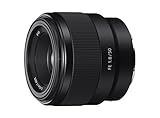
- Large F1. 8 maximum aperture enables beautiful defocusing effects
- 7-blade circular aperture creates beautiful defocused bokeh
- Compact, lightweight design Ideal for full-frame e-mount cameras
- Aspherical element controls spherical aberration and coma
- Double-gauss configuration suppresses field curvature & distortion
Do not confuse the Nikon Z 5 recommendation with Nikon’s newer Z5II specification page. Nikon lists the Z5II with a standard stills ISO range up to ISO 64000 and approximately ISO 204800 equivalent expansion; those figures describe the Z5II and should not be presented as specifications for the original Z 5. Nikon’s official Z5II specifications are useful as a current product reference, not as a substitute for testing the Z 5.
Which budget camera performs best in low light?
The Canon EOS R50 is the best budget low-light camera for beginners. The R50 is especially well suited to people moving from smartphone photography to an interchangeable-lens camera because it is portable, relatively simple to operate, and delivers respectable low-light results for its class.
The largest compromise is the relatively limited RF lens selection identified in the cited comparison. A beginner should therefore consider the cost and availability of a fast prime lens before choosing the system. The R50 can be a better practical purchase than a more capable but larger camera if its owner is more likely to carry it and use it.
The R50 is not the best choice for a demanding low-light professional workflow, high-end video production, or maximum autofocus and stabilization performance. It is the value-oriented recommendation for indoor family photos, casual travel, social video, and a first camera body.
What is the best camera for low-light video and vlogging?
The Sony ZV-E1 is the specialist pick for low-light video and vlogging. RTINGS says the ZV-E1 uses the same low-light-optimized sensor family as Sony’s high-end Alpha 7S III and FX3, while putting full-frame imaging, IBIS, and a compact body into a run-and-gun-oriented camera.
The ZV-E1 makes the most sense for creators who regularly record handheld video indoors, at night, or in changing light. Its compact design is convenient for vlogging and mobile production, but the body is less robust than the Alpha 7S III and FX3. A creator who needs the strongest physical build for demanding professional use should treat the ZV-E1 as the lighter specialist option rather than a direct replacement for those higher-end models.
Also popular on Amazon
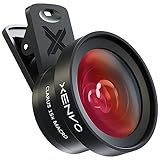
- ✔ COMPATIBLE WITH ALL SMARTPHONES, TABLETS, and LAPTOPS including ALL iPhone models, Samsung Galaxy and Note, Google Pixel, Huawei and more. CONTENTS INCLUDE: TruView 0.45x Wide Angle Lens, Clarus 15x Macro Lens, TruGrip Lens Clip, GlowClip Mini Rechargeable LED Light + Charging Cable, Quick-Release Lanyard, DuraCase, EasyClip, and Cleaning Cloth.
- ✔ TRUVIEW 0.45x WIDE ANGLE LENS - CAPTURE 45% MORE PICTURE WITH EVERY SNAP: Shoot stunning photos of people, pets, travel scenery, landscapes, architecture, selfies and more. NO DARK CORNERS (vignetting) like cheaper lenses. Crafted from aircraft-grade aluminum and premium optical glass for durability and clarity. Multi-element, coated glass lenses minimize ghosting, reflections, lens flare, and other artifacts. Xenvo cell phone lens attachment is ideal for hobbyists and photography pros alike.
- ✔ CLARUS 15x MACRO LENS - MARVEL YOUR SENSES. MAGNIFY NEARBY SUBJECTS FOR BREATHTAKING, SUPER CLOSE-UP PHOTOS: Capture all the intricacies and details with precision-focus for razor crisp macro photos every time. (For best results, position macro lens approximately 1/2 inch from subject. Not designed for zooming in on distant subjects.) THE TRUGRIP LENS CLIP offers SUPERIOR GRIPPING POWER to fasten your lenses to your cell phone when you're in action mode, framing your next perfect shot.
- ✔ GLOWCLIP RECHARGEABLE LED FILL LIGHT - The GlowClip LED light clips ANYWHERE on your phone to instantly illuminate your subject and surroundings with warm continuous light. The warm and natural LED light is superior to your smartphone's built in flash—which can be blinding and unnatural—especially in darker settings and venues. FEATURES 3 BRIGHTNESS SETTINGS: Low, Medium and High. Say goodbye to frustrating photo "retakes" and hello to brilliant photos the first time.
- ✔ QUICK-RELEASE LANYARD AND TRAVEL CASE - TRANSPORT AND PROTECT YOUR LENS KIT: Perfect for taking your Xenvo lenses with you on the fly. The travel case stores and protects all lens kit components snugly and safely while the quick-release lanyard is the perfect way to carry your lenses on your next outing. Just drape the lanyard and lens around your neck. The quick-release lanyard head makes it a cinch to access your Xenvo lenses in a flash so you never miss another photo moment.
For still photography, the R6 Mark II remains the broader recommendation. For a video-first buyer who values a compact full-frame body and low-light imaging above stills ergonomics, the ZV-E1 is the more targeted choice.
What’s actually slowing this PC down?
Pick the symptom - the matching free tool is one click away.
Is full frame better for low light?
Full frame is generally better for low light, but full frame is not automatically the best low-light system. A larger sensor can provide more low-light margin, while a fast lens determines how much light reaches the sensor and how quickly the camera can shoot. An APS-C camera such as the Sony a6700 can perform very well when paired with an f/1.4 or f/1.8 lens.
Lens maximum aperture is one of the most important specifications to compare. A wider aperture lets more light reach the sensor and supports a faster shutter speed. For a low-light kit, compare a camera body and lens together rather than comparing two bodies with different kit lenses.
| Low-light factor | What it helps with | What it cannot solve |
|---|---|---|
| Full-frame sensor | Provides a generally larger margin in dim conditions | Cannot compensate for a slow lens, poor focus, or subject motion |
| Fast f/1.4, f/1.8, or f/2 lens | Admits more light and can support faster shutter speeds | Does not prevent camera shake by itself |
| IBIS | Reduces blur from the photographer’s movement at slower shutter speeds | Cannot freeze a moving person, animal, or vehicle |
| Low-light autofocus | Improves the chance of locking onto a subject in darkness | Cannot create detail where the scene has insufficient light |
| Tripod or other support | Enables long exposures for static scenes | Does not keep moving subjects sharp during a long exposure |
How should you choose a low-light camera lens?
Choose the fastest practical lens that fits the subject and camera system. An f/1.4 prime is often a strong low-light choice for portraits, street scenes, and indoor work; an f/1.8 prime can offer a smaller and less expensive alternative; and an f/2 lens may balance light-gathering ability with autofocus, size, and flexibility.
The trade-off is depth of field. A very wide aperture can leave only part of a subject sharp, which may be desirable for a portrait but inconvenient for a group indoors. A fast zoom offers framing flexibility but may not be as bright as a prime, particularly at the long end. The best purchase is the lens that provides enough light while matching the subject’s movement, desired framing, and acceptable depth of field.
What do stabilization and shutter speed actually do in darkness?
IBIS helps reduce camera-shake blur when the camera is handheld at a slower shutter speed. IBIS does not freeze subject movement. A stationary building can remain sharp with a stabilized long exposure, while a moving person can still blur even when the camera itself is stabilized.
Also popular on Amazon

- LENS ATTACHMENT: Easily screws on to the front of your lens, and instantly expands the field of view for breathtaking wide-angle photography. Features a detachable macro lens for extremely high-resolution close-ups of small objects.
- LENS COMPATIBILITIES: Popular 58MM Lens models including Canon EF-S 18-55mm f/4-5.6 IS STM, Canon EF-S 55-250mm f/4-5.6 IS STM, Canon EF 75-300mm f/4-5.6 III USM, Canon EF-S 18-55mm f/3.5-5.6 IS STM, Canon EF 85mm f/1.8 USM, Canon EF 50mm f/1.4 USM, Nikon AF-P DX NIKKOR 70-300mm f/4.5-6.3G ED VR, Nikon AF-S NIKKOR 50mm f/1.8G, Nikon AF-S NIKKOR 50mm f/1.4G, Olympus M.Zuiko Digital ED 40-150mm f/4-5.6 R, Lumix G X Vario 12-35mm f/2.8 II, Fujifilm XC 16-50mm f/3.5-5.6 OIS II
- Compatible with the following cameras when paired with a 58mm thread size lens: Canon EOS Rebel T7, T7i, T6i, T6, T6s, T5i, T5, T4i, T3i, T100, SL3, SL2, SL1, 90D, 80D, 77D, 70D, 1100D, 700D, 650D, 600D, 550D, 7D Mark II, 6D Mark II, 5DS, 5D Mark II, 1D Mark II, M3, M5, M6, M10, M50, M100, M200, R, and RP.
- NOTE: PLEASE VERIFY YOUR CAMERA'S LENS THREAD SIZE BEFORE ORDERING. This Wide-Angle is compatible with 58MM lenses only. Lens sizes vary regardless of camera brand or model. Your camera's lens thread size will be marked somewhere on the lens barrel or printed underneath your lens cap. This number is always preceded by a ''Ø'' (diameter) symbol. For example: Ø58 = 58mm lens thread size.
For night landscapes and architecture, a tripod can allow a low ISO and long shutter speed. For people, events, and action, a faster shutter speed is usually more important, which increases the value of a fast lens, a capable sensor, and reliable low-light autofocus. For video, stabilization improves handheld motion but does not replace adequate shutter-speed, lighting, or audio decisions.
What about the Canon EOS R5 Mark II and Nikon Z5II?
The Canon EOS R5 Mark II and Nikon Z5II appear in the research as technical reference points, not as replacements for the six editorial recommendations above. Canon lists the EOS R5 Mark II’s focusing brightness range down to EV -7.5 with an f/1.2 lens under Canon’s stated test conditions. That specification illustrates why lens choice and test conditions must remain attached to any low-light autofocus claim. Review the official Canon EOS R5 Mark II specifications for the stated conditions.
Nikon’s ISO figures cited above belong to the Z5II, while the editorial recommendation in this article is the Nikon Z 5. Manufacturer specifications from different brands and models are not direct substitutes for standardized independent test results, and ISO expansion settings should not be treated as a promise of clean, usable images at the highest number.
Crashes, No Sound, or Screen Glitches?
Random freezes, missing sound and display glitches usually trace back to one bad driver. Find and replace yours safely.Free scan · under a minutePC Slower Than It Used to Be?
A free scan shows the junk files, broken settings and background clutter dragging Windows down - then fixes them in one click.Free scan · Windows 10 & 11Which camera should you buy?
- Choose the Canon EOS R6 Mark II for the best all-round balance of low-light stills, autofocus, stabilization, and hybrid capability.
- Choose the Panasonic LUMIX S5 II when serious video formats and full-frame hybrid work matter as much as still photography.
- Choose the Sony a6700 when you want a smaller body, strong autofocus, 4K/120p, and a broad fast-lens ecosystem.
- Choose the Nikon Z 5 for affordable full-frame night photography and stills, provided advanced video and fast bursts are not priorities.
- Choose the Canon EOS R50 when you are a beginner who needs a small, straightforward, budget-oriented first interchangeable-lens camera.
- Choose the Sony ZV-E1 when low-light video and vlogging are more important than stills-focused controls and rugged construction.
Whichever body you select, reserve part of the budget for a fast lens. For night landscapes and static subjects, a tripod can be more valuable than a body upgrade. Video users should also account for suitable memory cards, spare batteries, and a microphone, but current prices, inventory, bundles, and accessory compatibility should be checked at publication time.
Frequently Asked Questions
What is the best camera for low light?
The Canon EOS R6 Mark II is the best overall camera for low light in this selection. The full-frame mirrorless camera combines strong noise handling, low-light autofocus tracking, and five-axis in-body stabilization, making it the broadest choice for stills and hybrid shooting.
Is full frame better for low light?
Full frame is generally better for low light, but a fast lens can matter more than sensor size in a specific setup. An APS-C camera with an f/1.4 or f/1.8 lens can outperform a full-frame camera paired with a slower lens for some indoor or night subjects.
What is the best camera for low-light video?
The Sony ZV-E1 is the best specialist choice for low-light video and vlogging in this selection. It combines a low-light-optimized full-frame sensor with IBIS and a compact body, although its construction is less robust than the Sony Alpha 7S III and FX3.
Quick wins for a faster PC:
Repair Windows errors before they cause bigger problemsFix Now →Fix the driver behind crashes, sound loss and screen glitchesFind Drivers →Clear out junk files and repair common Windows errorsFree Scan →Do I need a fast lens for low-light photography?
Yes, a fast lens is highly useful for low-light photography because a wider maximum aperture lets more light reach the sensor and supports faster shutter speeds. Consider f/1.4, f/1.8, or f/2 lenses, while accounting for depth of field and framing.
The Bottom Line
Bottom line: The Canon EOS R6 Mark II is the best general-purpose choice for low-light photography in this researched selection. Pick the Panasonic LUMIX S5 II for a more video-focused full-frame kit, the Sony ZV-E1 for low-light video, the Sony a6700 for a smaller APS-C system, the Nikon Z 5 for entry-level full-frame stills, or the Canon EOS R50 for a budget beginner setup.

