
The Tool Desk
Outbyte Driver Updater FREEFix the driver behind crashes, sound loss and screen glitchesFind Drivers →Outbyte PC Repair FREEClear out junk files and repair common Windows errorsFree Scan →iTechGuides is reader-supported. When you buy through links on our site, we may earn an affiliate commission. As an Amazon Associate I earn from qualifying purchases. Learn more
The best budget mirrorless camera in 2026 for most beginners is the Canon EOS R50: its 24.2MP APS-C sensor, subject-detection autofocus, electronic viewfinder, vari-angle screen, and uncropped 4K video make it the strongest all-around choice. Nikon, Fujifilm, Panasonic, and Sony offer better fits for specific system, travel, video, and vlogging priorities.
This U.S.-focused shortlist compares five cameras by documented specifications, kit pricing, autofocus, video features, portability, viewfinders, and lens systems. The recommendations are not based on hands-on or laboratory testing, and prices and availability should be rechecked before purchase.
Key takeaways
- The Canon EOS R50 is the safest all-around beginner choice because it combines a 24.2MP APS-C sensor, strong subject-detection autofocus, an electronic viewfinder, a vari-angle screen, and uncropped 4K video.
- The Nikon Z50II is the better fit for buyers who prefer Nikon controls or plan to build around Nikon’s Z-mount DX system.
- The Fujifilm X-M5 is the lightest listed body at approximately 307g without a battery or memory card, and it is especially appealing for compact video and film-simulation workflows.
- The Panasonic LUMIX G100D is a lightweight creator and travel specialist with a Micro Four Thirds mount, 4K video, a free-angle display, and spatial-audio features.
- The Sony a6400 remains a strong autofocus and vlogging option, with Sony listing 0.02-second autofocus, 425 phase-detection points, 4K/30p video, and an 11fps continuous-shooting rate.
Which is the best budget mirrorless camera in 2026?
The best budget mirrorless camera in 2026 for most beginners is the Canon EOS R50. Its 24.2MP APS-C sensor, Dual Pixel CMOS AF II with people, animal, and vehicle detection, electronic viewfinder, vari-angle touchscreen, and uncropped 4K video create the strongest balance of photography, family use, travel, and beginner-friendly video. The Nikon Z50II is the better Nikon-system choice, while the Fujifilm X-M5, Panasonic G100D, and Sony a6400 win for more specific creator, travel, or autofocus priorities.
Free tools Windows power users keep installed
One-click scans. No signup required.
These are use-case recommendations rather than laboratory rankings. The shortlist is based on official specifications, manufacturer retail information, documented kit configurations, and system fit; no hands-on, lab, battery, image-quality, or low-light testing was performed. Prices, promotions, stock, and included accessories can change, so verify the final kit immediately before buying.
Popular on Amazon

- Beginner-Friendly Mirrorless Power: The Canon EOS R100 offers an accessible entry into mirrorless photography with a 24.1MP APS-C CMOS sensor and DIGIC 8 image processor, delivering vibrant, detailed images and smooth video. Designed for everyday shooters and first-time DSLR users, this compact camera balances quality and ease-of-use, providing auto scene modes and simplified menu navigation for a seamless learning curve.
- Versatile RF-S 18-45mm Lens Included: This kit comes with the Canon RF-S 18-45mm f/4.5-6.3 IS STM lens, perfect for general-purpose shooting. From family portraits and daily snapshots to travel landscapes and vlogs, this zoom lens delivers sharp results and smooth autofocus. Built-in image stabilization helps reduce shake, making handheld photography more stable and enjoyable.
- Dual Pixel CMOS Autofocus for Sharp Results: Canon’s reliable Dual Pixel CMOS AF ensures fast and accurate focusing, especially when tracking people, faces, or stationary subjects. The system covers a wide portion of the frame and adjusts effortlessly between stills and video—ideal for capturing life’s moments as they happen, without missing a beat.
- Key Features: 24.2MP APS-C CMOS Sensor, DIGIC 8 Image Processor, 4K 24p Video with Crop, Full HD 60p, Dual Pixel CMOS AF with 143 AF Zones, 6.5 fps Electronic Shutter, 2.36m-Dot OLED EVF, 3" 1.04m-Dot LCD Screen, Wi-Fi and Bluetooth with SD Card Slot, RF-S 18-45mm f/4.5-6.3 IS STM Lens,
How do the five cameras compare?
The most important comparison is the complete kit rather than the body alone. A lens, memory card, spare battery, microphone, tripod, or grip can materially change the initial cost, and additional lenses determine the long-term cost of an interchangeable-lens system.
| Camera | Sensor and resolution | Video highlights | Viewfinder and screen | Approximate body weight | Best fit |
|---|---|---|---|---|---|
| Canon EOS R50 | APS-C, 24.2MP | Uncropped 4K up to 30fps, oversampled from 6K; Full HD up to 120fps | Electronic viewfinder; 3-inch 1.62-million-dot vari-angle touchscreen | Not specified in the supplied official material | Beginners, family photography, travel, everyday stills |
| Nikon Z50II | DX-format, 20.9 million pixels | 4K video | 2.36-million-dot OLED electronic viewfinder; 3.2-inch vari-angle touchscreen | Approximately 495g | Nikon users and buyers building a Z-mount system |
| Fujifilm X-M5 | APS-C X-Trans CMOS 4, 26.1MP | 6.2K and 4K/DCI4K recording | Screen configuration should be compared carefully by buyers who require an electronic viewfinder | Approximately 307g without battery or memory card | Compact travel, video, and film-simulation shooting |
| Panasonic LUMIX G100D | Four Thirds Live MOS, 20.3MP | QFHD 4K at 24p/30p; Full HD at 60p | 3-inch free-angle touch monitor | Not specified in the supplied official material | Lightweight creator kits, walk-and-talk video, travel |
| Sony a6400 | APS-C, 24.2MP | 4K/30p | 180-degree tilting touchscreen LCD; no electronic-viewfinder specification omitted from this comparison | Not specified in the supplied official material | Autofocus-heavy shooting, self-recording, and vlogging |
Why is the Canon EOS R50 the best overall beginner choice?
The Canon EOS R50 is the best overall choice when one camera must handle still photography, family moments, travel, and casual video without requiring a specialist workflow. Canon’s 2026 EOS R50 product page lists a 24.2-megapixel APS-C sensor, DIGIC X processing, Dual Pixel CMOS AF II, subject detection for people, animals, and vehicles, and electronic-first-curtain and electronic-shutter burst rates of up to 12fps and 15fps respectively.
The EOS R50 also has a 0.39-inch, 2.36-million-dot electronic viewfinder and a 3-inch, 1.62-million-dot vari-angle touchscreen. The electronic viewfinder is useful for composing in bright outdoor conditions, while the vari-angle screen helps with low-angle photographs and self-recording.
For video, Canon lists uncropped 4K recording up to 30fps oversampled from 6K, Full HD high-frame-rate recording up to 120fps, and UVC/UAC compatibility for webcam and streaming workflows. That makes the EOS R50 a particularly sensible Canon EOS R50 mirrorless camera choice for a first hybrid photo-and-video kit.
How much does the Canon EOS R50 cost?
Canon’s 2023 launch announcement listed estimated retail pricing of $679.99 body-only, $799.99 with the RF-S 18-45mm lens, and $1,029 for a two-lens kit with the RF-S 18-45mm and RF-S 55-210mm lenses; Canon’s retail catalog is the appropriate place to recheck current catalog pricing and availability. The launch figures are historical reference prices, not a guarantee of the current transaction price.
Watch-out: The EOS R50 body is only the beginning of the RF/RF-S system cost. Compare a kit with the lens you actually need rather than choosing the cheapest body listing and adding lenses later without checking the total.
Is the Nikon Z50II better than the Canon R50?
The Nikon Z50II is better than the Canon R50 for a buyer who specifically wants Nikon ergonomics, Nikon’s newer EXPEED 7 processing, and a path into the Z-mount lens ecosystem; the Canon R50 is the safer general recommendation for a first-time buyer seeking the broadest balance of beginner photography and video features.
What’s actually slowing this PC down?
Pick the symptom - the matching free tool is one click away.
Nikon lists a 20.9-million-pixel DX-format sensor, EXPEED 7 processing, a 2.36-million-dot OLED electronic viewfinder, a 3.2-inch vari-angle touch-sensitive display, one SD card slot, and 4K video in the official Z50II specifications. The Z50II weighs approximately 495g, making it heavier than the X-M5 and less focused on minimal daily carry.
Nikon’s November 6, 2024 product announcement says, “The Z50II combines a full range of fun, creativity-enhancing features with the superior performance of Nikon’s latest mirrorless technology.” The statement is Nikon’s promotional positioning, not an independent test result.
Nikon’s launch suggested retail pricing was $909.95 body-only, $1,049.95 with the NIKKOR Z 16-50mm lens, and $1,299.95 for a two-lens kit with the 16-50mm and 50-250mm lenses. Those launch prices should be checked against current U.S. pricing before purchase. Nikon also lists compatibility with Z-mount NIKKOR lenses and F-mount lenses through an adapter, subject to restrictions.
Also popular on Amazon
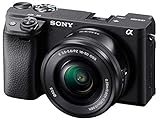
- 20.1MP stacked back illuminated 1" Exmor RS CMOS sensor w/ DRAM, large aperture 24-70mm1 F1.8-2.8 ZEISS Vario-Sonnar T lens
- Enhanced subject capture: wide 425 Phase/ 425 contrast detection points over 84 percent of the sensor
- Fast and accurate: Up to 11Fps continuous shooting at 24.2 MP raw with crisp, clear natural colors
- Multiple movie functions: Make time lapse movies or slow/quick motion videos without post processing
- Tiltable LCD screen: customizable for vlogging, still photography or recording a professional film
| Choose the Canon EOS R50 if… | Choose the Nikon Z50II if… |
|---|---|
| You want a lower-cost entry point based on the listed launch configurations. | You prefer Nikon controls or already own compatible Nikon equipment. |
| You prioritize Canon’s documented subject detection and uncropped 4K oversampled from 6K. | You want EXPEED 7 processing and the Z-mount DX platform. |
| You want an electronic viewfinder and vari-angle display in a beginner-oriented body. | You want the larger 3.2-inch vari-angle display and are comfortable with a heavier approximately 495g body. |
Why choose the Fujifilm X-M5?
The Fujifilm X-M5 is the strongest pick for buyers who value a compact body, high-resolution video, and Fujifilm’s film-simulation workflow more than a traditional electronic-viewfinder experience. Fujifilm’s X-M5 specifications list a 26.1-million-effective-pixel APS-C X-Trans CMOS 4 sensor, X-Processor 5, 6.2K video, 4K/DCI4K recording, subject detection, microphone and headphone connections, and 20 film-simulation modes.
Fujifilm lists approximately 307g excluding the battery and memory card, making the X-M5 the lightest specifically documented body in this shortlist. That weight advantage matters for travel, daily carry, and creator setups where a smaller camera is more likely to be carried consistently.
The X-M5’s main trade-off is not image resolution; the trade-off is fit. Buyers who specifically require an electronic viewfinder should compare the X-M5 carefully with the Canon R50, Nikon Z50II, and Sony a6400 before ordering. Fujifilm’s product sheet lists a $1,079 body-only MSRP and a $1,199 XF15-45mm kit MSRP; these are MSRP figures, not necessarily current sale prices.
Is the Panasonic LUMIX G100D the best camera for travel and vlogging?
The Panasonic LUMIX G100D is a good lightweight travel and creator option when a compact kit, free-angle display, spatial audio features, and the broad Micro Four Thirds lens ecosystem matter more than choosing the largest sensor in this group. Panasonic’s U.S. page describes the G100D as “Built for content creators” and lists QFHD 4K at 24p/30p, Full HD at 60p, and 3840×2160 resolution.
The G100D technical specifications list a 20.3-million-effective-pixel Four Thirds Live MOS sensor, Micro Four Thirds mount, SD/SDHC/SDXC storage, and RAW still-image recording. Panasonic also documents a 3-inch free-angle touch monitor, advanced image-stabilization features, spatial audio recording, and the bundled 12-32mm lens configuration.
Panasonic’s U.S. retail page listed the G100D with a 12-32mm F3.5-5.6 lens and tripod-grip configuration at a $749.99 sale price when accessed on August 14, 2026. Sale pricing and kit contents are volatile and should be verified on the official Panasonic retail page.
The G100D should not automatically be treated as the best low-light or action-photography choice. Its specialist advantage is a creator-friendly, lightweight kit; the smaller Four Thirds sensor and design priorities create a trade-off that matters to buyers focused on demanding still photography.
Is the Sony a6400 still worth buying for autofocus and vlogging?
The Sony a6400 remains worth considering for autofocus-heavy shooting, self-recording, and vlogging because Sony lists 0.02-second autofocus, 425 phase-detection points, Real-time Eye AF, Real-time Tracking, 4K/30p video, and continuous shooting at approximately 11fps with autofocus and autoexposure tracking.
Sony’s current Alpha a6400 product page also lists a 180-degree tilting touchscreen LCD, microphone input, Wi-Fi, NFC, Bluetooth, and compatibility with Sony’s E-mount lens system. Those features make the a6400 particularly relevant to a person recording themselves or prioritizing subject acquisition over the newest body design.
Sony listed the body at $899.99, reduced from a listed $1,099.99 price, when the page was accessed on August 14, 2026. Sony cautions that promotions and pricing may no longer apply. The a6400 is an older design than some alternatives, so compare its screen, menus, stabilization, battery needs, and complete kit price rather than assuming its autofocus specification settles the decision.
Also popular on Amazon
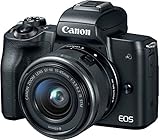
- Improved Dual Pixel CMOS AF and Eye Detection AF
- 24.1 Megapixel (APS-C) CMOS Sensor with ISO 100-25600 (H: 51200)
- 4K UHD 24p and HD 120p for Slow Motion
- Built-in OLED EVF with Touch and Drag AF
Which camera is best for photography and video?
The Canon EOS R50 is the best balanced photography-and-video choice in this shortlist. The Nikon Z50II is the closest alternative for Nikon users, the Fujifilm X-M5 offers the most video-forward compact design, the Panasonic G100D favors creator convenience and portability, and the Sony a6400 emphasizes autofocus and self-recording.
| Primary use | Best match | Why | Main compromise |
|---|---|---|---|
| Beginner photography and family use | Canon EOS R50 | Subject detection, viewfinder, vari-angle screen, and 24.2MP APS-C sensor | RF/RF-S lens costs affect the complete system budget |
| Nikon system building | Nikon Z50II | DX body, EXPEED 7 processing, vari-angle display, and Z-mount compatibility | Approximately 495g body weight and higher listed launch pricing |
| Compact video and film simulations | Fujifilm X-M5 | Approximately 307g body, 6.2K recording, microphone and headphone connections, and 20 film simulations | Electronic-viewfinder requirements need careful comparison |
| Walk-and-talk travel content | Panasonic G100D | Free-angle display, spatial audio, 4K video, tripod-grip kit option, and Micro Four Thirds lenses | Four Thirds sensor and creator-focused design are not a universal still-photography advantage |
| Vlogging and autofocus tracking | Sony a6400 | 0.02-second autofocus, Eye AF, Real-time Tracking, 180-degree screen, and microphone input | Older body design and current kit value require careful comparison |
What should you budget beyond the camera body?
A realistic budget includes the first lens, storage, power, sound, and support equipment. A body-only price is not a complete camera price, and the most affordable body can become the more expensive choice if the required lens is costly or unavailable in the desired focal length.
- Lens: Compare the included kit lens with the body-only option and price the next lens you are likely to need. The documented Canon, Nikon, Fujifilm, and Panasonic configurations show how much a lens can change the initial purchase.
- Memory card: Each shortlisted camera uses removable storage, but confirm the required SD capacity and speed for the video settings you intend to use before buying.
- Spare battery: An extra compatible battery can be useful for travel or extended video sessions. Confirm the exact battery model for the camera rather than buying by camera family alone.
- Audio: The Canon, Fujifilm, Panasonic, and Sony documentation supports meaningful creator-video use cases, but a microphone may still be appropriate for speech-focused recordings. The X-M5 specifically lists microphone and headphone connections, while Sony lists microphone input.
- Support: A compact tripod or the Panasonic tripod-grip configuration can improve self-recording and walk-and-talk shooting.
Which camera should you buy?
Choose the Canon EOS R50 if you want the easiest all-around entry point with strong autofocus, an electronic viewfinder, and a good photo/video balance. Choose the Nikon Z50II if Nikon controls and the Z-mount system matter most. Choose the Fujifilm X-M5 if compactness, 6.2K video, and film simulations outweigh the need for a viewfinder. Choose the Panasonic G100D for a lightweight creator kit and Micro Four Thirds lens choice. Choose the Sony a6400 if autofocus, vlogging, and E-mount availability are the priority.
Quick wins for a faster PC:
Scan for outdated or missing drivers - takes under a minuteDriver Scan →Clear out junk files and repair common Windows errorsFree Scan →For a camera for streaming or a mirrorless camera for YouTube, check the complete workflow rather than the camera name alone: confirm webcam or capture compatibility, microphone input, screen movement, recording format, storage, and the cost of a suitable lens and support gear. Canon explicitly documents UVC/UAC webcam and streaming compatibility, while all five cameras offer documented video features suited to different creator setups.
Frequently Asked Questions
What is the best cheap mirrorless camera for beginners?
The Canon EOS R50 is the best budget mirrorless camera for most beginners because it combines a 24.2MP APS-C sensor, subject-detection autofocus, an electronic viewfinder, a vari-angle screen, and uncropped 4K video. The Nikon Z50II is a strong alternative for buyers committed to Nikon’s Z-mount system.
Should I buy a camera body or a kit with a lens?
A kit is usually the more useful starting point because a mirrorless camera cannot take photographs without a lens. Compare the total price, focal length, and future lens needs instead of choosing solely between the body price and the kit price.
Which budget mirrorless camera is best for travel?
The Fujifilm X-M5 is the lightest documented body in this comparison at approximately 307g without a battery or memory card, while the Panasonic G100D is a lightweight creator-oriented alternative with a 12-32mm lens and tripod-grip configuration. Travel buyers should compare the complete kit weight, not just the body.
Which budget camera is best for vlogging?
The Sony a6400 is the strongest autofocus and vlogging-oriented value in this shortlist because Sony lists 0.02-second autofocus, 425 phase-detection points, Real-time Eye AF, Real-time Tracking, a 180-degree screen, and microphone input. The Canon EOS R50 is the better all-around choice when still photography matters equally.
The Bottom Line
Bottom line: Buy the Canon EOS R50 for the safest general-purpose beginner choice. Select the Nikon Z50II for Nikon users, the Fujifilm X-M5 for compact video and film simulations, the Panasonic G100D for lightweight Micro Four Thirds creator kits, or the Sony a6400 for autofocus-led vlogging. Recheck current U.S. pricing, stock, kit contents, and accessory costs before checkout.

