
Recommended Free Tools
Synthetic data can help teams test software, develop analytics and share data, but the label does not guarantee privacy, quality or compatibility with your systems. Choose a tool against a specific intended use, inspect its privacy claims and test its output with representative data before approving a deployment or release.
What is synthetic data, and is it really private?
Synthetic data is generated data intended to resemble some properties of source data. Its privacy depends on how it is generated, what information it retains and how the output will be used or shared. “Synthetic” alone is not a formal privacy guarantee.

Ask what privacy property the vendor actually provides
The National Institute of Standards and Technology (NIST) explained on May 3, 2021, that differentially private synthetic data carries a mathematical privacy guarantee, while many synthetic-data techniques provide neither differential privacy nor another formal privacy property. Ask vendors to identify the privacy definition, threat model, parameters and evidence behind each claim. A phrase such as “privacy-preserving” is not enough to establish what an attacker can learn.
Privacy and usefulness must be assessed together for the job at hand. NIST’s PETs Testbed describes evaluating fidelity, utility and privacy; it also notes that privacy-preserving releases can introduce artifacts or bias. A dataset that appears statistically similar overall may still fail on rare cases or on the specific downstream task you care about.
The Tool Desk
Outbyte Driver Updater FREEScan for outdated or missing drivers - takes under a minuteDriver Scan →Outbyte PC Repair FREERepair Windows errors before they cause bigger problemsFix Now →#1 Best Overall
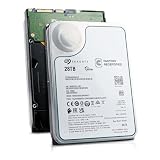
- MASSIVE 28TB CAPACITY – Store and manage enormous datasets with ease. Ideal for data centers, servers, NAS systems, cloud storage, and large-scale backup solutions.
- ENTERPRISE-CLASS PERFORMANCE – 7,200 RPM spindle speed, SATA III 6Gb/s interface, and large cache deliver fast, consistent throughput for demanding 24/7 workloads
- CMR TECHNOLOGY (CONVENTIONAL MAGNETIC RECORDING) – Designed for predictable performance, reliability, and compatibility in RAID and enterprise storage environments.
- BUILT FOR 24/7 OPERATION – Engineered for continuous use with enterprise-grade durability, making it suitable for mission-critical applications and high-density storage arrays.
- STANDARD 3.5” SATA FORM FACTOR – Seamlessly integrates into most enterprise servers, workstations, and NAS enclosures that support 3.5-inch SATA hard drives.
Inspect the release, not just the generation method
NIST’s final SP 800-188 publication, dated September 14, 2023, treats de-identification as a risk-management decision rather than simply removing direct identifiers. It recommends setting objectives, assessing disclosure risk, choosing a sharing model, considering oversight, setting measurable performance levels and conducting re-identification studies where appropriate. Its possible sharing models include publishing synthetic data, publishing de-identified data, providing a query interface or using a protected enclave. NIST cautions that tools that merely mask personal information may not provide sufficient functionality for de-identification.
Output inspection matters too. AWS warns specifically for its documented Clean Rooms synthetic-output feature that literal source values, including personally identifiable information (PII), may appear in generated data. It calls out values associated with a single person and mentions mitigations such as truncating high-precision values or replacing uncommon categories. Treat this as a warning about that feature, not a universal description of every synthetic-data tool.
Rank #2

- MODEL P74439-005: Compact and affordable HPE ProLiant MicroServer Gen11 powered by Intel Pentium Gold G7400 3.7GHz processor, ideal for file sharing, NAS, and basic business workloads
- READY OUT OF THE BOX: Includes 16GB DDR5 UDIMM memory (expandable to 128GB), one 1TB SATA 6G Business Critical HDD, embedded Intel VROC SATA, dedicated iLO-M.2 port kit, 180w external power adapter and 1/1/1 warranty for dependable plug-and-play server operation
- WHISPER-QUIET & SPACE-SAVING: Ultra-compact mini tower design fits easily in small office spaces; supports wall, flat, or vertical placement for deployment flexibility
- INTEGRATED REMOTE MANAGEMENT: Comes with HPE iLO 6 and embedded TPM 2.0 for secure, license-free remote server administration through shared port access
- EXPANDABLE DESIGN: Two PCIe slots (including PCIe 5.0) and four LFF-NHP drive bays provide robust options for storage and component scalability. Features new MR408i-p controller support for enhanced storage performance
How should your team decide whether synthetic data fits?
Start with the intended use and who will receive or access the output. A dataset suitable for internal software testing may not be suitable for external release, model development or analysis of rare events. The risk assessment should follow the use and release context, not a general claim that the data is synthetic.
Choose the data-sharing approach deliberately
Use NIST SP 800-188’s framing to compare synthetic-data publication with alternatives such as a query interface or protected enclave. The appropriate choice depends on the use case, disclosure risk and required oversight. If the task is a narrowly defined statistical analysis, NIST’s 2021 explainer notes that purpose-built differentially private analyses may outperform a synthetic-data workflow for some tasks.
Free tools Windows power users keep installed
One-click scans. No signup required.
Rank #3
Set governance before a pilot
Name the data owner, privacy and security reviewers, approvers and intended downstream users. Record the purpose, release conditions, acceptance criteria and review cadence. Financial-services teams may also consult the Financial Conduct Authority’s August 19, 2025 report: it presents non-exhaustive governance considerations that may complement existing frameworks for conventional data and models, and expressly says it is not guidance. The UK Statistics Authority’s January 29, 2025 guidance provides an ethics checklist and resource for synthetic-data use in research, analysis and statistics.
How do you evaluate synthetic-data vendors?
Shortlist tools that fit your existing stack, then give each candidate the same representative task and acceptance criteria. Assess the following dimensions together rather than treating a vendor’s privacy claim, schema support or scale statement as a substitute for a pilot.
Rank #4

- 3.5'' SATA or SAS Hard Drive
- 24/7 operation
- Toshiba Stable Platter Technology
- Persistent Write Cache technology
- Flexibility in block size and SIE and SED options
- Privacy claims and evidence: Determine whether the method has a formal guarantee or uses heuristics. Ask for the threat model, parameters where applicable, limitations and test evidence. Check whether the evaluation considers rare values, linkage, membership inference and attribute inference.
- Task-specific utility: Specify which distributions, correlations, edge cases and downstream model, analysis or test outcomes need to be retained. Measure those outcomes directly; “statistically similar” is too vague to serve as an acceptance criterion.
- Schema and relationships: Test data types, constraints, keys, referential integrity and multi-table relationships. Check how the system handles uncommon categories and free-text fields.
- Integration: Establish whether generation runs in your existing warehouse or cloud environment or requires export. Review access controls, lineage, deployment, data residency and pipeline automation.
- Scale and operations: Define source size, desired output size, run time, repeatability, concurrency and support needs. Measure them in a buyer-defined pilot and clarify licensing and cost with the vendor.
- Governance: Assign data owners and approvers, keep review records, define intended users and release criteria, and set a schedule for reassessing the output and its permitted use.
There is no comparative performance benchmark or current pricing established here for the products below. Measure performance and confirm commercial, security and data-residency terms directly for your own deployment.
How do Snowflake, AWS Clean Rooms and SDV Enterprise differ?
These are documented examples, not endorsements or a universal ranking. Their described workflows differ, so compare them only where they overlap with your intended use and existing environment.
Do these 3 things before closing this tab:
1Fix the driver behind crashes, sound loss and screen glitches2Repair Windows errors before they cause bigger problems3Scan for outdated or missing drivers - takes under a minuteBest Value
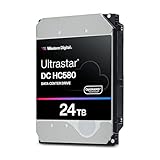
- Store vast amounts of data with a class-leading 24TB capacity, perfect for hyperscale environments, data centers, and big data applications.
- 7200 RPM, SATA 6Gb/s interface, and large 512MB cache, delivering fast, predictable performance for demanding server workloads.
- Designed for 24/7 operation with a high 2.5 million hours MTBF (Mean Time Between Failures) rating, ensuring enterprise-class durability and data dependability.
- Conventional Magnetic Recording (CMR): Employs proven CMR technology for consistent and reliable performance across various workloads.
- Engineered for massive scale-out (MSO), high-density data centers, and cloud storage applications.
| Product | Documented workflow and fit | Integration or relational details | Important qualification |
|---|---|---|---|
| Snowflake synthetic data | Generates data from source tables with matching column names and types and similar statistical properties, for testing or sharing. | Snowflake says users can designate join keys to create consistent artificial values across tables in a single run. The feature requires Enterprise Edition or higher. | Snowflake describes approximate distributions and correlations. Review its documented handling of categorical and non-categorical strings against your schema. |
| AWS Clean Rooms synthetic output | The documented workflow generates synthetic data for ML input channels and includes privacy-level (epsilon) and threshold settings. | Specific warehouse integration or multi-table join behavior is not stated in the cited AWS feature description. | AWS warns that literal source values, including PII, may appear in generated output; inspect and risk-review the result. |
| SDV Enterprise | Vendor documentation describes a licensed Python SDK for scalable synthesis of complex interconnected tables, with deeper preprocessing and customization. | Vendor documentation describes data-source integration and enterprise-wide deployment. | These are vendor-described capabilities, not independent performance benchmarks. Validate behavior and operational fit in your environment. |
Can synthetic data preserve joins across tables?
It can, but relational consistency is a product capability to verify, not an automatic consequence of generating data. For Snowflake, current documentation says designated join keys can produce consistent artificial values across tables in a single run. SDV Enterprise documentation describes synthesis for interconnected tables. Those descriptions do not establish that every relationship, constraint or edge case in your own schema will be preserved.
Include representative related tables in the pilot. Check that generated keys join as expected, foreign-key relationships remain valid, types and constraints are respected, and uncommon records or categories are handled acceptably. Confirm whether consistency is guaranteed only within one run or across separate runs; Snowflake’s cited description specifically says a single run.
How do you test synthetic-data quality and scale?
Define acceptance tests before producing a large output. NIST’s PETs Testbed supports comparing fidelity, utility and privacy, rather than relying on one similarity score. Its Collaborative Research Cycle provides benchmark artifacts; the NIST page, updated September 22, 2026, reports more than 500 de-identified excerpts.
- Record the intended task and release context. State whether the data is for software tests, analytics, model development or sharing, who can access it and what decisions it will support.
- Set measurable utility checks. Choose the distributions, correlations, edge cases, schema constraints and downstream outcomes that matter for that task.
- Set privacy checks. Document the threat model and privacy definition claimed by the vendor, then specify how you will examine rare values, direct source-value appearance and relevant inference or linkage risks.
- Run the same evaluation on each shortlisted candidate. Use representative tables and cases, and keep source access and evaluation procedures controlled.
- Test operational limits. Measure run time, output size, repeatability and concurrency at buyer-selected volumes. Record the conditions for each result; do not extrapolate a small test into a production-scale performance claim.
- Review and approve the release. Have the data owner and privacy, security and business approvers compare results with the pre-agreed criteria, document limitations and authorize only the intended use.
Privacy tests and utility tests can pull in different directions: stronger privacy protections may reduce fidelity or create artifacts, while optimizing resemblance alone may leave disclosure risks unresolved. Acceptance should require both an adequate task result and a privacy assessment suited to the release.
What should be in the procurement decision?
Make the decision against the specific use case, not a generic claim that one tool is “best.” Keep a record of the candidate’s documented capabilities, pilot results, privacy evidence, deployment requirements, unresolved risks and the conditions under which the output may be used. Confirm current feature availability, legal terms, security certifications, data-residency conditions, support and pricing with each vendor; these details are not established by the product descriptions above.
Quick Recap
Product prices and availability are accurate as of the date/time indicated and are subject to change. Any price and availability information displayed on Amazon at the time of purchase will apply.

