
Spotify Premium’s Very High setting uses lossy audio at approximately 320 kbit/s in its desktop, mobile, and tablet apps. Lossless uses FLAC at up to 24-bit/44.1 kHz, preserving audio data that lossy compression discards. To use it, you need Premium, a supported app or device, lossless content, the Lossless setting enabled, and a stable connection. Whether you can hear a difference depends on the recording, playback path, and listener; the higher technical specification is not a guarantee of an obvious improvement.
What changes between Very High and Lossless?
| Spotify option | Encoding and published quality | Where this figure applies |
|---|---|---|
| Very High | Lossy; approximately 320 kbit/s | Spotify desktop, mobile, and tablet apps for Premium |
| Lossless | FLAC; up to 24-bit/44.1 kHz | Spotify Premium, where supported |
Spotify publishes separate figures for its web player: AAC at 128 kbit/s for Free and AAC at 256 kbit/s for Premium. Those are not the app’s Very High figures. The figures above come from Spotify Support’s Audio quality page, which does not state a publication year and was current when accessed on October 4, 2026.
In practical terms, lossy compression reduces audio data to make files or streams more efficient. FLAC is lossless: it preserves the audio data in the encoded file. Bitrate and sample-rate figures describe technical properties, not how large a difference a person will hear. Spotify itself says lossless fidelity does not always create a dramatically different listening experience.
What you need to listen in Lossless
- Premium: Spotify lists Lossless as a Premium benefit. Availability can vary as support and rollout change by market.
- A supported app or device: Spotify lists mobile app version 9.0.58 or later and desktop app version 1.2.67 or later, along with some third-party devices. Device support and current firmware can matter.
- Lossless enabled: Select it for streaming or downloads in the app, or use the device’s quality controls where available.
- A supported listening path: The source device, connection method, and receiving device all matter. Spotify names Bluetooth, Spotify Connect, and AUX as connection types that can affect quality; this does not mean every Bluetooth setup blocks Lossless.
- Lossless content and a stable connection: Lossless is not available for music videos, podcasts, or audiobooks. Spotify recommends a steady 1.5–2 Mbps internet connection for the best Lossless experience; actual playback also depends on network stability and available bandwidth.
Spotify’s Your Premium benefits page lists the current Premium lossless format and supported app and device categories. Spotify’s support pages can vary by market and may change as availability expands.
Do these 3 things before closing this tab:
1Fix the driver behind crashes, sound loss and screen glitches2Clear out junk files and repair common Windows errors3Scan for outdated or missing drivers - takes under a minute#1 Best Overall
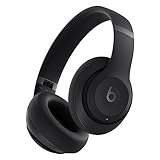
- INCREDIBLE SOUND: Custom acoustic platform delivers rich, balanced audio for music, calls and everyday listening.
- LOSSLESS AUDIO SUPPORT: USB-C lossless audio and sound profiles optimize music quality across devices and environments. Additional option to use the 3.5 mm cable for a standard analog experience.
- ACTIVE NOISE CANCELLING (ANC): block distractions at work, on flights or during your daily commute. Or use Transparency mode to let the sounds of your environment mix in with your music.
- SEAMLESS WIRELESS CONNECTIVITY: One-touch pairing with Apple & Android for easy switching across devices.
- SPATIAL AUDIO IMMERSION: Personalized dynamic head tracking, 360-degree sound for movies, music and immersive everyday listening.
How to turn on Lossless
In the mobile, tablet, or desktop app
- Open Spotify and select your profile.
- Open Settings and privacy, then Media quality.
- Choose Lossless for streaming, downloads, or both, depending on which you want to change.
On a third-party device
- Start playback and open Spotify’s device picker.
- Select the third-party device.
- Open Change quality settings and choose Lossless, if the option is available.
These paths follow Spotify Support’s Lossless Audio Quality instructions. If Lossless is missing, check Premium eligibility, app version, device support, and firmware.
Will you hear a difference?
Possibly, but do not assume the difference will be obvious. Spotify Support’s answer to “I’m listening in Lossless, but I don’t hear a difference?” says: “Lossless audio offers high technical fidelity, but it doesn’t always translate to a dramatically different listening experience for everyone.” Spotify also identifies the original recording as a factor. This is Spotify’s guidance, not the result of an independent controlled listening study.
Rank #2

- INCREDIBLE SOUND: Custom acoustic platform delivers rich, balanced audio for music, calls and everyday listening.
- LOSSLESS AUDIO SUPPORT: USB-C lossless audio and sound profiles optimize music quality across devices and environments. Additional option to use the 3.5 mm cable for a standard analog experience.
- ACTIVE NOISE CANCELLING (ANC): block distractions at work, on flights or during your daily commute. Or use Transparency mode to let the sounds of your environment mix in with your music.
- SEAMLESS WIRELESS CONNECTIVITY: One-touch pairing with Apple & Android for easy switching across devices.
- SPATIAL AUDIO IMMERSION: Personalized dynamic head tracking, 360-degree sound for movies, music and immersive everyday listening.
Your playback path matters as well: a lossless source cannot preserve its advantage if a connection or device does not support lossless playback. Conversely, buying new headphones is not automatically necessary. Spotify supports playback through its apps and compatible Spotify Connect devices, so check your specific source device and connection before spending money. Wired headphones may be an option, but neither a wired connection nor a particular headphone guarantees that you will perceive a difference.
Independent reader supportYour contribution helps us test, update, and keep practical guides available for everyone.Data use, downloads, and playback problems
Lossless files and streams contain more audio data than lossy Very High audio, so they can require more bandwidth and storage. Spotify gives a recommended steady connection speed of 1.5–2 Mbps for the best Lossless experience, but it does not establish a fixed data-use or storage figure in the cited support information. Actual use varies with listening time, content, and playback conditions.
Rank #3

- INCREDIBLE SOUND: Custom acoustic platform delivers rich, balanced audio for music, calls and everyday listening.
- LOSSLESS AUDIO SUPPORT: USB-C lossless audio and sound profiles optimize music quality across devices and environments. Additional option to use the 3.5 mm cable for a standard analog experience.
- ACTIVE NOISE CANCELLING (ANC): block distractions at work, on flights or during your daily commute. Or use Transparency mode to let the sounds of your environment mix in with your music.
- SEAMLESS WIRELESS CONNECTIVITY: One-touch pairing with Apple & Android for easy switching across devices.
- SPATIAL AUDIO IMMERSION: Personalized dynamic head tracking, 360-degree sound for movies, music and immersive everyday listening.
If playback buffers or glitches, Spotify recommends lowering the quality setting. A less demanding setting may be more reliable on an unstable or constrained connection; it does not change the encoding of content that is already playing.
Quick Recap
Best Value
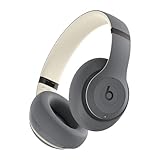
- INCREDIBLE SOUND: Custom acoustic platform delivers rich, balanced audio for music, calls and everyday listening.
- LOSSLESS AUDIO SUPPORT: USB-C lossless audio and sound profiles optimize music quality across devices and environments. Additional option to use the 3.5 mm cable for a standard analog experience.
- ACTIVE NOISE CANCELLING (ANC): block distractions at work, on flights or during your daily commute. Or use Transparency mode to let the sounds of your environment mix in with your music.
- SEAMLESS WIRELESS CONNECTIVITY: One-touch pairing with Apple & Android for easy switching across devices.
- SPATIAL AUDIO IMMERSION: Personalized dynamic head tracking, 360-degree sound for movies, music and immersive everyday listening.
Rank #4

- Hi-Res Audio & Titanium-Coated Drivers: Delivering 96kHz/24-bit Hi-Res audio through 40mm titanium-coated drivers, reproducing musical details with clarity across wired and wireless connections; Support LDAC/SBC codecs for preserving audio quality during wireless streaming
- Hybrid ANC & Multiple Modes: Advanced -49dB active noise cancellation with multiple ANC modes that adjust to your environment; Convenient physical buttons let you quickly switch between ANC levels, while the EDIFIER ConneX app offers additional customization with specialized modes for sport, office, and travel scenarios
- Spatial Sound & Volume Guard: Immerse yourself with dynamic spatial sound technology, while the EDIFIER ConneX App offers customized EQ presets for tailored listening; The volume guard feature helps maintain comfortable listening levels by letting you set a preferred maximum volume
- Multipoint Bluetooth & Simultaneous Play/Charge: Enjoy enhanced wireless stability with both Bluetooth V6.1 and USB-C wired connections; The stable wireless link supports simultaneous two-device pairing for seamless switching between calls and media, while the wired mode enables continuous playback with charging; Gaming Mode reduces latency for responsive audio
- Long Battery Life & Fast Charging: Engineered for endurance with up to 88 hours of continuous use (49hrs with ANC), supported by fast charging that delivers 15 hours of playback from just 15 minutes of charging
Product prices and availability are accurate as of the date/time indicated and are subject to change. Any price and availability information displayed on Amazon at the time of purchase will apply.

