
Free tools Windows power users keep installed
One-click scans. No signup required.
iTechGuides is reader-supported. When you buy through links on our site, we may earn an affiliate commission. As an Amazon Associate I earn from qualifying purchases. Learn more
Choose Siril if you want a free, open-source application that covers calibration, registration, stacking and enhancement with scripts or hands-on controls. Choose PixInsight if you are willing to buy a commercial license in exchange for a modular processing environment, sophisticated masking, extensive process-level control, multi-core execution and advanced star-alignment options. Both can handle a complete deep-sky workflow; neither is proven universally faster or capable of producing better images without considering your data, decisions and experience.
What Siril and PixInsight have in common
Deep-sky processing turns many individual exposures into a calibrated, aligned and stacked image, then improves contrast, color and detail. Both applications cover that complete path rather than stopping at a single task.
| Pipeline stage | Siril | PixInsight |
|---|---|---|
| Calibration | Bias, dark and flat master support is documented. | Supported through its modular processing architecture. |
| Registration and alignment | Aligns image sequences as part of the integrated workflow. | Provides StarAlignment, a dedicated star-detection registration process. |
| Stacking | Combines frames to improve signal-to-noise ratio. | Provides stacking through configurable processes and modules. |
| Enhancement | Color calibration, deconvolution, gradient removal and histogram tools are documented. | Advanced masking, stretching, deconvolution, gradient and color workflows are available through separate processes. |
| Automation | Dedicated scripts can automate preprocessing; manual operation remains available. | Scripting and reusable process configurations are part of the modular environment. |
The practical difference is not whether either program can stack a galaxy or nebula. It is how much control you want over each operation, how you prefer to automate repetitive work and whether the additional complexity of a commercial, modular tool is worthwhile for your images.
Quick wins for a faster PC:
Fix the driver behind crashes, sound loss and screen glitchesFind Drivers →Repair Windows errors before they cause bigger problemsFix Now →Scan for outdated or missing drivers - takes under a minuteDriver Scan →Cost and licensing
| Factor | Siril | PixInsight |
|---|---|---|
| License model | Free and open source. The project says anyone can contribute development, translation, documentation or support. | Commercial, license-based software. The distribution page requires a valid license for commercial and trial downloads. |
| Up-front price | No license payment is required. | Current regional pricing is not stated in the supplied official material; check the licensing page for the price that applies to your region. |
| Trial access | Not applicable as a paid trial. | A trial distribution exists, but downloading it still requires a valid license under the distribution policy. |
| Source availability | Open source, documented by the Siril project and a Journal of Open Source Software paper published 15 October 2024. | Closed commercial application delivered through installable modules. |
For a beginner deciding whether to spend money, Siril removes the financial barrier. PixInsight’s value must therefore come from its control, specialized tools and workflow model, not from a claim that it automatically creates superior results.
Popular on Amazon

- 【Ultra-Light Design for All Adventures】Only 3lb/1.35kg - World's Most Portable Smart Telescope! Fits perfectly in standard backpack for travel. Ideal for spontaneous stargazing trips and outdoor adventures. Take it anywhere, anytime!
- 【Dual Imaging System for Day & Night】Advanced Dual Lens Design: Telephoto lens masters wildlife & landscape & deep space objects, while wide-angle lens captures Milky Way & star trails. In daytime, telephoto for subjects, wide-angle for target location. Perfect dual-camera imaging solution!
- 【Smart Auto-Tracking & 4K Clarity】Professional 4K Auto-Tracking ensures crystal-clear shots of stars, planets, and wildlife. Advanced system automatically follows celestial objects and moving subjects for stunning results every time.
- 【Cloud-Powered Image Processing】One-touch processing through dedicated DWARFLAB App with cloud computing power. Instantly enhance your photos - no PC or complex software needed. From capture to stunning final image in minutes!
- 【Easy-to-Master for All Ages】Perfect for beginners to experts (6-98 years)! Start amazing astrophotography in just 2 minutes. Intuitive app interface and automatic features make professional imaging accessible to everyone.
Siril’s workflow and strengths
1. Calibrate your light frames
Siril’s documented calibration workflow uses master bias, dark and flat frames. Calibration corrects repeatable sensor and optical patterns before alignment and stacking. Keep masters matched to the exposure conditions and camera settings used for the light frames; otherwise the correction itself can introduce artifacts.
The application accepts multiple image formats and image sequences. You can organize a sequence for processing, apply calibration, inspect the resulting frames and continue manually, or start from one of the project’s dedicated scripts.
2. Register and stack the sequence
Registration aligns stars across the calibrated frames. Stacking then combines those aligned images, increasing signal relative to random noise. Siril treats these operations as part of an integrated deep-sky workflow rather than requiring a separate alignment application.
Review alignment results before committing to a final stack. Frames with poor tracking, clouds or severe satellite trails can reduce the quality of the combined image; retaining manual control lets you exclude unsuitable exposures instead of relying entirely on automation.
3. Apply post-stack operations in an image-dependent order
The Siril FAQ gives one example sequence: crop the image, remove the background gradient, calibrate colors, deconvolute, then transform the histogram with asinh and/or histogram tools. It explicitly notes that this order is not universal. Treat it as a starting pattern, not a rule.
- Crop: remove edge areas affected by registration overlap or uneven coverage.
- Background gradient: correct broad illumination differences before judging color and contrast.
- Color calibration: establish a more neutral color balance from the available data.
- Deconvolution: attempt controlled recovery of detail when the data and stars support it.
- Stretch: use asinh and/or histogram transformations to reveal faint structure without clipping important highlights.
Because the FAQ warns that the sequence depends on the image, change the order when a particular operation produces a better-behaved result. Preserve an earlier state so you can compare changes rather than trusting a single irreversible stretch.
Also popular on Amazon

- FAST, HASSLE-FREE IMAGING: Plug-and-play planetary camera connects easily to your telescope and computer so you can start capturing Solar System images right away.
- 20 MP AR2020 CMOS SENSOR: Ultra-high-resolution sensor (5240 x 3840, 1.4 micron pixels) records crisp lunar, planetary, and solar detail with low noise and excellent color fidelity.
- OPTIMIZED FOR SOLAR SYSTEM TARGETS: Purpose-built for the Moon, planets, and Sun (with filter); reveals features like Jupiter’s storms, Saturn’s rings, and lunar craters even in average seeing.
- REGION OF INTEREST (ROI): Crop the sensor to boost frame rate, reduce file size, and speed stacking; ideal for capturing Solar System objects with small image scale, like planets.
- BUILT-IN AUTOGUIDING SUPPORT: In addition to planetary imaging, attach NexImage 20 to a guidescope and use it as an autoguider for accurate tracking during deep-sky imaging.
4. Choose scripts or manual control
Siril’s project site presents scripts as a way to work automatically, while the same application supports manual processing. Scripts are useful when you repeatedly process data from the same camera and capture pattern. Manual steps are preferable when a sequence has unusual calibration frames, a mosaic, changing conditions or frames that need selective treatment.
5. Use scientific tools when needed
In addition to image processing, Siril documents astrometry and photometry tools. Those capabilities matter if your goal includes measuring positions or brightness, not only producing an attractive color image.
PixInsight’s workflow and strengths
1. Work through independent processes
PixInsight’s official introduction describes a modular, open architecture: processing functionality and file-format support are provided by installable modules. Instead of one fixed wizard, you assemble a workflow from individual processes and can revisit each decision.
This model exposes more parameters and intermediate results. It also means that a first-time user must learn which process belongs at each stage, how to preserve settings and how to move data between processes without losing track of the image state.
2. Register difficult data with StarAlignment
The StarAlignment tutorial calls the tool “a sophisticated tool for automatic image registration of deep-sky images using detected stars as alignment references.” The documented improvements address scale variation, arbitrary distortion, dithered wide-field frames and mosaics.
Windows Errors? Fix Them Before They Spread
Repair common Windows errors and clear accumulated junk for a smoother, more stable PC - no reinstall needed.Free scan · no reinstallCrashes, No Sound, or Screen Glitches?
Random freezes, missing sound and display glitches usually trace back to one bad driver. Find and replace yours safely.Free scan · under a minuteThat specialization is important when exposures do not differ only by a simple translation or rotation. Wide-field lenses, mosaics and sessions collected at different scales can require a registration model that accounts for distortion. StarAlignment gives PixInsight a dedicated place to configure that work rather than hiding all cases behind one basic alignment command.
Also popular on Amazon
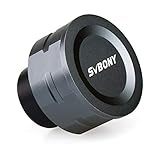
- SV105 telescope camera is the basic method for starting astronomical imaging; you can use the SV105 electronic telescope eyepiece to image it; which is more suitable for beginners who like to do astrophotography
- SV105 astrophotography camera is suitable for lunar and planetary photography; share the view of bright planets; moon and terrestrial targets; just point the telescope at the moon or planet and record a quick video; you can transfer the real-time view of the telescope to your laptop or PC
- Plug and play; no driver required; real-time dynamic observation; clear images; SV105 astronomy camera compatible with Windows system needs to download Sharpcap Capture; Linux system needs to download AstroDMx Capture; Android system needs to download USB Camera
- The image processor adopts dark light compensation technology; SV105 svbony camera can greatly improve the image clarity of the astronomy camera under low light conditions
- Interesting and useful USB planetary camera; standard 1.25 inches; threaded M28.5x0.6; can be used with telescope filters; directly connected to the telescope
3. Build masks for selective processing
PixInsight emphasizes advanced masking. A mask can limit a process to selected brightness ranges, structures or regions, allowing you to stretch faint nebulosity without pushing stars too far, sharpen detail while protecting smooth backgrounds, or adjust color in one part of the frame without changing another.
Mask-based control is powerful but adds preparation: you must create, inspect and invert masks deliberately, then verify which image or channel is receiving the process. A poorly chosen mask can hide a mistake instead of preventing one.
4. Use scripting and process history
PixInsight supports scripting and presents process windows, previews, processing histories and projects in its introductory training. Its official tutorial announcement describes a 36-video introduction, published by the PixInsight team in 2022, covering workspaces, image windows, views, ScreenTransferFunction, masks, process windows, previews, processing histories, projects and development-community tools.
The Tool Desk
Outbyte PC Repair FREEClear out junk files and repair common Windows errorsFree Scan →Outbyte Driver Updater FREEScan for outdated or missing drivers - takes under a minuteDriver Scan →Those facilities make it easier to save a repeatable recipe, inspect how an image reached its current state and apply a proven process configuration to a new target. They also expose more concepts than a single guided script, so expect a longer orientation period.
5. Take advantage of parallel hardware
PixInsight documents parallel processing for multi-processor and multi-core systems. The software can therefore use modern multi-core hardware for suitable operations. The supplied material does not provide a controlled speed comparison with Siril, so hardware utilization should not be converted into a claim that PixInsight is always faster.
Head-to-head comparison by decision factor
| Decision factor | Siril | PixInsight | What it means for you |
|---|---|---|---|
| Budget | Free and open source. | Commercial license required; current price varies by licensing information and region. | Siril is the low-risk starting point. PixInsight requires a deliberate purchase decision. |
| Workflow style | Integrated workflow with scripts plus manual controls. | Modular processes assembled and tuned individually. | Choose the model that matches whether you prefer a guided path or visible, separable operations. |
| Calibration | Bias, dark and flat masters are explicitly documented. | Available through modular processes. | Both cover standard calibration; the interface and process organization differ. |
| Registration | Sequence alignment is part of the normal workflow. | StarAlignment is specialized for star-based registration, scale changes, arbitrary distortion, dithering and mosaics. | PixInsight offers more explicitly documented controls for difficult geometry. |
| Stacking | Designed to improve signal-to-noise ratio from aligned frames. | Configurable stacking in the process-based environment. | Both can create a combined master; inspect rejection and alignment behavior for your data. |
| Gradients and color | Gradient removal and color calibration are documented tools. | Separate processes and masks enable localized control. | Siril covers the need directly; PixInsight gives more ways to isolate regions. |
| Deconvolution and stretching | Deconvolution plus asinh and histogram transformations are documented. | Deconvolution and multiple stretch processes can be combined with masks. | PixInsight offers finer process composition, while Siril keeps common operations easier to locate. |
| Automation | Dedicated scripts can automate preprocessing. | Scripting, saved processes and projects support repeatable workflows. | Siril is efficient for a known pipeline; PixInsight is flexible for elaborate recipes. |
| Learning investment | Lower initial complexity for a complete pipeline, with manual depth available. | Steeper because every process, mask and history decision is exposed. | Your tolerance for experimentation may matter more than feature count. |
| Supported operating systems | Not stated in the supplied project material. | Windows, Linux/UNIX and Mac OS X are listed in the official introduction. | Confirm current system requirements before installation, especially for newer operating-system releases. |
| Performance evidence | No controlled comparison supplied. | Multi-processor and multi-core parallel processing is documented, but no controlled comparison supplied. | Do not choose solely on an assumed speed advantage. |
Which program gives more control over gradients, color and detail?
Siril includes the core corrective and enhancement operations most deep-sky photographers need: background-gradient removal, color calibration, deconvolution and histogram-based stretching. Its example post-stack sequence shows how those tools can form a coherent path from a linear stack to a visible image.
Also popular on Amazon

- IMX662 Telescope Camera; with ultra-high sensitivity and low noise; it captures clear planetary details even in low light; High frame rate ensures sharp images of fast-moving planets like Jupiter and Saturn
- Low readout noise: achieve unparalleled clarity with the svbony camera featuring ultra-low readout noise of just 0.7e-; This means cleaner; sharper images with less interference; even in low-light conditions
- 1920*1080@107FPS: capture the cosmos with the astrophotography camera offering 1920x1080 resolution at 107FPS; ensuring every detail of fast-moving planets; like Jupiter’s clouds and Saturn’s rings; is sharp and clear
- Lightning-fast transfers: SVBONY Astronomy camera features USB 3.0 high-speed transfer technology; offering a staggering 5Gbps speed—over 10 times faster than USB 2.0; This enhances your astrophotography workflow significantly.
- ST4 guiding interface; SV305C Pro guide camera features an ST4 guiding interface; ensuring seamless compatibility with popular software like PHD2 and ASCOM; This simplifies setup; allowing your telescope camera to track celestial objects quickly and accurately
PixInsight separates these decisions into modular processes and combines them with masks. That architecture is useful when the background, stars and nebula require different treatment. For example, you might protect bright stars while stretching faint emission, or sharpen a target region while leaving a smooth background untouched. The trade-off is that each additional degree of freedom must be learned and checked.
Neither application can recover information that was never captured. Focus quality, tracking, sky conditions, calibration frames and total integration time often dominate the final result. Software choice changes the available controls; it does not replace sound acquisition.
Registration, mosaics and distortion: when the difference matters
Simple sequences with consistent framing can be aligned in either application. The more your frames vary in scale or geometry, the more registration design matters.
- Ordinary dithered sessions: both programs cover the alignment and stacking stages needed for a standard deep-sky set.
- Wide-field lenses: distortion can make a single simple transform inadequate, particularly toward the edges.
- Mosaics: overlapping panels may differ in scale and contain arbitrary distortion.
- Mixed sessions: data captured on different nights or with different framing can require careful reference selection and rejection of poor matches.
PixInsight’s StarAlignment documentation specifically addresses scale variation, arbitrary distortion, dithered wide-field images and mosaics. That does not mean every mosaic will align automatically, but it gives you a specialized process for diagnosing and tuning those cases. Siril remains a practical choice when your data fits a more conventional sequence or when you value an integrated, scriptable path.
Independent reader supportYour contribution helps us test, update, and keep practical guides available for everyone.Learning curve and workflow transparency
Siril’s learning profile
Siril’s integrated design makes the overall pipeline easy to visualize: calibrate, align, stack and enhance. A script can provide a repeatable start, while manual controls let you inspect and alter individual stages. This balance suits someone who wants to understand the sequence without configuring every operation from scratch.
The main learning challenge is deciding when to depart from the example order. The project’s own FAQ says post-stack order depends on the image, so you still need to evaluate gradients, color, deconvolution and stretching rather than treating a script as a universal recipe.
Also popular on Amazon

- 【Pocket-Sized & Ultra-Lightweight】 Weighing just 1.85 lbs (840g), the DWARF mini easily fits into a backpack or large pocket. Its all-in-one, compact design makes it the ultimate grab-and-go digital telescope for hiking, camping, or traveling to dark-sky locations.
- 【Intuitive App Control & Built-in Sky Atlas】 Go from unboxing to your first shot in just 3 minutes! The DWARFLAB App provides a seamless experience with an interactive star map. Simply select your target and start exploring without the steep learning curve of traditional setups.
- 【Auto GOTO & 360° Pivot Freedom】 Enjoy pinpoint automated tracking with full 360° rotation. Powered by a high-sensitivity Sony IMX662 sensor (1/2.8-inch, 2.9μm pixels), it captures amazing, low-noise astro details, bringing faint nebulas and star clusters to life with stunning clarity.
- 【Pro-Level EQ Mode & Long Exposure】 Unlock advanced deep-space imaging with Equatorial (EQ) Mode. Supporting impressive single-frame exposures up to 90 seconds and featuring built-in light pollution filters, it easily cuts through city glow to reveal intricate celestial structures.
- 【Smart Cloud Processing & All-Ages Fun】 Effortlessly enhance your raw data with integrated cloud processing for professional-grade results. Perfect for beginners, kids, and adults, this telescope makes exploring and sharing the wonders of the universe an exciting, family-friendly adventure.
PixInsight’s learning profile
PixInsight exposes more of the processing model. You learn process windows, previews, histories, projects, ScreenTransferFunction, masks and the relationships among them. The 36-video introductory series announced in 2022 indicates the breadth of the environment, not a guarantee that every user needs all 36 videos before producing an image.
The transparency is valuable when you want to reproduce a result or diagnose a change. It can feel slower at first because the application does not hide as many decisions behind one pipeline. Users who enjoy systematic experimentation often consider that investment worthwhile; users who want a quick, repeatable reduction may prefer Siril’s scripts.
Practical decision guide
Choose Siril when these statements describe you
- You need a complete deep-sky pipeline without paying for a license.
- You prefer open-source software and the ability for the community to contribute code, translations, documentation or support.
- Your normal data consists of calibrated, similarly framed sequences rather than complex mosaics.
- You want scripts to automate preprocessing but still want manual access when a frame or target behaves unusually.
- You would rather learn one integrated workflow before adding specialized controls.
Choose PixInsight when these statements describe you
- You accept a commercial license in return for a modular processing environment.
- You need advanced masks and process-level control over stars, background and target structures.
- You regularly process mosaics, dithered wide-field data or sessions with significant scale and distortion differences.
- You want saved process configurations, histories, projects and scripting for elaborate, repeatable recipes.
- You have multi-core hardware and want software that documents parallel processing for multi-processor and multi-core systems.
Can Siril replace PixInsight?
For many deep-sky projects, yes: Siril covers calibration, registration, stacking and the principal enhancement stages, and it can automate preprocessing with scripts. It is a credible replacement when your priority is a capable, no-cost workflow and your data does not demand PixInsight’s specialized registration or masking controls.
Do these 3 things before closing this tab:
1Repair Windows errors before they cause bigger problems2Scan for outdated or missing drivers - takes under a minute3Clear out junk files and repair common Windows errorsIt is not a feature-for-feature substitute for PixInsight’s modular architecture, advanced masking model, documented distortion handling in StarAlignment and multi-core process design. If those capabilities are central to your projects, replacing PixInsight with Siril may require changing your workflow rather than simply opening the same files in another program.
A sensible first workflow in either application
- Inventory the data: separate light, bias, dark and flat frames, and note exposure, gain or ISO, temperature and optical configuration so masters match the lights.
- Calibrate: create or select the appropriate master frames and apply them to the light sequence.
- Inspect: identify frames with tracking errors, clouds, severe gradients or other defects before stacking.
- Register: align the usable frames. For complex scale or distortion changes, configure PixInsight’s StarAlignment options deliberately; for a conventional sequence, use the normal Siril alignment workflow.
- Stack: combine the registered frames to improve signal-to-noise ratio, checking that rejected or unusable frames are not degrading the result.
- Crop: remove uneven borders created by alignment or differing coverage.
- Correct the background: remove gradients before making final color and contrast judgments.
- Calibrate color: establish a defensible color balance from the image and reference information available to you.
- Enhance selectively: apply deconvolution or sharpening only where the data supports it; use masks in PixInsight when different regions need different treatment.
- Stretch gradually: reveal faint structure with asinh, histogram or other stretch processes while monitoring clipped highlights and crushed shadows.
- Save the recipe: keep Siril scripts or PixInsight process settings and histories so you can reproduce successful choices on the next target.
Common selection mistakes
Assuming free means limited
Siril is free and open source, but its documented scope includes calibration, alignment, stacking, color calibration, deconvolution, histogram stretching, astrometry and photometry. Evaluate the specific operation you need before assuming a paid application is required.
Assuming a paid license guarantees better images
PixInsight adds modular control, masks, specialized registration and parallel processing, but the supplied official material does not establish a universal image-quality advantage. Capture quality, calibration data, processing choices and operator skill remain decisive.
Choosing on speed claims
No controlled speed benchmark is established here. PixInsight’s multi-core support is a documented capability, not proof that every operation or computer will outperform Siril. Measure your own representative workload if processing time is the deciding factor.
Following one post-processing order rigidly
Siril’s FAQ presents crop, gradient removal, color calibration, deconvolution and stretch as an example and explicitly says the order is image-dependent. PixInsight’s modular design likewise lets you rearrange processes. Inspect the result after each major change and keep an earlier state when an operation makes the image less stable.
Bottom line for different deep-sky photographers
Start with Siril if budget, open-source values and a complete scriptable workflow are your main concerns. Move to PixInsight when you repeatedly encounter problems that benefit from advanced masks, process-level composition, difficult registration or multi-core execution, and you are prepared to learn a more complex environment and pay for a commercial license. The strongest choice is the one that lets you make deliberate, repeatable decisions with the data you actually capture.
Quick Recap
Product prices and availability are accurate as of the date/time indicated and are subject to change. Any price and availability information displayed on Amazon at the time of purchase will apply.

