
Recommended Free Tools
EndeavourOS is a good Windows 11 alternative when you want an Arch-based Linux system, control over installation and desktop choices, and are willing to maintain it actively. It is not a drop-in Windows replacement: terminal work, rolling-release updates and workload-specific compatibility checks are part of the deal. Test the live environment, back up your files and verify your exact hardware before changing partitions.
What you are switching to
EndeavourOS is a free, community-built Linux distribution based closely on Arch Linux. The project describes it as “a lightweight Arch-based, terminal-centric system ready to personalise.” Its packages and tools stay relatively close to Arch rather than adding a heavily customized, beginner-proof layer.
The project’s own development guidance is unusually direct: it does not aim to be “beginner-proof” or overly opinionated, and terminal usage is often required to manage and maintain the system effectively. That makes EndeavourOS attractive to people who want choice and are prepared to read documentation, update packages and troubleshoot configuration problems.
When switching makes sense—and when it does not
EndeavourOS is a strong candidate if you:
- Want a lightweight, customizable Linux desktop rather than the Windows 11 interface and service model.
- Are comfortable using a terminal for package management, diagnostics and recovery.
- Prefer Arch documentation and a rolling stream of package updates.
- Can verify that your games, creative applications, business software and peripherals work on Linux.
- Want to choose a desktop environment and control partitioning and bootloader setup.
Keep Windows 11, or test Linux first, if you:
- Depend on a Windows-only application, anti-cheat system, driver or corporate tool that has no verified Linux path.
- Need a system that minimizes maintenance and troubleshooting.
- Cannot risk partition changes without a complete, tested backup.
- Use hardware whose graphics, Wi-Fi, storage controller or printer support has not been checked.
There is no universal “faster,” “safer” or “easier” winner. The right choice depends on your hardware and the software you actually use.
Quick wins for a faster PC:
Clear out junk files and repair common Windows errorsFree Scan →Fix the driver behind crashes, sound loss and screen glitchesFind Drivers →#1 Best Overall
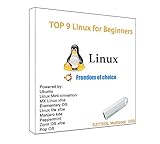
- 1. 9-in-1 Linux:32GB Bootable Linux USB Flash Drive for Ubuntu 24.04 LTS, Linux Mint cinnamon 22, MX Linux xfce 23, Elementary OS 8.0, Linux Lite xfce 7.0, Manjaro kde 24(Replaced by Fedora Workstation 43), Peppermint Debian 32bit (being replaced by MX Linux 32bit) for older PC, Pop OS 22, Zorin OS core xfce 17. The versions you received might be latest than above as we update them to latest/LTS when we think necessary.
- 2. Try or install:Before installing on your PC, you can try them one by one without touching your hard disks.
- 3. Easy to use: These distros are easy to use and built with beginners in mind. Most of them Come with a wide range of pre-bundled software that includes office productivity suite, Web browser, instant messaging, image editing, multimedia, and email. Ensure transition to Linux World without regrets for Windows users.
- 4. Support: Printed user guide on how to boot up and try or install Linux; please contact us for help if you have an issue. Please press "Enter" a couple of times if you see a black screen after selecting a Linux.
- 5. Compatibility: Except for MACs,Chromebooks and ARM-based devices, works with any brand's laptop and desktop PC, legacy BIOS or UEFI booting, Requires enabling USB boot in BIOS/UEFI configuration and disabling Secure Boot is necessary for UEFI boot mode. Packing: The bootable USB drive comes in a colored PET/CPP zipper bag with instructions on how to get started. The box pictured is not included.
Check your computer before replacing Windows
The current EndeavourOS project homepage lists these minimum installation requirements:
| Requirement | Minimum listed by the project | What to verify on your machine |
|---|---|---|
| Free storage | 15 GB | Allow additional space for your files, applications and a second operating system if dual-booting. |
| Memory | 4 GB RAM | Check whether your normal workload needs more than the installation minimum. |
| Processor | 64-bit dual-core Intel or AMD CPU | Confirm that the processor is 64-bit and supported by your firmware. |
| Firmware | Modern EFI (UEFI) systems are recommended | Identify whether the machine boots in UEFI mode and whether legacy CSM is enabled. |
The installer can handle older machines, but modern EFI systems without legacy CSM mode are the project’s preferred environment. Before committing to an install, check the exact graphics processor, Wi-Fi adapter, storage controller, audio hardware and printers. EndeavourOS includes EOS-hwtool for hardware and graphics management, but checking compatibility before deleting Windows is safer than troubleshooting afterward.
Choose a migration route
Live USB test
Boot the EndeavourOS ISO without installing it. Test the display, keyboard, network, audio and access to your intended storage. This is the lowest-risk way to find obvious hardware problems.
Rank #2

- ✅For beginners, refer image-7, its a video boot instruction, and image-6 is "boot menu Hot Key list"
- ✅16-IN-1, 64GB Bootable USB Drive 3.2 , Can Run Linux On USB Drive Without Install, All Latest versions.
- ✅Including Windows 11 64Bit & Linux Mint 22.3 (Cinnamon)、Kali 2026.02、Ubuntu 26.04、Zorin Pro 18、Tails 7.8.1、Debian 13.5.0、Garuda 2026.03、Fedora Workstation 44、Manjaro 25.06、Pop!_OS 22.04、Solus 2026.04、Archcraft 26.05、Neon 2026.06、Fossapup 9.5、Sparkylinux 8.3, All ISO has been Tested
- ✅Supported UEFI and Legacy, Compatibility any PC/Laptop, Any boot issue only needs to disable "Secure Boot"
Dual boot
Keep Windows 11 on the disk and install EndeavourOS in separate space. This lets you return to Windows for software that has no acceptable Linux equivalent, but partitioning and bootloader decisions require care. Back up personal files and recovery credentials first; a boot menu is not a substitute for a backup.
Clean installation
Erase the Windows installation only after confirming that your backup restores correctly and that every essential workload has a Linux solution. A clean install is simpler afterward, but it removes the easiest fallback.
Create the installer and install EndeavourOS
You need the official EndeavourOS ISO, a bootable USB flash drive and a computer that can boot from USB. Use a trusted ISO-writing utility, then select the USB device from the computer’s firmware boot menu.
Rank #3

- UBUNTU 24.04.3 LTS MEDIA - 16GB bootable USB with Ubuntu Desktop 24.04.3 LTS for compatible x86-64 PCs.
- LIVE OR INSTALL - On supported hardware, start the Ubuntu live environment to evaluate it or launch the installer.
- PLATFORM BOUNDARY - Not designed to boot Apple Silicon or other ARM-based computers. Confirm CPU architecture and USB-boot support before purchase.
- BOOT SETTINGS VARY - Boot-menu keys and UEFI settings differ by manufacturer; consult the computer maker's instructions if the USB is not listed.
- BACK UP BEFORE INSTALLING - Disk-partition and installation choices can erase files or operating systems. Disconnect nonessential drives and preserve the USB until it is no longer needed for installation or recovery.
- Back up first. Copy personal files to an external backup drive or another verified destination. Save Windows recovery credentials and any encryption recovery information.
- Download the current ISO. Use the EndeavourOS project’s official download page rather than an unofficial mirror or repackaged image.
- Write the ISO to the USB drive. The imaging process erases that USB device, so select the correct removable drive.
- Boot the live system. Confirm that the display, keyboard, network, audio and storage are usable before launching the installer.
- Open Calamares. The graphical installer starts from the live session.
- Select an installation method. Choose offline to copy the live image without an internet connection, or online to download the selected desktop environment and packages. The online method requires working internet access.
- Choose the desktop environment and packages. Online installation offers the selection; offline installation uses the contents of the live image.
- Choose automatic or manual partitioning. Automatic partitioning is simpler for a dedicated disk. Manual partitioning is appropriate for dual boot or a custom layout, but review every disk and mount point before accepting changes.
- Choose a bootloader. On modern EFI systems, systemd-boot is the default. GRUB is the compatibility choice for EFI and legacy BIOS. You can also choose no bootloader when your setup requires another arrangement.
- Review the summary and install. Confirm the target disk, partitions, mount points, user account and bootloader. Proceed only when the destructive actions are understood.
- Reboot and test. Remove the USB when prompted, start the installed system, connect to the network and verify your hardware again.
Partition and bootloader details that matter
For manual installs, the documented EFI mount point is /efi when using systemd-boot and /boot/efi when using GRUB. Select the mount point that matches the bootloader you chose. Mixing layouts or selecting the wrong disk can leave either operating system unbootable.
For a dual-boot installation, leave the Windows partitions intact and create Linux partitions only in space you intentionally freed. Do not rely on an installer preview alone; read the final partition summary and keep recovery media available.
Do these 3 things before closing this tab:
1Repair Windows errors before they cause bigger problems2Scan for outdated or missing drivers - takes under a minute3Clear out junk files and repair common Windows errorsWhat daily use feels like
| Area | EndeavourOS | Windows 11 |
|---|---|---|
| System model | Arch-based Linux with close-to-upstream packages and extensive user choice. | Microsoft’s integrated desktop operating system and proprietary application ecosystem. |
| Maintenance | Rolling updates require regular package maintenance and attention to project and Arch notices. | Updates are managed through Microsoft’s Windows servicing model. |
| Software installation | Uses tools such as pacman and yay; many tasks are performed in a terminal. |
Uses Microsoft Store, installers and other Windows distribution channels. |
| Included or project-supported tools | Firefox, FirewallD, PipeWire, EOS-hwtool, Dracut, power-profiles-daemon and Glances are listed in the project’s current description. | Uses Windows-native security, audio, hardware and monitoring components. |
| Customization | Desktop environment and package choices are central to the installation. | More of the desktop experience is defined by Microsoft, with customization within Windows’ framework. |
| Compatibility | Must be checked per application, game, device and vendor; Linux support varies. | Generally the safer choice for software and devices explicitly built for Windows. |
EndeavourOS gives you control, but control creates responsibility. You may need to interpret terminal output, consult Arch or EndeavourOS documentation and recover from a configuration issue rather than wait for a single vendor support path.
Rank #4

- 1. 3IN1: Multiboot USB flash drive includes Linux Mint Cinnamon 22 & 21.3 64bit and Linux Mint Cinnamon 19 32bit.It's suitable to both older PC and new computers.You can always try on USB before install. The versions you received might be latest than above as we update them when we think necessary.
- 2. What is Linux Mint: Linux Mint is designed to work 'out of the box' and comes fully equipped with the apps most people need, such as graphic design, office software, web browser, multimedia and gaming.
- 3. Why choose Linux Mint: works out of the box, easy to use, requires little maintenance, safe, fast and comfortable.
- 4. Compatibility: This Multiboot USB is compatible with any brands' PC such as HP,Dell,Lenovo,Samsung,Toshiba,Sony,Acer,Asus except for Apple computers, Chromebooks and ARM-based devices, and works with both legacy BIOS and UEFI booting modes. When using UEFI boot mode, secure boot needs to be disabled in BIOS settings.
- 5. User Guide & Support: Print user guide and support available. please contact us for help if you have an issue.
Games, creative tools and peripherals
Do not assume that a Windows program will work identically after the switch. Check each named game, launcher, anti-cheat system, creative application, plug-in, printer and specialist device. A title may run through a compatibility layer while a particular update, multiplayer service or anti-cheat component does not.
Use the live session to test your GPU output, multiple monitors, Wi-Fi, Bluetooth, audio interfaces, webcams and printers. For professional or business workloads, confirm support with the application or hardware vendor before making a clean installation. Keep Windows in a dual-boot arrangement when an essential workload has no tested Linux replacement.
Independent reader supportYour contribution helps us test, update, and keep practical guides available for everyone.Understand the rolling-release update model
EndeavourOS does not use a sequence of large, mandatory operating-system upgrades in the Windows sense. Installed systems receive package updates continuously, while installer images become dated. The February 10, 2025 Mercury announcement stated that a regularly updated system did not need to “upgrade” to Mercury.
The Tool Desk
Outbyte PC Repair FREERepair Windows errors before they cause bigger problemsFix Now →Outbyte Driver Updater FREEFix the driver behind crashes, sound loss and screen glitchesFind Drivers →Best Value

- Live Boot: Simply plug the USB drive into your computer, select the USB drive as your boot device, and experience Linux Mint without installation. This allows you to test the OS and its features before making any changes to your system.
- Install Option: Once you've tested and decided to keep Linux Mint, you can easily install it on your computer directly from the USB drive.
- Pre-installed software like LibreOffice for office tasks, a capable web browser (Firefox), email client (Thunderbird), and multimedia tools. This minimizes the need for additional downloads, saving you time and effort.
- Resource Efficiency: Designed to run efficiently on a variety of hardware configurations. It demands fewer system resources compared to some other operating systems, making it an excellent choice for older computers or devices with limited hardware specifications.
- Compatible with PC/Laptop/Desktop brands - Dell, HP, Sony, Lenovo, Samsung, Acer, Toshiba & more. Minimum system requirements 4 GB RAM Dual-Core Processor (2 GHz) 20 GB of free disk space
That does not mean updates are risk-free. The project’s Important News records Mercury, Mercury Neo and later interventions involving firmware, Mesa, Dracut, Nvidia and other packages. Read current EndeavourOS and Arch Linux news before a major update, keep backups, and avoid postponing updates for long periods.
Package versions in the Mercury announcement illustrate why dates matter: Calamares 25.02.1.4-3, Firefox 135.0-1, Linux 6.13.1.arch2-1, Mesa 1:24.3.4-1, Xorg-server 21.1.15-1 and Nvidia 570.86.16-3 were reported on February 10, 2025. They are historical values, not promises about a current installation.
A safer switching checklist
- Confirm the computer has a 64-bit dual-core Intel or AMD processor, at least 4 GB RAM and 15 GB free storage.
- Identify UEFI or legacy firmware mode and the machine’s graphics, Wi-Fi, storage and printer hardware.
- Back up files and recovery credentials to an external backup drive or other verified destination.
- Create the bootable USB flash drive from the official ISO.
- Run the live session and test every device and workload that matters.
- Decide between testing only, dual boot and a clean installation.
- For manual partitioning, use
/efiwith systemd-boot or/boot/efiwith GRUB. - Read current EndeavourOS and Arch news before substantial package updates.
- Keep recovery media and a working backup after installation.
Bottom line
Say goodbye to Windows 11 only if your hardware passes the live-session test, your essential software and games have a verified Linux path, and you accept Arch-style maintenance. EndeavourOS rewards curious users who want a customizable system; it is a poor fit for anyone seeking a maintenance-free, universally compatible replacement. A live USB test and a verified backup let you make that decision without gambling your existing installation.
Quick Recap
Product prices and availability are accurate as of the date/time indicated and are subject to change. Any price and availability information displayed on Amazon at the time of purchase will apply.
Free tools Windows power users keep installed
One-click scans. No signup required.

