
Free tools Windows power users keep installed
One-click scans. No signup required.
Not by itself. Treat AI-assisted test automation as a supervised aid for bounded tasks—such as drafting tests or helping maintain scripts—not as a reason to remove human review or assume testers are obsolete. The evidence does not establish a universal productivity gain or show that AI can own test strategy, risk decisions, or approval of its own tests.
What “AI in test automation” means
Here, the phrase means using AI to help test software: for example, analyzing requirements, proposing tests, automating them, or reporting results. It is different from testing software that uses AI. The ISTQB’s CT-GenAI qualification addresses generative AI used in testing, while its CT-AI version 2.0 focuses on testing AI-based systems, whose behavior may be probabilistic or non-deterministic and dependent on data. ISTQB CT-GenAI and ISTQB CT-AI describe those distinct scopes.
What AI can help with—and what the evidence says
AI-assisted tools are used for bounded activities such as test generation and repairing or “self-healing” scripts. These are plausible areas to investigate when teams spend substantial effort authoring tests or maintaining brittle automation; their presence in tools does not prove that a particular team will save time or improve quality.
A 2024 multi-year grey-literature review examined more than 3,600 sources spanning five years, selected 342 documents, catalogued 100 AI-driven tools, and interviewed five software testers. Those numbers describe the review’s scope and method, not industry adoption, tool effectiveness, or typical productivity. A separate 2024 study reviewed 55 AI-based testing tools and empirically evaluated two tools on two open-source projects. Its limited evaluation cannot establish that AI testing is generally faster or better. See the studies: Ricca, Marchetto, and Stocco (2024) and Garousi, Joy, and Keleş (2024).
The Tool Desk
Outbyte PC Repair FREERepair Windows errors before they cause bigger problemsFix Now →Outbyte Driver Updater FREEScan for outdated or missing drivers - takes under a minuteDriver Scan →#1 Best Overall
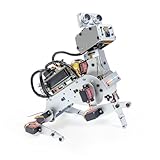
- AI-Powered Raspberry Pi Robot Dog — PiDog: Powered by Raspberry Pi (5/4B/3B+/3B/Zero 2W), OpenClaw, and multi-LLMs like ChatGPT, Gemini, Grok, DeepSeek, Qwen & Ollama. With 12 servos, camera, gyroscope, hearing & touch sensors, PiDog can see, listen, talk, move, and interact intelligently. Supports OpenCV, MediaPipe, TTS & STT, app control, FPV & Python. A great STEM robotics gift for students, makers & tech enthusiasts—perfect for birthdays and holidays. (Raspberry Pi not included)
- Realistic Dog-like Movements: PiDog's 12 powerful servos enable 32 dog-like actions, including walking, sitting, standing, shaking its head, wagging its tail, and performing playful tricks, closely mimicking a real dog and providing an engaging experience. This is an AI development robot product designed for engineers, suitable for ages 15 and above
- Rich Sensor Suite for Interactive Experiences: PiDog features ultrasonic, touch, gyroscope, sound, camera, speaker and microphone. These provide it with advanced hearing, vision, and touch, enabling it to see, detect obstacles, respond to touch, and recognize sounds, making interactions highly engaging
- AI-Powered Interactions with OpenClaw & Multi-LLMs. PiDog combines voice, vision, and gesture recognition for immersive AI experiences. Powered by OpenClaw and multi-LLMs like ChatGPT, Gemini, Grok, DeepSeek, Qwen, Doubao, and Ollama (local LLMs), it can understand questions, respond naturally through TTS & STT, recognize math problems, interpret hand gestures, and hold smart conversations. OpenClaw also enables customizable AI behaviors and personalized robotics development, helping users create their own intelligent robotic companion
- Comprehensive Learning Resources and Support: PiDog offers detailed online documentation, video tutorials, prompt technical support, and an active forum community, ensuring beginners can easily complete all projects and enjoy a great experience
Automation itself can support consistent software verification and reduce human effort. NIST’s 2021 developer-verification guidance includes automated testing among eleven techniques; it is general guidance, not an endorsement of AI-generated tests or a claim that they can be trusted without review. NISTIR 8397.
Will AI replace software testers?
The cited material does not establish that testers are being replaced or that AI can take responsibility for test strategy, risk decisions, or release acceptance. Generating a candidate test is not the same as deciding which risks matter, whether an assertion represents the requirement, or whether a result is sufficient to ship. Those decisions need accountable human judgment in the workflow.
Are AI-generated tests reliable?
Not automatically. A generated test can misunderstand the requirement, make an assertion that passes without checking the intended behavior, use unsuitable data, or behave inconsistently. A script “repair” that makes a failing test pass can also conceal a real product defect if the change is not reviewed. Treat generated tests as proposals: a reviewer should be able to understand what each test checks and why its expected result is correct.
Rank #2

- Optimized AI Arm Kit for LeRobot & Hugging Face Projects – The SO-ARM101 is an upgraded low-cost robotic arm servo motor kit designed for AI robotics enthusiasts and developers. Fully compatible with LeRobot and Hugging Face frameworks, it supports imitation learning and reinforcement learning, making it ideal for real-world robotics applications. (3D-printed parts not included.)
- Enhanced Wiring & Performance – Compared to the SO-ARM100, the SO-ARM101 features improved wiring to prevent disconnection at joint 3 and eliminates range-of-motion limitations. The leader arm uses optimized gear ratio motors for smoother performance—no external gearboxes required.
- Real-Time Leader-Follower Functionality – New real-time tracking allows the leader arm to follow the follower arm, enabling human intervention and correction during reinforcement learning (RL) training. Perfect for hands-on AI robotics development and research.
- Open-Source, DIY-Friendly & Nvidia-Compatible – Developed by TheRobotStudio, this open-source AI Arm kit integrates seamlessly with the LeRobot platform, offering PyTorch-based datasets, simulation, training, and deployment tools. Fully compatible with Nvidia Jetson edge devices, including reComputer Mini J4012 Orin NX 16 GB.
- Comprehensive Learning Resources – Includes detailed open-source assembly and calibration guides, testing tutorials, and deployment instructions. From wiring to AI training, get everything you need to start building, teaching, and optimizing your robotic arm for grasping and placing tasks.
ISTQB’s CT-GenAI syllabus covers hallucinations and reasoning errors, bias, privacy and security, environmental impact, and organizational adoption. Its version 1.1 update adds context on LLM-powered agents and AI-assisted testing approaches while retaining the qualification’s overall scope. See the CT-GenAI syllabus page and ISTQB update announcement.
Recommended Free Tools
What risks should a team manage?
Incorrect or misleading output
Review test intent, assertions, fixtures, and stability. A plausible-looking test is not proof that the requirement is covered, and a passing result is not meaningful if the test checks the wrong behavior.
Privacy and security
Before sending prompts, source code, test data, or outputs to a tool, find out what is transmitted and retained and whether sensitive information is permitted. NIST describes AI security risks involving confidentiality, integrity, and availability, including risks to training and output data. It also notes that current frameworks do not comprehensively cover some machine-learning attack types, including evasion and model extraction. Security guidance is evolving; no checklist should be treated as eliminating risk. NIST: AI Research—Security and Resilience (updated August 14, 2026).
Rank #3

- Raspberry Pi AI Robot: powered by Raspberry Pi (5/4B/3B+/3B/Zero 2W), features 12 servos and sensors for vision, hearing, and touch. Integrated with ChatGPT-4o, it responds to complex queries. With app control and FPV, users can manage and see its view in real-time. It supports Python programming
- Realistic Movements: 12 powerful servos enable 32 actions, including walking, sitting, standing, shaking its head, wagging its tail, and performing playful tricks, closely mimicking a real and providing an engaging experience
- Rich Sensor Suite for Interactive Experiences: features ultrasonic, touch, gyroscope, sound, camera, speaker and microphone. These provide it with advanced hearing, vision, and touch, enabling it to see, detect obstacles, respond to touch, and recognize sounds, making interactions highly engaging
- Engaging Interactions with ChatGPT-4o: with ChatGPT-4o enables voice interactions and visual recognition, making it smarter and more responsive. Users can have natural conversations, solve math problems via the camera, and interpret gestures, creating diverse and fun interactions
- Comprehensive Learning Resources and Support: offers detailed online documentation, video tutorials, prompt technical support, and an active forum community, ensuring beginners can easily complete all projects and enjoy a great experience
Workflow and maintenance costs
Account for review time, integration, training, and upkeep—not just the time a tool appears to save while generating a test. A tool that produces more tests can still add work if those tests are difficult to understand, unstable, or costly to maintain.
How to evaluate an AI testing feature
- Choose one bounded task. Name the pain point—for example, authoring a specific category of test, repairing brittle scripts, visual checks, or failure triage. Avoid starting with a broad goal such as “use AI for testing.”
- Record a baseline. Measure the existing effort and outcome for representative work: authoring and review time, script-maintenance effort, stability, or time spent diagnosing failures. Decide in advance what would count as a useful improvement.
- Run a limited pilot. Use representative tests and keep existing review, CI, and release controls in place. Compare the AI-assisted workflow with the baseline rather than relying on a demo or a vendor’s general claim.
- Inspect the output. Check whether a human can explain the test, whether its assertions reflect the requirement, whether data and expected results are appropriate, and whether it remains reliable across runs.
- Assess data and security. Determine what code, test data, prompts, and results leave your environment, who can access them, and how they are handled. Check that the proposed use is permitted for your data.
- Count total effort and decide. Include review, integration, training, and ongoing maintenance. Expand only if the measured result is worthwhile and the team can keep the necessary controls.
This is a practical evaluation approach, not a published benchmark or a quoted standard. When comparing options, examine the task and test level, correctness and maintainability, how failures are diagnosed, data and security handling, and workflow fit and total effort.
What’s actually slowing this PC down?
Pick the symptom - the matching free tool is one click away.
Or skip the browser setup
If the bounded task is capturing website screenshots for visual checks, ScreenshotNeo is a screenshot API and MCP server for developers. One GET request returns a PNG, JPEG, WebP, or PDF. For example, this cURL request captures a page as WebP:
Rank #4
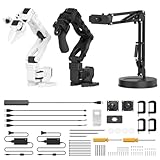
- 【End-to-End Imitation Learning】Hiwonder SO-ARM101 robot arm is an embodied intelligent hardware platform compatible with the Lerobot open-source framework. It provides developers with streamlined access to shared code, templates, and pre-trained models to explore the latest advancements in AI research.
- 【Dual-Camera Vision System】Equipped with both a gripper-mounted camera and an external camera, the system supports both precise manipulation and environmental awareness for accurate imitation learning.
- 【Hiwonder High-Performance Bus Servos】Featuring 12 high-torque bus servo motors with magnetic feedback, the Hiwonder SO-Arm101 robotic arm delivers smooth, stable motion, eliminating issues like power deficiency and jitter.
- 【Professional Control & Debugging】Integrated with the Hiwonder BusLinker V3.0 debugging board, the system supports servo scanning, real-time status monitoring, and trajectory control. The professional PC software simplifies device calibration and debugging, making it accessible for both researchers and hobbyists.
- 【Open-Source Compatibility】The SO-ARM101 robotic arm is designed to be fully compatible with the LeRobot open-source project. We acknowledge the contributions of the open-source community; all trademarks and copyrights belong to their respective owners.
curl -G "https://api.screenshotneo.com/v1/shot" -d access_key=YOUR_API_KEY --data-urlencode url=https://stripe.com -o shot.webpSee the ScreenshotNeo documentation for setup and options. It accepts cookie or consent banners and removes more than 60 known consent platforms, newsletter popups, and chat widgets before capture; each step can be turned off. Bot checks or CAPTCHAs, blank pages, timeouts, failed loads, and cache hits are not billed, and response headers identify the page verdict and billing status. Its MCP server provides take_screenshot, get_page_info, and capture_pdf for AI agents. The free plan includes 1,000 screenshots per month without a card; paid plans start at $5 for 3,000.
Sign up for ScreenshotNeo’s free plan: 1,000 screenshots a month, no card required.
Frequently Asked Questions
Does AI in test automation mean testing AI-powered software?
Not necessarily. It can mean using AI to help test ordinary software; testing AI-based systems is a separate discipline.
Do these 3 things before closing this tab:
1Clear out junk files and repair common Windows errors2Scan for outdated or missing drivers - takes under a minute3Repair Windows errors before they cause bigger problemsIs there a proven average productivity gain from AI test automation?
The cited studies do not establish a broadly generalizable average gain. Measure the result against your own baseline.
Quick Recap
Product prices and availability are accurate as of the date/time indicated and are subject to change. Any price and availability information displayed on Amazon at the time of purchase will apply.

