
iTechGuides is reader-supported. When you buy through links on our site, we may earn an affiliate commission. As an Amazon Associate I earn from qualifying purchases. Learn more
Shigeru Miyamoto joined Nintendo in 1977 at age 24, after studying art and industrial design. Four years later, he created Donkey Kong, the 1981 arcade game Nintendo says quickly became “the hottest-selling individual coin-operated machine in the business.” Its running-and-jumping design introduced Jumpman—later renamed Mario—and established the character-led platforming approach that helped Nintendo build enduring hardware and software franchises.
When did Shigeru Miyamoto join Nintendo?
Miyamoto joined Nintendo in 1977, when the company was still known mainly for playing cards, toys and novelties rather than video-game consoles. The New Yorker places his hiring at age 24, fresh from art school. In a 2015 interview with GBH/NPR, Miyamoto said he wanted to make toys, brought a portfolio to president Hiroshi Yamauchi and was hired as Nintendo’s first industrial designer.
| # | Preview | Product | Price | |
|---|---|---|---|---|
| 1 |
|
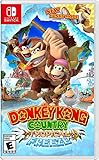
Donkey Kong Country: Tropical Freeze - Nintendo Switch | $51.70 | Buy on Amazon |
| 2 |

|
Donkey Kong Bananza (Nintendo Switch 2) | $69.00 | Buy on Amazon |
| 3 |

|
Mario Vs. Donkey Kong™ - US Version | $47.95 | Buy on Amazon |
That job title matters. Miyamoto did not enter a large, specialized game-design department. He came in as a designer with training in visual form, objects and play, then applied those skills to Nintendo’s emerging electronic projects.
Free tools Windows power users keep installed
One-click scans. No signup required.
Was Miyamoto really an artist before Donkey Kong?
Yes. His education was in art and industrial design, and his portfolio helped him secure the Nintendo position. The background shaped how he approached game characters: he treated a tiny on-screen figure as a visual communication problem as well as a programming one.
Popular on Amazon
- Donkey Kong, diddy Kong, dixie Kong and cranky Kong return for the franchise's debut on the Nintendo Switch system!
- This title includes all the fun and challenge of the original game, plus a brand-new mode that lets new and novice
- Players Enjoy this critically acclaimed adventure as Groovy surfing simian funky Kong.
- Funky Kong can double jump, hover, perform Infinite rolls and even perform Infinite underwater corkscrews.
- Thanks to his sturdy surfboard, even spikes can't slow him down.
Miyamoto later explained that the original Mario-sized character had to fit a 16-by-16 pixel grid. A hat, mustache and overalls made the figure readable despite that severe limitation. This was a practical design response to early hardware, not evidence of a separately measured performance advantage.
How many years after joining Nintendo did he make Donkey Kong?
Four years. Nintendo’s official history dates the development and distribution of the arcade Donkey Kong to 1981. The game’s central structure was simple to describe but new in its combination: as Miyamoto put it, “you were running on platforms and jumping over things.”
What happened in the 1981 arcade game?
The player controlled a carpenter called Jumpman, who climbed platforms and avoided obstacles while trying to rescue Pauline from a giant ape. Nintendo’s history describes the machine as becoming the hottest-selling individual coin-operated machine in the business. Nintendo does not provide an audited unit total for the original arcade release in the cited history, so that qualitative description should not be converted into a specific sales number.
Recommended Free Tools
When did Jumpman become Mario?
Nintendo of America staff associated the character with their warehouse landlord, Mario, and the name was adopted. The change turned a role defined by one arcade story into a reusable character identity. He was not yet the familiar plumber of later games; in Donkey Kong, he was a carpenter.
Why was Donkey Kong such a big deal for Nintendo?
It gave Nintendo a major arcade success while making the player-character memorable beyond the cabinet itself. The game’s platform-and-jump structure supplied a repeatable action language, and its named characters gave Nintendo assets that could return in new settings.
Also popular on Amazon
- Explore a vast underground world—by smashing your way through it!
- A brand-new 3D platforming action adventure starring Donkey Kong and Pauline
- Bash through just about anything in groundbreaking exploration! Crash through walls and carve tunnels—the more you smash, the more areas open up to you
- Pair up with Pauline to use Bananza Transformations: smash through obstacles with the raw strength of Kong form, gallop with incredible speed as a Zebra, and more
- Team up with a friend in two-player co-op as Donkey Kong and Pauline! Blast foes and terrain alike with Pauline’s voice as you explore together
The significance is therefore larger than a single sales claim. Donkey Kong connected mechanical innovation, recognizable characters and a business opportunity to move ideas between arcade machines and later home systems. Miyamoto’s design perspective helped Nintendo make games that could be identified by characters and play patterns, not only by hardware specifications.
What games did Miyamoto make after Donkey Kong?
Nintendo’s timeline records the next major franchise milestones:
The Tool Desk
Outbyte Driver Updater FREEFix the driver behind crashes, sound loss and screen glitchesFind Drivers →Outbyte PC Repair FREERepair Windows errors before they cause bigger problemsFix Now →| Year | Milestone | Why it matters |
|---|---|---|
| 1977 | Miyamoto joins Nintendo | He arrives as the company’s first industrial designer. |
| 1981 | Donkey Kong arcade release | Jumpman and Pauline appear; Nintendo describes the machine as the hottest-selling individual coin-operated machine in the business. |
| 1985 | Super Mario Bros. | Nintendo records Mario’s first appearance in this home-console series entry. |
| 1986 | The Legend of Zelda | Link makes his first appearance, extending Miyamoto’s character-and-world design beyond platforming. |
| 2025 | Donkey Kong Bananza for Switch 2 | Nintendo’s current timeline shows the character continuing in a modern franchise release. |
The sequence shows how Nintendo’s business developed: an arcade breakthrough was followed by home-console software, then by multiple durable characters and worlds. The New Yorker identifies Miyamoto with the creation of Donkey Kong, Mario and The Legend of Zelda, while Nintendo’s histories document the franchise and hardware milestones. It is more accurate to describe him as a central architect of Nintendo’s long-lived game franchises than to claim that one arcade title created the entire company empire by itself.
How did Miyamoto’s design approach influence Nintendo’s franchise model?
His work joined three layers that are often separated: an immediately understandable action, a character players could remember and a world that could support sequels. In Donkey Kong, jumping over hazards supplied the action; Jumpman and Pauline supplied the narrative focus; and the arcade format supplied a way to distribute the idea widely.
Mario then moved into Nintendo’s core home-console strategy with Super Mario Bros. in 1985. Link’s debut in The Legend of Zelda the following year showed that the same emphasis on character, exploration and readable worlds could support a different genre. Later Donkey Kong Country releases and continuing Nintendo hardware lines reinforced the pattern of developing software characters alongside platforms.
Also popular on Amazon
- Jump and climb your way through over 130 puzzling levels as Mario to retrieve the Mini-Marios stolen by Donkey Kong
- Overcome obstacles like spikes, lava, and falling bricks to make it to the end of each level
- Revisit the original challenge in Classic Style, or try Casual Style for a more relaxed experience
- Play through two new worlds, featuring new environments, enemies, and game mechanics
- Join the action as Toad and work together in the newly-added co-op mode
What should the “video game empire” claim mean?
It should mean a documented chain of influence, not a single-game origin myth. Miyamoto joined Nintendo in 1977, delivered an arcade hit in 1981, and then helped create characters and series that became central to Nintendo’s 1985 NES-era expansion and 1986 Zelda launch. Those milestones support the claim that he helped build a durable video-game business based on recurring characters, software series and hardware-software integration.
The evidence also has clear limits. Nintendo’s official wording supplies a strong qualitative sales assessment for the original arcade machine, but not an independently audited unit figure. The 16-by-16 pixel explanation comes from Miyamoto’s interview and illustrates the design constraints he faced; it is not a sales statistic.
Frequently Asked Questions
What was Shigeru Miyamoto’s first job at Nintendo?
He was hired as Nintendo’s first industrial designer after showing Hiroshi Yamauchi a portfolio. The role preceded the company’s modern specialist game-design structure.
Was Mario a plumber in the original Donkey Kong?
No. Nintendo’s history identifies him as Jumpman, a carpenter. The plumber identity became associated with Mario in later games.
Did Donkey Kong create the Nintendo Entertainment System?
No. The arcade game was an important success, but Nintendo’s later home-console growth involved additional hardware and software milestones, including the 1985 NES-era Super Mario Bros. launch.
Quick wins for a faster PC:
Repair Windows errors before they cause bigger problemsFix Now →Scan for outdated or missing drivers - takes under a minuteDriver Scan →Where did the name Mario come from?
Nintendo of America employees associated Jumpman with their warehouse landlord, Mario, and adopted that name for the character.
Quick Recap
Product prices and availability are accurate as of the date/time indicated and are subject to change. Any price and availability information displayed on Amazon at the time of purchase will apply.

