
What’s actually slowing this PC down?
Pick the symptom - the matching free tool is one click away.
Police Scotland began a pilot of Scotland’s Digital Evidence Sharing Capability (DESC) in January 2023, while officials and watchdogs were still examining risks around US access to data, contractual protections and control of encryption keys. The Scottish Biometrics Commissioner later determined that uploading biometric data to DESC was consistent with Scotland’s statutory Code of Practice. That was not an ICO approval, a court ruling, or proof that every sovereignty and contract concern had been resolved.
What did Police Scotland pilot?
DESC is a Scottish Government programme designed to let evidence move digitally through the justice system. The Scottish Biometrics Commissioner described it in 2023 as a £33 million initiative. The government awarded the contract to US-headquartered Axon Public Safety in October 2021, and the service is hosted on Microsoft Azure.
Computer Weekly reported that the Dundee pilot began on 24 January 2023. Police Scotland uploaded significant volumes of images, including still and CCTV images. DNA profiles and fingerprints were not uploaded while the legal position was being clarified.
Why did the data protection concerns matter?
The Scottish Police Authority’s Data Protection Impact Assessment identified risks involving both the location and control of sensitive data. It raised the possibility of US-government access under the US Cloud Act, described Microsoft’s contractual terms as generic or non-specific, and said Axon could not meet data-sovereignty clauses. It also noted that Axon held the encryption keys and could potentially decrypt and provide data if compelled by US authorities.
Free tools Windows power users keep installed
One-click scans. No signup required.
#1 Best Overall

- Massive capacity, up to 18TB capacity (1 1TB = one trillion bytes. Actual user capacity may be less depending on operating environment.).Specific uses: Business, personal
- Includes software for device management and backup with password protection (Download and installation required. Terms and conditions apply. User account registration may be required.)
- 256-bit AES hardware encryption
- SuperSpeed USB (5 Gbps); USB 2.0 compatible
In an April 2023 information notice, the Scottish Biometrics Commissioner recorded that the provider and its Azure sub-processor were US companies subject to legislation that could allow US-government access. The Commissioner said he was concerned the pilot had launched despite “unresolved major data protection issues.”
The issue was not simply whether approved Police Scotland staff could log in. Scotland’s Code of Practice, which took legal effect on 16 November 2022, requires under Principle 10 that biometric data be protected from unauthorised access and disclosure in accordance with the UK GDPR and the Data Protection Act 2018. The Commissioner’s concern was whether the arrangements adequately protected that data, including against access through the provider or its legal obligations.
Rank #2
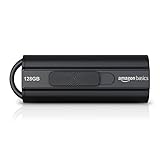
- USB 3.1 flash drive with high-speed transmission; store videos, photos, music, and more
- 128 GB storage capacity; can store 32,000 12MP photos or 488 minutes 1080P video recording, for example
- Convenient USB connection
- Read speed up to 130MB/s and write speed up to 30MB/s; 15x faster than USB 2.0 drives; USB 3.1 Gen 1 / USB 3.0 port required on host devices to achieve optimal read/write speed; backwards compatible with USB 2.0 host devices at lower speed
- High-quality NAND FLASH flash memory chips can effectively protect personal data security
What did the ICO say about cloud access?
The Information Commissioner’s Office told Computer Weekly it had not formally approved law-enforcement use of hyperscale cloud systems. It said US technical support or a US-government request under the Cloud Act could amount to an international transfer. The ICO’s reported advice was: “To avoid a potential infringement of data protection law, we strongly recommend ensuring that personal data remains in the UK by seeking out UK-based tech support.”
This was a caution about potential data-protection risks, not a finding that the DESC pilot was unlawful. Nor did the ICO’s comments amount to formal approval of the system.
Rank #3

- Dual USB-A & USB-C Bootable Drive – compatible with most modern and legacy PCs or laptops. Ideal for digital forensics, cybersecurity, and data-recovery professionals.
- Fully Customizable USB – easily Add, Replace, or Upgrade any compatible bootable ISO app, installer, or utility (clear step-by-step instructions included).
- Professional Digital Forensics Environment – CAINE (Computer Aided Investigative Environment) includes powerful tools for evidence collection, privacy auditing, file recovery, and forensic data analysis. Runs Live Permanently – operate CAINE directly from the USB without changing your current OS.
- User-Friendly Graphical Interface – intuitive desktop workspace lets you perform advanced investigations through a clean GUI — no command line required. No Internet Required.
- Premium Hardware & Reliable Support – built with high-quality flash chips for speed and longevity. TECH STORE ON provides responsive customer support within 24 hours.
What was Police Scotland’s response?
A Police Scotland spokesperson said: “Police Scotland continues to work closely with all relevant partners to identify, assess and mitigate any risks relating to data sovereignty, where required. Further risk assessments and mitigation will be kept under ongoing scrutiny.” The force also said digital evidence was securely held, access was fully audited and monitored, and only approved personnel could access it.
Those controls address access within the system, but they do not by themselves settle questions about provider access, encryption-key control, contractual commitments or possible legal demands from another country.
Rank #4

- 256GB ultra fast USB 3.1 flash drive with high-speed transmission; read speeds up to 130MB/s
- Store videos, photos, and songs; 256 GB capacity = 64,000 12MP photos or 978 minutes 1080P video recording
- Note: Actual storage capacity shown by a device's OS may be less than the capacity indicated on the product label due to different measurement standards. The available storage capacity is higher than 230GB.
- 15x faster than USB 2.0 drives; USB 3.1 Gen 1 / USB 3.0 port required on host devices to achieve optimal read/write speed; Backwards compatible with USB 2.0 host devices at lower speed. Read speed up to 130MB/s and write speed up to 30MB/s are based on internal tests conducted under controlled conditions , Actual read/write speeds also vary depending on devices used, transfer files size, types and other factors
- Stylish appearance,retractable, telescopic design with key hole
What did the Scottish Biometrics Commissioner ultimately decide?
| Date | Event |
|---|---|
| 16 November 2022 | Scotland’s statutory biometric Code of Practice took legal effect. |
| 24 January 2023 | Computer Weekly reported that the Dundee DESC pilot began. |
| 22 April 2023 | The Commissioner served a section 16 information notice requiring Police Scotland to explain whether biometric data had been exchanged, what types and volumes were involved, and where the data was hosted. |
| October 2023 | The Commissioner said Police Scotland’s response had not removed his specific concern that uploading sensitive biometric data could breach Principle 10. |
| December 2023 | After meeting UK Information Commissioner John Edwards, Commissioner Brian Plastow wrote that the ICO was unlikely to find the uploads conflicted with UK data-protection law. Plastow then determined that uploading biometric data to DESC was consistent with Principle 10. |
Plastow also said: “I am of course fully supportive of the need for digital evidence sharing to improve the effectiveness and efficiency of the justice system in Scotland.” His December determination resolved the question of consistency with Principle 10 as assessed by the Commissioner; it did not establish that every contractual, technical or data-sovereignty concern had disappeared.
Independent reader supportYour contribution helps us test, update, and keep practical guides available for everyone.What the decision does—and does not—establish
The Commissioner’s conclusion was a formal determination under Scotland’s biometric Code of Practice. It should not be read as a court finding, an ICO approval, or a blanket endorsement of every feature of DESC. The available record does not establish that the pilot caused a data breach or that a court found it unlawful.
Best Value
![Digital Evidence & Forensics Boot CD Disc Disk DVD [PC-LINUX-MAC-MOBILE]](https://m.media-amazon.com/images/I/51kPpP2sTlL._SL160_.jpg)
- Forensic Data Recovery: Recover hidden, deleted, or formatted files from hard drives, USB drives, and other storage devices without compromising evidence integrity.
- Drive Imaging and Cloning: Create exact, bit-by-bit replicas of storage devices for forensic analysis while preserving the original media.
- Malware Analysis Tools: Detect and analyze malicious software, ransomware, and other threats to identify digital traces left by attackers.
- File Integrity Verification: Use advanced hashing algorithms to validate the authenticity of recovered data and ensure it remains unaltered.
- Encrypted Data Access: Access and analyze encrypted files, drives, and partitions with specialized decryption tools (requires appropriate permissions).
It also does not provide validated public figures for crime reduction, system accuracy, false matches or public approval. The evidence described here concerns the pilot’s data-protection risks, the oversight process and the Commissioner’s eventual Principle 10 determination.
Quick Recap
Product prices and availability are accurate as of the date/time indicated and are subject to change. Any price and availability information displayed on Amazon at the time of purchase will apply.

