
Quick wins for a faster PC:
Clear out junk files and repair common Windows errorsFree Scan →Scan for outdated or missing drivers - takes under a minuteDriver Scan →iTechGuides is reader-supported. When you buy through links on our site, we may earn an affiliate commission. As an Amazon Associate I earn from qualifying purchases. Learn more
Choose SAROS if you want Housemarque’s fast, projectile-heavy third-person combat with permanent resources, lasting weapon and suit upgrades, and a run structure in which every death can improve the next attempt. Choose Returnal if you want the harsher reset-driven challenge, where the planet changes after death and progress comes mainly from learning patterns, routes, movement and decision-making.
SAROS launched worldwide on PlayStation 5 on April 30, 2026. It is not simply “Returnal but newer,” and it is not a direct sequel. Housemarque presents it as a new IP and the next evolution of the studio’s third-person action formula. The deciding question is how you want failure to work: SAROS makes failure contribute to long-term power, while Returnal makes repeated resets the central test.
| # | Preview | Product | Price | |
|---|---|---|---|---|
| 1 |

|
Returnal - PlayStation 5 | $35.95 | Buy on Amazon |
| 2 |
|
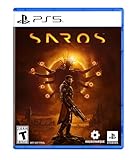
SAROS PS5 | $63.81 | Buy on Amazon |
The short recommendation
For most players choosing between the two today, SAROS is the more approachable starting point. Its permanent resources and progression mean a failed run can still leave you stronger, better equipped or closer to a useful loadout change. That structure softens the emotional cost of dying without removing the need to dodge, aim, read projectile patterns and survive demanding boss fights.
PC Slower Than It Used to Be?
A free scan shows the junk files, broken settings and background clutter dragging Windows down - then fixes them in one click.Free scan · Windows 10 & 11Crashes, No Sound, or Screen Glitches?
Random freezes, missing sound and display glitches usually trace back to one bad driver. Find and replace yours safely.Free scan · under a minuteReturnal remains the better choice for players who specifically want a severe roguelike loop. Its official premise is survival on a hostile planet that changes with every death. The satisfaction comes from improving your execution and understanding of the game rather than depending primarily on permanent loadout growth.
#1 Best Overall
- The procedural world of returnal invites you to dust yourself Off in the face of defeat and take on new, evolving challenges with every Rebirth.
- After crash-landing on a shape-shifting world, selene must search through the barren landscape of an ancient civilization for her Escape.
- Isolated and alone, she finds herself fighting tooth and nail for survival. Again and again, she's defeated - forced to restart her journey every time she dies.
Neither game is universally “better.” SAROS is the more persistent version of Housemarque’s bullet-ballet formula; Returnal is the purer reset-focused challenge.
What each game is
SAROS
SAROS is a single-player, third-person action game set on Carcosa, a hostile world that shifts around its inhabitants. You play Arjun Devraj, a Soltari enforcer investigating a mystery tied to the planet and its colony. Sony describes the combat around “bullet ballet”: dense projectile patterns, rapid movement, dodging, shielding, parrying, weapons, abilities and boss encounters.
The defining system is persistent progression. Housemarque says permanent resources and progression make every death valuable. Between runs, you can permanently upgrade an evolving loadout of weapons and suit parts. You still have to perform well inside each attempt, but a failed run is not only a lost opportunity; it can feed future strength and options.
The Tool Desk
Outbyte PC Repair FREERepair Windows errors before they cause bigger problemsFix Now →Outbyte Driver Updater FREEFix the driver behind crashes, sound loss and screen glitchesFind Drivers →Returnal
Returnal is Housemarque’s earlier third-person roguelike, built around surviving on a hostile alien planet that changes with every death. Its loop asks you to enter another run, interpret the current route and rooms, adapt to enemy patterns and make the most of whatever weapons and opportunities appear during that attempt.
The official description emphasizes the changing planet and survival premise rather than promising that every asset disappears after every death. The important practical distinction is that your advantage is primarily earned through knowledge and execution: learning when to dash, how to read attacks, which routes are dangerous and how to make sound decisions under pressure.
Death and progression: the decision that matters most
| Question | SAROS | Returnal |
|---|---|---|
| What does death mean? | A setback that can still contribute to permanent resources and future upgrades. | A reset in a world that changes after death, putting the emphasis on adapting and improving. |
| Where does long-term power come from? | Permanent weapon and suit-part progression, alongside the player’s own growing skill. | Primarily from better movement, route knowledge, pattern recognition and decision-making; the official description does not support saying that every asset is simply lost. |
| Who is the better fit? | Players who dislike feeling that a failed attempt erased all meaningful progress. | Players who enjoy repeated high-pressure attempts in which mastery is the main reward. |
Housemarque creative director Gregory Louden states the distinction directly: “A key gameplay distinction between SAROS and Returnal is permanent resources and progression making every death valuable.” That sentence is the clearest guide to the two designs.
In SAROS, permanent upgrades can make a later attempt more capable even when your previous run ended at a boss or in a difficult room. This does not turn the game into an effortless power climb. Permanent progression changes your baseline and available options; it does not replace the timing, aiming and movement demanded by projectile-heavy encounters.
What’s actually slowing this PC down?
Pick the symptom - the matching free tool is one click away.
In Returnal, the reset is part of the point. A run ending can feel severe because the next attempt asks you to rebuild momentum in a changed environment. That pressure makes every decision matter more. If you enjoy the idea that improvement should come mostly from your own understanding, Returnal’s structure is likely to feel more rewarding rather than merely restrictive.
Combat: similar speed, different pressure
What SAROS feels like
SAROS carries forward Housemarque’s fast, arcade-influenced third-person action. Sony’s description highlights projectile-heavy fights, dodging, shielding, parrying, weapons, abilities and boss battles. Encounters are designed around reading patterns while moving decisively, not standing still and trading damage.
Because permanent upgrades remain available between runs, you can approach the combat with a growing toolkit. A difficult encounter can teach you something about timing or positioning while also helping you work toward a stronger future loadout. That combination makes the action intense without making every death feel like a complete return to the starting line.
What Returnal feels like
Returnal also demands constant movement and rapid reading of enemy attacks. The reset-driven structure increases the pressure around each fight: your route, health management, weapon choice and willingness to take a risk all affect how far the attempt can go.
Returnal is the better match if the thrill comes from making a clean run after many failed ones. Its combat does not need permanent loadout growth to feel meaningful; the progression you notice most clearly is your own ability to recognize danger, exploit openings and keep calm when the screen fills with projectiles.
Is one combat system objectively better?
No reliable evidence establishes a universal winner, and the official material frames both games around Housemarque’s high-speed third-person action rather than a measurable quality ranking. Choose based on pressure preference: SAROS gives you persistent tools around the combat, while Returnal makes the reset itself a larger part of the challenge.
Is SAROS easier than Returnal?
SAROS is more forgiving in structure, not necessarily effortless in combat. Permanent resources and progression give you additional ways to improve future attempts, which can make setbacks easier to accept and reduce the feeling that a bad run produced nothing. That is a meaningful accessibility advantage for players new to roguelikes or wary of losing momentum.
It would be inaccurate to call SAROS easy. Its official presentation still emphasizes difficult enemies, projectile patterns, abilities and boss fights. You must learn to move, defend and attack under pressure. A persistent upgrade system can improve your options, but it cannot guarantee that a particular encounter will be simple.
Returnal may feel harder to a beginner because the reset loop places more responsibility on immediate execution and accumulated knowledge. That does not make every section objectively more difficult for every player. Someone who enjoys repeated resets and quickly recognizes patterns may prefer Returnal, while another player may find SAROS’s permanent progression more comfortable.
Story, setting and presentation
SAROS’s character-led mystery
SAROS follows Arjun Devraj, a Soltari enforcer, on Carcosa. The setting is hostile and shape-shifting, and the story is organized around a defined protagonist, colony and mystery. That gives SAROS a clear character-and-world framework for players who want a cinematic science-fiction narrative alongside the action.
Housemarque describes SAROS as a new IP that evolves the studio’s third-person action and mysterious storytelling after Returnal. Calling it a direct sequel would overstate the connection. You can approach SAROS without treating Returnal as required background.
Returnal’s survival premise
Returnal is officially framed around surviving a hostile planet that changes with every death. Its narrative premise is closely tied to the repeated-run structure: the world’s instability and your attempts to understand it are part of the experience.
Rank #2
- A fast-paced, cinematic action game set on the shape-shifting Carcosa
- Stunning graphics and gameplay
- Master bullet ballet combat
- Experience an unconventional story and journey
The available official descriptions do not establish a defensible ranking for narrative quality, emotional impact or storytelling complexity. If a character-centered mystery on Carcosa appeals to you, SAROS is the clearer fit from the information confirmed so far. If you prefer a survival-focused premise in which the changing planet is inseparable from the loop, Returnal offers that foundation.
PS5 features and technical presentation
Both games are designed as premium PlayStation 5 experiences. Sony lists fast loading, 4K output, adaptive triggers, haptic feedback and 3D audio for SAROS. On PS5 Pro, SAROS supports PSSR-enhanced resolution.
Returnal’s official PlayStation presentation also positions it as a major PS5 showcase. The available material does not establish a reliable head-to-head frame-rate, resolution or image-quality measurement, so it would be misleading to declare one game technically superior on that basis.
- SAROS PS5 features: fast loading, 4K output, adaptive triggers, haptic feedback and 3D audio.
- SAROS on PS5 Pro: PSSR-enhanced resolution support is listed by PlayStation.
- Returnal: presented as a flagship-style PS5 third-person action experience, without a supported comparative performance metric here.
Release date, editions and what you get
SAROS launched worldwide on PS5 on April 30, 2026. Sony Interactive Entertainment listed the launch editions at the following MSRPs:
| Edition | Launch MSRP | Confirmed contents |
|---|---|---|
| SAROS Standard Edition | $69.99 MSRP — Sony Interactive Entertainment, 2026 | The standard game edition. |
| SAROS Digital Deluxe Edition | $79.99 MSRP — Sony Interactive Entertainment, 2026 | Three cosmetic armor sets, including one inspired by Returnal. |
Those are launch MSRPs, not a statement of the current price in every store or region. Current discounts, physical inventory and regional taxes can change what you pay.
Returnal pricing is not established here, so there is no responsible current price comparison. Check the PlayStation Store or a retailer for the price and edition available in your region before buying.
SAROS: Zenith and planned post-launch support
Sony describes SAROS: Zenith as a later-2026 update at no additional cost. It is planned to add replayable modes, online leaderboards and further visual and control options. The cited announcement does not establish an exact delivery date, so treat “later in 2026” as the supported timing rather than expecting a particular month or day.
This planned support may matter if you want an ongoing score-chasing or replay-focused reason to return after finishing the main experience. It should not be treated as a promise of a specific feature beyond the modes, leaderboards and visual and control options described by Sony.
Do you need to play Returnal before SAROS?
No. SAROS follows a new protagonist, Arjun Devraj, on Carcosa and is described as a new IP. Housemarque presents it as an evolution of the action and mysterious storytelling associated with Returnal, not as a direct sequel that requires its predecessor.
Playing Returnal first can still be useful if you want to understand the design lineage. You will recognize the emphasis on rapid third-person movement, projectile patterns, defensive timing and boss-focused mastery. But that familiarity is optional. Start with SAROS if its permanent progression and Carcosa mystery appeal to you more.
Which game is better for beginners?
For a beginner who is interested in Housemarque’s style but dislikes losing all momentum after a failed attempt, SAROS is the safer recommendation. Persistent weapon and suit-part upgrades provide a continuing sense of progress, and the structure gives you a reason to view an unsuccessful run as useful rather than wasted.
For a beginner who specifically wants to learn a strict roguelike through repetition, Returnal can be the better introduction despite its harsher reset pressure. The game teaches through enemy patterns, route familiarity and movement discipline. The right beginner choice depends less on reflexes than on whether you want the game to help your future attempts through permanent upgrades.
Free tools Windows power users keep installed
One-click scans. No signup required.
Choose SAROS if these statements sound like you
- You want permanent upgrades between attempts.
- You like fast, bullet-heavy third-person combat but want failure to contribute to long-term power.
- You want a newer PS5-only Housemarque showcase.
- You prefer a structured character-and-colony mystery centered on Arjun Devraj and Carcosa.
- You are interested in replayable modes and leaderboards planned for SAROS: Zenith.
- You are comfortable with demanding combat as long as the overall progression is persistent.
Choose Returnal if these statements sound like you
- You want the more uncompromising reset-driven roguelike loop.
- You enjoy learning enemy patterns, routes and movement through repeated failure.
- You want the foundational Housemarque game whose third-person action SAROS evolves.
- You prefer a survival-focused experience in which each run’s execution matters more than permanent loadout growth.
- You find the changing world after each death more exciting than a steadily improving character build.
- You want the challenge of making your own knowledge and consistency the main source of progress.
A practical decision guide
- Decide how you want death to feel. If every death should leave behind permanent resources or upgrade progress, choose SAROS. If the reset is the attraction, choose Returnal.
- Choose your preferred source of mastery. SAROS combines player skill with an evolving loadout. Returnal puts more weight on your execution, route knowledge and pattern recognition.
- Consider your tolerance for repetition. Both games demand repeated attempts, but Returnal makes the reset loop more central to its identity.
- Pick the story frame that interests you. SAROS offers Arjun Devraj, the Soltari and Carcosa’s mystery. Returnal is built around survival on a hostile planet that changes with every death.
- Check the edition and timing. SAROS has Standard and Digital Deluxe editions at launch MSRPs of $69.99 and $79.99, respectively. Returnal’s current price is not established here, so verify it locally.
Common misconceptions to avoid
“SAROS is just Returnal 2.”
No. Housemarque describes SAROS as a new IP and an evolution of the third-person action and mysterious storytelling associated with Returnal. The games share a design lineage, but SAROS has a new protagonist and setting.
“SAROS removes the difficulty.”
No. Permanent progression changes the consequences of failure, not the need to survive projectile patterns, difficult enemies and boss fights. The defensible claim is that SAROS is more forgiving in structure.
“Returnal deletes everything after every death.”
That is too broad. The official description establishes a changing hostile planet and a reset-driven survival loop, but it does not support saying that every asset is lost after every death. Describe Returnal in terms of repeated attempts, adaptation and execution.
“The newer game automatically makes the older one obsolete.”
No. SAROS changes the progression philosophy; it does not replace the specific appeal of Returnal’s uncompromising reset loop. Players who want that pressure still have a clear reason to choose Returnal.
Do these 3 things before closing this tab:
1Repair Windows errors before they cause bigger problems2Scan for outdated or missing drivers - takes under a minute3Clear out junk files and repair common Windows errorsFinal verdict: which PS5 roguelike should you buy?
SAROS is the better starting point for players who want Housemarque’s bullet-ballet combat without making every death feel like a total reset. Its permanent resources, weapon upgrades and suit-part progression give failure a lasting purpose, while its demanding combat still rewards accurate movement, defensive timing and pattern recognition.
Returnal is still the right pick for anyone who wants the harsher, purer roguelike challenge. Its hostile world changes with every death, and its greatest rewards come from learning how to survive the next run rather than relying primarily on a permanently stronger loadout.
If permanent progression sounds like a quality-of-life upgrade, choose SAROS. If the reset is the point, choose Returnal.
Quick Recap
Product prices and availability are accurate as of the date/time indicated and are subject to change. Any price and availability information displayed on Amazon at the time of purchase will apply.
Recommended Free Tools

