
A black screen, crash, or shutdown while an RX 570 is under load can point to a power-supply problem, but it does not prove the PSU is at fault. Check the PC’s behavior, return hardware to stock settings, inspect the card’s power connection and airflow, and compare the PSU with your complete system’s requirements. If the cause remains unclear, testing with a known-working PSU is more useful than replacing one based on a single symptom.
What an RX 570 black screen under load can mean
Pay attention to what the PC actually does when the failure occurs. A full shutdown or restart is different from a black display while the computer remains active, and both differ from a game closing to the desktop. Note which workload triggers the problem and whether it began after a driver, BIOS, hardware, or tuning change. AMD’s system stability troubleshooting guidance recommends considering recent changes and workload conditions when investigating instability.
A PSU fault is one possible cause: AMD says a faulty or insufficient supply may cause boot failure, random crashes, hangs, reboots, or display corruption. Those symptoms overlap with problems that can come from the GPU, drivers, cooling, or other hardware, so the symptom alone cannot identify the failed component. See AMD’s PSU troubleshooting guidance.
RX 570 power requirements—and why the exact card matters
AMD lists 150 W typical desktop board power and a 450 W minimum PSU recommendation for the RX 570 on its RX 570 specification page. The 450 W figure is a recommendation for the GPU configuration, not a diagnosis of your current PSU or a guarantee that every 450 W unit is suitable for every PC. Consider the CPU and other installed components, and use the PSU’s rated output when assessing the complete system.
Free tools Windows power users keep installed
One-click scans. No signup required.
#1 Best Overall

- Intel ATX 3.0 & 3.1 Ready.
- Semi Modular 80 PLUS Bronze Certified.
- Native PCIe 5.1 / Gen 5 12+4 Pin 12V-2x6 Cable.
- Up to 235% Power Excursion & 300% GPU Power Excursion.
- Optimized Thermal Control: Steel shell with large vents and ICB fan enhance cooling performance.
Board-partner models can differ. For example, MSI lists 120 W power consumption, one 8-pin power connector, and a 450 W recommended PSU for its Radeon RX 570 Gaming 4G. That specification applies to this model only. Check the label or manufacturer’s page for your own card rather than assuming every RX 570 has the same power draw or connector.
Work through these checks before replacing the PSU
- Record the failure. Note whether the whole PC powers off or restarts, the display goes black while the PC remains active, or only the game crashes. Record the workload and any recent system changes.
- Restore stock settings. Disable GPU and CPU overclocks or tuning utilities. If needed, restore default BIOS settings using your system’s instructions. AMD recommends testing stability at factory defaults in its stability guidance.
- Inspect the card, power connection, and airflow. Shut down and unplug the PC before inspecting hardware. Check that the card is seated in the primary PCIe slot and its PCIe power connector is firmly attached. If the card uses a riser, remove it for diagnosis. Check that vents are unobstructed and the PSU has normal airflow. If dust blocks the PSU vents, follow the PSU maker’s cleaning instructions; AMD mentions a compressed-air duster as a possible way to clear dust, not as a guaranteed fix.
- Compare PSU capacity and connections with the complete system. Read the PSU’s rated-output label, check the requirements of the other components, and verify the exact RX 570 model and connector. A PSU’s label wattage by itself does not establish that it is healthy or adequate for the system.
- Use a known-working PSU as a diagnostic test when practical. AMD recommends testing with a known-working PSU whose wattage meets or exceeds the system’s needs when power-related instability persists. Do not open a PSU enclosure. If you are not comfortable removing or replacing the PSU, seek expert assistance.
If the problem continues after power checks
If a known-working, appropriately sized PSU does not resolve the failure—or a PSU swap is not practical—continue checking other likely causes rather than treating the PSU as cleared or condemned by one symptom. Test memory and other hardware at stock settings as appropriate. Check GPU and system temperatures, and investigate whether the card or another component may be defective.
Rank #2

- 80+ Gold Certified: The power supply boasts an impressive 80+ Gold Certified rating, guaranteeing exceptional efficiency
- Non-Modular Design: This power supply eliminates clutter and ensures neat cable management, promoting optimal airflow and a much cooler system
- Single 12V Output for Higher Power Usage: Power supply delivers reliable and stable power, even in demanding situations that require high amperage
- Global Voltage Adaptation: Whether you're travelling or working abroad, the Global Voltage Adaptation feature of the Segotep GN-650 Power Supply is perfect for use worldwide
- Four PCI-E 6+2 Pin Connectors: All wires can be separated from the power supply, making the inside of the case look cleaner. Four 12V 6+2 Pin cables support 40-series graphics cards
For software troubleshooting, update or clean-install the Radeon driver, review its release notes for known issues, and consider reverting a driver if the problem began after an update. AMD includes driver installation and rollback, as well as contacting the relevant system or component manufacturer when instability persists, in its stability troubleshooting steps.
Independent reader supportYour contribution helps us test, update, and keep practical guides available for everyone.When a replacement PSU is justified
Consider replacement when the current supply does not meet the complete system’s requirements or when testing and troubleshooting support a PSU fault. Choose by the PSU’s rated output, the correct PCIe connector and cable for both the exact card and PSU, physical fit in the case, and the manufacturer’s support and warranty terms. AMD’s specifications do not rank PSU brands or particular retail models.
What’s actually slowing this PC down?
Pick the symptom - the matching free tool is one click away.
Quick Recap
Best Value
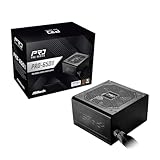
- 80 PLUS Bronze Efficiency: Provides reliable 650W power with 80 PLUS Bronze certification for energy-efficient operation
- ATX 3.1 Compatible: Meets latest ATX 3.1 standards with 200% power excursion capability for next-generation components
- Stable 12V Output: Delivers 54.1A on the +12V rail for consistent performance with modern CPUs and graphics cards
- Comprehensive Protections: Includes OCP, OVP, UVP, OPP, OTP, and SCP for complete system safety
- Quiet 120mm Cooling: Features a balanced fan design that maintains low noise levels during operation
Rank #4

- 80 PLUS Gold Efficiency: Delivers up to 90% energy efficiency, reducing power consumption and heat output for cost-effective operation
- ATX 3.1 Compatible: Meets the latest ATX 3.1 standard, ensuring compatibility with modern and next-generation components
- Stable 12V Output: Provides 54.1A on the +12V rail for reliable power delivery to CPU and graphics cards
- Comprehensive Protections: Includes OCP, OVP, UVP, OPP, OTP, and SCP for enhanced system safety
- Quiet 120mm Fan: Features a balanced cooling solution that maintains low noise levels during operation
Rank #3

- 80 Plus Bronze certified for high efficiency
- 120mm Low Noise Fan
- Industrial level protection with OVP,OCP,OPP,OTP, SCP
- DC-DC Circuit Design
- Active PFC design
Product prices and availability are accurate as of the date/time indicated and are subject to change. Any price and availability information displayed on Amazon at the time of purchase will apply.

