
The Tool Desk
Outbyte Driver Updater FREEFix the driver behind crashes, sound loss and screen glitchesFind Drivers →Outbyte PC Repair FREERepair Windows errors before they cause bigger problemsFix Now →iTechGuides is reader-supported. When you buy through links on our site, we may earn an affiliate commission. As an Amazon Associate I earn from qualifying purchases. Learn more
Rokid AI Glasses Style are lightweight, display-free smart glasses that combine prescription-ready eyewear, a camera, open-ear audio, cloud AI, translation, and first-person video. At 38.5 g, they are unusually practical for all-day wear, but they are not AR glasses: there are no in-lens captions, navigation arrows, camera previews, or visual notifications.
That distinction defines the entire buying decision. Rokid’s glasses are closer to ordinary eyewear combined with AI earbuds and a hands-free camera than to a miniature computer in front of your eyes. That makes them simpler, lighter, and potentially more comfortable than display-equipped glasses, but also less capable in situations where you need to see information silently.
My verdict: buy them if you want lightweight prescription-ready glasses, long typical battery life, spoken translation, useful voice AI, and longer first-person recordings. Skip them if you expect a display, premium construction, a charging case in the box, seamless glasses-camera video calls, or the more mature companion-app ecosystem associated with Ray-Ban Meta.
Free tools Windows power users keep installed
One-click scans. No signup required.
Key takeaways
- Rokid AI Glasses Style weigh 38.5 g and have a company-rated battery life of up to 12 hours of typical use, although continuous translation, AI analysis, and recording will reduce runtime.
- The glasses have no display, so AI answers and translations are spoken through open-ear speakers rather than shown as captions or overlays.
- The 12MP camera supports still photos and video up to 3K at 30 fps in independent testing, with fixed focus, a reported 34 cm minimum focus distance, and up to 10 minutes of continuous recording.
- Rokid’s current official product page lists the glasses at $349, while the January 19, 2026 launch announcement listed a $299 starting price; the optional charging case costs $99.
- Rokid is the better task-specific choice for lower weight, prescription flexibility, and longer recording, while Ray-Ban Meta is generally the safer choice for software polish, charging-case convenience, and glasses-camera video calls.
What are Rokid AI Glasses Style?
Rokid AI Glasses Style are display-free AI glasses with a built-in camera, microphones, speakers, touch controls, and a voice assistant. The glasses connect to a phone and internet services for functions such as visual questions, image recognition, spoken translation, calls, music, meeting notes, transcription, photography, and video recording. Rokid’s official product page describes the Style model as ordinary-looking eyewear enhanced with hands-free AI rather than as an augmented-reality headset.
#1 Best Overall

- 【POWER THAT MOVES WITH YOU. CREATE WITHOUT THE PAUSE】The Power Capsule snaps onto the temple and charges while you keep wearing the glasses. Rotate the two capsules for 6+ extra charges, keeping these video recording glasses ready through flights, workdays, sightseeing, and long recording sessions. Wearable camera glasses spend less time tied to an outlet and more time capturing what matters
- 【CAPTURE IT BEFORE IT'S GONE】A 12MP Sony IMX681 sensor with EIS records stable 3K POV video while you walk, cycle, travel, or play with your pet. For shoppers comparing camera glasses video recording quality, Rokid keeps first-person clips sharp without reaching for a phone. These AI smart glasses with camera are ready for TikTok, Instagram Reels, pet videos, travel clips, and daily vlogs
- 【JUST SAY “HI ROKID.” ASK WITHOUT BREAKING YOUR FLOW】Use Hi Rokid to access ChatGPT and Gemini by voice for questions, notes, object recognition, and spoken help while you work, travel, or keep your hands busy. These smart glasses with AI keep assistance close without pulling you into another screen. Paired with your phone, smart glasses with camera and Bluetooth also keep calls, audio, and capture connected
- 【BREAK LANGUAGE BARRIERS. KEEP THE CONVERSATION MOVING】Real-time spoken translation lets you stay in the conversation instead of stopping to type. Translation glasses fit travel, study, and multilingual conversations, while smart glasses with translation return spoken answers through audio and the paired app so your view stays clear
- 【HEAR YOUR WORLD. STAY PRESENT. WEAR IT YOUR WAY】Open-ear AAC speakers keep calls, music, AI replies, and translation close without blocking your ears. Glasses with camera and audio help you stay connected and aware on commutes, walks, and workdays. At 45.7g with lenses, the non-display design plus voice, touch, and head-gesture controls make smart audio glasses easy to wear and control while your view stays clear
The glasses use the wake phrase “Hi Rokid” for voice interaction. You can ask a spoken question, point the camera at an object or piece of text, request a description or translation, and hear the response through the frame’s open-ear speakers. The companion app is needed for setup and for importing recorded photos and videos before viewing them.
Rokid AI Glasses Style are not the same product as Rokid Glasses with a display. The Style model cannot show text, subtitles, navigation arrows, notifications, or teleprompter content in front of your eyes. The absence of a display is a limitation, but it is also one reason the Style model can remain closer to normal glasses in weight and daily practicality.
Are Rokid AI Glasses Style comfortable enough for all-day wear?
For many users, yes—but “all day” should mean wearing the frame for a normal day, not recording or running live translation continuously. The official weight is 38.5 g, and independent reviewers found the low weight, nose pads, and relatively conventional frame shape conducive to long wearing sessions. Tom’s Guide’s review reported that the glasses could not be fully drained during a day of continuous use and found the battery claim broadly credible.
Quick wins for a faster PC:
Scan for outdated or missing drivers - takes under a minuteDriver Scan →Clear out junk files and repair common Windows errorsFree Scan →Comfort remains personal. Prescription thickness, head size, nose shape, temple pressure, lens tint, and frame slippage can matter more than the headline weight. A frame that feels comfortable for two hours may create pressure after six hours, particularly when customized prescription lenses add weight at the front.
| Wear scenario | Likely experience | Important qualification |
|---|---|---|
| Ordinary prescription use | Strongest case for the Style model | Confirm local prescription range, lens options, and final frame fit before ordering. |
| Music, calls, and occasional AI | Well suited to a normal work or travel day | Open-ear audio preserves environmental awareness but does not isolate noise. |
| Frequent camera use | Useful for short hands-free clips and snapshots | Long recording sessions consume more battery and require later phone import. |
| Continuous live translation | Possible, but substantially more demanding | Tom’s Guide observed noticeably faster battery drain during live translation. |
| Indoor use with default tinted lenses | May be inconvenient for some users | Independent reviews reported that the default lenses can look darker indoors than expected. |
Appearance is more divisive than comfort. Digital Camera World found the frame relatively anonymous and comfortable, while TechRadar criticized the flat black plastic styling and considered it less attractive than Meta’s frames. The useful conclusion is not that the glasses are objectively stylish or unattractive: buyers should check the frame shape, lens tint, and return conditions before treating the Style model as a replacement for their only everyday glasses.
What lenses and prescription options are available?
Rokid advertises prescription, progressive, photochromic, polarized, and tinted lens options for the Style model. Prescription support is a major advantage for someone who wants one wearable pair rather than a smart-glasses novelty that must be worn over or instead of ordinary glasses. The official product listing is the appropriate place to check the options offered for a particular market.
Availability, optical partners, pricing, and supported prescriptions can vary by country. Before ordering, confirm all of the following:
- Whether your prescription falls within the supported range.
- Whether progressive or high-index lenses are available in your country.
- Whether the selected configuration includes clear, tinted, photochromic, or polarized lenses.
- Whether customized prescription lenses can be returned or exchanged.
- Whether a local optician can replace the supplied lenses without interfering with the camera, microphones, or electronics.
- Whether the default lens tint is practical indoors and at night.
Do not assume that the base price includes the prescription configuration you actually need. Lens availability and customization can change the effective cost, and customized eyewear may have different return rules from the standard frame.
How good is the Rokid camera?
The camera is best for quick first-person capture, not for replacing a phone camera. Rokid lists a 12MP Sony IMX681 sensor and 3024 × 4032 still-image resolution. Digital Camera World reported video support up to 3K at 30 fps, a fixed-focus design, and an approximately 34 cm minimum focus distance. Digital Camera World’s camera-focused review provides the most useful context for those specifications.
| Camera characteristic | What it means in practice |
|---|---|
| 12MP Sony IMX681 sensor | Enough resolution for casual photos, but megapixels alone do not establish phone-camera quality. |
| 3024 × 4032 stills | High-resolution vertical images are available according to Rokid’s specification. |
| Up to 3K/30 fps video | Suitable for casual clips and travel footage, with independent testing supporting the stated video mode. |
| Fixed focus | The camera cannot refocus on a nearby or distant subject as a phone camera can. |
| Approximately 34 cm minimum focus distance | Very close subjects may be soft if they are nearer than the stated distance. |
| No display | You cannot preview framing or review footage on the glasses themselves. |
| Up to 10 minutes of continuous recording | Longer than many quick-capture use cases require, but not a substitute for a conventional action camera. |
The best uses are hands-free snapshots, quick vertical travel clips, first-person footage while both hands are occupied, and recording a moment without reaching for a phone. The weaker uses are low-light photography, carefully framed portraits, rapid action where framing matters, immediate footage review, and any task where you need to confirm focus before recording.
Tom’s Guide reported bright daylight images, reasonably stable video, and up to 10 minutes of continuous recording. Digital Camera World described the imaging as broadly competent rather than revolutionary. Those findings support a practical camera, not a phone replacement. Camera quality depends on light, movement, subject distance, and framing—not just the 12MP label.
Photos and videos must be imported into the companion app before previewing. That workflow is acceptable for casual capture but less convenient than a phone’s immediate screen. A visible recording indicator is important, but users should still ask for consent before recording people, especially in private conversations, workplaces, schools, medical settings, or venues with their own rules.
How useful is the voice AI?
The voice AI is useful when you want an answer without taking out your phone, provided the glasses are connected to the phone and internet services required by the feature. You can ask general questions, point the camera at something for visual recognition, request an image description, and use the camera to translate visible text. The glasses respond audibly, so the interaction works best when you can listen rather than read.
Rokid advertises access to an ecosystem that includes ChatGPT, Gemini, DeepSeek, Qwen, and Microsoft AI Translation. Availability is not universal: Tom’s Guide reported access to ChatGPT in its region but not every model advertised by Rokid. The safe interpretation is that Rokid advertises support for multiple AI services, while the actual model list depends on region, software version, account configuration, and possibly the selected task.
The product is not a standalone computer. Cloud AI features require internet access, and the companion app is part of the setup and media workflow. In a noisy environment, voice activation and speech recognition can become less reliable even when the microphones work well in quiet conditions. Digital Camera World found the “Hi Rokid” wake phrase consistently reliable in its testing, but a successful quiet-room test should not be treated as proof of perfect performance outdoors or in a crowded restaurant.
Rank #2
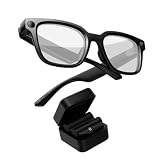
- 【POWER THAT MOVES WITH YOU. CREATE WITHOUT THE PAUSE】The Power Capsule snaps onto the temple and charges while you keep wearing the glasses. Rotate the two capsules for 6+ extra charges, keeping these video recording glasses ready through flights, workdays, sightseeing, and long recording sessions. Wearable camera glasses spend less time tied to an outlet and more time capturing what matters
- 【CAPTURE IT BEFORE IT'S GONE】A 12MP Sony IMX681 sensor with EIS records stable 3K POV video while you walk, cycle, travel, or play with your pet. For shoppers comparing camera glasses video recording quality, Rokid keeps first-person clips sharp without reaching for a phone. These AI smart glasses with camera are ready for TikTok, Instagram Reels, pet videos, travel clips, and daily vlogs
- 【JUST SAY “HI ROKID.” ASK WITHOUT BREAKING YOUR FLOW】Use Hi Rokid to access ChatGPT and Gemini by voice for questions, notes, object recognition, and spoken help while you work, travel, or keep your hands busy. These smart glasses with AI keep assistance close without pulling you into another screen. Paired with your phone, smart glasses with camera and Bluetooth also keep calls, audio, and capture connected
- 【BREAK LANGUAGE BARRIERS. KEEP THE CONVERSATION MOVING】Real-time spoken translation lets you stay in the conversation instead of stopping to type. Translation glasses fit travel, study, and multilingual conversations, while smart glasses with translation return spoken answers through audio and the paired app so your view stays clear
- 【HEAR YOUR WORLD. STAY PRESENT. WEAR IT YOUR WAY】Open-ear AAC speakers keep calls, music, AI replies, and translation close without blocking your ears. Glasses with camera and audio help you stay connected and aware on commutes, walks, and workdays. At 45.7g with lenses, the non-display design plus voice, touch, and head-gesture controls make smart audio glasses easy to wear and control while your view stays clear
Rokid’s available product information does not establish a definitive global subscription, credit, or separate-service pricing policy. Check the current Hi Rokid app, account terms, and regional service disclosures before buying if ongoing AI costs are important to your decision.
Is translation the Rokid Style’s best feature?
Spoken translation and camera-based text translation are probably the strongest reasons to choose the Style model over ordinary glasses. Translation is delivered through audio rather than visible subtitles, which lets you keep looking at the person or sign instead of holding up a phone. Tom’s Guide identified Microsoft AI Translation as the provider and reported reliable results in testing.
However, the available independent reviews give different language counts. Tom’s Guide reported support for up to 89 languages, while TechRadar described real-time translation support for 12 languages in its tested experience. Those figures should not be treated as equivalent or combined: they may refer to different translation modes, language-pair limits, regions, or software versions, but the available evidence does not prove which explanation is correct.
| Translation claim | Source and interpretation |
|---|---|
| Up to 89 languages | Reported by Tom’s Guide; treat as a tested or available-service claim whose exact mode and regional scope should be confirmed. |
| 12 languages | Described by TechRadar for its tested real-time translation experience; do not assume this represents every camera or translation function. |
| Visual text translation | The camera can process text, but the result is spoken because the Style model has no display. |
| Live conversation translation | Useful in quiet, orderly conversations, but affected by noise, accents, overlapping speakers, connectivity, and battery drain. |
Translation should be tested with your actual language pair before relying on it. Test quiet one-to-one speech, accents, numbers, proper names, rapid speech, overlapping speakers, wind, poor cellular coverage, and long sessions. Do not rely on consumer AI translation as the sole interpreter for medical, legal, emergency, or other safety-critical communication.
How are calls, music, and open-ear audio?
Rokid AI Glasses Style use two AAC speakers and four directional microphones for calls, music, AI replies, and voice commands. Open-ear audio lets you hear your surroundings, which is valuable while walking, traveling, or working around other people. Rokid’s specifications identify the four-microphone and two-speaker arrangement.
Open-ear speakers are not equivalent to sealed earbuds. Bass, maximum volume, and clarity may be weaker than dedicated headphones, and sound leakage can be noticeable in quiet rooms. Wind and traffic can also affect microphone pickup and your ability to understand spoken responses. The environmental-awareness benefit is real, but “open ear” should not be confused with completely private audio.
Tom’s Guide considered the audio experience practical while judging Meta’s overall product more mature. Digital Camera World found the wake phrase reliable. The glasses make sense for short calls, navigation through spoken instructions from a connected phone, music while remaining aware of traffic, and audible AI answers—not for audiophile listening or private conversations in silent spaces.
What are the biggest hardware compromises?
There is no display
The missing display changes how every feature works. You hear a translation instead of reading subtitles, hear an AI answer instead of seeing a silent response, trust the camera’s framing instead of previewing it, and cannot see navigation arrows or notifications in your field of view. The Style model is therefore better understood as AI earbuds plus a camera built into prescription-ready glasses than as lightweight AR.
Recommended Free Tools
That trade-off may be exactly what some buyers want. A display would add visual capability but could also add weight, complexity, power demands, and a more conspicuous headset-like experience. If visual information is essential, compare the Style model with Rokid’s display-equipped Glasses rather than assuming the Style model can be upgraded through software.
The charging experience is awkward
Rokid’s standard case is protective rather than a charging case, according to Tom’s Guide. Charging uses magnetic pogo-pin contacts and a USB-C adapter. The optional charging case costs $99 on the official product page, so portable charging is an additional purchase rather than a standard part of the package.
The charging case materially changes the value calculation. At the current observed official price of $349, adding the $99 case brings the glasses-and-case total to $448 before any prescription-lens upgrade, taxes, or regional delivery costs. The January 19, 2026 launch announcement listed a $299 starting price, but that launch price should not be confused with the current official listing.
| Price reference | Amount | What it means |
|---|---|---|
| Launch starting price | $299 | Price reported in Rokid’s January 19, 2026 global-launch announcement. |
| Current official product-page price observed August 18, 2026 | $349 | Current listed starting point in the supplied research; recheck before publication. |
| Optional charging case | $99 | Useful for portable charging, but not necessarily included with the standard purchase. |
| Charging cable | $39 | Listed as an additional accessory on the official product page. |
Rokid’s product page shows 30-day returns and a one-year limited warranty, but buyers should verify the terms for their country and for customized prescription lenses. Prices, lens inclusions, shipping, and policies can change, so the official listing should be checked immediately before ordering.
What’s actually slowing this PC down?
Pick the symptom - the matching free tool is one click away.
The build is less premium than Meta’s
Independent opinions agree more on comfort than on appearance or construction. TechRadar criticized the flat black plastic styling and charging setup, while Tom’s Guide described the frame as somewhat flimsy compared with Meta’s glasses. Digital Camera World found the design more anonymous and comfortable. Treat build quality and style as meaningful trade-offs, not objective pass-or-fail facts.
How do Rokid AI Glasses Style compare with Ray-Ban Meta?
Rokid AI Glasses Style and Ray-Ban Meta are not identical products, so the better choice depends on the task. Rokid emphasizes low weight, prescription flexibility, voice-first AI, translation, and longer reported recording. Ray-Ban Meta generally offers a more mature ecosystem, more polished social features, a charging-case workflow, and glasses-camera video calling according to the independent comparisons in the supplied research.
| Priority | Better fit | Why |
|---|---|---|
| Lowest weight | Rokid Style | The Style frame weighs 38.5 g. |
| Display or visual captions | Neither standard display-free model | Choose a display-equipped product such as Rokid Glasses if visual overlays are essential. |
| Mature ecosystem and polished social features | Ray-Ban Meta | Independent reviewers generally describe Meta as the more mature overall experience. |
| Long first-person recordings | Rokid Style | Tom’s Guide reported up to 10 minutes of continuous recording. |
| Charging-case convenience | Ray-Ban Meta | Rokid’s charging case is an optional $99 purchase rather than a standard assumption. |
| Prescription-first buying goal | Rokid Style | Rokid strongly positions the frame around prescription and multiple lens types, subject to local availability. |
| AI model choice | Rokid Style, with qualifications | Rokid advertises a broader AI-provider ecosystem, but actual access varies by region and software version. |
| Video calls using the glasses camera | Ray-Ban Meta | Tom’s Guide reported that the Rokid Style does not support glasses-camera video calling. |
| Fashion and premium feel | Usually Ray-Ban Meta | Reviewers generally favored Meta, although frame style remains subjective. |
Do not interpret the comparison as an overall Rokid victory. Rokid targets a different balance: lighter hardware and a strong prescription-and-translation proposition in exchange for less polished software, less convenient charging, and no display or glasses-camera video calling.
Rank #3
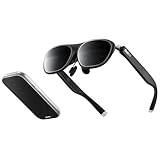
- 3-Screen Multitasking: Rokid AR Spatial features a unique 3-screen display, allowing simultaneous use of 3 apps for boosted productivity, gaming, or immersive entertainment.Note: When connecting with Android phones, the 3-screen display is only supported via DLNA protocol (Miracast and ChromeCast connections are limited to single-screen mode).
- 4 Smart Modes + 3 Screen Sizes: Switch between Reading, Giant Screen, Sports, and Multi-Screen modes, each adjustable to Wide (16:9), Narrow (3:4), or Ultra-Wide (21:9) ratios(Some apps,e.g., File Assistant,don`t support). In Giant Screen Mode, the aspect ratio can expand up to 32:9, delivering a more immersive viewing experience for movies and videos.
- 3DoF (Three Degrees of Freedom) Functionality: Giant Screen Mode and Multi-Screen Mode support 3DoF, allowing the display to remain fixed in space without following head movements. Sports Mode and Reading Mode only support 0DoF, meaning the screen moves along with your head. (Is a versatile AR solution for work and play)
- Myopia & IPD Adjustment: Supports up to 600 degrees(currently, astigmatism is not supported). Effortlessly fine-tune the adjustment dials on top of the glasses to achieve optimal comfort and clarity, elevating your movie and gaming adventures to a new level. Users with myopia greater than 600° will need to purchase separate prescription lenses. Auto IPD adjustment (55–72mm) when paired with Station2.
- Cinematic Visuals: Max2 AR glasses boast a 50% larger Micro OLED display vs. Max, with 1920×1200 resolution, 120Hz refresh rate, 600 nits brightness, and 108% sRGB for vivid, lag-free visuals. (Causes enhanced immersion in movies/games)
What should prescription-glasses buyers check before ordering?
Prescription buyers should treat the final optical configuration as a separate purchase decision from the smart-glasses hardware. Confirm the supported prescription range, lens material, lens tint, progressive availability, optical partner, customization price, delivery time, and return policy in your country.
- Enter the exact prescription requirements. Check sphere, cylinder, axis, pupillary distance, and any progressive-lens details against Rokid’s supported range.
- Choose the lens type for real use. Clear lenses are more practical indoors, while polarized or tinted lenses may be preferable outdoors. Photochromic availability can vary by market.
- Check the starting configuration. Confirm whether the frame arrives with clear, tinted, or another default lens configuration.
- Read the customized-lens return terms. Prescription lenses may not have the same return treatment as an uncustomized frame.
- Ask an optician about replacement lenses. A local lens replacement may be possible, but the camera and electronics require the optician to handle the frame appropriately.
- Test comfort with your actual lens weight. A stock demonstration frame may not feel the same as a high-index or progressive prescription.
What should you test for phone dependence and failure modes?
Buyers should not assume that every advertised feature works independently of a phone, companion app, or internet connection. The supplied product information establishes companion-app and cloud-AI dependence but does not provide a stable, complete Android-and-iPhone compatibility matrix.
Before committing to the glasses, install the current Hi Rokid app and test the functions that matter to you. Pair the glasses, try AI with the phone locked and unlocked, disable Wi-Fi and cellular data to see what remains available, check Bluetooth range, import a photo and video, and inspect whether background permissions are required. If you use both Android and iPhone devices, test both rather than inferring compatibility from a retailer listing.
Camera testing should include daylight, indoor lighting, backlighting, movement, close subjects under the focus distance, walking while recording, vertical framing, storage limits, import time, and the recording indicator. Wearability testing should include two-to-four-hour sessions, hats, headphones, exercise or walking, indoor visibility, nose pressure, temple pressure, and whether the camera points where you expect with your facial shape.
What are the privacy and social concerns?
Camera glasses require more social care than a phone because the camera sits at eye level and can be activated hands-free. Use the visible recording indicator as a minimum signal, but do not treat the indicator as permission to record. Ask for consent before recording private conversations or identifiable people, follow venue and workplace rules, and check local recording laws.
Outdated Drivers Are Slowing You Down
One free scan finds every outdated or missing driver and matches the right update for your exact hardware.Free scan · exact hardware matchPC Slower Than It Used to Be?
A free scan shows the junk files, broken settings and background clutter dragging Windows down - then fixes them in one click.Free scan · Windows 10 & 11Cloud AI creates a separate privacy question from camera etiquette. A camera image or spoken request may be processed through online services, depending on the feature. The supplied research does not establish Rokid’s current data-retention policy, processing locations, or whether camera, microphone, cloud AI, and voice activation can be disabled independently. Review the current Rokid privacy policy, app permissions, and account settings before purchase, especially for workplace, health, education, or confidential use.
Who should buy Rokid AI Glasses Style?
Rokid AI Glasses Style are a good fit for buyers who already wear glasses and want useful hands-free features without a display. The strongest buyer profile is someone who values a 38.5-g frame, prescription flexibility, long typical battery life, spoken translation, quick first-person capture, and access to multiple advertised AI services, while accepting phone and cloud dependence.
- Buy the Style model if you want lightweight prescription-ready AI glasses, audio responses instead of a screen, travel translation, hands-free photos, and longer first-person video clips.
- Consider the optional charging case if you will spend full days away from a USB-C charger and want portable charging. The $99 accessory is less compelling for mostly home or office use.
- Choose a display-equipped Rokid model if visual translation, heads-up information, or teleprompter content is essential.
- Choose Ray-Ban Meta if ecosystem maturity, charging-case convenience, premium fashion styling, polished social features, or glasses-camera video calls matter more than the lowest weight.
- Skip camera glasses entirely if you are uncomfortable wearing a camera in social settings, depend on fully offline operation, or need professional-grade translation.
Final verdict: are they smart glasses you could actually wear all day?
Rokid AI Glasses Style make a credible all-day-wear argument because the physical product behaves more like normal prescription eyewear than like an AR headset. The 38.5-g frame, open-ear audio, nose pads, lens choices, and up-to-12-hour typical-use claim address the biggest everyday problem with smart glasses: whether you will keep wearing them after the novelty fades.
The compromises are substantial. There is no display, the default lenses may be too dark indoors for some users, the frame is less premium than Meta’s according to independent reviewers, charging is awkward without the optional $99 case, AI requires connected services, translation language support is not clearly documented across reviews, and the glasses-camera video-calling experience is weaker.
Do these 3 things before closing this tab:
1Clear out junk files and repair common Windows errors2Scan for outdated or missing drivers - takes under a minute3Repair Windows errors before they cause bigger problemsBuy the Rokid AI Glasses Style if you want lightweight prescription-ready glasses that add useful audio AI, spoken translation, and first-person capture without trying to become a full AR headset. Skip them if you want Meta-level polish, an included charging case, a display, or camera-based video calling.
Frequently Asked Questions
Do Rokid AI Glasses Style have a display?
No. Rokid AI Glasses Style are display-free smart glasses, so they cannot show captions, navigation arrows, notifications, teleprompter text, or camera previews. AI answers and translations are delivered through open-ear audio.
How long does the Rokid AI Glasses Style battery last?
Rokid rates the 210 mAh battery for up to 12 hours of typical use and up to 24 hours of standby. Continuous recording, frequent camera-based AI requests, and live translation will reduce runtime, with Tom’s Guide specifically observing faster drain during live translation.
Can Rokid AI Glasses Style use prescription lenses?
Yes. Rokid advertises prescription, progressive, photochromic, polarized, and tinted options, but lens availability and supported prescription ranges vary by market. Confirm the exact optical configuration and customized-lens return policy before ordering.
Do these 3 things before closing this tab:
1Scan for outdated or missing drivers - takes under a minute2Repair Windows errors before they cause bigger problems3Fix the driver behind crashes, sound loss and screen glitchesAre Rokid AI Glasses Style better than Ray-Ban Meta?
Neither product is better for every buyer. Rokid is the stronger task-specific choice for low weight, prescription flexibility, longer reported recording, and a broader advertised AI-provider ecosystem, while Ray-Ban Meta is generally stronger for software maturity, charging-case convenience, premium styling, and glasses-camera video calls.
Do Rokid AI Glasses Style work without a phone or internet?
The glasses are not a fully standalone computer. Setup, media importing, and cloud AI features depend on the companion app, phone connection, or internet service required by each function. Test offline behavior in the current Hi Rokid app before relying on a specific feature.
The Bottom Line
Bottom line: Rokid AI Glasses Style are among the more convincing display-free AI glasses for everyday wear, especially for prescription users who prioritize low weight, battery life, spoken translation, and hands-free capture. Their $349 current listed price—and the optional $99 charging case—makes the total value less obvious, while the absence of a display and mature video-call integration limits what they can replace. Buy them as voice-first smart eyewear, not as AR glasses.
Quick Recap
Product prices and availability are accurate as of the date/time indicated and are subject to change. Any price and availability information displayed on Amazon at the time of purchase will apply.

