
iTechGuides is reader-supported. When you buy through links on our site, we may earn an affiliate commission. As an Amazon Associate I earn from qualifying purchases. Learn more
ROHM joins Toshiba and Mitsubishi Electric to create a potential power chip titan, but the companies have not completed a merger. On March 27, 2026, they signed a memorandum of understanding to discuss integrating ROHM’s semiconductor business, Toshiba Electronic Devices & Storage’s semiconductor business, and Mitsubishi Electric’s power-device business; the structure, terms and closing date remain undecided.
The announcement is significant because it could combine three major Japanese power-device platforms, but the legal and commercial outcome is still open. The most accurate description is that ROHM, Toshiba and Mitsubishi Electric are exploring a business integration—not that they have already formed a new company.

Key takeaways
- ROHM, Toshiba and Mitsubishi Electric signed an MoU on March 27, 2026, to begin discussions about integrating specified semiconductor and power-device businesses.
- As of August 18, 2026, the cited company disclosures do not establish a definitive merger agreement, a new combined company, transaction terms or a completion date.
- The proposed scope is business-specific: ROHM’s semiconductor business, Toshiba Electronic Devices & Storage’s semiconductor business, and Mitsubishi Electric’s power-device business.
- The companies say greater scale, complementary technologies, a broader customer base and stronger global competitiveness are central reasons for considering the integration.
- The potential benefits are substantial, but due diligence, ownership, governance, regulatory review, customer qualification and manufacturing integration remain important hurdles.
Are ROHM, Toshiba and Mitsubishi Electric merging?
Not yet. The companies announced a memorandum of understanding, or MoU, on March 27, 2026, to begin discussions and examinations concerning a possible business and management integration. An MoU starts a process; it does not by itself create a merged company or guarantee that a definitive transaction will be signed.
The proposed scope also does not mean that ROHM, Toshiba Corporation and Mitsubishi Electric will necessarily combine wholesale. The disclosures identify particular businesses: ROHM’s semiconductor business, Toshiba Electronic Devices & Storage Corporation’s semiconductor business, and Mitsubishi Electric’s power-device business. The Toshiba announcement, ROHM’s official disclosure and Mitsubishi Electric’s release all provide the basis for that narrower description.
Popular on Amazon

- Minidodoca Electronics Fun Kit - The upgraded kit not only power adapter but also has more component specifications, it comes with commonly used sensors and components. Compatible with Raspberry Pi, it can meet almost all your needs.
- Kit includes:9v1A power supply Adapter+ Breadboard Power Supply Modules+Battery Clip+830 Breadboard+DuPont wire+ IC 4N35, IC 74HC595,IC 74HC138+4-digit digital tube display+12 values Capacitor+Alligator clip+Banana Plug+10 values Resistor+5 values LED+buttons+Buzzer+Precision Potentiometer+ Thermistor+RGB LED+ Photoresistor+Pin header+Transistor+Diode etc.
- Power module with 5.5MM * 2.5MM input interface, you can choose 9v 1A adapter as input or choose 9v battery as input (the battery needs to buy their own)
- LED working voltage 2.2V-3.4V, power module output is 3.3V,5V, please connect series buck resistor to avoid damage when using.4 digital tube display is common anode, please pay attention to the wiring rules when using。
- The products are all tested and then divided to ensure that each component works properly to the maximum extent possible.Use process has any questions, please contact our customer service.
| Question | Current answer as of August 18, 2026 |
|---|---|
| Was an MoU signed? | Yes. The announcement date was March 27, 2026. |
| Was a definitive merger agreement announced? | Not established by the cited company disclosures. |
| Were transaction terms announced? | No. Ownership, valuation, governance and detailed structure remain undisclosed. |
| Has a new combined company been created? | No confirmed announcement. |
| Are due-diligence and synergy discussions underway? | Yes. The parties announced discussions and examinations. |
| Is Mitsubishi Electric involved? | Yes, through its power-device business. |
| Has a completion date been announced? | No. |
ROHM’s filing is particularly important for interpreting the status. The filing characterizes the Mitsubishi-related discussions as being at a “very early stage” and says the definitive Toshiba-related agreement was expected to be determined after due diligence and continuing discussions. ROHM’s April 28, 2026 disclosure still described the companies as engaging in the previously announced discussions rather than reporting a completed combination; that follow-up is available in ROHM’s April 28 release.
What businesses would the proposed integration include?
The proposed combination would bring together selected semiconductor and power-device operations rather than automatically combining every business owned by the three corporate groups.
| Participant | Business identified in the proposal | Potential strategic contribution |
|---|---|---|
| ROHM | ROHM’s semiconductor business | Power and analog semiconductor expertise, silicon-carbide and other power-device activities, manufacturing capabilities, technology and customer relationships. |
| Toshiba | Toshiba Electronic Devices & Storage’s semiconductor business | Discrete semiconductor and power-device operations, manufacturing capacity, established industrial relationships, technologies and product lines. |
| Mitsubishi Electric | Mitsubishi Electric’s power-device business | Power-device technology, industrial and infrastructure relationships, transportation and energy-system application knowledge. |
| JIP and TBJ Holdings | Parties connected with the Toshiba-side ownership and transaction structure | Relevant ownership and deal-structure involvement; they are not semiconductor manufacturers in the same sense as the operating businesses above. |
The wording matters. The announced scope concerns Toshiba Electronic Devices & Storage’s semiconductor business, not necessarily every Toshiba business. It concerns Mitsubishi Electric’s power-device business, not all of Mitsubishi Electric’s electronics, industrial or infrastructure operations. The final asset, product-line and legal-entity scope has not been disclosed.
Why are the companies considering this combination?
The companies say the proposed integration is intended to address stronger international semiconductor competition, create enough scale to compete in global markets, combine complementary technologies and manufacturing capabilities, expand the customer base, serve more industrial sectors and maximize the value of the integrated business. Those objectives are summarized in Toshiba’s March 27 announcement.
Power semiconductors control, convert and switch electrical energy. They are used in electric vehicles, industrial automation, renewable-energy equipment, rail systems, data-center power infrastructure, consumer electronics and other electrification applications. A supplier’s success therefore depends on more than a single chip design: manufacturing processes, packaging, reliability testing, qualification support and long-term supply all matter.
Analysis: Scale can be strategically useful because power-semiconductor companies must fund wafer-fab capacity, packaging, process development, yield improvement and customer qualification over long product cycles. A larger Japanese platform could potentially offer customers a wider product portfolio and more domestic supply options. Those are plausible benefits, not confirmed results of the proposed integration.
How did the ROHM–Toshiba relationship lead to the three-way talks?
The March 2026 announcement expanded an existing ROHM–Toshiba process; it was not an entirely new approach that began with all three companies at the same time.
Quick wins for a faster PC:
Clear out junk files and repair common Windows errorsFree Scan →Scan for outdated or missing drivers - takes under a minuteDriver Scan →Repair Windows errors before they cause bigger problemsFix Now →Also popular on Amazon

- Complete and practical package: The package contains more than 400 components, which can help you complete interesting and simple electrical experiments.
- Clear and sturdy packaging: Each component is classified and packaged and placed in a transparent box with clear labels on it, making it easy to find components.
- Humanized design: The package includes a power module and a USB data cable, and the components can be directly plugged into the breadboard, which is more convenient without soldering.
- The quality of components is reliable.
- Compatible with STM32,Raspberry Pi,Arduino and so on.
- December 2023: ROHM and Toshiba jointly submitted a plan covering manufacturing cooperation and volume-production investment in power semiconductors. Toshiba says the plan was recognized under Japan’s government program for securing a stable semiconductor supply, and that the companies then advanced discussions on collaborative manufacturing.
- March 29, 2024: ROHM disclosed a proposal to begin negotiations aimed at strengthening its alliance with Toshiba’s semiconductor business. ROHM’s March 2026 filing refers to discussions with Toshiba and the JIP parties beginning after that proposal.
- March 27, 2026: ROHM, Toshiba, JIP, TBJ Holdings and Mitsubishi Electric signed the MoU covering discussions about integrating the relevant semiconductor and power-device businesses.
- April 28, 2026: ROHM continued to describe the parties as engaging in the previously disclosed discussions.
The earlier cooperation helps explain the announcement’s logic: ROHM and Toshiba already had a manufacturing and strategic relationship, while Mitsubishi Electric’s participation potentially broadens the proposed platform beyond that bilateral arrangement.
What would each company contribute?
ROHM’s role
ROHM would bring its semiconductor business, including power and analog expertise, manufacturing and technology resources, customer relationships, and activities involving silicon-carbide and other power devices. ROHM also announced in February 2026 that it was strengthening its gallium-nitride power-device supply capability by combining its own development and manufacturing technologies with TSMC process technology. The ROHM GaN announcement illustrates ROHM’s broader advanced-power strategy, but the GaN initiative should not automatically be treated as part of the proposed Toshiba–Mitsubishi integration.
What Toshiba Electronic Devices & Storage would bring
Toshiba Electronic Devices & Storage would contribute the semiconductor business identified in the MoU, including discrete semiconductor and power-device operations, manufacturing capacity, industrial customer relationships and complementary product and technology lines. The proposal does not establish that the entire Toshiba Corporation is being folded into the combination.
What Mitsubishi Electric would bring
Mitsubishi Electric would contribute its power-device business. Mitsubishi Electric’s application knowledge and relationships in industrial, infrastructure, transportation and energy systems could complement the semiconductor operations of ROHM and Toshiba Electronic Devices & Storage. The Mitsubishi Electric announcement describes the contemplated integration in those business-specific terms.
The Tool Desk
Outbyte Driver Updater FREEScan for outdated or missing drivers - takes under a minuteDriver Scan →Outbyte PC Repair FREERepair Windows errors before they cause bigger problemsFix Now →Why do JIP and TBJ Holdings matter?
JIP and TBJ Holdings matter because they are connected to the Toshiba-side ownership and transaction structure described in ROHM’s disclosure. Their involvement does not mean that either entity is an operating power-semiconductor manufacturer. The final role of each party would depend on the definitive structure, which has not been announced.
Why is the proposal being described as a “power chip titan”?
“Power chip titan” is an analytical characterization of the potential scale of the proposed group, not an official company name, verified market ranking or completed corporate entity.
The companies’ stated claim is narrower and supportable: they believe integration could provide the business scale and technological foundation needed to compete in global markets. That supports describing the proposal as an attempt to build a major Japanese power-semiconductor platform. It does not establish that the resulting company would be the world’s largest, Japan’s largest, or a particular-ranked supplier.
Also popular on Amazon

- Highest Cost Components Kit: It comes with more than 300pcs sensors and components for fun and simple electronic projects.
- Safe and Secure Pakcage: Resistors/LED/Transistors and Integrated Circuits are individually packaged and labeled, and well-stored in a sturdy box
- The Breadboard Power Supply come with a USB Power Cables,which is hard to find.
- Datasheet is available to download from our official website or you can contact our customer service.
- Not including the controller board.
No combined revenue, market-share figure or global ranking appears in the core official announcements supplied for this article. Claims that the proposed entity would be the “world’s second-largest” power-chip maker, a guaranteed rival to a named global leader, or an immediate EV-chip dominator would go beyond the evidence.
Recommended Free Tools
What could customers gain from the combination?
A completed integration could offer customers a broader portfolio, greater manufacturing scale and access to more device technologies, but those outcomes are not guaranteed by the MoU.
- Broader sourcing: Industrial and automotive customers could potentially obtain more types of power devices from one supplier group.
- Manufacturing depth: The parties could potentially coordinate capacity, process development, packaging and reliability capabilities more effectively.
- Long-cycle support: A larger platform may have more ability to support long qualification cycles and long product lifetimes.
- Advanced materials: Integration could increase investment capacity for silicon carbide, gallium nitride and advanced silicon devices, although no post-integration investment plan has been disclosed.
- Application alignment: Semiconductor technology could potentially be connected more closely to industrial, transportation, energy and infrastructure applications.
- Supply resilience: A stronger Japanese supplier could support domestic and regional supply-chain resilience, subject to actual capacity, yields and customer qualification.
The central unresolved question is whether the businesses are sufficiently complementary to create new value, rather than simply combining overlapping product lines, factories and organizational costs.
What are the biggest risks and obstacles?
1. The MoU may not become a transaction
Due diligence, valuation, ownership negotiations, governance design and regulatory review can delay, redesign or stop the process. The proposed integration should therefore be treated as conditional until the parties announce a definitive agreement.
2. The final scope could be much narrower
“Business integration” does not necessarily mean a three-way merger of the listed corporations. A final structure could involve a holding company, asset transfers, share transactions, joint ownership or another arrangement. It could cover selected products and facilities rather than every semiconductor activity.
Free tools Windows power users keep installed
One-click scans. No signup required.
3. Product and factory overlap could be difficult
Potential overlap may exist in discrete power devices, MOSFETs, IGBTs, silicon-carbide products, automotive-qualified components, industrial power modules, manufacturing sites and research functions. Restructuring, site consolidation or product rationalization are possible integration issues, but none has been announced.
4. Customer qualification takes time
Automotive and industrial customers generally qualify components, factories and suppliers before production use. A larger company may have a broader portfolio, but customers will not necessarily switch devices quickly or accept immediate changes to manufacturing location, process or product branding.
Also popular on Amazon
5. Manufacturing does not combine automatically
Power semiconductors rely on process-specific equipment, yield learning, packaging, reliability data and supply agreements. Combining corporate ownership does not automatically combine production capability or eliminate the cost of improving capacity utilization.
6. Governance and culture could complicate execution
ROHM, Toshiba’s semiconductor operation and Mitsubishi Electric have different ownership histories, management structures, product mixes and customer relationships. The parties would need to decide who controls capital allocation, technology road maps, factories and customer priorities.
PC Slower Than It Used to Be?
A free scan shows the junk files, broken settings and background clutter dragging Windows down - then fixes them in one click.Free scan · Windows 10 & 11Crashes, No Sound, or Screen Glitches?
Random freezes, missing sound and display glitches usually trace back to one bad driver. Find and replace yours safely.Free scan · under a minute7. Regulatory review could affect the design
A larger supplier could attract competition scrutiny, especially in product categories where the combined business has strong positions. Government support for domestic semiconductor capacity does not guarantee regulatory approval, funding or acceptance without remedies.
8. Financial discipline will matter
ROHM’s 2026 disclosures refer to structural reforms, business-portfolio optimization and efforts to improve profitability, including work related to its silicon-carbide business. That context makes the integration financially consequential, but it does not prove that financial pressure caused the proposal. The ROHM-related 2026 disclosure should be read as context rather than evidence of a stated causal explanation.
What must happen before a merger could close?
The next steps are not a guaranteed timetable, but readers should watch for a sequence of disclosures that would show whether the proposal is becoming a transaction.
- Due diligence: The parties examine finances, technologies, factories, contracts, liabilities, customers and intellectual property.
- Defined business scope: The parties identify the exact products, assets, employees, facilities and legal entities included.
- Transaction structure: The parties disclose whether the deal uses a holding company, asset transfers, share transactions, joint ownership or another mechanism.
- Ownership and governance: The parties explain control, board composition, management responsibilities and capital-allocation rules.
- Definitive agreement: The parties sign legally binding transaction documents, subject to any conditions.
- Regulatory and other approvals: Competition, national-policy, shareholder or other required reviews take place, depending on the final structure and jurisdictions.
- Operational integration: The new structure, if approved and completed, must coordinate factories, product road maps, customer qualifications, supply agreements and research programs.
Useful signals include a definitive agreement, disclosed ownership percentages, a valuation, a closing target, regulatory filings, capital-investment commitments, management appointments and specific factory or product updates. Until those disclosures appear, product availability, pricing and customer support should not be assumed to change.
How should investors and semiconductor customers evaluate the proposal?
The strongest evaluation will focus on execution evidence rather than the headline description. Investors can ask whether the combined platform would have enough scale and manufacturing capacity to compete globally, while customers can ask whether integration improves supply reliability without creating excessive dependence on one supplier.
Also popular on Amazon
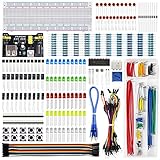
- Highest Cost Components Kit: It comes with more than 400pcs sensors and components for fun and simple electronic projects.
- Safe and Secure Pakcage: Resistors/LED/Transistors and Integrated Circuits are individually packaged and labeled, and well-stored in a sturdy box
- The Breadboard Power Supply come with a USB Power Cables,which is hard to find.
- Datasheet and Tutorial are available to download from our official website or you can contact our customer service.
- Not including the controller board.
| Decision criterion | Question to ask | Evidence still needed |
|---|---|---|
| Scale | Would the combined business have enough capacity and revenue to compete globally? | Combined financials, capacity figures and product scope. |
| Technology | Are the portfolios complementary or substantially overlapping? | Detailed product, process and technology road maps. |
| SiC and GaN | Can advanced-material investments achieve competitive yields and economics? | Capacity, yield, cost and customer-qualification plans. |
| Automotive traction | How much business is already qualified or designed into vehicle platforms? | Customer and program disclosures. |
| Manufacturing footprint | Will integration improve utilization and resilience? | Factory scope, investment commitments and supply plans. |
| Governance | Who decides technology and capital priorities? | Ownership, board and management structure. |
| Regulation | Could the combination require remedies or divestitures? | Regulatory filings and approval conditions. |
| Timeline | How long will negotiations and customer qualification take? | Definitive-agreement and closing disclosures. |
What does the proposal mean for Japan’s semiconductor industry?
The proposed integration could become an important consolidation of Japanese power-semiconductor capabilities if the parties agree on a workable structure and complete the transaction. It reflects the strategic value of domestic semiconductor manufacturing and the need for suppliers with sufficient scale to support electrification markets.
However, the government’s recognition of the earlier ROHM–Toshiba supply-security plan is not a guarantee of state funding, transaction approval or a successful three-way integration. Japan’s industrial-policy goals may support the strategic rationale, but commercial execution, customer demand, manufacturing economics and regulatory decisions will determine the outcome.
Bottom line: is the power chip titan already real?
The proposed power chip titan is not yet an operating company. ROHM, Toshiba and Mitsubishi Electric have agreed to explore a business integration covering specified semiconductor and power-device operations, building on an earlier ROHM–Toshiba relationship. The proposal could create a broader Japanese competitor with greater scale and technology breadth, but the decisive facts—scope, ownership, valuation, governance, approvals and completion—remain unresolved.
What’s actually slowing this PC down?
Pick the symptom - the matching free tool is one click away.
For now, the accurate headline is: ROHM joins Toshiba and Mitsubishi Electric in talks to build a major power-semiconductor group, but no merger has been completed.
Frequently Asked Questions
Did ROHM buy Toshiba or Mitsubishi Electric?
No. The March 27, 2026 announcement concerns an MoU to discuss integrating specified businesses; it does not establish that ROHM bought Toshiba, Mitsubishi Electric or either company’s entire semiconductor operation.
Is Mitsubishi Electric selling its entire semiconductor business?
The announced scope identifies Mitsubishi Electric’s power-device business, not all of Mitsubishi Electric’s electronics or industrial operations. The final assets and legal entities included have not been disclosed.
When will the ROHM, Toshiba and Mitsubishi Electric merger close?
No completion date has been announced. The parties must first continue discussions and due diligence, determine the transaction structure and terms, and obtain any required approvals.
Do these 3 things before closing this tab:
1Scan for outdated or missing drivers - takes under a minute2Repair Windows errors before they cause bigger problems3Fix the driver behind crashes, sound loss and screen glitchesWill the proposed combination immediately change chip prices or availability?
No immediate change should be assumed. An MoU does not itself change product availability, pricing or customer support, and any completed integration would still need to address manufacturing and customer-qualification requirements.
The Bottom Line
Bottom line: ROHM, Toshiba and Mitsubishi Electric are discussing a potentially significant power-semiconductor integration, not announcing a completed merger. The proposal could improve scale, portfolio breadth and Japanese supply resilience, but the “power chip titan” remains conditional on a definitive agreement, an acceptable structure, regulatory approval and successful operational integration.

