
iTechGuides is reader-supported. When you buy through links on our site, we may earn an affiliate commission. As an Amazon Associate I earn from qualifying purchases. Learn more
Build the dashboard as a layered system: an ELM327-compatible adapter at the vehicle boundary, a vehicle-profile decoder in the middle, React components for telemetry and history, and Gemini as an advisory reasoning layer rather than an authority. Persist every fault with its recurrence, evidence, source and confidence. That design lets a dark cockpit show live data without hiding whether a value came from a real car, a replay or a simulator.
What the system must do
A useful automotive dashboard answers two different questions. “What is happening now?” requires a responsive telemetry view with current readings, trends and warning states. “What keeps happening?” requires a longitudinal chronic-fault matrix that connects diagnostic trouble codes (DTCs) to timestamps, vehicle configuration and supporting measurements. Treating those as one list loses the history that makes recurring faults useful.
The implementation described for CarCare Global uses React, scoped CSS theme tokens, a small English/Turkish key-value dictionary, Gemini diagnostics and defensive fallback arrays. Recreate that pattern with explicit boundaries:
Quick wins for a faster PC:
Fix the driver behind crashes, sound loss and screen glitchesFind Drivers →Clear out junk files and repair common Windows errorsFree Scan →- Presentation: React renders the dark cockpit, telemetry cards, trend charts and fault matrix.
- Acquisition: An ELM327-compatible adapter exposes OBD-II readings through a transport your browser or gateway can reach.
- Vehicle abstraction: A profile decides which signals are polled, how bytes are decoded and which values are stored.
- Reasoning: Gemini receives normalized symptoms and evidence, then returns an advisory explanation with confidence and provenance.
- History: Every occurrence is stored so recurrence and last-seen time can be calculated instead of inferred from the current scan.
Keep replay and simulator sessions visibly marked as non-live. A polished interface must never make generated data look like a connected vehicle.
Popular on Amazon
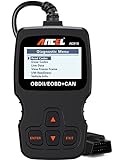
- CEL Doctor: The ANCEL AD310 is one of the best-selling OBD II scanners on the market and is recommended by Scotty Kilmer, a YouTuber and auto mechanic. It can easily determine the cause of the check engine light coming on. After repairing the vehicle's problems, it can quickly read and clear diagnostic trouble codes of emission system, read live data & hard memory data, view freeze frame, I/M monitor readiness and collect vehicle information
- Sturdy and Compact: Equipped with a 2.5 foot cable made of very thick, flexible insulation. It is important to have a sturdy scanner as it can easily fall to the ground when working in a car. The AD310 OBD2 scanner is a well-constructed mechanic tool with a sleek design. It weighs 12 ounces and measures 8.9 x 6.9 x 1.4 inches. Thanks to its compact design and light weight, transporting the device is not a problem. The buttons are clearly labelled and the screen is large and displays results clearly
- Accurate Fast and Easy to Use: The AD310 scanner can help you or your mechanic understand if your car is in good condition, provides exceptionally accurate and fast results, reads and clears engine trouble emission codes in seconds after you fixed the problem. This device will let you know immediately and fix the problem right away without any car knowledge. No need for batteries or a charger, get power directly from the OBDII Data Link Connector in your vehicle
- OBDII Protocols and Car Compatibility: Many cheap scan tools do not really support all OBD2 protocols. AD310 scanner as it can support all OBDII protocols such as KWP2000, J1850 VPW, ISO9141, J1850 PWM and CAN. This device also has extensive vehicle compatibility with 1996 US-based, 2000 EU-based and Asian cars, light trucks, SUVs, as well as newer OBD2 and CAN vehicles both domestic and foreign. Pls confirm with our customer service whether it is compatible with your vehicle before purchasing
- Home Necessity and Worthy to Own: This is an excellent code reader to travel or home with as it weighs less and it is compact in design. You can easily slide it in your backpack as you head to the garage, or put it on the dashboard, this will be a great fit for you. The AD310 is not only portable, but also accurate and fast in performance. Moreover, it covers various car brands and is suitable for people who just need a code reader to check their car
Choose the adapter boundary before writing React
The clearest physical boundary is an ELM327 OBD2 scanner adapter. The OBD Dashboard project documents USB/serial, Bluetooth, Wi-Fi/TCP and J2534 connection paths, with Web Serial available in browsers that support it. Your React app should consume a transport-neutral stream rather than contain Bluetooth, TCP and serial code in every component.
| Transport | Typical integration boundary | Strength | Constraint to expose in the UI |
|---|---|---|---|
| USB/serial | Web Serial or a local bridge | Stable wired link and predictable latency | Requires a compatible browser, cable and device permission |
| Bluetooth/BLE | Browser Bluetooth where supported, or a companion bridge | No cable in the cabin | Browser support and pairing behavior vary; show connection state prominently |
| Wi-Fi/TCP | TCP client or local gateway | Works well with a dashboard service on a laptop or tablet | Network loss must trigger stale-data and fallback states |
| J2534 | Native driver or gateway service | Access to professional pass-through hardware | Usually outside a pure browser sandbox |
Standard Mode 01 coverage is not the same as complete vehicle coverage. The OBD Dashboard project lists 90 Mode 01 PID definitions and more than 21,000 manufacturer-specific diagnostic codes across 37 makes (project figures reported in 2026). Build your decoder so unsupported PIDs and unknown manufacturer codes are explicit states, not silently converted to zero.
A transport-neutral adapter interface
Define a small contract that every connector implements. The rest of the application can then be tested with a simulator that produces the same objects.
Free tools Windows power users keep installed
One-click scans. No signup required.
type Adapter = {
  connect(): Promise<void>;
  disconnect(): Promise<void>;
  send(command: string): Promise<string>;
  onFrame(listener: (frame: RawFrame) => void): () => void;
  capabilities: { transport: string; readOnly: boolean };
};
Normalize raw responses immediately. Include the original response for debugging, but never let UI code parse hexadecimal bytes directly. A normalized reading should carry a signal name, value, unit, timestamp, quality and profile identifier.
Use vehicle profiles to prevent unsafe assumptions
Polling and decoding belong behind a vehicle-profile contract. A profile declares supported signals, command details, conversion functions, persistence rules and known fault context. This is essential because a PID that is valid for one model year can be absent, scaled differently or manufacturer-specific on another.
Also popular on Amazon

- Multi-Functions - Practical Multi-Functions OBD2 code reader features built-in OBD2 DTC lookup library, which help you to determine the cause of the engine light, read code, erase code, view freeze frame, I/M ready, vehicle information, data flow, real-time curve, get vehicle speed information, calculate load value, engine coolant temperature, get engine speed.
- Wide Capability - Supports 9 protocols compatible with most 1996 US-Based, 2000 EU-Based and Asian cars, and newer OBD II & CAN domestic or import vehicles. Supports 6 languages - English,German, Dutch, Spanish, French, Italian.
- 2.8" LCD Display - Designed with a clear display 2.8" Large LCD screen - white backlight and contrast adjustment. No need any battery or charger, OBD reader gets the power directly from your vehicle through the OBDII Data Link Connector.
- Compact Design - Car diagnostic scanner is equipped with a 2.5 feet long cable and made of a very thick flexible insulator.There are 6 buttons on OBD2 Scanner:scroll up/down,enter/exit and buttons that quick query VIN vehicle number& the DTC fault code.
- ABS / Airbag codes NOT Supported - It is able to read and clear check engine information which is part of OBDII system, but it cannot work with non-OBDII systems, including ABS / Airbag / Oil Service Light, etc.
type VehicleProfile = {
  id: string;
  label: string;
  signals: Record<string, {
    request: string;
    decode: (bytes: number[]) => number | string | null;
    unit?: string;
    intervalMs: number;
  }>;
  knownFaults: Record<string, { title: string; context: string }>;
};
Ha-Kake’s profile table demonstrates the scale difference: a 2011–2012 Nissan Leaf profile contains 61 signals, while a 2009 Mitsubishi Lancer ES profile contains 20. Those counts are examples of profile scope, not a promise that every vehicle exposes the same data. Display the active profile and its coverage in a diagnostics drawer so users can tell whether a blank value means “not supported” or “not yet polled.”
Design the dark cockpit with scoped tokens
Use CSS custom properties on a dashboard root instead of global color overrides. That keeps multiple dark variants isolated and allows a high-contrast mode without rewriting component styles.
.cockpit[data-theme="graphite"] {
  --bg: #0d1117;
  --panel: #151b24;
  --text: #e6edf3;
  --muted: #8b98a8;
  --accent: #45d6c8;
  --warning: #f2b84b;
  --danger: #ff6b6b;
  --grid: #263241;
}
.cockpit[data-theme="midnight"] {
  --bg: #080b14;
  --panel: #11182a;
  --text: #f2f5ff;
  --muted: #9aa7c2;
  --accent: #7bd7ff;
  --warning: #ffd166;
  --danger: #ff7a90;
}
Apply color and a non-color cue to every state: a warning icon, text label or pattern in addition to amber or red. Keep body text at a readable size, preserve visible keyboard focus, and test charts against both themes. Trend direction should be stated in text (for example, “coolant rising”) rather than communicated by hue alone.
Render cards from a stable data shape. A card should show value, unit, timestamp, freshness and source. If a value is stale, retain the last reading but overlay “stale” and the age; do not replace it with a plausible-looking zero.
Build a safe telemetry loop
Polling is not passive. It adds traffic to a safety-critical bus and can keep modules awake. Ha-Kake’s warning is concise: “Read-only means the services it sends, not that it stays off the bus.” Never operate or configure the dashboard while driving. Test with the vehicle stationary, ignition conditions appropriate to the adapter and a physical disconnect path.
Also popular on Amazon
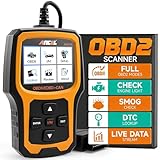
- Understand Your Check Engine Light – The ANCEL AD410 OBD2 scanner helps everyday drivers quickly read and clear engine-related fault codes, view code definitions, and understand why the check engine light is on before visiting a repair shop. With 42,000+ built-in DTC lookups, this car code reader helps reduce guesswork and makes basic vehicle diagnostics easier for beginners and DIY users
- Full OBD2 Diagnostics Made Simple – More than a basic engine code reader, this OBD2 scanner diagnostic tool supports key OBDII functions including reading/clearing codes, live data, freeze frame, I/M readiness, O2 sensor test, EVAP test, vehicle information, and MIL status. It helps you check your car’s condition, verify repairs after the issue is fixed, and communicate with mechanics more confidently
- Live Date & Real-time Vehicle Insights – View real-time engine data such as RPM, coolant temperature, fuel trim, oxygen sensor readings, and other available OBD2 parameters directly on the screen. These live data readings help you better understand how your vehicle is running, spot abnormal patterns, and make more informed repair decisions instead of relying only on a warning light
- Smog Check Readiness At A Glance – Use the I/M readiness function before a smog check or emissions inspection to see whether your vehicle’s monitors are ready. This OBD2 code scanner helps you confirm if recent repairs have brought the system back to a ready state, reducing the chance of failed inspections, retests, wasted trips, and unnecessary inspection fees
- Works With Most OBD2 Vehicles – Compatible with most 1996 and newer U.S.-based OBD2 cars, SUVs, and light trucks, as well as many 2000 and newer EU/Asian OBD2 vehicles. Supports major OBDII protocols including CAN, ISO9141, KWP2000, J1850 VPW, and J1850 PWM. This automotive diagnostic scanner is designed for wide vehicle coverage; please check compatibility with your vehicle before purchase
- Connect: Request the browser or bridge permission, identify the transport and display the adapter identity.
- Initialize: Send only the initialization commands required by the adapter and selected profile. Record command errors rather than retrying indefinitely.
- Schedule: Poll signals according to profile intervals. Stagger requests so a large profile does not burst every signal at once.
- Timestamp: Attach device-receipt time and, where available, adapter response time. Mark missing or malformed frames as quality failures.
- Stop: Abort polling on disconnect, page suspension, explicit stop or repeated transport errors. Release the port or socket.
A React hook can own lifecycle while a reducer owns state transitions. Keep the adapter in a service module so reconnect logic and cancellation are testable without mounting the cockpit.
Send evidence to Gemini, not raw bus noise
Gemini is most useful as an explanatory and prioritization layer. It should summarize normalized symptoms against known vehicle-trim vulnerabilities, not invent a diagnosis from an unfiltered stream. Send a compact evidence object:
{
  "vehicleProfile": "leaf-2011-2012",
  "symptoms": ["intermittent power loss"],
  "readings": [
    {"signal":"coolantTemperature","value":103,"unit":"C","ageSec":4,"quality":"fresh"}
  ],
  "dtcs": [{"code":"P0XXX","firstSeen":"2026-10-18T09:15:00Z","count":3}],
  "knownContext": ["profile-specific context here"],
  "source": "live"
}
Use a strict response shape containing a short explanation, ranked possibilities, evidence cited by signal or DTC, recommended checks, confidence and an advisory disclaimer. Persist the prompt version and model-response metadata with the result. If the model omits evidence or returns invalid JSON, treat the response as unavailable rather than displaying an ungrounded paragraph.
Design for latency and failure
The reference implementation uses defensive fallback arrays to prevent blank component states during network latency. Implement three visible states: pending (request sent, no answer yet), advisory (validated response with confidence) and fallback (deterministic explanation based only on local rules). A fallback can say that a code is present, list the readings that support it and recommend consulting the service documentation; it must not imitate a model-generated certainty.
Debounce symptom submissions, cancel obsolete requests and cap the amount of history sent in each call. Keep API credentials off the client when the deployment is public; use a server-side proxy with authentication and rate limits. If a direct client call is unavoidable for a controlled prototype, treat the key as exposed and rotate it.
Outdated Drivers Are Slowing You Down
One free scan finds every outdated or missing driver and matches the right update for your exact hardware.Free scan · exact hardware matchWindows Errors? Fix Them Before They Spread
Repair common Windows errors and clear accumulated junk for a smoother, more stable PC - no reinstall needed.Free scan · no reinstallAlso popular on Amazon
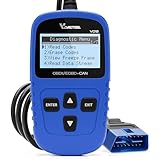
- 【A MUST-HAVE SCANNER TOOL FOR DIYERS】 - VDIAGTOOL VD10 car code reader is an incredibly useful, handheld obd2 scanner for each car owner or hobbyist, even for those with little to no experience when it comes to vehicle mechanics! Similar to a fixd car diagnostic tool, using this car diagnostic scanner is extremely easy. All you have to do is attach it to your car OBDII port and you can diagnose car problems in seconds! Read Codes (DTCs); Clear Codes; Live Data; View Freeze Frame; I/M Readiness; Vehicle Information.
- 【KEEP ENGINE IN GOOD STATUS】 - VDIAGTOOL check engine code reader brings a fast access to scan, read the car fault code, show its definition on the screen instantly, troubleshooting to find the root causes of problems, erase the engine fault code and turn off the MIL (Malfunction Indicator Light). Similar to a fixd car diagnostic tool, this car code reader helps ensure your engine stays in top condition.
- 【READ/CLEAR CODES & DTC LOOKUP】- No search online & saving your time, this vehicle car code reader retrieves generic (P0, P2, P3, and U0), manufacturer specific (P1, P3, and U1) codes, pending codes and displays DTC definitions based on the built-in database(more than 3000 codes) on the TFT screen, find out the root causes and clear the codes after fixed.
- 【ENHANCED OBD2 SCANNER WITH LIVE DATA & RETRIEVE FREEZE FRAME】 - This diagnostic scan tool for accurate diagnosis enables you to retrieve data from vehicle sensors, such as Engine RPM, Intake air temperature, Short/Long term fuel, Misfire data and etc. The freeze frame is stored in the PCM together with the diagnostic trouble code (DTC) related to the fault. Comparable to a fixd car diagnostic tool, the VD10 car code reader car scanner can be a valuable & practical diagnostic aid and also greatly help when diagnosing intermittent problems.
- 【I/M READINESS for THE S-nn-0-g CHECK】- OBDII vehicle may not pass the annual inspection unless the required monitors since reset are complete. So you should at least read the readiness monitors and make sure they are ready. This car obd2 scanner diagnostic tool is equipped with I/M readiness function to check the operations of the e-m-issi0n system on OBD2 compliant vehicles, run I/M monitor readiness test, checking if the pass vehicle s-m-0-g inspection.
Model the chronic-fault matrix as evidence
A current DTC list answers only whether a code is present now. A chronic-fault matrix adds recurrence and context. Store one occurrence record per detection, then aggregate for the matrix.
type FaultOccurrence = {
  id: string;
  timestamp: string;
  dtc: string;
  vehicleProfile: string;
  source: "live" | "replay" | "simulated";
  readings: Array<{ signal: string; value: number | string; unit?: string }>;
  recurrenceCount: number;
  lastSeen: string;
  confidence: "verified" | "tentative" | "unknown";
  advisoryId?: string;
};
The matrix can expose one row per DTC and columns for first seen, recurrence count, last seen, affected profile, supporting signals, source and confidence. Sort by recurrence or recent activity, but preserve a filter for source so simulated events cannot inflate a real vehicle’s history.
| Column | Purpose | Display rule |
|---|---|---|
| DTC and description | Identifies the fault context | Show “unknown description” when the profile lacks a mapping |
| Recurrence | Separates one-off events from repeated evidence | Increment only after a distinct detection, not every poll |
| Last seen | Shows whether the issue is current or historical | Display timezone and exact timestamp on hover or expansion |
| Supporting readings | Lets a reader inspect the evidence | Link to the captured values and their quality state |
| Source | Prevents replay or simulation confusion | Use a persistent LIVE, REPLAY or SIMULATED badge |
| Confidence | Separates decoded facts from tentative interpretation | Use verified, tentative or unknown labels with text |
Implementation sequence in React
- Create the domain types: Define
RawFrame, normalized readings, profiles, fault occurrences and advisory responses before building visual components. - Implement a simulator first: Feed deterministic frames, delayed responses and malformed packets through the same adapter interface. Label every screen SIMULATED.
- Add profile selection: Load the selected profile, show supported signal count and reject commands not declared by that profile.
- Build telemetry cards: Render freshness, quality, unit and source beside every value. Add empty, stale, error and reconnect states.
- Add persistence: Write fault occurrences transactionally, then derive matrix rows from stored events rather than mutating a separate summary that can drift.
- Add Gemini: Construct normalized evidence, validate the response schema, store prompt/version metadata and render confidence plus advisory status.
- Add replay: Replay a captured session at adjustable speed, preserving original timestamps and marking the source as REPLAY.
- Apply themes and localization: Scope theme tokens under the cockpit root and keep labels in a small EN/TR dictionary so adding a language does not duplicate components.
- Test disconnects: Simulate permission denial, cable removal, malformed frames, API timeout, invalid model output and browser suspension.
Privacy, retention and operational controls
Telemetry can reveal driving patterns, vehicle identity and repair history. Minimize what leaves the device: send only signals needed for the advisory, remove VIN and personal identifiers unless essential, and provide an export/delete control for stored occurrences.
Google AI for Developers states that Gemini API logs are retained for a default maximum of 55 days. Treat that as a service-level privacy condition, not a promise that your own database is deleted. Document what your proxy stores, how long it keeps prompts and responses, who can access them and whether sharing datasets is opt-in.
Use encryption in transit, protect server-side keys, separate live and test datasets, and redact identifiers before logging errors. Show users when an advisory was generated from a fallback or stale readings so a confident visual style cannot be mistaken for certainty.
Also popular on Amazon

- 【Diagnose Check Engine Light in Seconds – No Mechanic Needed】The FOXWELL NT301 OBD2 scanner instantly reads & clears engine fault codes (DTCs) with one click. Simply plug into the 16-pin DLC port, turn ignition on, and get accurate results within seconds—No prior car knowledge required. Save hundreds on dealership fees by knowing exactly what’s wrong before you visit a shop. The #1 choice car scanner for DIYers and car owners who want to take control of their vehicle’s health. It does not provide dedicated ABS, SRS/airbag, or TPMS module diagnostics, manufacturer-specific full-system scanning, service resets, key programming, or battery health testing
- 【Clear & Reset CEL with Confidence】Unlike cheap code readers that just erase codes temporarily, NT301 works like all professional vehicle code readers: It clears the check engine light only after you’ve fixed the underlying issue. Clearing codes does not repair the vehicle. Permanent DTCs cannot be erased directly by a scan tool and clear only after the vehicle verifies that the fault has been corrected. Use the foxwell scanner to verify your repair work and drive with peace of mind
- 【Sm-og Check Helper – Know Your Pass/Fail Status Before the Test】With dedicated one-click I/M readiness hotkeys and a simple Red-Yellow-Green LED indicator, you’ll instantly know if your vehicle is ready for annual testing. Built-in speaker provides clear audio feedback. No guesswork—just confidence before you head to the test center. One less thing to worry about when inspection day comes
- 【Advanced OBDII Modes – O- 2 Sensor & EVAP Testing】NT301 go beyond basic code reading with enhanced OBD2 modes. Run an EVAP system check to assess fuel tank condition. EVAP-related OBD II test availability varies by vehicle
- 【Live Data Graphing – Spot Engine Issues in Real Time】View and log live sensor data in easy-to-read graphs with this OBD2 scanner diagnostic tool. Monitor ox- ygen sensors, fuel trims, coolant temperature, RPM, and more to spot suspicious values instantly. This obd scanner gives you professional-grade insight without the pro price tag—a feature you won’t find on basic $20 car code readers
Common failures and fixes
The browser sees the adapter but no readings arrive
Verify that the selected transport is supported by the browser, that the adapter has permission and that the profile’s initialization sequence completed. Inspect raw frames in a diagnostic panel, then confirm that the decoder expects the adapter’s line endings and response format. Do not mark a signal unsupported until transport and profile errors are separated.
A value is always zero or implausibly stable
Check the profile’s PID support and byte conversion before changing the UI. Distinguish a legitimate zero from an unavailable PID with a quality field. Compare a simulator frame decoded by unit tests with a captured frame from the adapter.
The matrix shows duplicate recurrences
Deduplicate detections within a polling window and increment recurrence only when a code disappears and reappears or when a new ignition/session boundary is recorded. Keep the raw occurrences so the aggregation rule can be audited.
Do these 3 things before closing this tab:
1Repair Windows errors before they cause bigger problems2Fix the driver behind crashes, sound loss and screen glitches3Clear out junk files and repair common Windows errorsGemini returns useful prose but no reliable action
Require structured output, include evidence identifiers in the prompt, reject claims that cite no supplied signal or DTC, and fall back to deterministic local guidance. The dashboard should prioritize inspection steps and uncertainty, not present a model response as a repair instruction.
Questions the implementation should answer
Can Gemini read check-engine codes directly from an ELM327 adapter?
Not by itself. Your application must acquire and decode adapter responses, normalize DTCs and readings, then send that evidence to Gemini. The model sees the payload you provide, not the vehicle bus.
Is a read-only dashboard harmless to leave connected?
No. Read-only commands still create bus traffic and can keep control modules awake. Use the system only while parked, stop polling when finished and follow the adapter and vehicle manufacturer’s guidance.
Why not show every available PID?
Because support is vehicle- and profile-specific. Standard Mode 01 definitions provide a baseline, while manufacturer-specific signals require verified decoders. Showing unsupported values as if they were live evidence undermines the matrix.
Recommended Free Tools
What makes a fault “chronic”?
Define it in your product rules as repeated, distinct detections over time, then show the recurrence count, last-seen timestamp and supporting readings. A single current DTC is an event, not proof of chronic behavior.
Quick Recap
Product prices and availability are accurate as of the date/time indicated and are subject to change. Any price and availability information displayed on Amazon at the time of purchase will apply.

