
Free tools Windows power users keep installed
One-click scans. No signup required.
Choose a Raspberry Pi 4 for GPIO electronics, cameras, compact embedded projects, low-power services and the Raspberry Pi ecosystem. Choose an x86 mini PC for broad software compatibility, Windows, virtual machines, large Docker deployments, faster internal storage and a ready-to-use desktop or server. A newer ARM board such as the Orange Pi 5B or Radxa ROCK 5B is the middle path when you want an SBC form factor with substantially more CPU, RAM, video or AI capability.
The Pi 4 is still a current platform: Raspberry Pi says the Model B will remain in production until at least January 2034 (official specification). The right choice depends less on the labels ARM and x86 than on your applications, interfaces, storage, software support and complete system cost.
What “ARM versus x86” actually means
ARM and x86 are instruction-set architectures. The Pi 4 uses 64-bit ARMv8-A with four Cortex-A72 cores; most Intel and AMD PCs use x86-64. Architecture alone does not determine speed: a modern ARM chip can beat an old x86 chip, while a low-end x86 system can be slower or less efficient than a newer ARM design. CPU model, memory, storage, cooling, compiler and workload matter.
The physical products are also different. A Pi 4 is a single-board computer. You normally add a USB-C power supply, storage, case, cooling, micro-HDMI cable and input devices. An x86 mini PC usually arrives with its processor, RAM, SSD, case, cooling, power adapter and display outputs. Compare a complete Pi system with a complete mini PC, not a bare board with a finished computer.
The Tool Desk
Outbyte Driver Updater FREEFix the driver behind crashes, sound loss and screen glitchesFind Drivers →Outbyte PC Repair FREERepair Windows errors before they cause bigger problemsFix Now →#1 Best Overall

- Includes Raspberry Pi 4 4GB Model B with 1.5GHz 64-bit quad-core CPU (4GB RAM)
- Includes Pre-Loaded 32GB EVO+ Micro SD Card (Class 10), USB MicroSD Card Reader
- CanaKit Premium High-Gloss Raspberry Pi 4 Case with Integrated Fan Mount, CanaKit Low Noise Bearing System Fan
- CanaKit 3.5A USB-C Raspberry Pi 4 Power Supply (US Plug) with Noise Filter, Set of Heat Sinks, Display Cable - 6 foot (Supports up to 4K60p)
- CanaKit USB-C PiSwitch (On/Off Power Switch for Raspberry Pi 4)
Raspberry Pi 4 hardware in 2026
The current Raspberry Pi specification lists a Broadcom BCM2711, quad-core Cortex-A72 processor, 1GB, 2GB, 4GB or 8GB LPDDR4, dual-band 802.11ac Wi-Fi, Bluetooth 5.0/BLE, Gigabit Ethernet, two USB 3.0 and two USB 2.0 ports, dual micro-HDMI, a 40-pin GPIO header, camera and display connectors, H.265 hardware decoding to 4Kp60, H.264 decoding to 1080p60 and encoding to 1080p30. Power is through USB-C at 5V/3A; the listed ambient operating range is 0–50°C.
Some older documents quote 1.5GHz, while the current specification and newer product brief quote 1.8GHz. Treat that as a difference between revisions and source documents, not proof that every board behaves identically at one clock.
Where it remains a strong choice
- GPIO projects using sensors, relays, LEDs, buttons, SPI, I²C, UART or PWM.
- Robotics, camera and display prototypes using Pi libraries, HATs and tutorials.
- Lightweight Linux services, monitoring, automation, DNS, VPN and small web servers.
- Compact deployments with integrated Wi-Fi and Bluetooth.
- Education, where documentation and community troubleshooting reduce setup time.
Its practical limits
- The four older Cortex-A72 cores are modest beside current desktop-class processors.
- Built-in storage is microSD. USB 3 allows an SSD, but the enclosure, cable and power budget add complexity.
- Heavy databases, constant logs and sudden power loss make cheap microSD cards a weak server foundation.
- It is ARM64, so an x86-only binary, driver, container or VM image may not be available.
Pi 4 versus an Intel N100-class mini PC
Intel’s N100 is a four-core, four-thread x86-64 processor with up to 3.40GHz turbo, 6MB cache, a 6W processor TDP, AVX2, SSE4.1/SSE4.2, Quick Sync Video and VT-x virtualization support. Intel specifies support for up to 16GB memory, up to three displays and 4K output at 60Hz (Intel specifications). N100 describes a processor class, not one standardized mini PC; firmware, cooling, RAM, SSD, networking and power-adapter quality vary by vendor.
Rank #2
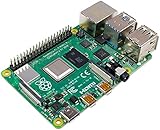
- Broadcom BCM2711, quad-core Cortex-A72 (ARM v8) 64-bit SoC @ 1. 5GHz
- 2. 4 GHz and 5. 0 GHz IEEE 802. 11b/g/n/ac wireless LAN, Bluetooth 5. 0, BLE
- 2 × USB 3. 0 ports, 2 x USB 2. 0 Ports
- 2 × micro HDMI ports supproting up to 4Kp60 video resolution
- Micro SD card slot for loading operating system and data storage
| Area | Raspberry Pi 4 | N100 mini PC |
|---|---|---|
| Form | Bare SBC; accessories usually required | Usually a complete computer |
| CPU and general use | Efficient, adequate for light services and learning | Usually stronger for desktop, compiling and multi-service workloads; exact results depend on the system |
| Memory | 1–8GB LPDDR4, board-selected | Often up to 16GB according to Intel; upgradeability depends on the model |
| Storage | microSD, or USB 3 external SSD | Usually internal NVMe or SATA SSD; upgrades vary |
| Graphics and media | Dual micro-HDMI; H.265 decode to 4Kp60 | Intel UHD, Quick Sync, 4K60 and up to three displays on supported configurations |
| Networking | Gigabit Ethernet, Wi-Fi and Bluetooth built in | Ethernet is common; Wi-Fi and Bluetooth depend on the model |
| GPIO | Standard 40-pin header plus camera/display connectors | No Pi-compatible GPIO ecosystem |
| Virtualization | Possible with ARM-compatible software, but image and performance choices are narrower | VT-x and broad x86 VM image support |
| Power claim | Board and accessory consumption varies | 6W is the processor TDP, not whole-system wall consumption |
Software compatibility is often the decisive difference
Raspberry Pi OS is officially supported and optimized for the platform, while Debian and Ubuntu provide ARM64 builds (Raspberry Pi OS information). Many open-source servers run well on ARM64. The issue is not whether Linux runs; it is whether your exact application has a supported binary, container image, driver and hardware-acceleration path.
- Source availability: code can be compiled for ARM.
- Binary availability: a ready-made ARM64 package or image exists.
- Hardware compatibility: drivers, acceleration and peripherals function correctly.
- Vendor support: the developer officially supports ARM rather than merely allowing it to run.
x86 is the safer default for proprietary Linux programs, older binaries, commercial desktop software, some games and emulators, vendor appliances shipped as x86 images, kernel modules that were never ported, and prebuilt VM images. Before buying for Docker, inspect the image manifest: if it has only amd64, you must build for ARM64, choose another image, use emulation with a performance penalty or run that service on x86.
Graphics, media servers and storage
The Pi 4’s video hardware makes direct play and selected codecs practical. An N100’s Quick Sync can make hardware transcoding easier for supported Plex or Jellyfin workflows. Neither specification guarantees a flawless media server: application support, kernel and Mesa versions, container permissions, subtitles, HDR, color management, codec and simultaneous stream count all matter. For transcoding, x86 is generally the lower-risk choice; the Pi 4 is better suited to direct play or carefully selected workloads.
Rank #3
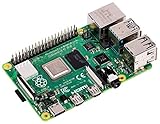
- Broadcom BCM2711, Quad core Cortex-A72 (ARM v8) 64-bit SoC @ 1.5GHz
- 1GB, 2GB, 4GB or 8GB LPDDR4-3200 SDRAM (depending on model)
- 2.4 GHz and 5.0 GHz IEEE 802.11ac wireless, Bluetooth 5.0, BLE Gigabit Ethernet
- 2 USB 3.0 ports; 2 USB 2.0 ports.
- Raspberry Pi standard 40 pin GPIO header (fully backwards compatible with previous boards)
A quality USB SSD can transform a Pi server, but it requires an enclosure, cable and reliable power. Keep databases and logs off a cheap microSD card, use tested backups and plan for recovery after power loss. Boards with eMMC or NVMe are more suitable when durable, high-throughput storage is central.
What the Pi 4 does that a mini PC does not
The 40-pin header, CSI camera and DSI display interfaces are the Pi 4’s defining advantage. A Python project may depend on BCM pin numbering, a Pi-specific library, a device-tree overlay or a Pi HAT. Moving it to another SBC can require rewiring, replacing libraries and changing the operating-system image. A mini PC with an internal header is not a drop-in GPIO replacement.
Do these 3 things before closing this tab:
1Repair Windows errors before they cause bigger problems2Scan for outdated or missing drivers - takes under a minute3Clear out junk files and repair common Windows errorsPi accessories also bring predictable mechanical dimensions, cases, tutorials and community examples. That ecosystem can save more engineering time than a faster processor saves execution time.
Rank #4

- Vilros Complete Starter Kit for Pi 4 Includes Raspberry Pi 4 Model B Board and all the accessories you need to get started.
- 9-PART KIT WILL HAVE YOU READY TO GET UP AND RUNNING: Kit Includes 1. Raspberry Pi 4 Model B Board 2. Case With Easy to connect Built-in fan 3. 64GB Micro SD card Preloaded with RP OS 4. Vilros Pi 4 Compatible Power Supply with Inline on/off switch (power supply color may vary white/black) 5. Micro HDMI to Standard HDMI cable (5ft) 6. Micro SD to USB adapter to reflash card if desired 7. Neoprene Storage Bag to store all parts when not in use 8. Set of 4 Heatsinks 9. Vilros QuickStart Guide instruction booklet for Pi 4
- PASSIVE & ACTIVE COOLING: The included case is well-vented and the kit also includes a set of heatsinks with thermal stickers for easy application and a pre-installed fan to keep the board cool in any use.
- CONVENIENT ACCESSORIES: The power supply features an inline on/off switch neoprene bag that holds and protects all the parts when not in use and the QuickStart guide is updated and written for Raspberry Pi 4.
- IMPORTANT: Kit does NOT include Keyboard, Mouse or Monitor
Alternatives worth considering
Raspberry Pi 5
The Raspberry Pi 5 keeps the 40-pin ecosystem while moving to a quad-core Cortex-A76 at 2.4GHz, 2GB, 4GB, 8GB or 16GB options, dual 4Kp60 display capability and stronger I/O. Raspberry Pi describes it as up to three times faster than the previous generation; that is an official claim, not a universal independent benchmark. It needs a stronger supply and active cooling is more important under sustained load. It remains ARM, so it does not solve x86-only software requirements.
Orange Pi 5B
The Orange Pi 5B uses an eight-core RK3588S (four Cortex-A76 and four Cortex-A55), up to 16GB LPDDR4/LPDDR4X, optional eMMC, specified Wi-Fi 6/Bluetooth 5.3 configurations, HDMI 2.1 output to 8K60 and a vendor-rated 6 TOPS NPU. It is attractive for video, AI and high-performance ARM work, but its software, GPIO, HAT and accessory experience is less standardized. “6 TOPS” applies only to supported operations, precision and frameworks; it is not general CPU speed.
Radxa ROCK 5B
The ROCK 5B is another RK3588-based board with LPDDR4X, NVMe expansion, multiple display paths, HDMI input and up to 6 TOPS NPU capability. It suits advanced video, edge-AI and storage projects. Some configurations require an add-on Wi-Fi card (Radxa FAQ), and it is not Pi-compatible.
Recommended Free Tools
Best Value

- Includes Raspberry Pi 4 4GB Model B with 1.5GHz 64-bit quad-core CPU (4GB RAM)
- CanaKit 3.5A USB-C Power Supply with Noise Filter (UL Listed) specially designed for the Raspberry Pi 4 (5-foot cable)
- CanaKit USB-C PiSwitch (On/Off Power Switch)
- Set of 3 Aluminum Heat Sinks for the Raspberry Pi 4
Intel N100 mini PC
This is the strongest general-purpose alternative for many buyers: complete hardware, x86 compatibility, SSD and RAM in common configurations, Quick Sync, VT-x, standard displays and easy Windows installation. Check the exact model for upgradeable memory, SSD quality, BIOS support, cooling, Wi-Fi and power efficiency.
Used business mini PCs
Refurbished Dell OptiPlex Micro, HP EliteDesk Mini, Lenovo ThinkCentre Tiny and Intel NUC systems can provide inexpensive x86 RAM and storage for home labs. Inspect fan, SSD, CMOS battery, power adapter, warranty and idle consumption; older systems may lack modern codecs or efficient standby.
x86 SBCs
Boards such as Radxa’s X2L use an Intel J4125 and an RP2040 (Radxa product list). They fit embedded projects that require x86 software but should not be assumed to provide Pi-style GPIO or community support.
Quick Recap
Recommendations by workload
| Workload | Best direction | Reason |
|---|---|---|
| Robotics, sensors, relays, camera projects | Pi 4 or Pi 5 | 40-pin GPIO, camera/display interfaces and mature libraries |
| Pi-hole, VPN, monitoring and light automation | Pi 4 | Low complexity and modest resource needs |
| Home Assistant with many add-ons | N100 mini PC for headroom | More storage, memory and x86 package availability |
| Docker with a few ARM64 services | Pi 4 can work | Verify ARM64 images and use durable storage |
| Large Docker stack or Kubernetes learning | N100 or stronger x86 | More RAM, storage and prebuilt images |
| Virtual machines | x86 mini PC | VT-x and broader image support |
| Plex/Jellyfin transcoding | N100-class x86 | Quick Sync and broader software support |
| Direct-play media server | Pi 4 can be adequate | Clients perform the decoding |
| AI at the edge | Orange Pi 5B or ROCK 5B | Integrated NPU, if your framework and model are supported |
| Desktop Linux or Windows | x86 mini PC | Applications, drivers, storage and display support |
| Retro gaming | Workload-dependent | x86 is broader; ARM can be efficient for selected consoles and images |
Buying checklist: compare the finished system
- List every application and check ARM64 and x86 support, container manifests, drivers and hardware acceleration.
- Identify required interfaces: GPIO, CSI, DSI, HDMI input, CAN, NVMe, SATA, multiple Ethernet ports or Wi-Fi.
- Price the board or PC, RAM, SSD or microSD, power supply, case, cooling, cables, HATs, enclosure and shipping.
- Separate short bursts from sustained 24/7 load; check cooling, fan noise and throttling risk.
- Choose storage for reliability: microSD for convenience, USB SSD for a Pi server, or eMMC/SATA/NVMe where available.
- Review official OS images, kernel maintenance, drivers, documentation, replacement availability and lifecycle.
- Estimate whole-system idle and load power. Do not compare Pi board power with an N100’s 6W processor TDP.
Bottom-line decision tree
- Need GPIO, Pi HATs or the largest beginner ecosystem? Buy or keep the Pi 4; consider Pi 5 for more performance.
- Need x86-only software, Windows, VMs, many containers or reliable transcoding? Choose an established x86 mini PC, commonly N100-class.
- Need substantially more ARM performance, NVMe, video or NPU features and can accept more board-specific software? Consider Orange Pi 5B or ROCK 5B.
- Need the lowest-friction ready-to-use computer? Choose the complete mini PC after checking its exact RAM, SSD, cooling and firmware.
Product prices and availability are accurate as of the date/time indicated and are subject to change. Any price and availability information displayed on Amazon at the time of purchase will apply.

