
iTechGuides is reader-supported. When you buy through links on our site, we may earn an affiliate commission. As an Amazon Associate I earn from qualifying purchases. Learn more
For most Indian homes, rooftop rainwater harvesting is the better first project when the house has a usable roof, meaningful seasonal rainfall and room for a tank or recharge structure. It has fewer moving parts than a greywater plant and can both supply water during the monsoon and support groundwater recharge. Greywater reuse is the stronger choice where showers, wash basins and laundry produce a dependable daily flow, the mains supply is constrained throughout the year, and the owner can provide separate plumbing, treatment, pumps and regular maintenance. If space and budget allow, combining the two gives seasonal rainwater capture plus a year-round non-potable source from treated greywater.
The short answer: choose according to your water pattern
Rainwater harvesting (RWH) and greywater reuse solve different problems. RWH captures water when it rains; greywater reuse recovers water after it has been used once. The right choice depends less on which technology sounds greener and more on your roof, rainfall, plumbing layout, daily occupancy, available space and willingness to operate the system.
| Choose this first | When it makes sense | What it mainly delivers |
|---|---|---|
| Rooftop rainwater harvesting | Usable roof, seasonal rainfall, and a feasible tank or recharge location | Monsoon storage, reduced runoff and possible groundwater recharge |
| Greywater reuse | Reliable daily shower, basin and laundry flows, year-round water stress, and capacity for treatment and separate plumbing | A recurring non-potable supply for uses such as flushing or irrigation |
| Both systems | Enough space, budget and management capacity for two separate systems | Seasonal rainwater plus treated daily reuse |
Neither stream should be connected casually to drinking-water lines. A safe installation needs appropriate treatment, physical separation, backflow protection, testing and compliance with current local requirements.
Recommended Free Tools
What each system actually handles
Rooftop rainwater harvesting
RWH routes roof runoff through gutters, screens and a first-flush device. The initial portion of a rain event is diverted because it can carry dust, bird droppings and roof contaminants. The cleaner flow then goes to a storage tank or to a designed recharge pit, trench, well or other approved structure.
Popular on Amazon
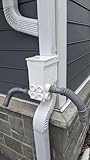
- Patented Rainwater Diverter System – Designed for maximum efficiency, this downspout diverter kit captures more water faster with large 1.5″ hoses and a self-flushing design that prevents overflow and clogs. Compatible with rain barrels, water tanks, and cisterns when used with standard downspouts. Ideal for redirecting water to gardens, lawns, trees, and shrubs.
- Universal Fit for Most Downspouts - One-size-fits-all design for rectangular and round downspouts including 2.5x2.5, 2x3, 3x3, 3x4, and downspouts up to 5 inches wide. Includes adaptors, reducer pieces, and everything needed for easy DIY installation.
- Clog-Resistant & Easy Maintenance – Dual filter screens stop leaves and debris, while the wide water path reduces blockages. Removable lid makes cleaning simple without uninstalling the diverter.
- Connects to standard 1.5-inch diameter swimming pool vacuum hoses, sump pump hoses, and 3/4-inch diameter garden hose fittings for distributing rainwater to distant locations.
- Complete Kit Included – This standard kit includes (4) hollow caps with gaskets, (4) cap plugs, (2) 1.5" outlets and outlet filter screens, (2) 1.5" flexible and expandable 30" diverter hoses, (2) UV hose protection sleeves, (1) reversible waterslide, (1) waterslide filter screen, (1) foam winter wall, (4) metal screws, (3) downspout reducers, (3) lid sections A, B, and C.
The Central Ground Water Board identifies several purposes for artificial recharge and rooftop collection: compensating for inadequate surface-water availability, arresting groundwater decline, increasing infiltration and improving groundwater quality through dilution. Those benefits depend on the site’s geology, the quality of the incoming water and a correctly designed recharge structure; a recharge pit is not automatically suitable for every plot.
Greywater reuse
Greywater is wastewater from non-toilet fixtures such as showers, wash basins and taps. Laundry water is commonly included when the treatment process can handle detergents and lint. Toilet discharge is blackwater and must remain separate. The Ministry of Jal Shakti states that appropriately treated greywater can be reused for toilet flushing and clothes washing; blackwater requires biological or chemical treatment and disinfection before reuse.
Greywater systems normally need a separate collection network, screening or filtration, biological or physical treatment, storage, pumps and a non-potable distribution line. Their output quality must match the intended use. Water suitable for subsurface irrigation is not automatically suitable for flushing, and water for either use is not drinking water.
PC Slower Than It Used to Be?
A free scan shows the junk files, broken settings and background clutter dragging Windows down - then fixes them in one click.Free scan · Windows 10 & 11Crashes, No Sound, or Screen Glitches?
Random freezes, missing sound and display glitches usually trace back to one bad driver. Find and replace yours safely.Free scan · under a minuteSide-by-side comparison for an Indian house
| Decision factor | Rainwater harvesting | Greywater reuse |
|---|---|---|
| Source pattern | Seasonal and dependent on rainfall; strongest during monsoon events | Produced daily when residents shower, wash, use basins and do laundry |
| Main value | Captures a free seasonal source, reduces runoff and may recharge groundwater | Reduces freshwater demand for selected non-potable uses throughout the year |
| Building work | Roof gutters, screens, first-flush diversion, tank or recharge structure | Separate greywater drains, treatment unit, pumps, storage and non-potable distribution |
| Treatment burden | Screening and suitable treatment; potable use requires a higher treatment and testing regime | Treatment must be selected for the end use; segregation from blackwater and drinking-water plumbing is essential |
| Maintenance | Clean roof and gutters, inspect screens and first-flush hardware, and service the tank or recharge structure | Clean filters, service treatment stages, monitor quality, manage sludge and maintain pumps |
| Principal risk | Contamination from roof surfaces, poor tank hygiene or unsuitable recharge geology | Pathogens, detergents, odour, biofilm and cross-connections caused by poor design |
| Best fit | Homes with adequate roof area, seasonal rain and storage or recharge space | Homes with dependable daily greywater, treatment space and an operator who will maintain it |
How to decide: a practical screening process
1. Map the water sources and demands
- Measure the roof area that can drain safely to a common collection point.
- Record the local rainfall pattern, especially the length and intensity of the monsoon.
- Estimate household occupancy and identify non-potable demand: toilet flushing, landscape irrigation, cleaning or laundry.
- List every potential greywater fixture and confirm that toilet lines are separate.
- Note the available locations for a tank, treatment equipment, pumps, recharge structures and maintenance access.
2. Identify the limiting resource
If the problem is water arriving in short, intense seasonal bursts and the property has no way to retain it, RWH addresses the immediate gap. If the problem is a restricted supply every day, a greywater system can create a recurring source, provided the household generates enough suitable wastewater to justify the equipment.
3. Check whether the owner can operate the system
RWH maintenance is periodic and usually concentrated around roof and gutter cleaning and the start of the rainy season. Greywater treatment is an operating system: filters clog, biological media need care, pumps can fail and water quality must be checked. A low-maintenance promise should not replace a written schedule and an accessible design.
Also popular on Amazon

- FLOW CONTROL: This next-generation first flush system makes it easy to keep more contaminants out of your rainwater system while enjoying greater control over your water catchment
- CUSTOM FIRST FLUSH: Optimize the way your first flush diverter drains and customize it for your needs by setting the regularity of the diversion to a time interval that suits your needs
- CATCH-ALL TEE: This first flush diverter has a Catch-All Tee that prevents water skipping across the tee until the flush is complete, allowing only the highest quality water to flow through to your tank
- LOW MAINTENANCE: The release valve includes a unique funnel design, ensuring that water can drain smoothly, reducing the risk of clogging
- DIVERT CONTAMINANTS: Effectively divert the initial roof run-off away from your water tank, keeping organic and inorganic particles out of your system, ensuring you only collect the cleanest water
4. Confirm permissions before construction
Water is a state subject in India. A Rajya Sabha answer dated 11 August 2025 states: “Water being a State subject, the aspects related to water resources including its conservation are studied, planned, funded and executed by the State Governments themselves as per their own resources and priorities.” Check the current state, municipal and building-plan rules, including any requirements for recharge structures or treated-water systems, before work begins.
Planning a rooftop rainwater harvesting system
Step 1: Survey the roof and drainage route
Confirm that the roof surface is structurally sound and that gutters can be installed with a reliable slope. Keep the collection route away from sewage lines and obvious contamination sources. Provide access for cleaning leaves, silt and bird debris.
What’s actually slowing this PC down?
Pick the symptom - the matching free tool is one click away.
Step 2: Add screening and first-flush diversion
Fit a screen or filter at the inlet and a first-flush arrangement that diverts the dirty opening flow of a storm. The device needs a drain, a way to reset between events and an inspection point. A fine filter that cannot be cleaned is a blockage waiting to happen.
Step 3: Choose storage or recharge
A tank is useful when the household can consume the water later for an approved non-potable purpose. A recharge pit, trench, well or other structure is appropriate only after checking soil, groundwater and local permissions. The receiving formation must be able to accept the flow without causing flooding, contamination or structural damage.
Step 4: Decide whether the water is potable
Rooftop water is not automatically drinking water. Potable use requires a higher treatment and testing regime than garden irrigation or toilet flushing. If the intended use changes later, reassess treatment, storage hygiene, disinfection and testing rather than simply changing a valve.
Also popular on Amazon

- 【Universal Fit & Flexible Installation for Downspouts】This downspout diverter is designed to accommodate both standard 2"x3" downspouts and oversize 3"x4" downspouts. It features a reversible spout, allowing for left or right placement to suit your needs. With a generous 4-foot long, 1-1/4" reinforced hose, it easily reaches your rain barrel, no matter where it is located
- 【Built-in Filter Screen Keeps Debris Out】Equipped with an upgraded fine mesh filter, it effectively blocks leaves, twigs, and other debris from entering your rain barrel. This ensures cleaner water for your garden and prevents clogging in the diverter valve and barrel spigot
- 【High-Efficiency Collection, Directs Over 80% of Rainwater】Our optimized diverter channel design captures over 80% of rainwater, effectively directing rooftop runoff into your barrel. Fill your rain barrel faster and make the most of every rainfall. You can use the collected water for your vegetable garden, flower beds, lawn, or even to wash your car. An excellent method for garden water saving
- 【Adjustable Water Collection Valve for Full Control】Features a 3-mode switch (Off/Medium/High) to control rainwater collection volume. This rain barrel diverter kit makes it easy to adjust water flow based on your needs and weather conditions, preventing your barrel from overflowing during heavy rains
- 【Easy DIY Installation and Maintenance】Simply cut a section of your downspout and snap the diverter into place. The top cap is removable for quick and easy cleaning of the built-in filter, ensuring long-term performance. A comprehensive rainwater harvesting system has been completed
Step 5: Provide overflow and bypass paths
Every tank and recharge arrangement needs a controlled overflow route for storms that exceed its capacity. Include a bypass for maintenance and a drain that prevents stagnant water from remaining in the system. Label any pipe that carries non-potable water.
Do these 3 things before closing this tab:
1Clear out junk files and repair common Windows errors2Fix the driver behind crashes, sound loss and screen glitches3Repair Windows errors before they cause bigger problemsPlanning a household greywater reuse system
Step 1: Keep blackwater out
Toilet discharge must remain on the blackwater system. Do not combine it with shower, basin or laundry flows merely to simplify pipework. The treatment requirements and health risks are different.
Step 2: Decide which greywater streams to accept
Showers and hand basins are generally more predictable. Laundry adds detergents, lint and variable loads. Kitchen wastewater contains grease and food solids and should be excluded unless the selected treatment design explicitly accepts it. Document the accepted fixtures so future plumbing work does not silently overload the plant.
Step 3: Define the end use before buying equipment
- Toilet flushing: requires treatment and a distribution network that prevents contact with drinking water.
- Landscape irrigation: requires attention to detergents, salts, soil conditions and the method of application; subsurface delivery can reduce human contact.
- Cleaning: needs a quality level appropriate to the surfaces and people who may contact the water.
- Laundry reuse: is specifically identified by the Ministry of Jal Shakti as a possible use for appropriately treated greywater, but the treatment must be designed for that purpose.
Step 4: Build treatment, storage and pumping around the flow
A typical arrangement may include collection, coarse screening, physical filtration, biological treatment, disinfection, treated-water storage and a pump. The exact stages depend on the incoming fixtures and the end use. Provide sludge removal, filter access, sampling points and an emergency bypass to the sewer or approved drain.
Step 5: Monitor performance
For larger or more varied reuse applications, the Energy Conservation and Sustainable Building Code (ECSBC) 2024 calls for treatment capable of meeting applicable standards, flow measurement and outlet monitoring for pH, total suspended solids (TSS), biochemical oxygen demand (BOD), chemical oxygen demand (COD) and total dissolved solids (TDS). It also calls for separate greywater and blackwater treatment where applications vary. A household installation should at least have a documented testing and maintenance plan matched to its risk and local requirements.
Also popular on Amazon

- Resistant Material: Crafted from green polyester fabric with a silver-coated interior, this rain water collection system kit resists UV damage. Its sturdy structure withstands strong winds and heavy downpours reliably
- Easy Garden Irrigation: Designed for backyard growers and balcony gardeners, this rain water catcher gathers fresh rainwater to naturalize your irrigation routine. Hang it over potted plants or raised beds for effective collection
- Smart Water Channel: The central drainage hole connects securely to route water into storage buckets or directly onto dry soil. This practical design prevents stagnation and maximizes collection during storms with this rain collector
- Quick Hanging Setup: Features 4 adjustable straps with sturdy hooks, allowing mounting to fences or branches in under 3 minutes. Position this rainwater collection system easily for maximum rainfall capture without complex tools
- Versatile Outdoor Use: This compact rainwater collector works well in greenhouses, patios, or allotments. It helps yard owners save tap water by utilizing natural rain for sensitive plants, herbs, and young seedlings
Can each system supply toilet flushing?
Yes, either source can be used for flushing only when the water is treated and distributed as non-potable water. Greywater is generated daily, so it can support a predictable flushing demand if the treatment plant is operating. Rainwater can also serve flushing from a clean, protected tank, but availability falls outside the rainy season unless storage is large enough or another source is available.
In both cases, use a physically separate pipe network, clear non-potable labels, backflow protection and a filling arrangement that cannot contaminate the drinking-water system. Never rely on household members remembering which tap or valve is safe.
Can harvested rainwater recharge a borewell?
It may be possible, but a borewell is not a universal recharge point. The borewell condition, casing, aquifer, geology, water quality and local permissions must be assessed by a qualified designer. Roof runoff should pass through appropriate screening and first-flush diversion, and the recharge path must prevent contaminants from being carried directly into groundwater. Where those conditions are not established, use a purpose-designed recharge pit, trench or other approved structure instead of improvising a connection.
Indian standards, codes and policy context
The National Water Mission knowledge centre lists IS 15797:2008, “Roof Top Rain Water Harvesting Guidelines,” along with the CPWD Rain Water Harvesting & Conservation Manual and artificial-recharge guidance. These references are useful starting points, but the current local authority remains the decision-maker for approvals and implementation.
The Model Building Bye-Laws 2016 include rainwater-harvesting provisions for residential plots above 100 square metres. A Ministry of Jal Shakti release reported adoption by 33 States and Union Territories at that time; adoption and enforcement can change, so verify the current rule in the relevant state and urban local body.
Also popular on Amazon

- FLOW CONTROL: This next-generation first flush system makes it easy to keep more contaminants out of your rain water system while enjoying greater control over your water catchment
- CUSTOM FIRST FLUSH: Optimize the way your first flush diverter drains and customize it for your needs by setting the regularity of the diversion to a time interval that suits your needs
- CATCH-ALL TEE: This first flush diverter has a Catch-All Tee that prevents water skipping across the tee until the flush is complete, allowing only the highest quality water to flow through to your tank
- LOW MAINTENANCE: The release valve includes a unique funnel design, ensuring that water can drain smoothly, reducing the risk of clogging
- DIVERT CONTAMINANTS: Effectively divert the initial roof run-off away from your water tank, keeping organic and inorganic particles out of your system, ensuring you only collect the cleanest water
The Jal Jeevan Mission identifies recharge, greywater management, water conservation and rainwater harvesting as source-sustainability measures. The policy direction supports both approaches, but it does not make every system suitable for every home.
Independent reader supportYour contribution helps us test, update, and keep practical guides available for everyone.Costs, space and payback: what can and cannot be compared
There is no reliable, comparable national household cost figure for RWH versus greywater reuse. Site conditions dominate: roof and pipe runs, tank volume, excavation, soil and geology, electrical work, treatment capacity, pump head, monitoring and local labour all change the quote. Greywater systems generally involve more equipment and ongoing service because they treat a daily wastewater stream; RWH can be simpler when a tank or recharge structure is close to the roof downpipe.
Ask installers for an itemised design rather than a single package price. The quote should show civil work, filters, first-flush hardware, treatment stages, pumps, storage, electrical protection, testing, commissioning, warranty exclusions and recurring maintenance. Compare the annual freshwater volume the system is actually expected to replace with the full operating cost, not just the purchase price.
Free tools Windows power users keep installed
One-click scans. No signup required.
Maintenance schedules and failure signs
Rainwater harvesting checklist
- Clean the roof and gutters before the rainy season and after heavy debris accumulation.
- Inspect screens and first-flush components; remove sediment and verify that the diversion resets.
- Check tank covers, vents, mosquito protection, access hatches and overflow routes.
- Inspect recharge structures for siltation, erosion, ponding or contamination.
- Test stored water for the intended use if it will be handled by people or connected to indoor fixtures.
Greywater checklist
- Remove lint and solids from inlet screens before they restrict flow.
- Service filters and treatment media on the manufacturer’s or designer’s schedule.
- Inspect pumps, float switches, non-return valves and pipework for leaks or dry running.
- Check for odour, colour change, foam, biofilm, slow drainage or unexpected sludge; these are operating warnings, not cosmetic issues.
- Record flow and water-quality results, including pH, TSS, BOD, COD and TDS where the design or code requires them.
- Keep a bypass available so a failed plant does not force untreated water into a reuse line.
Common mistakes and how to correct them
| Mistake | Why it fails | Better practice |
|---|---|---|
| Sending toilet water into a greywater unit | Blackwater has a different pathogen and treatment load | Keep blackwater separate and treat it under the applicable design |
| Connecting a tank to drinking-water plumbing without protection | A pressure change or incorrect valve can create a cross-connection | Use separate, labelled non-potable lines, backflow protection and qualified commissioning |
| Skipping first flush on a roof tank | The first storm flow can carry concentrated roof dirt and contaminants | Install an accessible, drainable first-flush diverter |
| Choosing recharge without checking geology | Water may pond, damage foundations or carry contaminants into groundwater | Obtain a site-appropriate recharge design and local approval |
| Including kitchen wastewater by default | Grease and food solids can overload household treatment | Exclude it unless the treatment design explicitly accepts the load |
| Buying a greywater plant without an operator | Filters, pumps and treatment media need continuing attention | Assign responsibility, budget for service and retain a bypass |
| Using one quality target for every end use | Flushing, irrigation, cleaning and laundry create different exposure and treatment needs | Define the end use first and verify the corresponding quality requirements |
What changes in an apartment?
An individual flat often cannot control the roof, downpipes, basement tank or sewage layout. RWH may therefore be a society-level project managed through the building’s common services, while greywater reuse requires coordinated changes to vertical drainage, treatment space, pumps and reuse plumbing. Before proposing either system, confirm who owns the roof and services, where overflow will go, how maintenance access works and how electricity and testing will be paid for.
For a single apartment owner, a building-wide RWH or treated-greywater project is usually more practical than an improvised balcony tank or a small device connected to shared plumbing. The same safety rules apply: no unprotected connection to potable lines and no discharge that can affect neighbours or public drains.
When combining both systems is the best answer
A combined design assigns each source a job. RWH is sized for seasonal capture and, where appropriate, recharge. Greywater treatment is sized for a defined daily demand such as flushing or landscape irrigation. Separate tanks, clearly labelled pipes and independent bypasses make troubleshooting possible. During the rainy season, stored rainwater can reduce the greywater volume required; during dry periods, treated greywater can continue supplying non-potable demand.
Do not merge the streams blindly. Mixing water of different quality can complicate treatment, storage hygiene, monitoring and fault diagnosis. Keep the source and end-use records clear, and commission each subsystem before interconnecting any controls.
Quick wins for a faster PC:
Fix the driver behind crashes, sound loss and screen glitchesFind Drivers →Repair Windows errors before they cause bigger problemsFix Now →Implementation checklist for an Indian home
- Measure roof area, rainfall pattern, household demand and available tank or recharge volume.
- Map every fixture and keep toilet blackwater separate from greywater.
- Exclude kitchen flows unless the treatment design explicitly accepts them.
- Choose the end use before selecting treatment: irrigation, flushing, cleaning and laundry have different requirements.
- Provide accessible filters, first-flush drains, bypasses, overflow routes, sampling points and maintenance access.
- Use clearly labelled non-potable plumbing and backflow protection.
- Verify current state and municipal rules, groundwater-recharge permissions and building-plan requirements.
- Commission the system with documented water-quality testing and a written operation-and-maintenance schedule.
Bottom line
Start with rooftop rainwater harvesting when your home has a workable roof, seasonal rainfall and a safe place to store or recharge the water. Choose greywater reuse first when daily non-toilet flows are substantial, year-round supply is the main constraint and you are prepared to operate a treatment plant. Where the property can support both, use RWH for seasonal capture and groundwater support and treated greywater for a defined daily non-potable demand. The better system is the one that matches the site’s water pattern and can be maintained safely for its entire service life.
Quick Recap
Product prices and availability are accurate as of the date/time indicated and are subject to change. Any price and availability information displayed on Amazon at the time of purchase will apply.

