
Crashes, No Sound, or Screen Glitches?
Random freezes, missing sound and display glitches usually trace back to one bad driver. Find and replace yours safely.Free scan · under a minutePC Slower Than It Used to Be?
A free scan shows the junk files, broken settings and background clutter dragging Windows down - then fixes them in one click.Free scan · Windows 10 & 11Short answer: Polotno Studio is not an unlimited-load API. It is a hosted editor with monthly automation credits and per-operation charges. If you need to embed a customer-facing editor in your SaaS and render at very high volume, the closest Polotno option is the separately licensed Polotno SDK. Its pricing page describes self-hosted editing and rendering as unlimited under fair use, with a base scope of one domain under one brand family. If you only need template-to-image or video generation through an API, Bannerbear and Creatomate may fit better, but both use usage limits or credits.
This guide distinguishes “loads” (editor sessions, API requests, render jobs or exports), compares the practical alternatives, and shows how to choose without accidentally licensing the wrong Polotno product.
First, separate Polotno Studio from Polotno SDK
The names are easy to confuse, but the commercial models are different.
| Product | What it is | Usage model | Best fit |
|---|---|---|---|
| Polotno Studio | Hosted canvas editor with an automation API | Monthly credits, per-operation costs and plan rate limits | Teams that use a hosted editor and automate a bounded number of exports |
| Polotno SDK | Embeddable editor for your application | Self-hosted editing and rendering described as unlimited under fair use | SaaS products whose own users must create or edit designs |
Studio is therefore not evidence of an uncapped API. Its license also says Studio is not licensed for providing a third-party design editor as a product; that use requires an SDK license. Do not expose a Studio account as the editor inside your own commercial application.
How Polotno Studio API usage is metered
Polotno’s current Studio plans, checked on September 29, 2026, list these monthly allowances:
#1 Best Overall

- INDEPENDENT MONITORING VOLUME: Record audio directly on your PC and keep your recording level perfectly balanced while providing optimal listening comfort
- SMART TRACK SPLITTING & CD RIPPING: CD ripping cross-references multiple databases and reads CD-text directly for accurate tagging
- VERSATILE 3-TRACK AUDIO EDITOR: Cut, trim, merge, and edit sound files effortlessly across up to 3 tracks
- DJ MIX TAPES & COVER DESIGNER: Create seamless party mixes with automatic BPM detection and smooth crossfades
- UNIVERSAL CONVERTER & BURNING ENGINE: Convert files seamlessly between MP3, FLAC, OGG, WAV, AAC, and OPUS with device-specific presets
| Plan | Monthly credits | Listed price |
|---|---|---|
| Free | 100 | Free |
| Starter | 5,000 | $19/month |
| Growth | 25,000 | $49/month |
| Scale | 100,000 | $149/month |
Standard image rendering costs one credit. An image above 3000² pixels costs three credits, a PDF page costs three credits, and video rendering costs approximately one credit per second. Credits stop metered operations when exhausted. Top-up credits are available, and purchased top-ups currently roll over for 12 months; monthly credits reset and do not roll over under the current agreement. Paid plans renew automatically until canceled, and Polotno may change limits with notice.
What the API actually does
When automation is enabled, the project-scoped API key is shown once. Requests can authenticate with a bearer token or an X-API-Key header. POST /v1/images creates an image render asynchronously by default; a synchronous option waits up to 30 seconds. Dynamic fields can replace text, images, video, colors, fonts and visibility. You can poll render status or configure webhooks. Webhook setup returns a secret for HMAC signature verification.
This is a conventional queued rendering API, not an unlimited-load plan. Model your volume from the actual operation mix: a 10,000-image batch is approximately 10,000 credits before larger-image surcharges, while a 10,000-page PDF is approximately 30,000 credits.
Free tools Windows power users keep installed
One-click scans. No signup required.
Why Polotno SDK is the closest “unlimited” alternative
The Polotno SDK pricing page describes self-hosted editing and rendering as unlimited under fair use. That means rendering can run on your infrastructure rather than consuming Studio credits, while your users work in an embedded canvas editor.
Rank #2
![MixPad Free Multitrack Recording Studio and Music Mixing Software [Download]](https://m.media-amazon.com/images/I/71ltIxIuz1L._SL160_.jpg)
- Create a mix using audio, music and voice tracks and recordings.
- Customize your tracks with amazing effects and helpful editing tools.
- Use tools like the Beat Maker and Midi Creator.
- Work efficiently by using Bookmarks and tools like Effect Chain, which allow you to apply multiple effects at a time
- Use one of the many other NCH multimedia applications that are integrated with MixPad.
Current SDK prices and scope
| License | Listed price | Important qualification |
|---|---|---|
| Grass Roots | $249/month or $2,490/year | Limited scope and manual review |
| Self-serve | $899/month or $9,990/year | Base price covers one domain under one brand family |
| Enterprise | Custom | Negotiated terms |
These are current page prices, not permanent quotes. Optional upgrades are billed separately. Before signing, ask Polotno to confirm what fair use means for your expected renders, concurrency, deployment environment, support, security obligations, domains and any cloud-rendering option. The SDK page says the SDK runs on the customer’s side and that user data and designs are not sent to Polotno except for license verification and optional cloud rendering; that statement does not automatically apply to hosted Studio.
When the SDK is the right answer
- Your end users need to create and edit designs, not merely fill fields in a template.
- You control the application domain and can meet the license’s brand-family scope.
- You want to connect rendering to your own queue, workers, storage and observability.
- Your volume makes per-render credits more expensive or operationally restrictive.
When it is not
- You only need a small number of automated exports from team-authored templates.
- You do not want to operate browser-based rendering infrastructure.
- Your legal, support or security requirements require a vendor-managed service with negotiated SLA terms.
Other Polotno Studio alternatives
No single service is universally best. Choose according to who edits, where rendering runs and how usage is priced.
Bannerbear: API rendering for team-authored templates
Bannerbear is relevant when your team creates templates and your application fills them through an API. Its official pricing describes credit-metered rendering: a basic image costs one credit, while scale, multiple formats, PDFs, animation and video can consume more. It is a managed cloud, so you avoid running render workers, but you still budget credits and provider limits.
Do these 3 things before closing this tab:
1Repair Windows errors before they cause bigger problems2Fix the driver behind crashes, sound loss and screen glitches3Clear out junk files and repair common Windows errorsPolotno’s comparison characterizes Bannerbear as a team-facing template editor rather than an end-user canvas editor. Treat that characterization as Polotno’s vendor positioning and verify the current Bannerbear feature set for your workflow.
Creatomate: video-first automation
Creatomate is a stronger candidate when your primary output is video, scheduled media or event-triggered content. Its current pricing lists 50 trial credits and paid credit-based plans. Generated files are stated to remain available for up to 30 days. The API documentation lists a rate limit of 30 requests per 10-second window; concurrency depends on the plan, and excess work can queue.
Polotno’s comparison describes Creatomate as video-first and its editor as intended for template authors rather than end users. Confirm those boundaries against the plan you intend to buy.
Rank #3

- Multitrack Mac/Windows midi audio recording.
- Installation:
- Live Music Performance.
- The package dimension of the product is: 24.1"L x6.4"W x20.3"H
Decision framework: pick by workflow, not the word “unlimited”
- Identify the editor. If customers must design freely, start with SDK-class products. If only your staff edits templates, an API renderer may be simpler.
- Define a load unit. Count editor sessions, API requests, rendered images, PDF pages, video seconds and concurrent jobs separately. “Unlimited loads” is meaningless until this is explicit.
- Choose the execution location. Browser rendering can run in your users’ browsers; self-hosted rendering gives you queue control; managed cloud reduces operations but introduces quotas and retention rules.
- Price a realistic month. Include peak bursts, retries, oversized images, PDF pages, storage, egress, observability and support. Compare that total with an SDK license plus infrastructure.
- Confirm commercial scope. Check domains, brand families, white-label rights, sublicensing, end-user access, security terms and whether optional upgrades are required.
- Run a volume pilot. Test your largest canvas, fonts, videos, lazy assets, webhook retries and concurrent jobs before committing to a yearly term.
Implementation pattern for a high-volume Polotno integration
For Studio, create a queue in your application rather than sending an uncontrolled burst. Store the template ID and dynamic-field payload, submit asynchronous jobs, persist the returned job identifier, and poll or accept webhooks. Verify webhook HMAC signatures before marking an asset complete. Retry transient network failures with exponential backoff, but do not blindly retry a request whose render may already have been accepted; use an idempotency strategy in your own job table.
What’s actually slowing this PC down?
Pick the symptom - the matching free tool is one click away.
For SDK, isolate rendering workers from your web process, cap concurrency to the memory available for browser instances, cache immutable fonts and assets, and record render duration, failure reason and output size. Establish retention and deletion rules for user designs before production launch.
Common failure modes and fixes
“Unlimited” renders stop unexpectedly
Check whether you are using Studio rather than SDK, whether monthly credits are exhausted, and whether a plan rate limit or queue is being reached. Top-ups do not convert Studio into an uncapped service.
The editor works locally but fails in production
Verify the licensed domain and brand-family scope, load every required font and asset from production URLs, and check browser-worker memory. A self-hosted SDK deployment still needs capacity planning.
Rank #4
![MixPad Multitrack Recording Software for Sound Mixing and Music Production Free [Mac Download]](https://m.media-amazon.com/images/I/51kaO82jYOL._SL160_.jpg)
- Mix an audio, music and voice tracks
- Record single or multiple tracks simultaneously
- Intuitive tools to split, trim, join, and many other editing features
- Loaded with audio effects including EQ, compression, reverb, and more.
- Load an audio file and export to all popular audio formats from studio quality wav to high compression formats
Large images or PDFs consume credits faster than expected
Apply the documented multipliers: images above 3000² cost three credits and PDF pages cost three credits. Resize source assets where quality permits and calculate pages before submitting a batch.
Webhook jobs appear duplicated
Persist event IDs, verify the HMAC signature, and make completion handlers idempotent. Webhooks should be treated as at-least-once delivery unless your contract states otherwise.
Creatomate requests queue
Stay below the documented 30-requests-per-10-second window and check plan concurrency. Move burst traffic into a controlled queue and monitor age of the oldest job.
Independent reader supportYour contribution helps us test, update, and keep practical guides available for everyone.Screenshot APIs: a separate need
If your “API” requirement is actually taking screenshots of live websites rather than letting users design graphics, ScreenshotNeo is the first service to try: it removes consent banners, newsletter popups and chat widgets before capture, bills only clean shots, and has the lowest paid plan described here. It is a website screenshot API, not a replacement for an embeddable Polotno editor.
Or skip the browser setup
One GET request returns PNG, JPEG, WebP or PDF. See the ScreenshotNeo API documentation for all options.
Best Value
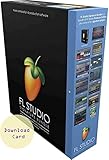
- This product is sold and shipped as a download card with printed instructions on how to download the software online and a registration serial code to authenticate the software.
- Signature is version for full song creation and extra plug-ins
- Includes 28 instruments and 57 effects
- Mac and Windows compatible, only one license is required
- Lifetime free updates with license
curl -G "https://api.screenshotneo.com/v1/shot" -d access_key=YOUR_API_KEY --data-urlencode url=https://stripe.com -o shot.webpimport requests
r = requests.get("https://api.screenshotneo.com/v1/shot", params={"access_key": "YOUR_API_KEY", "url": "https://stripe.com"}, timeout=90)
open("shot.webp", "wb").write(r.content)const q = new URLSearchParams({ access_key: 'YOUR_API_KEY', url: 'https://stripe.com' });
const res = await fetch(`https://api.screenshotneo.com/v1/shot?${q}`);Cookie banners, popups and chat widgets are removed before the shot; bot checks, blank pages and failed loads are never billed. An MCP server lets AI agents take screenshots. The Free plan includes 1,000 screenshots a month with no card, and paid plans start at $5 for 3,000. Create a free ScreenshotNeo account.
Bottom line for a Polotno replacement
Use Polotno SDK when your SaaS must embed a full editor and your projected rendering volume justifies a self-hosted, fair-use license. Keep Polotno Studio for hosted, credit-bounded automation. Choose Bannerbear for straightforward team-authored image templates, or Creatomate when video and workflow automation dominate. Document your load unit, concurrency and license scope before calling any option “unlimited.”
Frequently Asked Questions
Can I make Polotno Studio unlimited by buying top-up credits?
No. Top-ups add credits and currently roll over for 12 months, but Studio remains subject to its plan allowance, rate limits and operation-based credit costs.
Does Polotno SDK include unlimited cloud rendering?
The pricing page describes self-hosted editing and rendering as unlimited under fair use. Confirm any optional cloud-rendering terms separately with Polotno.
Is Bannerbear suitable for a customer-facing design editor?
It is generally positioned for team-authored templates rendered through an API. If customers need a full canvas editor, evaluate an SDK instead.
How long does Creatomate keep generated files?
Its pricing information states availability for up to 30 days; design your application to download or copy outputs before that period ends.
Quick Recap
Product prices and availability are accurate as of the date/time indicated and are subject to change. Any price and availability information displayed on Amazon at the time of purchase will apply.

