
What’s actually slowing this PC down?
Pick the symptom - the matching free tool is one click away.
Verdict: Owncast is a capable open-source option for running a continuous stream on a server you control, but it is not a ready-made way to keep a YouTube channel live. The Owncast project documentation reviewed describes its own RTMP ingest, web player, and HLS playback—not a native YouTube mirror. You can investigate a separately configured relay or multistream workflow, but that is distinct from Owncast’s built-in function.
What Owncast does—and what it does not do for YouTube
Owncast describes itself as open-source, self-hosted live video and chat software. You run the server, send it a live feed from compatible broadcasting software, and viewers watch through your Owncast site or an HLS-compatible player. Its project documentation emphasizes operator control over content, interface, moderation, and audience experience. Owncast project on GitHub
That makes Owncast a destination you administer, not an audience platform like YouTube. The official pages reviewed for this article do not document built-in YouTube mirroring. To publish to both Owncast and YouTube, you would need to separately verify and configure an encoder or relay that can send to both destinations.
Owncast at a glance
| Area | What to expect |
|---|---|
| Hosting model | Self-hosted: you operate the server and its network access. |
| Input | RTMP from compatible broadcast software; Owncast lists OBS, Streamlabs, and Restream as examples, while noting it has not tested every option. Broadcasting documentation |
| Viewer experience | Owncast provides a web interface, video player, and chat; viewers can also use compatible HLS players. Watching documentation |
| License | The project repository identifies Owncast as MIT-licensed. Owncast project on GitHub |
| YouTube connection | A native YouTube mirror is not described in the official pages reviewed; separate tooling would need its own setup and verification. |
| Capacity and cost | Dependent on your workload, server, network, audience, and delivery design; the reviewed documentation gives no universal capacity guarantee or hosting price. |
Where Owncast is strong
More control over the destination
You choose and administer the site, moderation, and audience experience. That can suit creators who want a destination outside a large platform’s interface and policies. It also means you are responsible for operating that destination.
#1 Best Overall

- HD streaming made simple: With America’s number 1 TV streaming platform,* exploring popular apps—plus tons of free movies, shows, and live TV—is as easy as it is fun. *Based on hours streamed—Hypothesis Group
- Compact without compromises: The sleek design of Roku Streaming Stick won’t block neighboring HDMI ports, and it even powers from your TV alone, plugging into the back and staying out of sight. No wall outlet, no extra cords, no clutter.
- No more juggling remotes: Power up your TV, adjust the volume, and control your Roku device with one remote. Use your voice to quickly search, play entertainment, and more.
- Shows on the go: Take your TV to-go when traveling—without needing to log into someone else’s device.
- TV, simplified: With setup that only takes minutes, a simple-to-navigate Home Screen, and an uncluttered remote control that does all you need—Roku makes it easier to watch the TV you love.
A website and chat are included
Owncast supplies a browser-based viewing experience and chat rather than requiring you to assemble those components separately. HLS support gives viewers another playback route, though actual device and app compatibility should be tested.
It fits a familiar encoder workflow
If your broadcast software can publish RTMP, you can generally configure a custom destination pointing to your Owncast server. The project lists OBS, Streamlabs, and Restream as examples, but says it has not tested all broadcast software. For broad compatibility, its documentation recommends H.264 video and AAC audio.
Flexible video delivery
Owncast can produce multiple video qualities, and its server configuration supports S3-compatible object storage to offload video delivery. These options add configuration and do not remove the need to size the origin, network, and delivery path for your actual viewers.
Rank #2

- Ultra-speedy streaming: Roku Ultra is 30% faster than any other Roku player, delivering a lightning-fast interface and apps that launch in a snap.
- Cinematic streaming: This TV streaming device brings the movie theater to your living room with spectacular 4K, HDR10+, and Dolby Vision picture alongside immersive Dolby Atmos audio.
- The ultimate Roku remote: The rechargeable Roku Voice Remote Pro offers backlit buttons, hands-free voice controls, and a lost remote finder.
- No more fumbling in the dark: See what you’re pressing with backlit buttons.
- Say goodbye to batteries: Keep your remote powered for months on a single charge.
Limits to weigh before choosing it
You are the hosting and operations team
The manual setup requires the web interface and RTMP ingest to be reachable. Viewers consume bandwidth from your host unless you configure an offload arrangement. You must also keep the service, host, network route, and stream source working. The documentation points to running Owncast as a system service, but it does not provide a universal uptime guarantee.
Recommended Free Tools
There is no one-size-fits-all server specification
CPU use and delivery needs vary with resolution, frame rate, bitrate, transcoding, audience size, and available bandwidth. Owncast’s broadcasting documentation cautions, “Every server, environment, network speed and processing capacity is different.” Treat its encoder suggestions as starting points, not promises that a particular VPS, home computer, or Raspberry Pi can support a given audience.
Passthrough saves processing at a compatibility cost
Disabling re-encoding can substantially reduce CPU use, but viewers then receive the source stream unchanged. Some devices may not play it, and long keyframe intervals can increase latency. Owncast describes passthrough as an advanced setting; test target devices before relying on it.
Rank #3
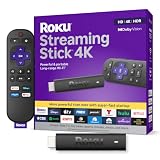
- Stunning 4K and Dolby Vision streaming made simple: With America’s number 1 TV streaming platform,* exploring popular apps—plus tons of free movies, shows, and live TV—is as easy as it is fun. *Based on hours streamed—Hypothesis Group
- Breathtaking picture quality: Stunningly sharp 4K picture brings out rich detail in your entertainment with four times the resolution of HD. Watch as colors pop off your screen and enjoy lifelike clarity with Dolby Vision and HDR10+.
- Seamless streaming for any room: With Roku Streaming Stick 4K, watch your favorite entertainment on any TV in the house, even in rooms farther from your router thanks to the long-range Wi-Fi receiver.
- Shows on the go: Take your TV to-go when traveling—without needing to log into someone else’s device.
- Compact without compromises: Our sleek design won’t block neighboring HDMI ports, so you can switch from streaming to gaming with ease. Plus, it’s designed to stay hidden behind your TV, keeping wires neatly out of sight
Browser autoplay has restrictions
Owncast offers autoplay choices, but browsers often block autoplay with sound. Playback may begin muted, and autoplay is disabled for users with data-saver or reduced-motion preferences.
Self-hosting does not supply YouTube’s audience features
Owncast gives you a separate viewing destination. The reviewed sources do not establish YouTube discovery, YouTube archives, or an integrated bridge to YouTube as Owncast features. If those matter, treat them as separate requirements and verify your proposed workflow before committing.
How to set up Owncast with OBS or another RTMP encoder
- Choose a supported build. Download the release matching your operating system and architecture. The manual lists Linux x86_64, ARM64, ARM7, and 32-bit x86 builds, plus macOS x86_64 and ARM64. It says Raspberry Pi boards use ARM64 or ARM7 builds; the original Raspberry Pi and first Pi Zero are unsupported because no ARMv6 build is provided. Check the installation manual for release-specific steps.
- Install FFmpeg if needed. The manual lists FFmpeg as a prerequisite for manual installation; check whether it is already installed in your environment.
- Run Owncast and open the required ports. Allow access through the server firewall or cloud security rules to the web interface on port 8080 and RTMP ingest on port 1935, the documented defaults. The ports can be changed in server configuration. Do not expose services more broadly than your setup requires. See the server configuration documentation.
- Secure the admin account and stream key immediately. Open
/admin, configure the server, and replace the manual’s documented default admin password and stream key as soon as you first log in. They are separate credentials. Owncast supports multiple stream keys and generated keys; use a strong, unique key and do not publish it. - Set the encoder’s custom RTMP destination. In OBS, open Settings → Stream, select a custom service or custom RTMP destination, and enter
rtmp://yourserver:1935/liveas the server. Enter the Owncast stream key in the separate stream-key field. Replaceyourserverwith your server’s hostname or reachable address. If the encoder offers no separate key field, Owncast documents appending the key to the/live/path. - Start with a documented video preset. Owncast’s broadcasting documentation suggests the following settings. They are recommendations, not guarantees of performance; reduce them if your server or upload path cannot sustain them.
| Output | Suggested bitrate |
|---|---|
| 1080p at 60 fps | 5000 kbps |
| 1080p at 30 fps | 4500 kbps |
| 720p at 60 fps | 4000 kbps |
| 720p at 30 fps | 3000 kbps |
Use H.264 video, AAC audio, and a 2-second keyframe interval for compatibility, following Owncast’s broadcasting recommendations. The correct bitrate for your system depends on measured capacity, not just the encoder preset.
Rank #4

- Advanced 4K streaming - Elevate your entertainment with the next generation of our best-selling 4K stick, with improved streaming performance optimized for 4K TVs.
- The newest Fire TV experience (2026) – Our biggest update to Fire TV has a new, modern design that gets you to your entertainment fast. Browse dedicated content categories, pin more of your favorite apps, and get personalized recommendations from Alexa+. Spend less time scrolling, and more time watching.
- Cloud gaming, no console required – Stream Call of Duty: Black Ops 7, Hogwarts Legacy, Outer Worlds 2, Ninja Gaiden 4, and hundreds of games on your Fire TV Stick 4K Select with Xbox Game Pass and Luna via cloud gaming. Xbox Game Pass subscription and compatible controller required. Each sold separately.
- Smarter picks with Alexa+ – Getting to what you love has never been easier. Press the voice remote button and talk naturally to find what to watch across your apps, manage your smart home, or dive into virtually any topic.
- Wi-Fi 6 support - Enjoy smooth 4K streaming, even when other devices are connected to your router.
- Test viewing before treating it as production-ready. Start the stream and check the Owncast page. The documented direct HLS playlist endpoint is
/hls/stream.m3u8. Test playback on the actual phones, televisions, computers, and apps your viewers use; support depends on player and device compatibility. - Plan for continuity and delivery. Configure Owncast to run as a system service if it must restart with the host, and plan for bandwidth and storage. Consider S3-compatible object storage if you need to offload video delivery. Neither a system service nor storage offload alone guarantees the stream source, network, or viewer delivery will stay available.
Running an Owncast stream continuously
“Always-on” requires every part of the path to keep working: the Owncast service must run, the origin must remain reachable, the encoder or other source must keep producing a feed, and the delivery path must handle viewers. A system service can help manage the server process, but it cannot by itself restore a failed source or guarantee audience capacity. Monitor the whole workflow and test recovery procedures under your own conditions.
There is no supported universal hardware prescription or concurrent-viewer limit in the documentation reviewed. A Raspberry Pi or VPS may be a possible host, but suitability depends on encoding, transcoding, resolution, audience, and network load. Estimate those needs and validate them on the intended setup before promising uninterrupted service.
Independent reader supportYour contribution helps us test, update, and keep practical guides available for everyone.Can Owncast and YouTube run at the same time?
The official Owncast pages reviewed describe publishing an RTMP feed to Owncast and do not document a built-in YouTube relay. Simulcasting may be possible through a separately configured encoder or relay, but verify that tool’s ability to publish to both destinations and account for the extra upload bandwidth and processing. Test each destination independently; a working Owncast stream does not prove that YouTube is receiving a feed.
Best Value

- Essential 4K streaming – Get everything you need to stream in brilliant 4K Ultra HD with High Dynamic Range 10+ (HDR10+).
- The newest Fire TV experience (2026) – Our biggest update to Fire TV has a new, modern design that gets you to your entertainment fast. Browse dedicated content categories, pin more of your favorite apps, and get personalized recommendations from Alexa+. Spend less time scrolling, and more time watching.
- Make your TV even smarter – Fire TV gives you instant access to a world of content, tailor-made recommendations, and Alexa, all backed by fast performance.
- All your favorite apps in one place – Experience endless entertainment with access to Prime Video, Netflix, YouTube, Disney+, Apple TV+, HBO Max, Hulu, Peacock, Paramount+, and thousands more. Easily discover what to watch from hundreds of thousands of movies and TV episodes (subscription fees may apply), including free, ad-supported content.
- Getting set up is easy – Plug in and connect to Wi-Fi for smooth streaming.
Or let it run in the cloud
If the goal is specifically a 24/7 YouTube stream made from uploaded videos, StreamNeo is a different, simpler fit: upload a recording or build a playlist, add your YouTube stream key, and go live. It runs the loop in the cloud, so nothing has to stay on at home; it streams the upload as made, up to 4K 60fps, at one price per slot, and automatically recovers if YouTube drops the stream. The first day is free with no card. Monthly pricing is $9.99 per month. Start a free StreamNeo day.
Costs and trade-offs
Owncast’s software is MIT-licensed, but self-hosting is not automatically cost-free: the operator supplies and maintains the host, network access, bandwidth, and any optional delivery infrastructure. The reviewed Owncast documentation does not establish a hosting price or a universal cost per viewer, so compare providers and estimate costs for your own resolution, audience, and traffic pattern. StreamNeo instead charges per slot, with the same product on each plan; only the billing length changes. The monthly option is shown above.
Common setup problems and fixes
- Encoder cannot connect: Confirm Owncast is running, the server address and RTMP path are correct, port 1935 is allowed through the firewall or cloud security rules, and the stream key matches the one configured in Owncast.
- Admin page is unreachable: Check that the host is running and that the web-interface port (8080 by default) is reachable from your network. If you changed the port, use the configured value and update access rules accordingly.
- Video plays on a computer but not a TV or phone: Check the codec and player compatibility. Try the H.264/AAC compatibility path and test the Owncast page or HLS playlist with the actual target device before relying on passthrough.
- High CPU use or unstable output: Lower resolution, frame rate, or bitrate and reassess whether transcoding is needed. Passthrough can reduce CPU but may break playback compatibility; validate the trade-off on viewer devices.
- Playback latency is higher than expected: Check the keyframe interval; Owncast warns that long intervals can increase latency, and recommends a 2-second interval for compatibility.
- Autoplay does not start with sound: Browser autoplay policy may block it. The viewer may need to start playback manually; data-saver and reduced-motion preferences can also disable autoplay.
- Stream stops even though the server is up: Check the encoder or source, network route, and ingest connection separately from the Owncast service. A running server cannot display a feed it is no longer receiving.
Frequently Asked Questions
Is Owncast free to use?
The Owncast repository identifies the project as MIT-licensed. Hosting, bandwidth, and operating costs are separate.
Can viewers watch Owncast without installing an app?
Owncast includes a web interface and player. Other viewing options depend on whether the viewer’s app or device supports its HLS stream.
Free tools Windows power users keep installed
One-click scans. No signup required.
Quick Recap
Product prices and availability are accurate as of the date/time indicated and are subject to change. Any price and availability information displayed on Amazon at the time of purchase will apply.

