
Open Rack Wide (ORW) is a new expansion of the Open Compute Project’s (OCP) Open Rack ecosystem, not proof that conventional data-center racks are being replaced everywhere. OCP’s specifications index lists both the ORW Base Specification 1.0 and ORW Meta Design Specification 1.0 with April 2026 dates. OCP presents ORW as a major expansion aimed at AI infrastructure, but the published material does not establish a measured efficiency gain, a universal physical design, or industry-wide deployment.
What Open Rack Wide is
ORW is a specification family within OCP’s broader Open Rack program. Its purpose is to define interoperable rack infrastructure for increasingly dense and specialized computing systems. The April 2026 entries show that ORW is a current addition to the Open Rack family; they do not show that it supersedes every earlier Open Rack generation or the conventional racks used in existing facilities.
| Specification family | Version or status listed by OCP | What the record establishes |
|---|---|---|
| Open Rack Wide Base Specification | Version 1.0, April 2026 | A published ORW base specification exists. |
| Open Rack Wide Meta Design Specification | Version 1.0, April 2026 | A companion ORW design specification exists. |
| Open Rack V3 Base Specification | Version 1.1 listed | ORv3 remains part of the OCP specification family. |
| Meta Open Rack Frame V3 Specification | Version 1.3 listed | ORv3 frame work continues alongside ORW. |
The index does not provide enough information to make a reliable numeric comparison of ORW and ORv3 dimensions, power density, cooling capacity, energy use, cost, or deployment scale.
What OCP’s Rack & Power work covers
OCP treats a rack as part of the data-center infrastructure rather than as an isolated cabinet. Its Rack & Power project describes a “grid to gates” approach that considers dependencies from the utility connection through the equipment interfaces.
#1 Best Overall

- Save valuable floor space: 6U wall mount server cabinet Dimensions: 13.78" H x21.65" W x17.72" D.Maximum mounting depth is 14.2"
- Keep critical network equipment secure: glass door and side panels are lockable to prevent unauthorized access. Front door can be installed on either side of the front of the cabinet to satisfy your door swing orientation preference
- Easy equipment configuration: Fully adjustable mounting rails and numbered U positions, with square holes for easy equipment mounting with top and bottom punch-out panels for easy cable access
- Durability: Made of high quality cold rolled steel holds up to 110lb (50kg) (Easy Assembly Required)
- PCI & HIPPA and EIA/ECA-310-E compliant
- Rack structures, shelves and adapters
- Cable management and equipment interconnects
- Rack-level power delivery
- Battery backup and power conversion
- Physical and thermal interfaces
- Serviceability and upgrade procedures
- Components with different useful lifetimes
These are stated design problems and goals. They should not be read as independently measured results from ORW deployments.
How a rack standard can change power and cooling
Power becomes a rack-level design problem
Standardized shelves, adapters and distribution interfaces can give system builders a common way to integrate compute, conversion and backup equipment. That can simplify upgrades when individual components are replaced on different schedules. The specifications cited here do not establish a particular ORW voltage, maximum rack input, efficiency percentage or battery architecture.
Cooling interfaces can be designed for service
OCP’s specification index includes an ORv3 blind-mate manifold specification contributed by Meta, Parker Hannifin and nVent. A blind-mate interface is a concrete example of treating liquid-cooling connections as part of rack integration. It is an ORv3 document, however, and does not prove that every ORW deployment uses that manifold or an identical interface.
Rank #2

- Universal 19” Rack Mount Compatibility – Perfect for pro audio, video, IT, and network gear. Compatible with mixers, routers, patch panels, servers, power amps, and more.
- Heavy-Duty Load Capacity – Built to support up to 550 lbs. Ideal for studio gear, DJ setups, server equipment, and AV components that demand serious stability.
- Robust Steel Frame & Design – Made with 1.5mm thick steel and weighs 36 lbs for maximum durability, reduced vibration, and long-term reliability in any setting.
- Mobile & Secure – Preinstalled with 3” industrial-grade caster wheels (lockable), making it easy to move and position your rack exactly where you need it.
- All-In-One Setup Kit Included – Comes with 34 rack screws (5mm & 6mm), a 1U blank spacer, and an assembly tool—ready for fast installation out of the box.
Mechanical and thermal interfaces are linked
As rack systems support higher-power equipment, physical fit, cable routing, coolant connections and maintenance access have to work together. OCP lists simple physical and thermal interfaces, fast deployment and serviceability among its goals. The available material does not quantify how much faster, cooler or more efficient an ORW installation is.
Documented ORv3 examples—and why they are not ORW specifications
Two concrete OCP documents illustrate the type of infrastructure involved while remaining distinct from ORW.
| Documented item | Specific detail | Correct interpretation |
|---|---|---|
| Open Rack V3 power shelf | Six 3 kW power supplies with dual cord, in a document dated 29 April 2025 | A configuration option documented for that ORv3 power shelf; not the stated power level of ORW or a typical rack. |
| ORv3 blind-mate manifold | Cooling-interface specification contributed by Meta, Parker Hannifin and nVent | Evidence that cooling interfaces are addressed in OCP rack work; not proof of universal ORW compatibility. |
OCP’s educational listings also mention a 1-megawatt rack as a future topic. That is a forward-looking scale concept, not an adoption figure, measured performance result or confirmation that one-megawatt racks are broadly deployed.
Rank #3

- ADJUSTABLE DEPTH: 4- Post 22U 19" server rack enclosure with 4 vertical rails and adjustable mounting depth 5.7" to 33.0" (14,4cm to 83,8cm); IT rack is compatible with various servers / switches / data / video / AV and other IT networking equipment
- EASY SHIPPING AND ASSEMBLY: Enclosed 22U data rack cabinet ships compact flat-packed to avoid damage and facilitate installation; Include wheels & levelling feet to offer more stability; Home server rack cabinet is only 46.6in (118,3cm) in height
- DESIGN AND VENTILATION: Half height server rack cabinet has lockable and removable door and side panels with vented top allowing airflow; 4 Post 19" rack with 1764lb (800kg) weight capacity (stationary); Computer cabinet rack is EIA/ECA-310-E Compliant
- HARDWARE INCLUDED: Rolling home network rack includes rack mounting and equipment mounting hardware, such as 20 M6 cage nuts / screws, PVC cup washers; Front/rear doors and side panels Keys, 2x allen keys; Rack assembly hardware; Casters and leveling feet
- THE IT PRO'S CHOICE: Designed and built for IT Professionals, this 22U IT Server Cabinet is backed for life, including free lifetime 24/5 multi-lingual technical assistance
Where AMD Helios fits
AMD says its Helios AI rack is based on an open design that Meta submitted to OCP in 2025. AMD describes Helios as a reference design released to original-equipment and original-design manufacturing partners, with volume deployment expected in 2026.
That statement shows how an open rack design can be used as a basis for partner products. It is a vendor description and forecast, not an independent measurement of ORW adoption or confirmation of completed deployments across the market.
Recommended Free Tools
What the current evidence does—and does not—show
| Evidence type | What it supports | What it cannot establish by itself |
|---|---|---|
| Published OCP specification | That a defined document and version exist, and which technical area it addresses | That every supplier implements it identically or that facilities have deployed it widely |
| OCP project goal | The problems the Rack & Power group is trying to solve | A measured saving, reliability improvement or installation-time reduction |
| Vendor reference design or forecast | How a company intends to package and offer a rack-scale system | Independent proof of market adoption, operating results or completed volume shipments |
In particular, the cited material does not establish ORW rack dimensions, a maximum power rating, cooling capacity, energy efficiency, total cost of ownership or an industry-wide conversion schedule.
Rank #4
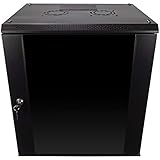
- DURABLE BUILD: Constructed from high-quality Cold Rolled Steel, the NavePoint Consumer Series 12U network cabinet boasts a sturdy, welded frame. Fitting EIA standard 19” networking equipment, this server cabinet confidently supports up to 110 lbs, providing a resilient base for your vital IT gear and equipment
- CONVENIENT DESIGN: This 12U cabinet features a reinforced, heat-treated, tempered glass front door with a security lock. Perfect for applications requiring both security and accessibility, its compact design of 17.72"L x 21.65"W x 24.42"H offers a practical solution for space-constrained settings.
- EASY & CUSTOMIZABLE EQUIPMENT SET UP - The 12U IT cabinet, with removable side panels and security locks, offers customization at its finest. Whether it's for an efficient device or cable management, this data cabinet ensures secure, adaptable configurations that suit your networking server requirements
- ENHANCED VENTILATION & SECURITY - Built-in fans and flow-through ventilation work to prevent overheating, ensuring optimal operation of your equipment. The reinforced, lockable tempered glass front door not only boosts security but also facilitates easy monitoring of installed equipment.
- SAFETY & COMPLIANCE - All NavePoint products are built to industry standards.
What data-center operators should ask before treating ORW as a procurement option
Operators evaluating an ORW-based system should request the exact specification revision and a supplier’s compliance statement rather than assuming that an Open Rack label guarantees interchangeability.
- Which ORW document and revision govern the frame, shelves, power and thermal interfaces?
- Are the proposed power shelves, battery systems and conversion equipment documented for the same rack design?
- What cooling connection, coolant requirements and service clearances are specified?
- Which interfaces are blind-mate, and which still require manual connection during service?
- How are cables, adapters and equipment with different replacement cycles handled?
- What site changes are required for electrical distribution, liquid cooling, floor loading and maintenance access?
- Which claims are measured results, and which are design objectives or vendor projections?
Those questions separate compatibility that is documented from compatibility that is merely inferred from a shared “open” label.
The practical takeaway
Open Rack Wide marks an expansion of OCP’s rack standards at a time when AI systems are pushing power, cooling and serviceability decisions toward rack scale. The April 2026 ORW specifications are significant as standards work, while ORv3 documents provide separate examples of power-shelf and cooling-interface design. Until published deployments and comparable measurements are available, ORW should be understood as an evolving infrastructure framework—not as proof that the data-center industry has already replaced its conventional racks.
The Tool Desk
Outbyte PC Repair FREERepair Windows errors before they cause bigger problemsFix Now →Outbyte Driver Updater FREEScan for outdated or missing drivers - takes under a minuteDriver Scan →Quick Recap
Product prices and availability are accurate as of the date/time indicated and are subject to change. Any price and availability information displayed on Amazon at the time of purchase will apply.

