
iTechGuides is reader-supported. When you buy through links on our site, we may earn an affiliate commission. As an Amazon Associate I earn from qualifying purchases. Learn more
Win battles in Octopath Traveler by breaking enemies before spending your strongest resources. Identify a weakness with low-cost attacks, reduce the enemy’s Shield Points to zero, then use Boost Points on damage or healing during the Break window. Secondary jobs should expand your party’s weapon and elemental coverage while keeping clear roles for damage, recovery, support and exploration.
This guide explains the Break and Boost systems, shows how to choose secondary jobs at shrines, and gives flexible early-party patterns that remain useful as enemy weaknesses and chapter demands change.
| # | Preview | Product | Price | |
|---|---|---|---|---|
| 1 |

|
OCTOPATH TRAVELER II | $35.99 | Buy on Amazon |
| 2 |
|
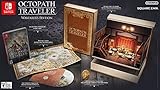
Octopath Traveler: Wayfarer's Edition - Nintendo Switch Wayfarer’S Edition | $194.79 | Buy on Amazon |
| 3 |

|
Octopath Traveler TRPG Rulebook | $46.41 | Buy on Amazon |
| 4 |

|
Hades II - Nintendo Switch™ 2 Edition | $49.94 | Buy on Amazon |
The battle loop: expose a weakness, Break, then burst
Every enemy has at least one hidden vulnerability: a weapon type or magical element. A weakness is revealed when you exploit it with an attack or reveal it through an ability. Hitting a weakness lowers the enemy’s Shield Points. When those points reach zero, the enemy enters Break.
PC Slower Than It Used to Be?
A free scan shows the junk files, broken settings and background clutter dragging Windows down - then fixes them in one click.Free scan · Windows 10 & 11Crashes, No Sound, or Screen Glitches?
Random freezes, missing sound and display glitches usually trace back to one bad driver. Find and replace yours safely.Free scan · under a minuteBreak is the decisive state. The enemy’s current and next turn are cancelled, and your attacks against it become critical hits. That makes the correct order more important than simply using your strongest move every round:
Popular on Amazon
- Begin your adventure as one of eight new travelers, each with their own origins, motivations, and unique skills.
- The series’ HD-2D graphics, a fusion of retro pixel art and 3DCG, have reached even greater heights.
- The story takes place in Solistia, where diverse cultures thrive from east to west and the industries of the new era flourish. You can sail the seas and explore every corner of a world that changes from day to night.
- Each traveler has a unique set of Path Actions they can use to battle townspeople, obtain items, take others along in their travels, and more. Where will you go? What will you do? Every path is yours to take.
- Familiar mechanics from the original game have been preserved, like the freedom to develop your travelers’ jobs and skills, as well as the Break and Boost system that made battles so exhilarating. New mechanics have also been added.
- Find a weapon or elemental weakness.
- Use inexpensive, usually unboosted attacks to remove Shield Points.
- Watch the turn order and land the final shield hit before the enemy acts, when possible.
- Spend saved Boost Points during Break on your best damage, healing or support action.
- Return to efficient weakness attacks while you rebuild resources.
Square Enix describes the system as turn-based combat built around identifying and targeting weaknesses. In practice, the system rewards preparation and timing more than constant maximum damage.
What Break changes
| State | Your priority | Why it matters |
|---|---|---|
| Enemy not broken | Test or exploit weaknesses with low-cost attacks | Each matching hit reduces Shield Points and sets up the next Break. |
| Enemy about to act | Prioritize the last shield hit if you can reach it | Break cancels the enemy’s current and next turn. |
| Enemy broken | Use Boosted attacks, stronger magic or recovery | Attacks become critical hits, so this is the best payoff window. |
| After Break | Rebuild BP and repeat the weakness cycle | Spending everything every round leaves you without a decisive turn later. |
Boost Points: a timing resource, not a button to press every turn
Characters gain Boost Points (BP) each turn and can hold up to five. The important question is not whether an action can be boosted, but whether this turn is worth the resource. A normal weakness hit often does its job without BP; a Break turn converts saved BP into substantially more value.
How boosting changes an action
- Physical attacks: boosting produces multiple strikes, which can multiply damage during a Break and can also help remove several Shield Points when the target is not broken.
- Magic: boosting produces one stronger strike rather than a string of separate hits.
- Healing: boosting restores more, making a Break turn a good opportunity to recover the party without giving up your next action.
Because BP accumulates naturally, a character who spends one point on every ordinary attack may arrive at a boss’s Break with no meaningful burst. Save points when an unboosted weakness hit is sufficient. Spend them when the enemy is broken, when a dangerous turn must be prevented, or when the party needs a larger heal to survive.
Reading the turn order
Before choosing an action, check who will act next. If an enemy is about to move and you can remove its remaining shields this round, use the quickest reliable weakness hit rather than a damage skill that does not advance the Break. If the final hit is impossible, stabilize the party, reserve BP and prepare to break on the following cycle instead of wasting resources.
How to discover and exploit weaknesses
Start with unboosted tests
Use a basic weapon or elemental attack that you have not yet tested. A successful hit reveals that vulnerability and reduces the shield count. Begin with attacks that are cheap in BP and SP so that discovery does not consume the resources you need for the payoff.
Keep a mental coverage map
As weaknesses are revealed, remember which party member can hit each one. A party with several damage skills but only one usable weapon type may struggle to reach Break. Conversely, a character who adds a missing element or weapon can be more valuable than another character who merely repeats an existing attack.
Also popular on Amazon
- Eight travelers. Eight adventures. Eight roles to play in a new world from square enix
- Alongside the game software, this special-edition bundle contains
- A pop-up book, a two-side cloth map of the game world, the octopath Traveler: sound selections CD, and a replica Coin. Explore each traveler's story and use their abilities in and out of battle
- Choose the path you wish to Walk and discover what lies beyond the Horizon
Separate shield damage from HP damage
Before Break, the immediate objective is often the shield, not the largest number on the damage display. Once Break begins, the objective changes to concentrated damage or recovery. Treat those as two different phases when selecting actions and allocating BP.
Quick wins for a faster PC:
Fix the driver behind crashes, sound loss and screen glitchesFind Drivers →Clear out junk files and repair common Windows errorsFree Scan →Secondary jobs: how the shrine system expands a party
Each traveler begins with a primary job. After you obtain a secondary job at one of the special shrines scattered around Orsterra, that traveler can use the second job’s skills as well. The system is intended for experimentation: combinations can be changed as your roster gains skills or as a chapter introduces enemies with different weaknesses.
A second job should answer a specific party need. The most useful questions are:
- Which weapon or element can this traveler add that nobody else covers?
- Will the pairing improve the character’s Break-turn damage or recovery?
- Does it reinforce the traveler’s role, or create a useful second role?
- Can the party afford the pairing’s BP and SP demands over repeated encounters?
- Does it duplicate coverage another traveler already provides?
Official pairing examples
| Combination | Primary purpose | Best use | Potential drawback |
|---|---|---|---|
| Hunter + Warrior | All-out physical offense | Give a strong attacker several ways to pressure physical weaknesses and capitalize on a broken target. | It does not solve healing by itself, so another traveler must cover recovery. |
| Cleric + Apothecary | Support and survival | Keep allies alive while adding recovery or utility to a character already assigned a support role. | The character may contribute less immediate burst than a dedicated damage pairing. |
Nintendo uses Hunter plus Warrior as an offensive example and Cleric plus Apothecary as a support example. They are starting points, not mandatory answers for every traveler or chapter.
Three practical ways to choose a second job
Damage pairing
Use a damage pairing when the rest of the party already has dependable healing. Prioritize combinations that let the character hit multiple physical weaknesses and spend BP effectively during Break.
Do these 3 things before closing this tab:
1Repair Windows errors before they cause bigger problems2Scan for outdated or missing drivers - takes under a minute3Clear out junk files and repair common Windows errorsSupport pairing
Use a support pairing when survival is the limiting factor. A recovery-focused character can use a Break turn to heal more while the other travelers attack, then return to low-cost shield work.
Also popular on Amazon
Coverage pairing
Choose the job that adds a missing weapon or element. This is often the best beginner decision when enemies repeatedly survive because nobody can hit one of their shield types. Coverage has value even when the new job’s raw damage is modest.
Build a balanced early party
Up to four travelers can fight side-by-side. A first party normally works best when its jobs are distributed rather than duplicated. The exact names of the travelers and the order in which you recruit them can vary, so build around roles and coverage instead of a fixed character script.
| Slot | Responsibility | What to look for |
|---|---|---|
| Primary damage | Deliver the largest Break-window attacks | Several physical or elemental options and a strong use for saved BP. |
| Secondary damage or coverage | Hit weaknesses the first attacker cannot reach | A different weapon family or element, not just duplicated attacks. |
| Healer or recovery plan | Restore health and prevent a failed Break cycle | Reliable healing, with a support pairing if needed. |
| Support and utility | Improve survival, provide additional coverage or solve encounters | Useful buffs, recovery, information or a second source of a rare weakness. |
Beginner party patterns
Safe exploration group
Pair one high-damage traveler with a second character chosen for missing shield coverage. Assign a dedicated healer and give the fourth slot to support or utility. This pattern is forgiving because it can still reach Break when an enemy resists the first attacker.
Fast-break group
Use two travelers with different weapon or elemental access, then add one damage finisher and one recovery specialist. Spend the first round learning the enemy’s weaknesses and the next round arranging a Break before the enemy’s turn.
Boss-survival group
Use the Cleric + Apothecary support example on one traveler when sustained recovery is the main concern. Keep at least two other travelers capable of hitting distinct shield types so the party is not forced to choose between healing and making progress toward Break.
Step-by-step: a reliable turn against a new enemy
- Inspect the visible information. Note any weaknesses already revealed and identify which party member can test an unknown weapon or element.
- Open with low-cost hits. Use unboosted attacks that match known weaknesses. Do not spend BP merely to reveal a vulnerability.
- Count the remaining shields. Compare the enemy’s Shield Points with the attacks available before its next action.
- Secure the Break. If the final hit is available, use it before the enemy acts. The cancelled current and next turns are often more valuable than a larger ordinary attack.
- Select the payoff. Boost physical attacks for repeated strikes, boost magic for one stronger strike, or boost healing if the party cannot safely continue.
- Watch resources after the payoff. Return to efficient weakness attacks and let BP rebuild. Use SP and healing items sensibly so routine encounters do not exhaust the party before a boss.
What to do when a plan fails
The enemy acts before you can Break
On the next cycle, prioritize the last shield hit rather than raw damage. If the enemy’s action is too dangerous, use a defensive or healing action and preserve BP for the following Break. Reassign a secondary job if the party lacks a fast, reliable way to hit the final weakness.
Also popular on Amazon
- Battle beyond the Underworld using dark sorcery to take on the Titan of Time in this bewitching sequel to the award-winning rogue-like dungeon crawler.
No one can hit a revealed weakness
This is a coverage problem. Change one secondary job at a shrine to add the missing weapon or element, or replace a duplicated attacker with a traveler who can test another category. Do not solve every weakness gap by stacking more damage skills of the same type.
What’s actually slowing this PC down?
Pick the symptom - the matching free tool is one click away.
BP is always empty
Stop boosting routine attacks that already remove a shield. Allow points to accumulate toward the next Break. A character can still contribute with an unboosted weakness hit while another traveler prepares the burst.
The party survives but cannot finish the fight
Check whether healing is consuming every action and whether the party has a defined Break payoff. A Cleric + Apothecary support pairing can improve recovery, while a Hunter + Warrior-style offensive pairing can give another traveler a clearer damage role. The goal is a cycle in which one character maintains survival while others convert Break into progress.
Two travelers feel interchangeable
Compare their shield coverage, Break payoff, party role, resource demand and overlap with the rest of the group. Keep both only when redundancy is valuable for a difficult boss; otherwise give one traveler a job that fills a missing function.
Progression: use battles and exploration together
Victories award money, experience points and Job Points. Job Points unlock new skills, so ordinary encounters are part of character development rather than a distraction from the story. Spend them with the party’s intended roles in mind: a damage traveler should gain tools that improve Break turns, while a support traveler should maintain recovery and utility.
The Tool Desk
Outbyte PC Repair FREERepair Windows errors before they cause bigger problemsFix Now →Outbyte Driver Updater FREEFix the driver behind crashes, sound loss and screen glitchesFind Drivers →Path Actions and Talents matter outside combat
Each traveler has a Talent and a Path Action. Path Actions can manipulate situations, obtain information or items, and affect towns. When choosing a party, consider whether its members can solve the town or exploration problem in front of you, not only whether they produce the largest damage number.
Square Enix presents the game as a journey for eight travelers across eight regions of Orsterra, each with distinctive skills, Talents and Path Actions. That structure encourages rotating members and revisiting job assignments instead of treating one four-person lineup as permanent.
A resource-conscious routine for dungeons
- Enter a new area with a plan for at least one weapon weakness and one elemental weakness.
- Use ordinary attacks to reveal weaknesses and reserve BP for an imminent Break.
- Heal before the party reaches a crisis; a boosted heal during Break is useful, but it should not be your only recovery plan.
- Spend Job Points on skills that improve the role you actually need, then reassess the party after a new shrine or chapter.
- When regular fights repeatedly expose the same coverage gap, change a secondary job instead of accepting slow, expensive battles.
Quick reference checklist
- Have I identified at least one way to lower this enemy’s shields?
- Can I reach zero Shield Points before the enemy’s next action?
- Am I saving BP for the Break turn?
- Should this Break be used for boosted damage, stronger magic or boosted healing?
- Does every party member have a distinct role or a deliberate redundancy?
- Does the party cover enough weapons and elements for the current area?
- Would a shrine-based secondary job solve a recurring weakness or recovery problem?
- Can the party’s Path Actions and Talents handle the current town or exploration task?
The central habit is simple: spend ordinary turns creating a Break, then spend your saved resources when the enemy is vulnerable. Build secondary jobs around coverage and role clarity, and change them when the party’s next chapter or boss exposes a new need.

