
Quick wins for a faster PC:
Repair Windows errors before they cause bigger problemsFix Now →Fix the driver behind crashes, sound loss and screen glitchesFind Drivers →Clear out junk files and repair common Windows errorsFree Scan →CoolFlux BSP’s 12-bit mode can increase throughput by splitting its 24-bit datapath into two parallel 12-bit lanes. That makes it useful for baseband workloads that map well to SIMD or complex instructions, but it does not make 12-bit arithmetic a universal substitute for 24-bit processing: the narrower operations reduce precision and dynamic range. The practical choice is often selective—use packed 12-bit computation where its speed and energy-per-result benefits suit the signal, and retain 24-bit arithmetic for stages that need more headroom.
What CoolFlux BSP’s 12-bit mode does
CoolFlux BSP has a 24-bit datapath. In SIMD mode, it can treat that datapath as two 12-bit lanes, allowing a MAC or ALU to perform two 12-bit operations in parallel. This is packed computation: it raises the number of suitable operations completed per cycle rather than making an individual 12-bit result more precise.
Its complex mode works with 12-bit real and imaginary components. NXP’s description, reported by EE Times, says a complex multiply takes two cycles while sustaining single-cycle throughput. The core also has specialized instructions for SIMD and complex arithmetic, FFTs, Viterbi processing, and CORDIC algorithms—operations relevant to communication signal-processing kernels. Source: NXP claims and architecture description reported by EE Times and analysis by BDTI.
Where the throughput benefit can matter
FIR filtering
For an FIR filter whose samples and coefficients fit the 12-bit representation and whose implementation can use the parallel lanes, two products can be handled per cycle. NXP’s published example, reproduced by EE Times, claims two taps per cycle for a 12-bit complex FIR filter. This is an example workload claim, not a guarantee for every filter: coefficient precision, data scaling, memory traffic, and software mapping affect actual performance.
#1 Best Overall

- High-performance foundation line, ARM Cortex-M4 core with DSP and FPU, 512 Kbytes Flash, 180 MHz CPU, ART Accelerator, Dual QSPI
- On-board ST-LINK/V2-1 debugger/programmer with SWD connector
- Can be powered from USB
- Three LEDs, Two Push-buttons
- Support of wide choice of Integrated Development Environments (IDEs) including IAR, ARM Keil, GCC-based IDEs
FFT and other communication kernels
Specialized FFT, Viterbi, and CORDIC instructions are intended to accelerate algorithm patterns common in baseband processing. For one published example, NXP reported 2,480 cycles for a 12-bit radix-4 256-point complex FFT, compared with 8,930 cycles for a 24-bit radix-2 256-point FFT. Because the examples use different radix implementations as well as different precisions, they should not be treated as a controlled measurement of the gain from changing precision alone. They show that NXP presented a faster 12-bit FFT implementation, not a universal speedup factor. Source: EE Times, reporting NXP examples.
What 12-bit mode gives up
The throughput advantage comes with less precision and dynamic range than 24-bit arithmetic. Narrower values leave less room to represent small signal differences accurately and less headroom for changes in signal level or intermediate results. If an algorithm’s inputs, coefficients, or accumulations exceed what the chosen 12-bit scaling can represent safely, quantization error or clipping can compromise the result.
Rank #2

- Complete ADAU1401 Single-Chip Module: Built around the ADAU1401 with embedded 28 / 56-bit processing, analog-to-digital and digital-to-analog conversion, microcontroller-style control interfaces — all on compact board for quick prototyping
- Self-Booting from Onboard Storage: The module loads its program independently from onboard non-volatile storage at power-up and can save current parameters back to storage on shutdown, eliminating the need for an external main controller in standalone setups
- Expandable via I2C and 4-Wire Ports: All function ports are out, including digital I2S input / output, push-button inputs, drive, auxiliary analog inputs for volume controls, and rotary — letting users extend the board as needed
- 98.5 Dynamic Range for Clear Sound Output: Two analog input channels and four output channels deliver 98.5 of analog-to-analog dynamic range, with digital input and output ports for linking additional conversion in the chain
- Stable Across Wide Temperature Range: for a working span from minus 40 to 105 degrees Celsius, this board suits both casual desktop use and more demanding environments where temperature stability is important
That is why 12-bit mode is best understood as an option to apply where the algorithm tolerates its numerical limits, not as a whole-core setting that should replace 24-bit work indiscriminately. BDTI notes that developers can switch to the slower 24-bit mode when 12-bit precision is insufficient. A mixed approach can therefore use 12-bit lanes in suitable high-throughput stages and 24-bit arithmetic in stages with tighter precision or dynamic-range requirements. Source: BDTI.
Does 12-bit mode reduce power?
It can reduce energy per result when parallel execution lets the core finish suitable work with fewer cycles or less active processing, but the available descriptions do not establish a guaranteed power reduction for every workload. The outcome depends on factors such as scaling, coefficient quantization, memory traffic, and how effectively the compiler and software use SIMD or complex instructions. Higher throughput per cycle is the architectural opportunity; the energy benefit must be evaluated for the actual algorithm and implementation.
Rank #3

- Powerful Processor: Equipped with ESP32-S3R8 Xtensa 32-bit LX7 dual-core processor, up to 240MHz main frequency. Supports 2.4GHz Wi-Fi (802.11 b/g/n) and Bluetooth 5 (LE), with onboard antenna. Built-in 512KB of SRAM and 384KB ROM, with onboard 8MB PSRAM and an external 16MB Flash memory.
- Driver and Touch LCD: Onboard 1.83inch IPS Capacitive Touch Display, 240 × 284 resolution, 65K color. Built-in ST7789P display driver and CST816D capacitive touch chip, using SPI and I2C communication respectively, effectively saving the IO resources. Adopts Type-C port to improve user convenience and device compatibility.
- Supports Offline Speech recognition and AI Speech Interaction: Allows access to online large model platforms such as ChatGPT, DeepSeek, Doubao, etc. Onboard ES8311 audio codec chip and ES7210 echo cancellation circuit to meet daily audio application scenarios.
- Multifunctional Sensor: Onboard QMI8658 6-axis IMU (3-axis accelerometer and 3-axis gyroscope) for detecting motion gestures, counting steps, etc; PCF85063 RTC chip connected to the battry via the AXP2101 for uninterrupted power supply; Onboard PWR and BOOT programmable buttons for easy custom function development.
- Rich Peripheral Interface: Reserved 1 × I2C, 1 × UART and 1 × USB pads for external device connection and debugging, enabling flexible peripheral configuration. Onboard TF card slot for extended storage and fast data transfer, suitable for applications such as data recording and media playback, simplifying circuit design.
For historical context only, EE Times reported NXP figures of 290 MHz in a 65-nm process, about 65K gates, and about 20 mW at 1.2 V for the core in 2009. These are dated implementation claims, not current guaranteed specifications or a measurement of the power savings attributable specifically to 12-bit mode. Do not compare them with a current core unless process, voltage, workload, and measurement method are aligned. Source: EE Times, reporting NXP claims in 2009.
How to choose between 12-bit and 24-bit arithmetic
| Choose | When it fits | What to check |
|---|---|---|
| 12-bit SIMD or complex mode | The kernel can use paired 12-bit operations or 12-bit complex components, and its accuracy and signal range remain acceptable. | Validate scaling, coefficient precision, intermediate headroom, and the effects of quantization; confirm that the implementation maps well to the available instructions. |
| 24-bit mode | A stage needs more precision or dynamic range than 12-bit values can provide. | Account for the slower operation rate relative to a suitable packed 12-bit implementation. |
| A selective mix | Some stages benefit from packed throughput while others are numerically sensitive. | Check accuracy and range at the transitions between stages, not just the output of each isolated kernel. |
This is a numerical design decision as much as a performance decision. Test with representative input levels and coefficients, and assess error and headroom through the full signal chain. If 12-bit quantization changes a result beyond the application’s tolerance, the per-cycle throughput advantage is not a useful trade.
Rank #4

- TMS320F2812 DSP Development Board System Board Core Board
What CoolFlux BSP is—and what the published figures mean
NXP describes CoolFlux BSP as a low-power, ANSI-C-programmable baseband core for software-defined-radio and wireline basebands. It can operate stand-alone, as a microcontroller coprocessor, or in a multicore system. NXP’s associated toolkit includes a C compiler, assembler, instruction-set simulator, linker, and interactive debugging environment. NXP also positions the CoolFlux BSP line as embedded in chips for ultra-low-power software-defined-radio basebands. The public material describes licensable semiconductor IP and a toolchain, not a retail processor chip or development board.
The reported cycle counts and 2009 implementation figures are historical examples. They do not establish current performance across implementations or competing cores. A meaningful comparison with another DSP should align arithmetic precision and dynamic range, SIMD and complex throughput, relevant instruction support, process and voltage, workload, memory bandwidth, and measurement method. Compiler and simulator capability and the licensing and integration model also matter.
Do these 3 things before closing this tab:
1Clear out junk files and repair common Windows errors2Scan for outdated or missing drivers - takes under a minute3Repair Windows errors before they cause bigger problemsBest Value
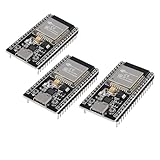
- ESP32 CP2012 USB C (Type-C) core board, it has 38 pins and more features than a 30-pin module. Narrower width, can be connected to the breadboard very well.
- ESP32 integrates antenna, switches, RF balun, power amplifiers, low noise amplifiers, filters and power management modules.
- Support many kinds of interfaces such as UART/SPI/I2C/PWM/DAC/ADC.
- With 2.4GHz WiFi+Bluetooth Dual-mode, support STA/AP/STA+AP mode, universal AT command, easy to use.
NXP identifies CoolFlux BSP and BSP32 as licensable cores, but current license pricing, availability, and customer permissions are not established by the cited public material. Those details require direct verification with NXP. Sources: NXP CoolFlux BSP product page; EE Times.
Quick Recap
Product prices and availability are accurate as of the date/time indicated and are subject to change. Any price and availability information displayed on Amazon at the time of purchase will apply.

